Ball Python Care Guide: Build a Secure, Measured Habitat
Build a secure ball python enclosure with measured heat, humidity, shaded UVB and room to stretch, plus practical checks for confident everyday snake care.
Read article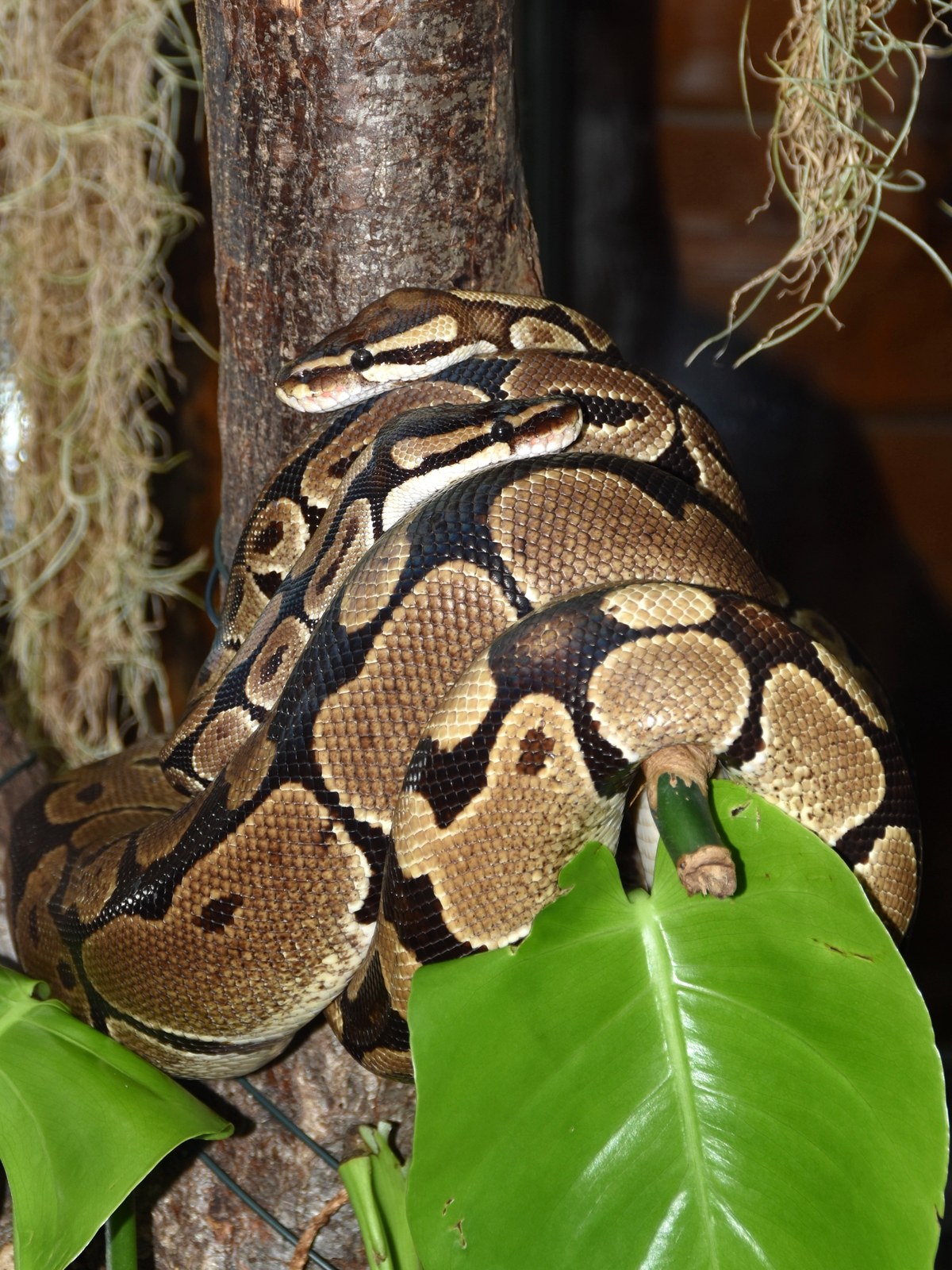
Python regius
A quiet, shelter-loving snake whose wellbeing depends on thoughtful, consistent care.
Deep Dive
Natural History
The ball python, Python regius, is native to West and Central Africa, where it occupies savanna, grassland and woodland mosaics rather than a permanently dry desert. Shelter changes the conditions an animal actually experiences: an abandoned burrow can remain more stable and humid than the exposed ground above it. Ball pythons commonly spend bright daytime hours concealed, then investigate their surroundings around dusk and during darkness. They are mainly terrestrial but can climb, so captive furnishings should provide sturdy routes above the floor as well as secure ground-level cover. Their common American name describes the defensive habit of curling around the head, while royal python is widely used in the United Kingdom. Neither name implies that every individual will enjoy human contact.
These snakes are predators that swallow whole vertebrate prey, using constriction rather than venom. Captive care should meet that biology without recreating the hazards of a wild hunt: suitably sized frozen-thawed, pre-killed rodents are the routine choice. Wild habitat also explains why a bare box with one temperature is inadequate. An enclosure should offer choices in temperature, humidity, light and concealment, with enough uninterrupted length for the adult to stretch fully. Choose a responsibly sourced captive-bred or rehomed animal with transparent feeding and health records, rather than assuming a decorative color guarantees good welfare. With lives that often exceed 20 years, a ball python belongs in a long-term household plan, not a short experiment in keeping an unusual pet.
Behavior
A ball python's quiet behavior is easy to misread. Remaining in a hide during the day is often consistent with its natural activity pattern, but persistent immobility alone does not prove contentment. Watch the whole pattern: relaxed movement, occasional investigation, normal breathing, appropriate body condition and use of different shelters are more useful than whether the snake stays still in your hands. Tongue flicking gathers chemical information and is not a gesture of aggression. A tightly tucked head, rigid coil, repeated retreat or defensive strike suggests that more distance is needed. An S-shaped neck can occur in different situations, including hunting, so interpret posture alongside prey scent, recent disturbance and the snake's usual behavior rather than assigning one fixed meaning.
Housing should remain solitary. Ball pythons do not need another snake for companionship, and sharing a hide does not demonstrate affection or safe compatibility. Gentle handling can become predictable for some individuals, but it is an optional activity, not the purpose of the animal's day. Let a newly arrived snake settle, support its heavy body and allow it to move across your hands instead of restraining its head. Skip handling during shedding, illness and the first 48 hours after feeding. Never pull a curled snake open to make it interact. If appetite or activity changes, record weight and enclosure conditions and seek veterinary guidance where appropriate; dismissing a change as stubbornness can delay recognition of a husbandry or medical problem.
Appearance
Ball pythons have muscular bodies, relatively small heads and short tails compared with many slender climbing snakes. Adults can reach around 150 cm, or 59 inches, in total length, with substantial variation between sexes and individuals. Total length includes the tail; it is not a snout-to-vent measurement. Wild-type animals usually show brown and dark patterning that helps break up their outline against shaded ground and vegetation. Small sensory pits around the lips help detect thermal information. These are normal structures, unlike bubbles around the nostrils, swollen lips or damaged scales, which deserve investigation. Because this species is naturally stocky, judging health simply by how thick it looks can miss both obesity and unhealthy weight loss.
Captive breeding has produced many color and pattern morphs, but appearance should never outrank function when choosing a snake. Spider-associated wobble is a particular welfare concern: research on affected spider morph animals has identified inner-ear abnormalities alongside balance and movement problems. Severity varies, and these findings do not mean every color morph has the same condition or that every unusual movement has a genetic cause. Ask about parentage, feeding coordination and health history, and avoid supporting selection for traits linked to impaired welfare. An existing animal with balance difficulties needs thoughtful care and veterinary assessment, not blame. Normal shedding also changes appearance: colors dull and the eye covering becomes cloudy before clearing again. Never peel retained skin or eye caps to restore a polished appearance; persistent remnants need professional advice.
Photo credits: NasserHalaweh (CC BY-SA 4.0 International). Images resized and compressed for web display. Each image retains its linked license. The ball python photograph shows two animals in a zoo display, not a recommended home-housing arrangement. House pet ball pythons individually.
Living With
Living with a ball python is more about maintaining reliable conditions than providing constant entertainment. Each day, check drinking water, enclosure security, temperatures, humidity and obvious changes in the snake or its surroundings. A furnished enclosure starting at 150 × 60 × 60 cm, about 59 × 24 × 24 inches, is a practical adult planning choice; enlarge it if the individual cannot stretch fully along its usable length. Keep heated and cooler shelters, a clean humid hide and sturdy climbing opportunities. Equipment must be checked even when the snake is hidden. A thermostat controls a heat source, but separate thermometers and regular surface checks are still needed to show what the animal actually experiences.
Budget for electricity, whole prey, replacement lamps and sensors, cleaning supplies and access to a reptile veterinarian, including an emergency reserve. Arrange a trained backup keeper before holidays or illness disrupt your routine. Salmonella can be present in healthy-looking snakes and feeder rodents, so wash hands and keep reptile care away from kitchens. Households with very young children, immunocompromised people or older adults should consider the additional public-health concerns before acquiring a reptile. The comparison species listed here are alternatives to research, not enclosure companions. The eight trait scores are editorial summaries of care demands and behavioral tendencies only: they are not clinical measurements, a prediction of an individual's personality or a promise of compatibility with people or other pets.
Adult habitat planning: These are species-specific care recommendations, not legal minima or universal settings. Measure the listed locations, provide a gradient and shaded retreat, and adapt with a reptile veterinarian.
Use a suitable thermostat and separate measurement devices. A basking surface reading is not an air temperature. Housing recommendations are for one animal, not a mixed-species enclosure.
At a Glance
Scores describe general care tendencies only, not temperature or humidity requirements or guarantees of compatibility.
Ownership Guide
Start adult planning at 150 × 60 × 60 cm (about 59 × 24 × 24 in), enlarging whenever full extension requires it. House one snake with secure doors, multiple snug hides, visual cover, ventilation and sturdy low climbing routes.
Measure warm-zone air at 30–32°C (86–89.6°F) and cool-side air at 24–26°C (75.2–78.8°F), with infrared surface checks kept separate. Guard and thermostat heat sources, retain thermal choices overnight, and provide a measured UVB gradient up to UVI 1.0 with complete shade and a 12-hour day; albinos need a lower maximum of UVI 0.7.
Aim for 60–80% daytime relative humidity with ventilation, fresh water and a clean humid hide. Let exposed substrate surfaces dry between moisture additions, and never peel retained skin or eye caps.
Offer appropriately sized frozen-thawed whole rodents, using roughly every 5–6 days for young growing juveniles and around every 14 days as an adult starting point, then adjust to age and body condition. Whole prey normally needs no routine calcium or D3 dusting, and refusal should prompt records and assessment rather than live-prey trials or force-feeding.
Let the snake settle, approach calmly and support its whole body without pulling open a defensive coil. Avoid handling during shedding or illness and for at least 48 hours after feeding; stop when the animal withdraws or becomes tense.
Remove waste promptly, refresh water daily and use dedicated equipment outside food preparation areas. Wash hands after reptile or feeder contact, arrange veterinary care before an emergency and quarantine new arrivals separately under professional guidance.
Wellness
Wheezing, nasal bubbles, persistent open-mouth breathing or abnormal effort need prompt reptile-veterinary assessment, with gasping treated as urgent. Check heat, humidity and ventilation, but do not substitute enclosure adjustments for diagnosis.
Blisters, ulcers, persistent redness or discolored belly scales may reflect infection, injury or burns. Maintain humid air without dirty wet contact surfaces, guard heat sources and seek veterinary care rather than applying household treatments.
Persistent skin rings, tail-tip constriction or retained eye coverings need veterinary guidance, especially when repeated. Review hydration, measured humidity and hide hygiene, and never pull or peel the retained material.
Record weight trends, prey details and measured conditions whenever feeding changes instead of automatically labeling refusal normal. Weight loss, weakness, regurgitation or repeated missed meals warrant veterinary advice, particularly in juveniles.
Moving dark specks, unusual prolonged soaking, diarrhea or unexplained weight loss deserve investigation and isolation from other reptiles. A veterinarian should identify the cause and choose treatment; household insecticides and empirical medication can harm snakes.
Spider-associated wobble raises selective-breeding welfare concerns, but new twisting, loss of balance or feeding difficulty should not be diagnosed from color alone. Obtain veterinary assessment and provide stable, low furnishings for an affected animal without assuming every morph has the same disorder.
Apparently healthy snakes, their equipment and feeder rodents can spread Salmonella. Wash hands, separate reptile care from kitchens, and consider CDC advice against reptile ownership in households with young children, immunocompromised people or older adults.
Further Reading
Build a secure ball python enclosure with measured heat, humidity, shaded UVB and room to stretch, plus practical checks for confident everyday snake care.
Read articleLearn ball python feeding by age and body condition, prepare thawed whole prey safely, avoid excess supplements and assess food refusal with useful records.
Read articleSpot ball python health concerns, from breathing changes and skin damage to weight loss, and learn safe quarantine, hygiene and veterinary escalation steps.
Read articleRead ball python body language, build gentle handling routines, reduce stress and prevent escapes while respecting hiding, shedding and digestion needs.
Read articleHelp your ball python shed safely with measured humidity, clean dry surfaces and a humid hide, and know when retained skin or eye caps need veterinary care.
Read articlePlan life with a ball python: daily checks, adult housing, ongoing costs, safe family routines and care handovers for a snake that may live for decades.
Read articleYou May Also Like
These links are for comparison only, not recommendations to house reptiles together. Keep different species in separate enclosures.