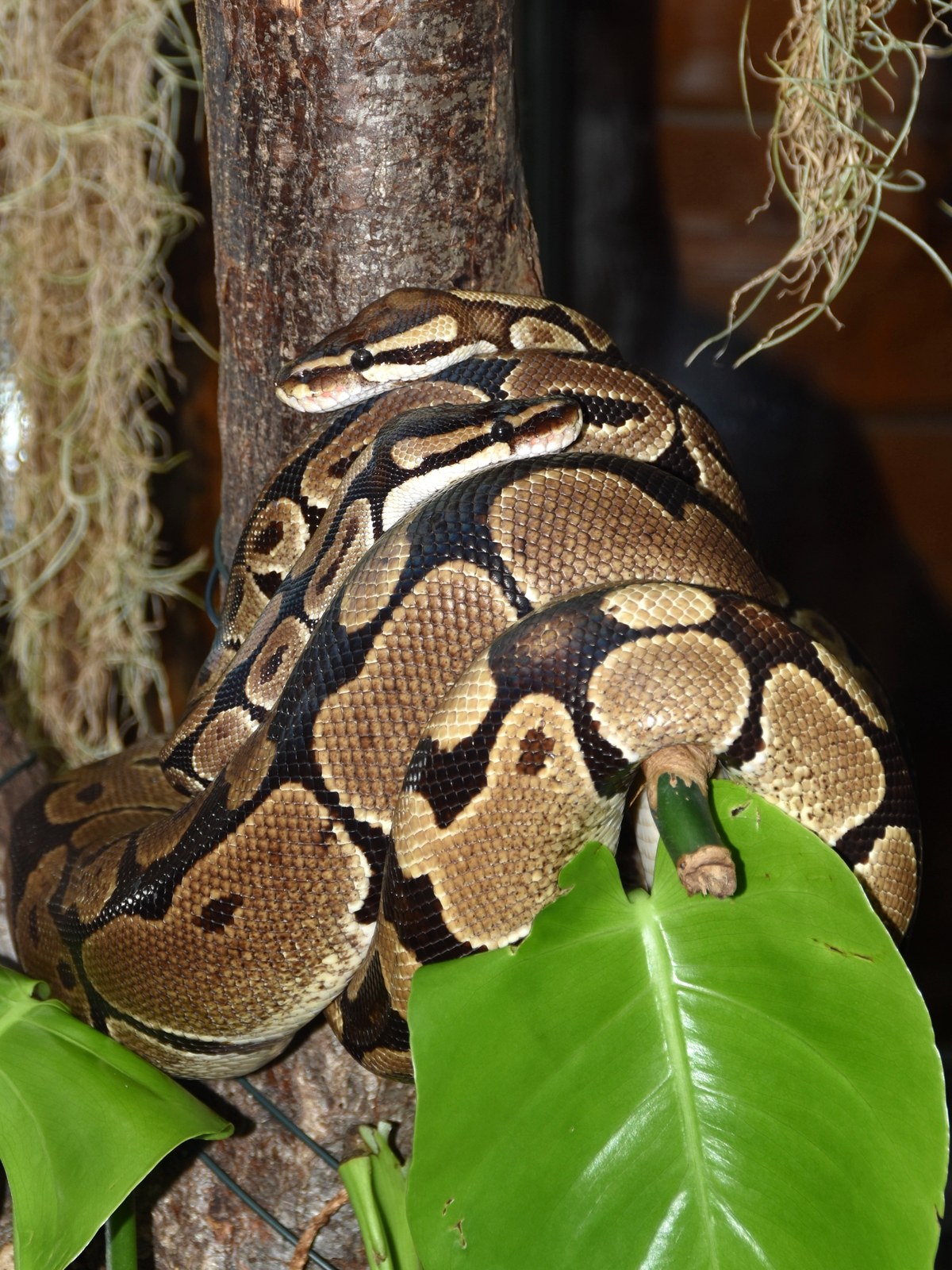
Ball python shedding care is about hydration, surfaces and patience, not grooming. A healthy snake usually releases the old outer skin as a largely continuous piece, but the process begins before that skin comes away. Dull colors and cloudy eyes can be normal stages. Your job is to maintain a suitable environment, reduce disturbance and recognize when a skin problem needs a reptile veterinarian.
Recognize the stages without rushing the snake
Before shedding, a ball python may look dull, spend more time hidden and show cloudy or bluish eye coverings. The eyes often clear again before the old skin is released, so clearer eyes do not necessarily mean the shed is finished. Activity and appetite may change during this period. Record those changes, but do not use shedding as an automatic explanation for weight loss, breathing problems or prolonged food refusal.
Shedding frequency is individual. Young growing snakes generally shed more often than mature animals, and a calendar cannot define the correct interval for every python. Keep the animal's own history rather than comparing it with a social-media schedule. Provide stable objects with gentle texture for rubbing, avoiding sharp edges and abrasive materials. Resist the temptation to help by lifting loose skin. Even a visible flap may still be attached elsewhere, and pulling can injure living tissue beneath the old layer.
Measure humidity rather than judging by appearance
Aim for 60–80% daytime relative humidity in this plan, allowing a natural nighttime rise without forcing saturation. Use a digital hygrometer around mid-enclosure at snake height and cross-check the cool end. A sensor directly above wet moss may report a local pocket rather than the wider habitat. Record the reading with its location and temperature so you can compare like with like over time. Condensation on glass is not a reliable substitute for measurement.
A moisture-retentive substrate can support humidity without keeping every exposed surface wet. Add moisture thoughtfully and allow the top contact layer to dry between additions while deeper material retains moisture. Maintain fresh air exchange rather than sealing vents to chase a number. If humidity drops quickly, assess the enclosure design, substrate depth and room conditions before repeatedly soaking the floor. Sudden environmental extremes are not a better shedding strategy than a stable, monitored setup with accessible humid shelter.
Make the humid hide clean and genuinely usable
A humid hide should be secure, easy to enter and large enough for the snake to coil inside without being cramped. Use clean moisture-holding material that is damp rather than dripping, and place the hide where it remains appropriately warm without becoming a hot wet pocket. Check the material regularly for contamination, mold and drying. A hide that looks attractive but is exposed, unstable or too small may not be used.
Keep ordinary snug hides in both the warm and cool zones as well; the humid hide is an additional choice, not the only shelter. Warm-zone air should be 30–32°C (86–89.6°F), with cool-side air at 24–26°C (75.2–78.8°F). Retain thermal choices overnight rather than deliberately chilling the snake during a shed. Measure resting surfaces separately with an infrared thermometer, particularly beneath lamps or on hide roofs. Fresh drinking water should always be available and replaced daily, or immediately if fouled.
Prevent skin damage while keeping adequate moisture
Humid air does not automatically cause scale rot. Problems are more likely when skin remains against dirty wet material, ventilation is inadequate, or injuries allow infection to develop. Remove waste promptly, replace contaminated patches and keep clean, drier contact areas available. Do not respond to concern about skin infection by eliminating necessary humidity altogether; dehydration and poor sheds introduce their own welfare problems.
Watch for blisters, persistent redness, ulcers, unusual discoloration or damaged belly scales. These signs can arise from several causes, including burns, and need veterinary assessment rather than a diagnosis from a photograph alone. Guard heat sources and use compatible thermostatic control. An acceptable air reading cannot guarantee that a nearby surface is safe. Do not apply oils, human lotions, household disinfectants or improvised medication to the snake. Products used to clean an empty enclosure must be used according to their labels and rinsed as directed, not applied to living skin.
Handle retained skin and eye caps conservatively
After shedding, inspect the discarded skin and observe the snake without restraining it unnecessarily. The transparent coverings from the eyes may be difficult to identify in a torn shed, so uncertainty is not permission to probe the eyes. Persistent cloudiness, swelling or an apparent retained eye cap needs a reptile veterinarian. Tight skin around the tail tip also deserves prompt advice because constriction can damage tissue.
Do not peel, tape, rub or scrape retained material away. Routine forced baths are not necessary when the habitat provides adequate humidity, water and a usable humid hide, and repeated soaking can add stress without resolving the cause. If a veterinarian recommends a specific supportive procedure after examining the animal, follow that individualized advice. Recurrent incomplete sheds require review of hydration, environmental records and possible underlying disease. Never keep repeating the same home remedy simply because it once seemed to loosen a piece of skin.
Build a shedding record and a calm routine
Reduce optional handling while vision is impaired and the snake is sheltering more. Continue normal environmental checks, water changes and waste removal without repeatedly uncovering the animal. If a meal is refused, record it along with weight trends and actual conditions. Do not try live prey or force-feeding to overcome a presumed shedding-related refusal. Once the shed is complete and the animal is behaving normally, resume its individualized feeding and gentle handling routine.
- Record the first visible changes and the date skin was released.
- Note whether the shed was largely intact or fragmented.
- Save humidity locations, temperature readings and relevant photographs.
- Contact the veterinarian for persistent remnants or abnormal skin.
Wash hands after handling shed skin, substrate, water bowls or the snake itself. Salmonella risk is not limited to visibly dirty material, so keep care equipment and discarded skin away from food preparation areas. Successful shedding reflects everyday husbandry, not a last-minute attempt to make an enclosure as wet as possible.
Continue reading: Living With a Ball Python: A Practical Long-Term Plan.
Sources and further reading:
- RSPCA: Royal pythons
- ReptiFiles: Ball Python Humidity, Temperature & Lighting Requirements
- MSD Veterinary Manual: Management and Husbandry of Reptiles
- Malformations of the sacculus and the semicircular canals in spider morph pythons
- CDC: Reptiles and Amphibians
Photo credits: NasserHalaweh (CC BY-SA 4.0 International). Images resized and compressed for web display. Each image retains its linked license. The ball python photograph shows two animals in a zoo display, not a recommended home-housing arrangement. House pet ball pythons individually.
