Crested Gecko Care Guide: A Safer Arboreal Habitat
Plan crested gecko care around a tall enclosure, gentle warmth, shaded UVB and a daily humidity cycle, with practical checks that help prevent overheating.
Read article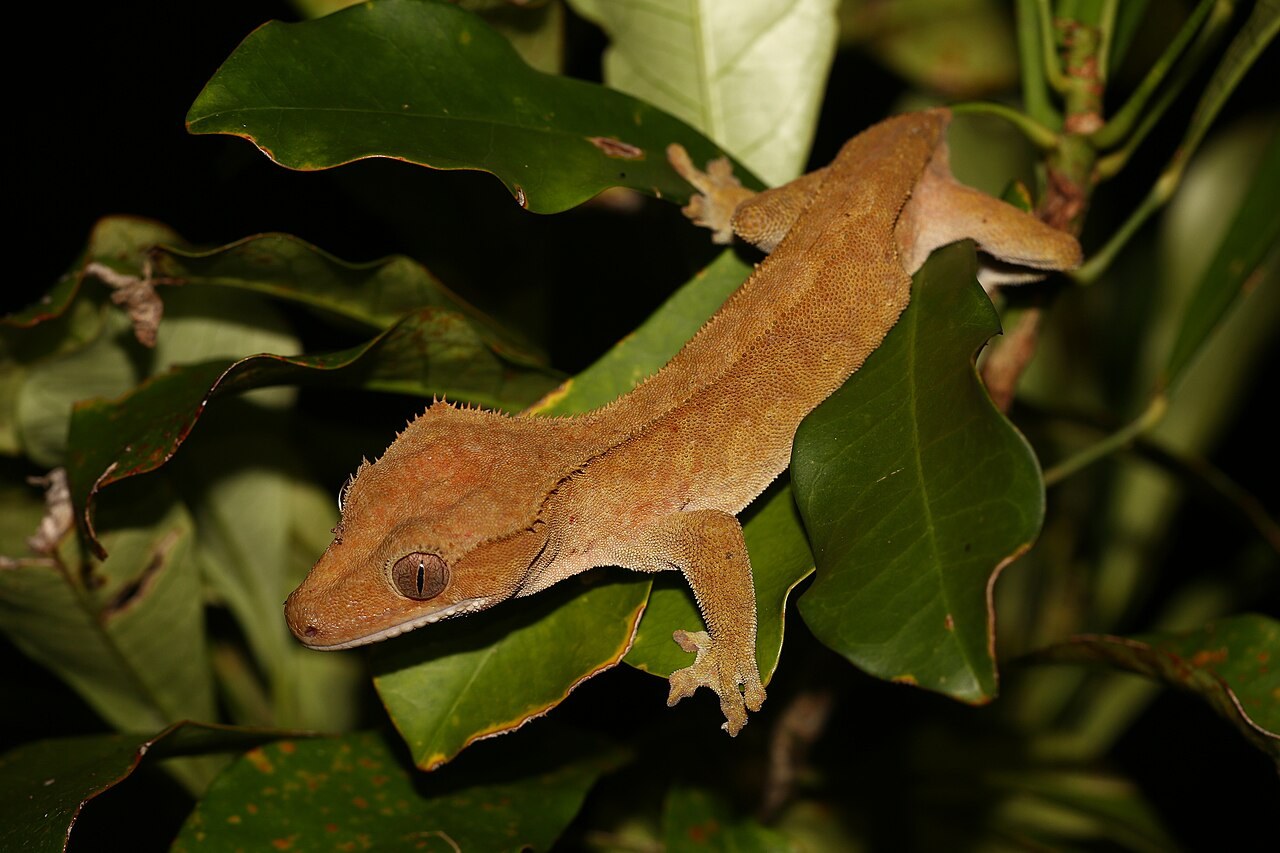
Correlophus ciliatus
An evening canopy explorer that needs gentle warmth, leafy cover and patient care.
Deep Dive
Natural History
The crested gecko, Correlophus ciliatus, comes from New Caledonia in the southwest Pacific, including Grande Terre and the Isle of Pines. Its familiar eyelash-like crests have made it recognizable far beyond its native islands, but its needs still reflect a life among branches and foliage. The species was thought extinct before its rediscovery in 1994. That history is interesting without turning today's pet trade into a conservation claim: a captive animal should come from a responsible, traceable source, not an unverified wild collection. Ask for feeding records, age estimates and any previous health problems rather than choosing solely by an unusual color or pattern.
These geckos use vegetation for shelter and travel, becoming especially active around dusk and continuing into the night. Adhesive toe pads and a gripping tail help them negotiate their surroundings, while a varied natural diet includes plant foods and invertebrates. Captivity should reproduce useful choices rather than an imagined permanently steamy jungle. A furnished upright enclosure needs sheltered routes, gentle warmth, a cooler retreat and ventilation that allows wet surfaces to dry. Commercially formulated complete crested gecko diet is a practical captive feeding foundation; a bowl of mashed fruit is not an equivalent reconstruction of wild nutrition. Observing how your animal selects different heights, cover and feeding locations is more useful than treating its island origin as a reason to keep every part of its enclosure equally hot or wet.
Behavior
A crested gecko can be an absorbing animal to watch without becoming a pet that enjoys prolonged contact. Many individuals remain concealed while the room is bright, then move between branches, investigate their feeding ledge and lick droplets after the evening misting. Quiet daytime hiding is therefore not automatically a problem. A meaningful change is a departure from that particular animal's established pattern, especially when accompanied by weight loss, weak grip or breathing difficulty. Some geckos tolerate brief handling after gradual familiarization; others consistently prefer distance. Neither response proves that you have failed to build trust, and remaining still in your hand is not reliable evidence of relaxation.
Approach from the side, offer a supported route onto your hand and let the gecko decline. A fixed stare toward a landing point may precede a surprisingly quick jump, so keep contact low over a safe surface. Repeated scrambling, rapid breathing or defensive movements mean the session should end rather than become a training challenge. Never catch or restrain the animal by its tail: a dropped tail will not regrow. Solitary housing is the default, and apparent tolerance between two geckos does not eliminate competition or injury risk. The trait scores on this page are editorial summaries of care demands and behavioral tendencies, not clinical measurements, promises about an individual or guarantees of compatibility with children or other pets.
Appearance
An adult crested gecko is approximately 20 cm, or 8 in, long when measured from the snout to the end of an intact tail, although individuals vary. That total length is not the same as snout-to-vent length, and a tailless adult cannot be compared using an intact animal's total-length figure. Raised crests run above the eyes and along the head, producing the characteristic eyelash outline. Color and pattern vary widely in captive populations. An individual can look brighter or darker at different times, often described as firing up or firing down. Color alone is not a dependable thermometer, hydration gauge or diagnosis, so pair visual observations with measured conditions and behavior.
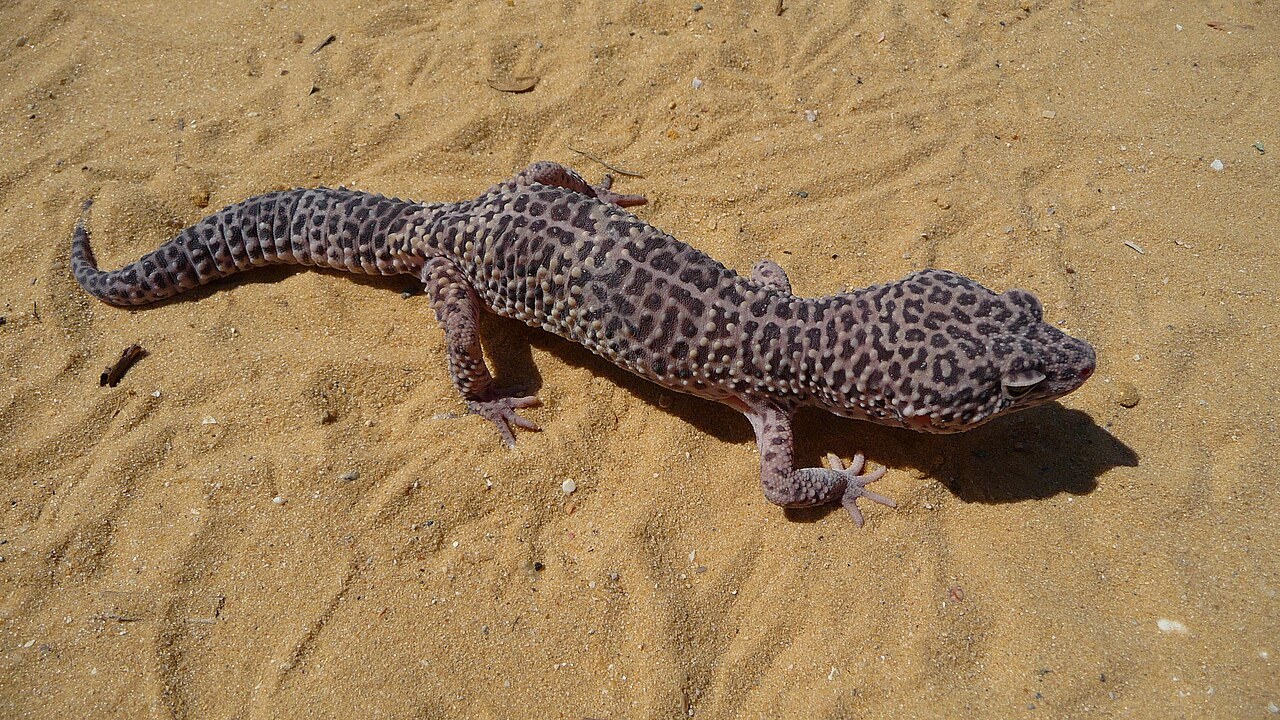
The broad toe pads contain microscopic structures that help the gecko adhere to surfaces, while small claws assist with climbing textured materials. Its tail also contributes to grip and balance, but it is not a handle. Unlike the leopard gecko, this species cannot regenerate a tail after dropping it. Many healed, tailless animals adapt well when they have secure branches and suitable resting platforms, although a fresh injury deserves veterinary advice. Crested geckos lack movable eyelids and lick the transparent eye covering as part of normal maintenance. Do not wipe the eyes or peel material from them. During routine observation, look for clear eyes, coordinated movement, intact toes and a stable overall outline; persistent swelling, wounds or worsening difficulty gripping warrant assessment by a reptile veterinarian.
Photo credits: Lennart Hudel (CC BY 4.0 International). Images resized and compressed for web display. Each image retains its linked license.
Living With
Living with a crested gecko suits someone who enjoys evening observation and can maintain a small habitat every day. Plan for a typical captive lifespan of 15–20 years rather than a short childhood project. One adult needs a secure upright enclosure at least 18 × 18 × 36 in, or 45.7 × 45.7 × 91.4 cm, measured length by width by height; larger usable space is preferable. Climbing routes, leafy retreats and an accessible feeding ledge make that volume functional. A tall empty box is not adequate enrichment, and a second gecko is not a substitute for habitat design. Related reptiles on this page are comparison options, never suggested enclosure companions.
The daily workload includes checking temperature readings, renewing water, inspecting food and waste, and managing a humidity rise followed by a drying period. Summer cooling can be a greater challenge than winter heating, so choose the room before buying the animal. Budget for reliable instruments, replacement lighting, complete food and access to a reptile veterinarian rather than only the purchase price. Arrange a trained sitter for holidays and provide written instructions that distinguish warm air from the perch surface. Reptiles can carry Salmonella while appearing healthy: wash hands, keep equipment out of kitchens and consider the additional risks to young children, older adults and immunocompromised people. A responsible adult must retain control of husbandry, hygiene and veterinary decisions.
Adult habitat planning: These are species-specific care recommendations, not legal minima or universal settings. Measure the listed locations, provide a gradient and shaded retreat, and adapt with a reptile veterinarian.
Use a suitable thermostat and separate measurement devices. A basking surface reading is not an air temperature. Housing recommendations are for one animal, not a mixed-species enclosure.
At a Glance
Scores describe general care tendencies only, not temperature or humidity requirements or guarantees of compatibility.
Ownership Guide
House one adult in an upright enclosure at least 18 × 18 × 36 in (45.7 × 45.7 × 91.4 cm), L × W × H, with larger usable space preferred. Secure branching routes, horizontal rests, dense cover and a feeding ledge without blocking cross-ventilation.
Keep warm daytime air at 24–26°C (75.2–78.8°F), cool air at 21–24°C (69.8–75.2°F), and night air at 18–20°C (64.4–68°F); these are conservative operating recommendations, not one universal setting. Independently check perch surfaces for hotspots rather than converting a warm-zone recommendation into a surface target. Thermostat-control added heat and provide approximately UVI 0.7 at the exposed perch grading to zero in shade; never use desert-lizard heat settings.
Allow a brief 70–80% RH rise after misting, then drying toward 40–50% before the next substantial misting, measured away from direct spray. Provide fresh water, ventilation and clean humid cover as needed, but never maintain soaked bedding or peel retained skin.
Use complete commercial CGD, offering it daily to juveniles under about 12 months and every 2–3 days to established adults, adjusted to the product and body condition. Insect opportunities are typically 1–2 times weekly for juveniles and 0–1 time weekly for adults, but separate insects and calcium/D3 must fit the exact formula and measured UVB rather than a universal supplement recipe.
Let an established, feeding gecko approach voluntarily and keep brief sessions low over a safe surface. End contact when it repeatedly tries to escape, and never restrain the tail because it cannot regrow.
Remove waste promptly, clean feeding equipment and wash hands after contact with the gecko or its habitat. Keep supplies outside food-preparation areas, arrange a reptile-veterinary baseline assessment and seek prompt advice for weight loss, poor grip, persistent retained shed or breathing changes.
Wellness
Open-mouth breathing at rest, collapse or severe weakness can signal an emergency, especially during warm weather. Maintain a cool retreat, intervene before accessible areas reach 29°C (84.2°F), and contact a reptile veterinarian urgently for distress; never use ice or cold-water immersion.
Poor grip, tremors, limb deformity or jaw changes require veterinary assessment rather than an improvised calcium dose. Prevent avoidable deficiencies with complete CGD, a coordinated insect-supplement plan and appropriately measured UVB.
Persistent stuck skin, constricted toes or difficulty climbing need attention to hydration, humid refuges and the measured wet/dry cycle. Do not pull skin from toes or eyes; swelling, discoloration or impaired movement warrants prompt veterinary care.
Wounds, unusual discharge, noisy breathing or persistent open-mouth breathing need a reptile veterinarian. Reduce avoidable risks with clean surfaces and ventilation rather than keeping the enclosure saturated, and treat breathing distress as urgent.
Repeated refusal with falling weight, abnormal droppings or marked inactivity can reflect several illnesses, including parasites. Record meals and weight, quarantine newcomers and ask a reptile veterinarian about examination and fecal testing instead of routine home deworming or force-feeding.
A dropped tail does not regrow; seek advice for a fresh wound and urgent care for persistent bleeding or exposed tissue. Females can produce infertile eggs without a male, so prolonged straining, swelling or weakness also needs prompt veterinary assessment without squeezing the abdomen.
Coordinated climbing, stable body condition, normal droppings and a consistent evening routine are reassuring observations, not proof that disease is absent. Regular records make changes easier to recognize, and a healthy appearance does not eliminate Salmonella risk.
Further Reading
Plan crested gecko care around a tall enclosure, gentle warmth, shaded UVB and a daily humidity cycle, with practical checks that help prevent overheating.
Read articleFeed your crested gecko a complete diet, not baby food. Learn age-based meal routines, insect choices, supplement checks and simple ways to track condition.
Read articleSpot crested gecko health problems early with checks for heat stress, poor grip, retained shed and weight loss, plus clear guidance on when to call a vet.
Read articleUnderstand crested gecko behavior before handling: learn to read stress signals, support safe jumps, prevent escapes and protect a tail that cannot regrow.
Read articleSupport crested gecko shedding with a measured humidity cycle, clean climbing surfaces and gentle observation, without peeling skin or keeping bedding wet.
Read articleDiscover what living with a crested gecko really involves: evening care, summer heat planning, household hygiene, ongoing costs and reliable holiday cover.
Read articleYou May Also Like
These links are for comparison only, not recommendations to house reptiles together. Keep different species in separate enclosures.