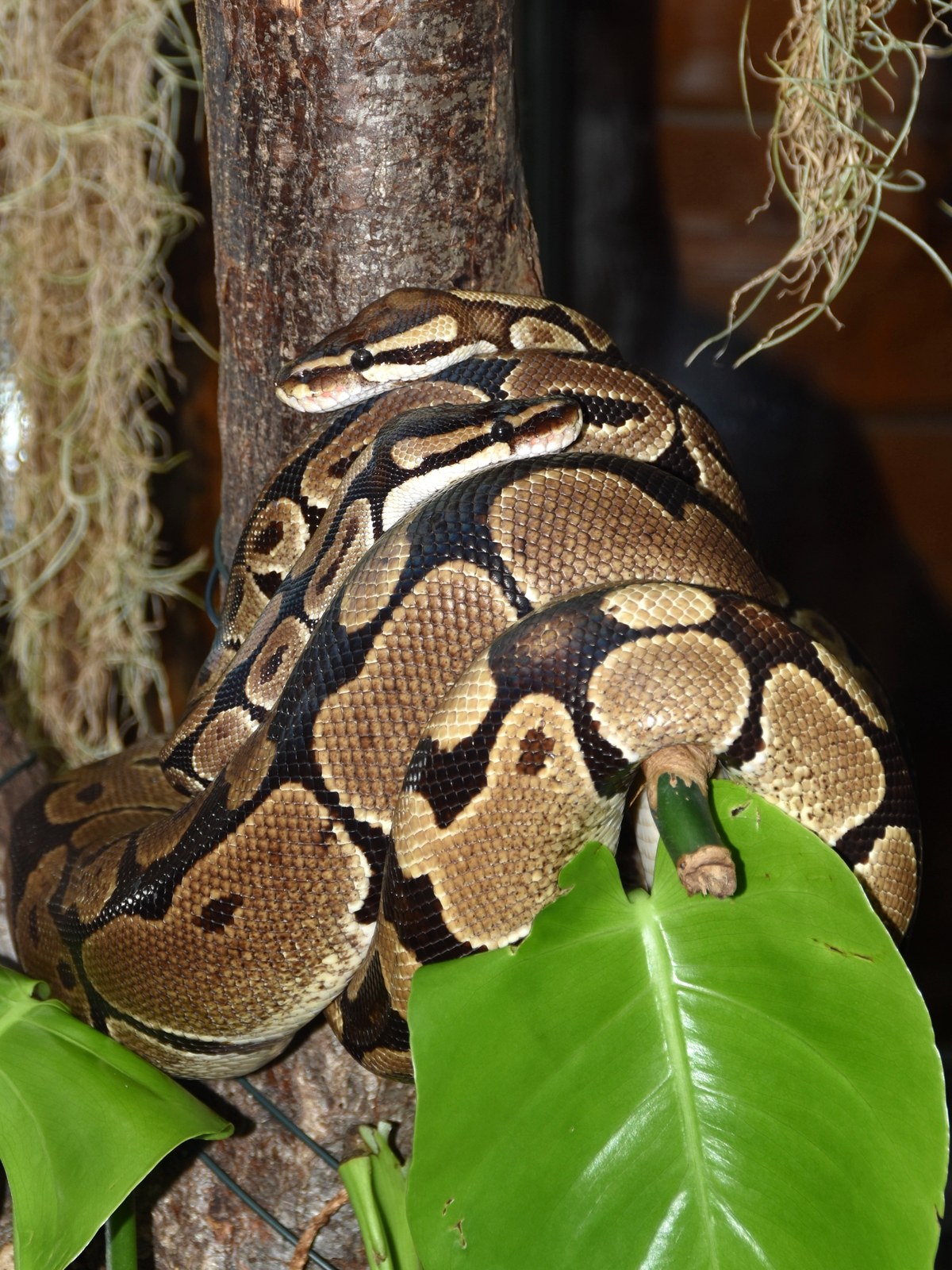
Living with a ball python is a commitment to an environment as much as to an animal. The snake may spend much of the day hidden and does not need constant interaction, but its water, security and equipment still need attention. Before bringing one home, decide whether your household can provide that reliability through holidays, house moves and the decades an individual may live.
Decide whether a long-lived snake fits your home
Ball pythons often live beyond 20 years in captivity, and some live substantially longer. That timescale can outlast a rental agreement, a child's interest or a particular work schedule. Choose the animal because you can support its biology, not because it appears quiet or decorative. An adult can reach around 150 cm in total length, and a small juvenile enclosure is not a permanent space-saving solution.
Research responsibly sourced captive-bred animals or reputable rehoming opportunities, asking for feeding records, health history and known welfare concerns. Color should not outweigh function. Spider-associated wobble is a specific selective-breeding concern linked in research with inner-ear abnormalities; avoid encouraging selection for traits associated with impaired welfare. This does not mean every morph has the same condition, and an existing affected snake deserves individualized care. If an animal has coordination problems or an unreliable feeding history, understand the veterinary and practical implications before taking responsibility for it.
Plan adult housing and recurring costs honestly
Start adult enclosure planning at 150 × 60 × 60 cm, about 59 × 24 × 24 inches, measured length × width × height. Increase the usable straight length if the individual cannot stretch fully. Include secure closures, multiple snug hides, a humid hide, stable climbing routes and adequate ventilation. One snake needs its own enclosure; buying a second animal does not turn solitary housing into a shared arrangement.
Budget by function rather than a promotional starter-kit price. Costs include thermostatic heating, independent sensors, guarded lighting, electricity, substrate, whole prey, cleaning supplies and replacement equipment. Add access to a reptile veterinarian, transport and an emergency reserve. Check actual local prices and power use rather than relying on a universal estimate. A cheap enclosure that cannot hold stable conditions may need early replacement. Renting households should also confirm permission and consider how the habitat will be moved safely without interrupting the snake's essential care.
Make daily checks short, consistent and meaningful
A daily routine should confirm that the snake is secure, has clean water and has not developed obvious signs of illness. Read the equipment rather than merely checking that a lamp glows. Warm-zone air should be 30–32°C (86–89.6°F), with cool-side air at 24–26°C (75.2–78.8°F). This plan retains access to those thermal choices overnight using controlled non-light-emitting heat, while visible lighting follows 12 hours on and 12 hours off.
Aim for 60–80% daytime relative humidity, allowing natural nighttime increases without forcing saturation. Keep ventilation functioning and let exposed substrate surfaces dry between moisture additions. Surface temperatures need separate infrared checks; an air probe cannot establish the safety of a hide roof beneath a lamp. Low-level UVB reaches up to UVI 1.0 with complete shade, or a lower maximum of UVI 0.7 for albinos. Record probe positions and significant changes so the routine produces useful information instead of a collection of unexplained numbers.
- Refresh drinking water and remove visible waste.
- Check locks, cable gaps, probes and accessible heat guards.
- Note abnormal breathing, skin changes or unusual prolonged soaking.
- Record meals, sheds and weight trends when they occur.
Keep feeding and family expectations realistic
Young growing juveniles may start with a suitably sized frozen-thawed whole rodent every 5–6 days, while healthy adults may begin around every 14 days. Adjust intervals and prey size to age, activity and body condition rather than feeding for rapid growth. Good-quality whole prey normally needs no routine calcium or D3 dusting. If meals are refused, record weight and conditions and seek advice for repeated refusal or concerning signs; never assume an indefinite fast is harmless.
Handling should be gentle and optional, with the whole body supported. Avoid it during shedding or illness and for at least 48 hours after feeding. A snake is not a pet that must entertain visitors, and defensive curling should end interaction rather than prompt someone to pull it open. Keep other animals away during handling. Bearded dragons, leopard geckos, crested geckos and corn snakes are alternatives to compare, each with different care needs; none belongs in a ball python's enclosure as a companion.
Set hygiene boundaries before problems arise
Healthy-looking reptiles and feeder rodents can carry Salmonella. Keep the snake, its carrier, water bowls, substrate and food preparation equipment out of kitchens and away from eating areas. Wash hands with soap and water after contact and before handling human food. Use dedicated cleaning equipment in a non-food area, ideally outdoors where practical, and disinfect contaminated surfaces appropriately. Calm temperament does not make a reptile microbiologically safe.
CDC does not recommend reptiles for households with young children, immunocompromised people or older adults. Children under 5 should not handle reptiles or their environments, and higher-risk people should not handle feeder rodents. Discuss these realities before acquisition, especially when household circumstances may change. Written boundaries help visitors and backup keepers follow the same routine. Do not kiss the snake, let it roam across food surfaces or assume that gloves replace handwashing after equipment is removed.
Prepare handovers, emergencies and future changes
Arrange a competent backup keeper before a holiday, illness or emergency. Walk through the enclosure together, showing the difference between thermostat controls, independent air probes and surface measurements. Leave the current feeding record so nobody offers extra meals out of concern that the snake looks hungry. A keeper should know not to remove eye caps, force-feed, try live prey or change temperatures to trigger seasonal dormancy.
Write down veterinary contacts, transport arrangements and what to do if heating fails or the snake escapes. Keep a safe contingency location in mind for a prolonged power outage, and avoid improvised heat sources that can burn the animal or start a fire. Review the plan after moving home, replacing equipment or changing caregivers. If you can no longer provide care, seek a responsible rescue or experienced new keeper with full records; never release a captive snake outdoors.
Long-term success comes from repeatable care, honest planning and timely professional help, not from expecting the snake to adapt to every change in human circumstances.
Continue reading: Ball Python Care Guide: Build a Secure, Measured Habitat.
Sources and further reading:
- RSPCA: Royal pythons
- ReptiFiles: Ball Python Humidity, Temperature & Lighting Requirements
- MSD Veterinary Manual: Management and Husbandry of Reptiles
- Malformations of the sacculus and the semicircular canals in spider morph pythons
- CDC: Reptiles and Amphibians
Photo credits: NasserHalaweh (CC BY-SA 4.0 International). Images resized and compressed for web display. Each image retains its linked license. The ball python photograph shows two animals in a zoo display, not a recommended home-housing arrangement. House pet ball pythons individually.
