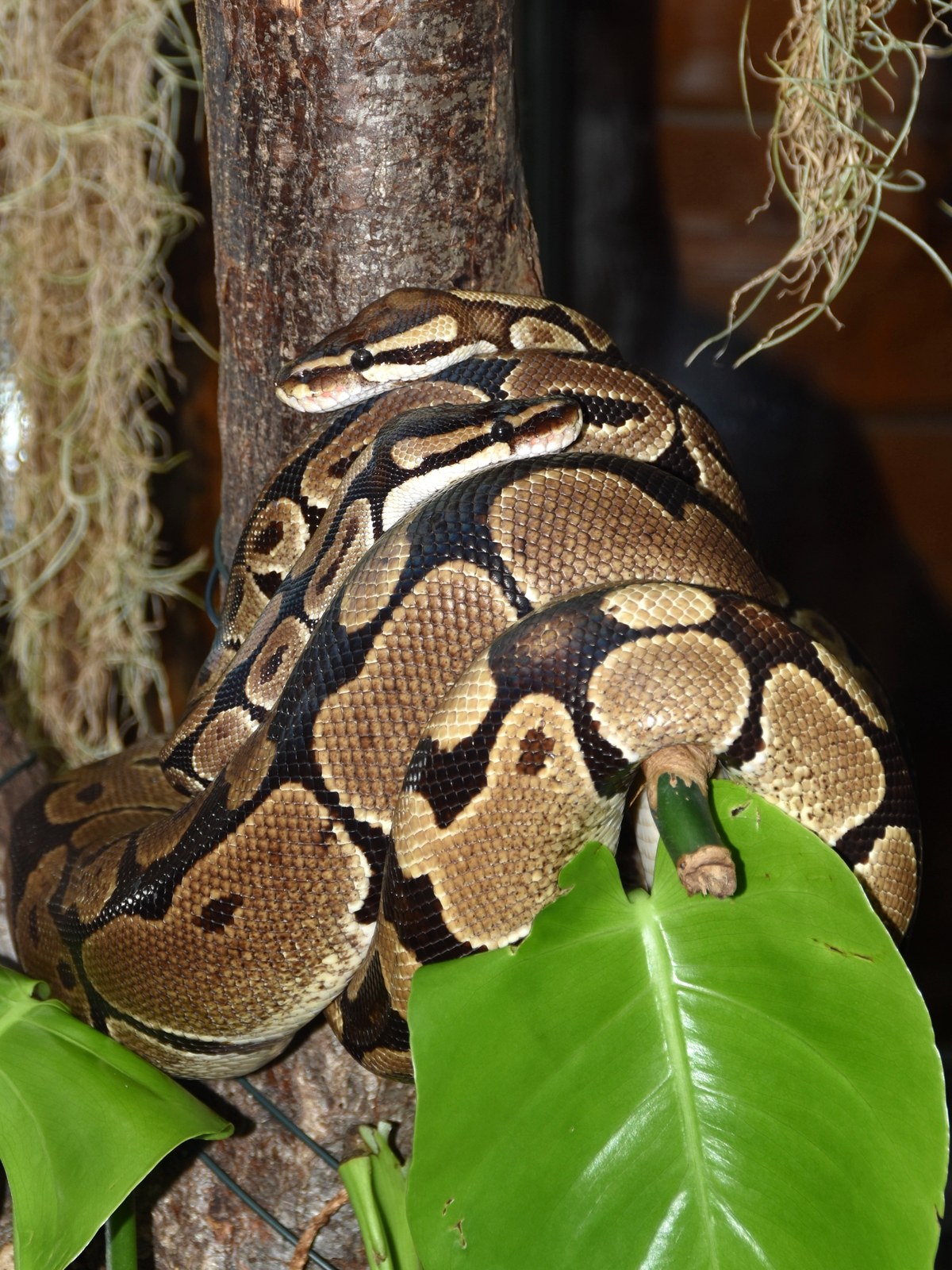
Ball python handling works best when you begin by observing rather than picking the snake up. These animals often shelter during daylight and investigate in low light, so a quiet daytime enclosure is not automatically a problem. The aim is to make necessary contact predictable and gentle while preserving the snake's ability to retreat. Frequent handling is not a substitute for a secure, well-furnished habitat.
Learn what ordinary ball python behavior looks like
A relaxed ball python may move slowly between cover, pause to tongue-flick and explore a branch after the room becomes dim. Tongue flicking collects chemical information; it is not a threat on its own. Resting inside a hide can be entirely appropriate, particularly during bright hours. Compare behavior with the individual's established pattern instead of expecting a snake to seek attention like a dog.
Context changes the meaning of a posture. An S-shaped neck may appear before a defensive response or during prey investigation. A rigid coil with the head protected, repeated retreat or striking after disturbance suggests that the animal needs space. Do not pull it open to prove it is tame. Conversely, immobility in your hands does not prove comfort. Watch breathing, muscle tension and attempts to withdraw, and use feeding and weight records to help distinguish an ordinary quiet period from a concerning change.
Let a new arrival settle before optional contact
Prepare the enclosure before bringing the snake home, including stable temperatures, humidity, secure hides and functioning locks. Ask for the previous keeper's feeding and handling history. During the first week, avoid unnecessary handling while checking health and maintaining the habitat. Some animals need longer, especially after transport, a housing change or an interrupted feeding pattern. The calendar alone does not establish readiness for interaction.
Provide enough cover that moving between the warm and cool ends does not require crossing a completely exposed floor. Start adult enclosure planning at 150 × 60 × 60 cm, about 59 × 24 × 24 inches, and enlarge it when full extension requires more length. A large furnished enclosure is different from a large empty one; shrinking the habitat is not the default solution to hiding. If the snake repeatedly refuses food, record weight and measured conditions and seek veterinary guidance rather than increasing handling to make it accustomed to you.
Support the body and keep sessions easy to end
Wash your hands before contact, especially after touching prey or other animals. Approach calmly from the side where possible, open the enclosure without sudden movement and support the snake's body with both hands. Let it move across your hands rather than dangling from one point. Do not grip the neck, pull the tail or restrain a tight coil. Keep the animal low over a safe surface so an unexpected movement cannot become a long fall.
Begin with a brief session and stop before the snake becomes tense or the room's cooler air affects it. Handling is optional enrichment for a tolerant individual, not a daily quota. Keep other pets away and prevent the snake from wrapping around a person's neck or reaching furniture gaps. Return it gently near a secure retreat, then close and check the enclosure. If it repeatedly withdraws, reduce the demands and review the setup instead of trying to outlast its defensive behavior.
Respect digestion, shedding and health limits
Avoid handling for at least 48 hours after feeding. The snake needs undisturbed access to appropriate temperatures during digestion, not a tour of a cool room. Maintain warm-zone air at 30–32°C (86–89.6°F) and cool-side air at 24–26°C (75.2–78.8°F), with thermal choices retained overnight in this plan. Those are air targets; surface checks remain a separate safety task. Do not switch off all heating just because visible lights are off.
During shedding, reduced vision and increased vulnerability can make a normally tolerant animal more defensive. Leave it access to a clean humid hide and postpone optional contact. Also skip handling when illness, injury or unexplained weight loss is suspected, except for necessary care and transport. New loss of balance or twisting warrants veterinary assessment. Spider-associated wobble is a specific welfare concern, but color alone cannot diagnose the cause of every movement problem, and not all morphs share that condition.
Offer exploration without forced social contact
Ball pythons should live alone. Another snake is not a cure for inactivity, and two animals sharing a hide may be competing for the same favorable conditions. Solitary housing lets you track food intake, waste and shedding accurately. Related reptiles listed for comparison are alternative pets to research, not potential enclosure partners. Contact with cats, dogs or other household animals should also be prevented rather than staged for photographs.
Use stable low branches, varied textures and cover to support exploration within the enclosure. Changes should preserve familiar hides and the thermal gradient rather than turning every cleaning session into a complete rearrangement. Make sure climbing routes do not bring the snake closer to unguarded heat or excessive UVB. A measured light gradient must still include complete shade. Provide a 12-hour light period and 12 hours of darkness, then observe low-light activity without repeatedly shining bright lights into the hide. Choice is more useful than constant novelty.
Prevent escapes and make household rules clear
Escape prevention is part of behavior management because a curious, muscular snake can exploit a loose door or cable gap quickly. Check every closure after feeding, cleaning and handling, even when another person says it is secure. Avoid adhesive products inside the enclosure where the animal could become trapped. If a snake escapes, secure the room, keep other pets away and search methodically without dismantling electrical equipment unsafely.
- Assign one responsible adult to verify the enclosure after every opening.
- Keep handling away from kitchens, food surfaces and sleeping areas.
- Wash hands after contact with the animal or its equipment.
- Stop a session when the snake becomes tense, defensive or difficult to support.
Healthy-looking reptiles can carry Salmonella. CDC advises against reptiles in households with young children, immunocompromised people or older adults, and children under 5 should not handle them or their environments. A calm snake does not remove that risk.
Continue reading: Ball Python Shedding: Humidity, Healthy Skin and Eye Caps.
Sources and further reading:
- RSPCA: Royal pythons
- ReptiFiles: Ball Python Humidity, Temperature & Lighting Requirements
- MSD Veterinary Manual: Management and Husbandry of Reptiles
- Malformations of the sacculus and the semicircular canals in spider morph pythons
- CDC: Reptiles and Amphibians
Photo credits: NasserHalaweh (CC BY-SA 4.0 International). Images resized and compressed for web display. Each image retains its linked license. The ball python photograph shows two animals in a zoo display, not a recommended home-housing arrangement. House pet ball pythons individually.
