Ball python health problems are easier to recognize when you know the individual animal's baseline. A quiet snake can be resting normally, stressed or unwell; stillness alone cannot distinguish those states. Keep useful records, maintain a measured environment and identify a reptile veterinarian before you need one urgently. Home observations support diagnosis, but they cannot replace an examination when warning signs appear.
Establish a baseline and quarantine new arrivals
Record the snake's weight, feeding history, sheds, waste and usual activity when it arrives. Ask the previous keeper for prey details, health concerns, treatments and the date of the last accepted meal. Arrange an initial veterinary assessment and discuss appropriate parasite testing. A snake that looks clean can still carry parasites or infections, and a new purchase should not be introduced directly into an existing collection.
Quarantine means separation, not simply placing another enclosure beside the first. Use a separate room where possible, dedicated equipment and a cleaning order that keeps the new animal last. Ask the veterinarian to tailor duration and testing to the source, clinical findings and other reptiles in the home. Easy-to-inspect substrate can help during observation, but temperature, humidity and security must still meet the species' needs. Do not end quarantine solely because a calendar reminder appears, and never share water bowls, hides or feeding tongs between animals.
Recognize respiratory trouble and urgent changes
Repeated wheezing, nasal bubbles, discharge, abnormal neck extension or persistent open-mouth breathing are not routine personality traits. Contact a reptile veterinarian promptly; gasping or obvious breathing effort is urgent. Poor ventilation, unsuitable temperatures and infectious causes can all contribute to respiratory illness, so simply lowering humidity or turning up heat is not a reliable diagnosis or treatment. Keep the snake within its established safe conditions while arranging care.
Other urgent changes include collapse, severe burns, major bleeding, prolapse or sudden inability to coordinate movement. Call the receiving clinic before travel so staff can prepare and advise on transport. Use a secure, ventilated carrier, minimize handling and protect the animal from temperature extremes without allowing direct contact with a heat pack. Avoid steam treatments, essential oils and leftover medications. A treatment that seems harmless to a person can injure a reptile or obscure findings the veterinarian needs to see.
Separate humid air from unhealthy wet surfaces
Aim for 60–80% daytime relative humidity while preserving ventilation and allowing exposed substrate surfaces to dry between moisture additions. This does not mean drying the entire habitat into a desert. Deeper substrate and a clean humid hide can retain moisture while the animal has clean, drier contact surfaces. Inspect under hides, where a damp dirty patch may remain invisible during a quick check from the front.
Blisters, persistent redness, ulcers or damaged belly scales can reflect infection, abrasion or burns. The everyday label scale rot does not identify the cause on its own. Remove contaminated material, prevent further contact with the suspected hazard and arrange veterinary assessment. Guard heat sources, use thermostatic control and measure accessible surfaces separately with an infrared thermometer. Warm-zone air at 30–32°C (86–89.6°F) does not prove that a branch directly under a lamp is safe. Never peel damaged tissue or apply household antiseptics without professional guidance.
Use appetite and weight as clinical information
Food refusal deserves a record of weight and conditions, not an automatic declaration that ball pythons simply do that. Compare recent meals, shedding, handling, temperatures and changes to the enclosure. Cool-side air should remain 24–26°C (75.2–78.8°F), with access to the warm zone maintained overnight in this plan. Check independent readings rather than trusting a control setting, and avoid deliberately cooling the animal to imitate seasonal dormancy.
Weight loss, weakness, regurgitation, diarrhea or mouth changes increase concern and should be discussed promptly with a veterinarian. Repeated refusals also merit review before the snake becomes visibly thin, especially in a juvenile. A veterinarian may need an examination and targeted testing rather than a list of increasingly unusual foods. Save photographs and ask how to collect a fresh fecal sample if requested. Do not treat presumed parasites based on appearance alone, and never use live prey, force-feeding or fluid syringing as a home diagnostic experiment.
Assess mites, retained shed and coordination
Moving dark specks around scales, unusual prolonged soaking or unexplained irritation can indicate mites, but water use alone is not diagnostic. Keep the animal isolated from other reptiles and obtain professional identification and treatment. Household insect sprays, dog or cat products and improvised chemical baths can poison snakes. Retained skin or eye coverings also need careful assessment, particularly if the tail tip is constricted or the problem repeats despite appropriate humidity. Never pull an eye cap or strip tight skin.
Spider-associated wobble deserves a separate welfare discussion. Research on affected spider morph ball pythons has linked abnormal balance and movement with inner-ear structural differences. The study is not proof that every color morph is affected, and severity varies between animals. Avoid supporting selective breeding for traits associated with impaired function. An existing affected snake still deserves good care, stable low furnishings and veterinary oversight. New twisting or poor coordination should not be dismissed as a known morph issue without evaluation for other causes.
Protect people through everyday hygiene
Apparently healthy ball pythons can carry Salmonella, and their substrate, water, equipment and feeder rodents can spread contamination. Keep reptile care out of kitchens and away from food preparation surfaces. Clean equipment outside where practical, or use a dedicated non-food area that can be disinfected afterward. Wash hands with soap and water after handling the snake, its habitat or feeders, and before eating or touching food.
- Keep feeding and cleaning tools clearly separated from household utensils.
- Remove waste promptly and replace contaminated drinking water immediately.
- Prevent pets and visitors from contacting reptile equipment.
- Give a backup keeper the same written hygiene and emergency instructions.
CDC does not recommend reptiles for households with young children, immunocompromised people or older adults; children under 5 should not handle reptiles or their environments. Consider those risks before acquisition rather than assuming a calm snake is a low-risk pet.
Continue reading: Ball Python Handling and Behavior: Read the Snake First.
Sources and further reading:
- RSPCA: Royal pythons
- ReptiFiles: Ball Python Humidity, Temperature & Lighting Requirements
- MSD Veterinary Manual: Management and Husbandry of Reptiles
- Malformations of the sacculus and the semicircular canals in spider morph pythons
- CDC: Reptiles and Amphibians
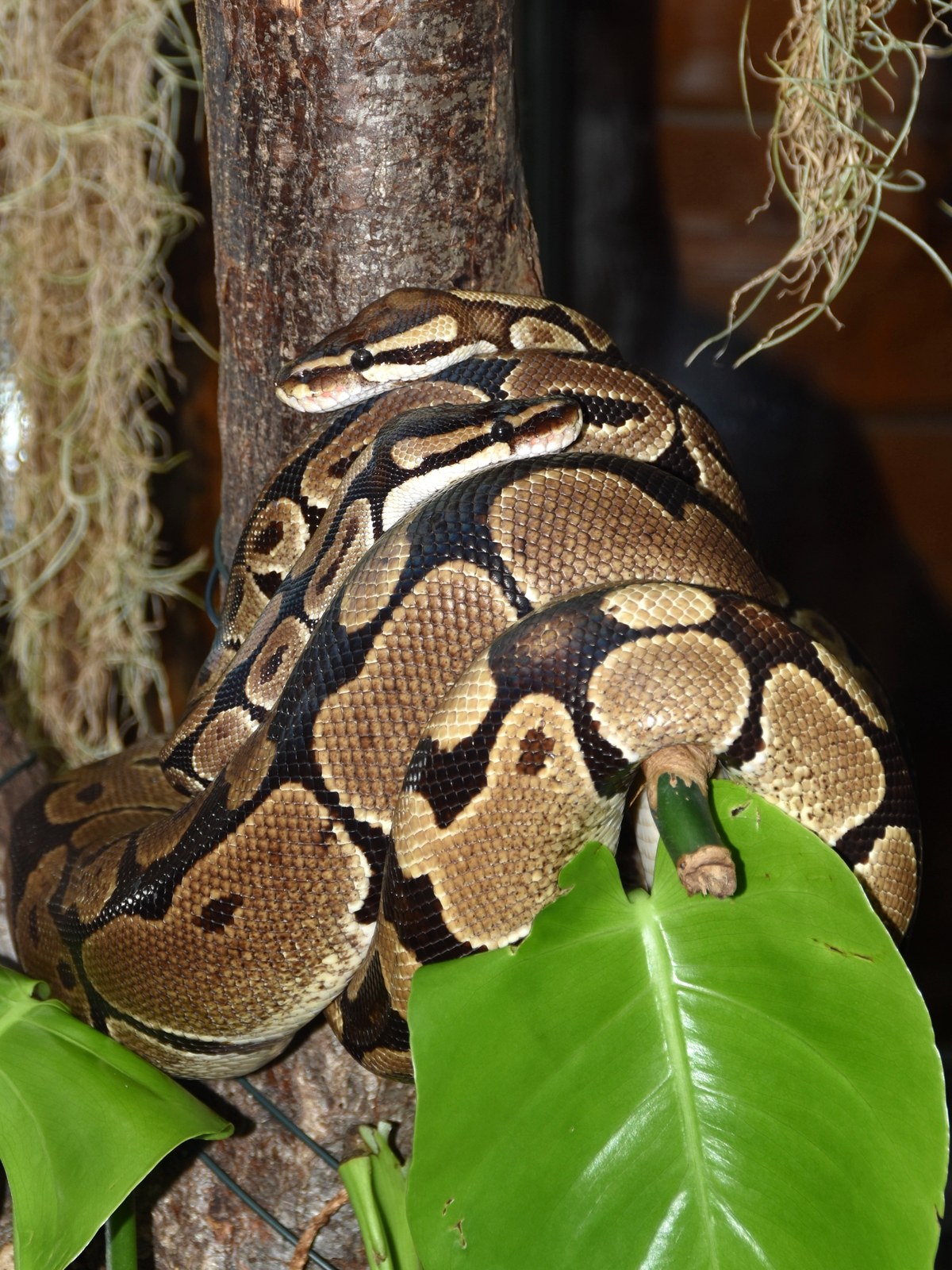
Photo credits: NasserHalaweh (CC BY-SA 4.0 International). Images resized and compressed for web display. Each image retains its linked license. The ball python photograph shows two animals in a zoo display, not a recommended home-housing arrangement. House pet ball pythons individually.
