Zebra Finch Care: Build a Home for Flight and Companionship
Give your Zebra Finches room to fly, compatible company and a steady daily routine. Learn safe housing, feeding, introductions and signs that need a vet.
Read article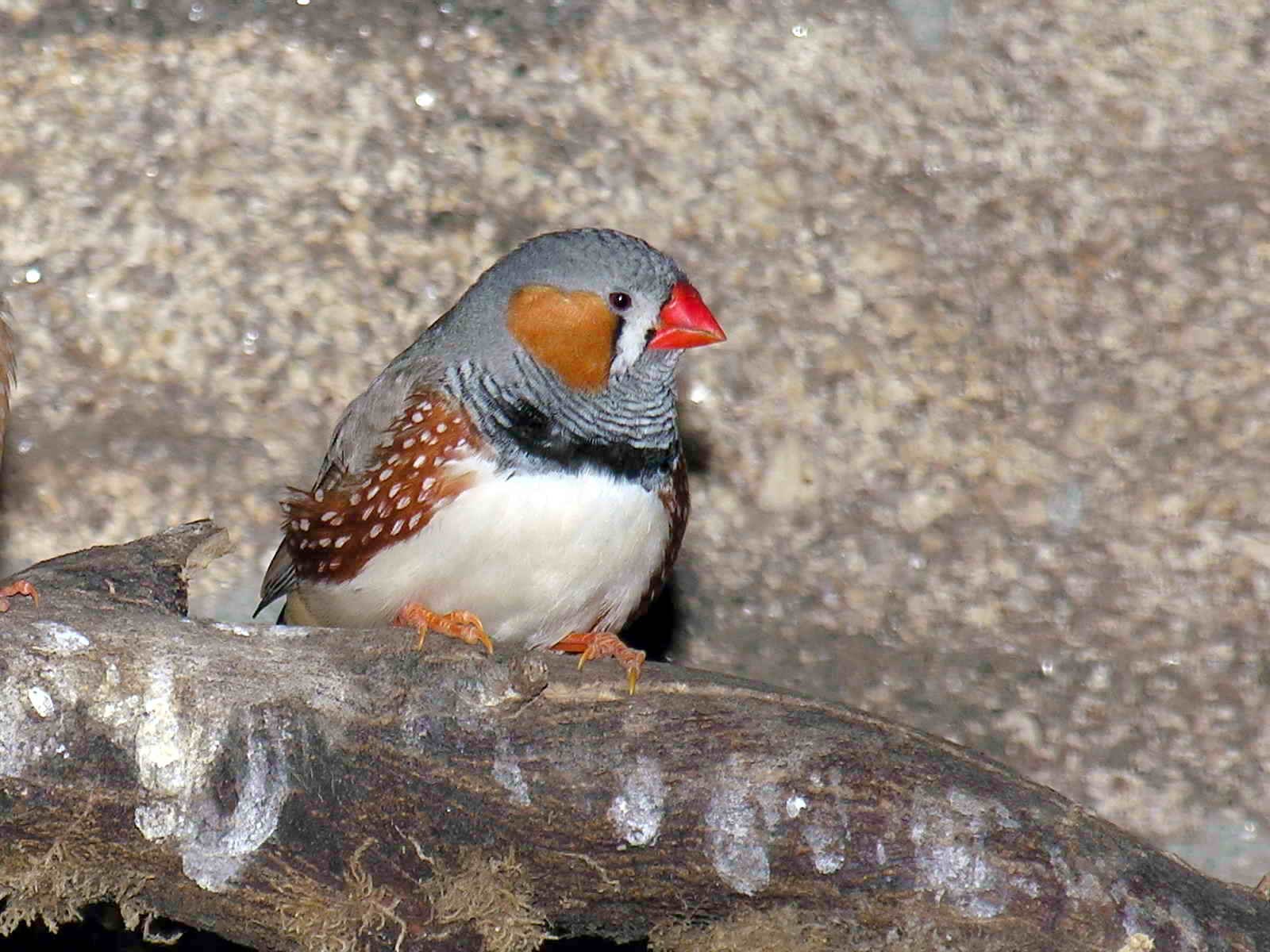
Taeniopygia castanotis
A lively Australian flock bird with a small voice and a big need for flight and companionship.
Deep Dive
The pet Zebra Finch discussed here is the Australian domestic bird. Taxonomies that separate the Australian and Timor populations call it Taeniopygia castanotis. Older books, research papers and some museum resources use Taeniopygia guttata for the broader species, with the Australian form named Taeniopygia guttata castanotis. In split treatments, Taeniopygia guttata refers to the Timor or Sunda Zebra Finch instead. These names explain apparently conflicting labels; they do not make every reference to guttata a reference to the same population. When comparing information, check the geographic identity as well as the scientific name.
Australian wild birds occupy extensive dry country, feeding mainly on fallen or ripening grass seeds and staying socially connected in flocks. Their breeding opportunities respond to favorable conditions rather than a household calendar. Strong pair bonds and a capacity to breed readily helped establish captive populations, but those qualities also make reproductive planning part of responsible pet care. A nest is not a necessary bedroom for a nonbreeding pair.
Generations of captive breeding have produced several color forms and made this finch important in research on vocal learning and social behavior. Research husbandry is useful background, not a reason to copy small experimental cages into a home. Choose a captive-bred bird or a suitable rescue, obtain its diet and health history, and check locally applicable ownership or transport rules. This profile does not recommend collecting wild Australian birds or substituting Timor birds without species-specific assessment.
Zebra Finches make engaging companions for people who enjoy watching rather than holding birds. A comfortable pair moves between perches, checks food dishes, exchanges contact calls and often rests close together. Males sing short, repeated phrases; both sexes communicate with calls. The sound is usually less forceful than a parrot's voice, but a pair can be audible throughout the active day. Quiet does not mean silent, and a sudden reduction in a familiar bird's activity or vocal behavior deserves attention.
Social living is a need, not a guarantee that any two birds will get along. An established compatible pair is often simpler to manage than a changing group. Watch whether each individual can eat, drink, bathe and rest without being displaced. Brief disagreements differ from repeated pursuit, feather damage or guarding every food station. Same-sex companions can work without producing fertile eggs, although personality still matters and females may lay infertile eggs. Mirrors cannot provide reciprocal companionship and should not replace another compatible finch.
You can build trust through predictable movements and small rewards while allowing the birds to keep their distance. Learning to approach a familiar dish or enter a transport cage voluntarily is more useful than insisting on tricks. Avoid catching a finch simply to prove it is tame. Even a bird that accepts your presence may dislike hands, and immobilized behavior during restraint should never be mistaken for affection. Offer choice, secure flight space and a routine that lets normal curiosity return after disturbances.
An Australian Zebra Finch is approximately 10–12 centimeters long, including its tail. Wild adults in the husbandry literature average around 12 grams, but domestic birds vary in build and condition; that wild average is not a target weight for every pet. A veterinarian should interpret an individual bird's weight alongside body condition and its own previous measurements. The compact body, short conical bill and quick flight fit a grass-seed eater that spends much of its day moving between feeding and resting places.
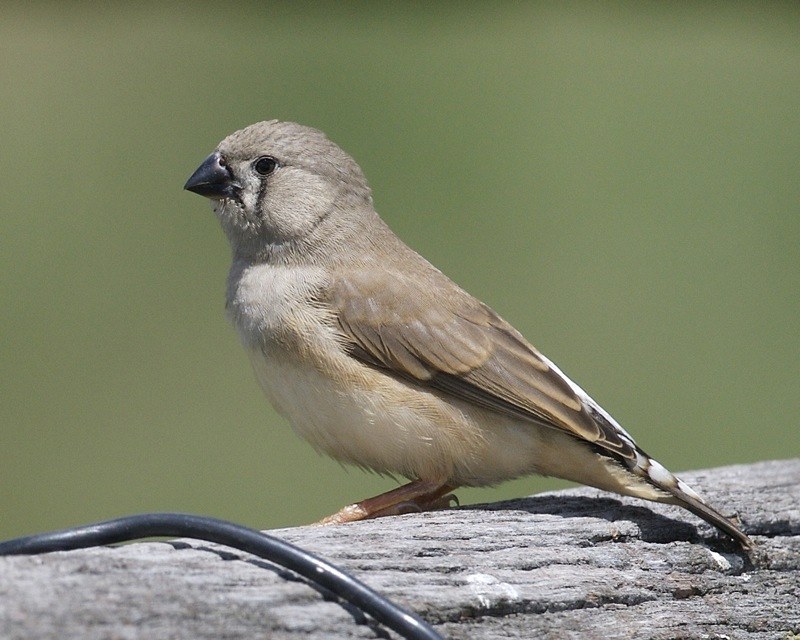
In typical adult wild-type plumage, males have orange cheek patches, fine throat barring, a dark breast band and chestnut flanks marked with pale spots. Females lack those conspicuous male ornaments and are generally plainer gray and buff. Both have facial markings that contribute to their distinctive expression. Juveniles initially have darker bills and do not present all the adult clues, so a young bird should not be confidently sexed from a single photograph. Color mutations can also change or conceal familiar markings.
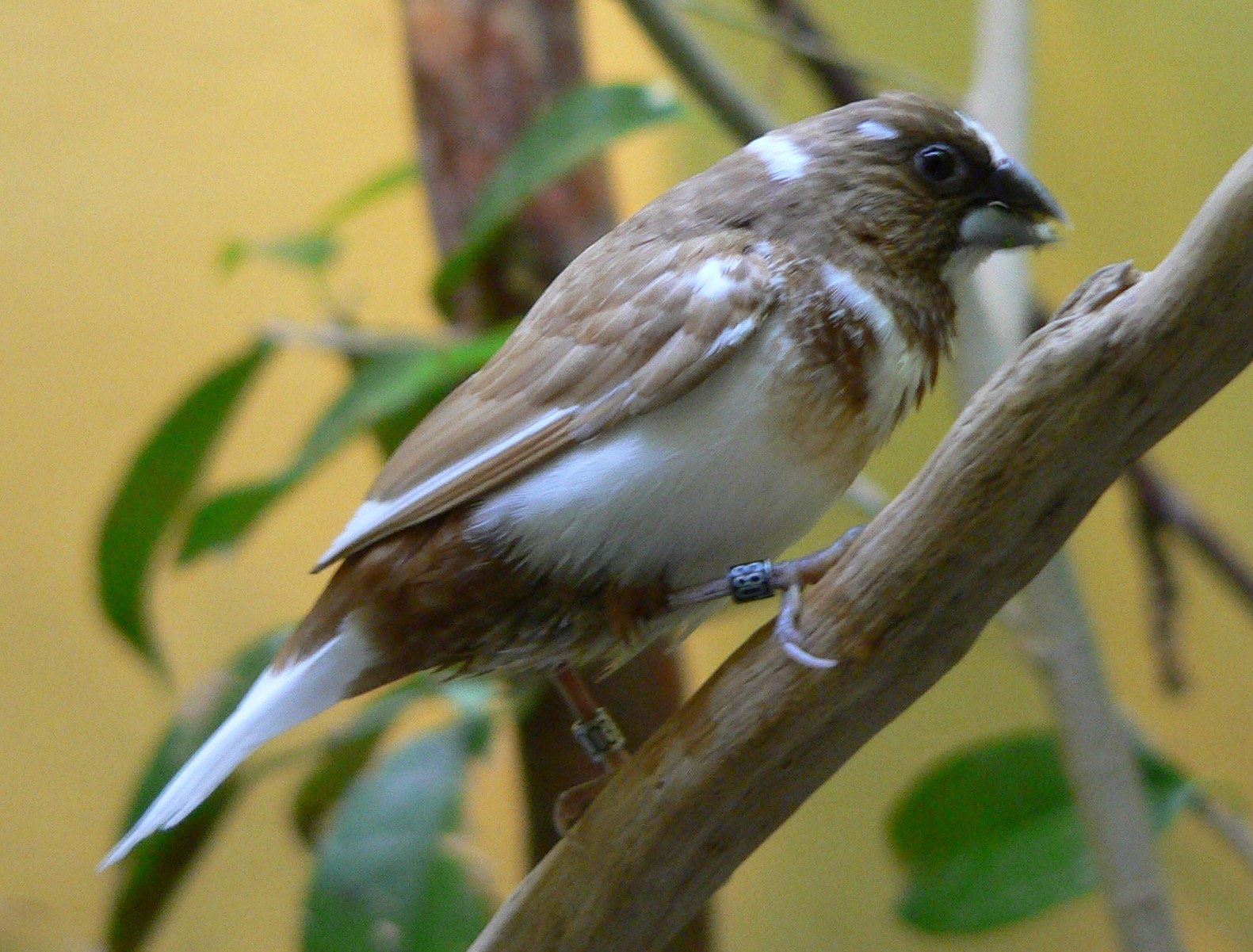
Domestic white, pied and other color forms belong to the same Australian pet population discussed here; they are not separate care categories. Select for sound health and responsible provenance rather than assuming an unusual color means better temperament. Normal feather replacement produces loose feathers and emerging pin feathers, but extensive bare patches, bleeding or impaired flight are not cosmetic variations. Observe feet, posture and feather symmetry while the bird moves naturally instead of repeatedly catching it for close inspection.
Photo credits: Luis Miguel Bugallo Sánchez (Lmbuga) (Creative Commons Attribution-ShareAlike 3.0 Unported (CC BY-SA 3.0)), Lip Kee Yap (Creative Commons Attribution-ShareAlike 2.0 Generic (CC BY-SA 2.0)). Images resized and compressed for web display. Each image retains its linked license.
Plan your home around a compatible pair and a broad flight cage, not a decorative solitary bird in a tall narrow cage. An editorial shopping target for two birds is roughly 100 centimeters long by 50 centimeters deep by 50 centimeters high, with more usable flight length preferred. This is a practical recommendation based on their active flight and veterinary advice to choose generous housing, not a universal legal minimum. Position perches near opposite ends without blocking the central flight lane, and provide separate feeding access so one bird cannot control every resource.
Daily work includes refreshing food and water, checking that seed dishes contain kernels rather than just husks, replacing dirty paper and observing both birds before approaching. Offer suitable finch nutrition without abruptly withdrawing familiar foods during a transition. Clean shallow bathing water supports normal feather care; shampoos, oils and routine wing clipping do not. Keep smoke, scented sprays and cooking fumes out of the birds' air, and give them a predictable period of darkness and quiet each night.
Arrange access to an avian veterinarian before adoption and budget for two patients, a spare cage and holiday care. New arrivals need veterinary guidance and quarantine before introductions. Cats and dogs should not share access to the birds, even through apparently sturdy bars. Children can help record observations under adult supervision, but catching and carrying these fragile birds is not an appropriate bonding activity. Other featured finches and parrots are comparison options, not suggested cage mates for Zebra Finches.
At a Glance
Ownership Guide
Use a long, secure flight cage with an unobstructed route between end perches. About 100 × 50 × 50 cm is an editorial shopping target for a compatible pair, not a legal minimum; larger usable flight space is preferable.
Work toward a balanced finch diet with an avian veterinarian rather than relying on seed alone. Preserve familiar foods during any transition and check actual eating, droppings and weight; seed-hulling finches do not require insoluble grit.
Offer a shallow dish of clean plain water for voluntary bathing and remove it when dirty. Wash food and drinking dishes daily, replace soiled liners and avoid feather oils, shampoos and scented cleaning sprays.
Provide safe opportunities to forage and learn predictable routines without cluttering the flight lane. Reward voluntary approaches or carrier entry; never use food deprivation or repeated capture to force tameness.
Keep compatible Zebra Finch companions and check that each bird can reach food, water and resting places. Introduce newcomers only after veterinary-guided quarantine, and separate persistent aggressors safely rather than waiting for injury.
Arrange an avian veterinary examination and a separate quarantine setup for new birds. Labored breathing, cage-floor sitting, bleeding or straining require urgent professional help, not online medication or home egg removal.
Wellness
A quiet, fluffed finch may be ill rather than simply relaxed, especially when appetite or droppings change. Learn each bird's normal weight with low-stress veterinary guidance and seek advice promptly for a persistent decline.
Open-mouth breathing at rest, pronounced breathing effort or collapse is urgent. Move away from suspected fumes if safe, minimize disturbance and contact an avian emergency service immediately.
Females can lay without a male, and repeated laying may strain their health. Straining, weakness or cage-floor sitting needs urgent assessment; do not massage the abdomen or attempt to remove an egg.
A seed-only routine can leave nutritional gaps even when a bird looks well fed. Improve the diet gradually with professional guidance, never by removing every familiar food to force pellet acceptance.
Persistent chasing, guarded feeders and missing feathers can indicate incompatible housing or another health problem. Provide safe separation when needed and have injuries or unexplained feather loss examined.
Swollen feet, snagging nails, an overgrown bill or difficulty perching are reasons for veterinary assessment. Varied safe perches help normal use, but sandpaper covers and amateur cutting can cause harm.
Clean water, balanced nutrition, compatible company and generous flight space support everyday welfare. Regular observation and individualized veterinary checkups can reveal changes earlier, but no routine guarantees freedom from illness.
Further Reading
Give your Zebra Finches room to fly, compatible company and a steady daily routine. Learn safe housing, feeding, introductions and signs that need a vet.
Read articleBuild a balanced Zebra Finch diet without sudden food swaps. Learn to check seed husks, introduce new foods, monitor intake and avoid unsafe supplements.
Read articleRecognize Zebra Finch illness before subtle changes become a crisis. Learn urgent warning signs, egg-laying concerns, quarantine and useful daily checks.
Read articleUnderstand Zebra Finch calls, pair bonds and disagreements. Build trust with voluntary routines, safer carrier practice and enrichment that leaves room to fly.
Read articleSupport Zebra Finch feather care with safe baths, clean perches and a clear flight lane. Learn normal molt signs and when feathers, feet or nails need a vet.
Read articleFind out how a pair of Zebra Finches fits into home life, from morning calls and seed husks to holiday care, household safety and long-term companionship.
Read articleYou May Also Like