Senegal Parrot Care: A Safe Home for a Long-Term Companion
Build a Senegal Parrot care routine around spacious housing, safe flight, balanced food, voluntary handling, and a realistic plan for decades of companionship.
Read article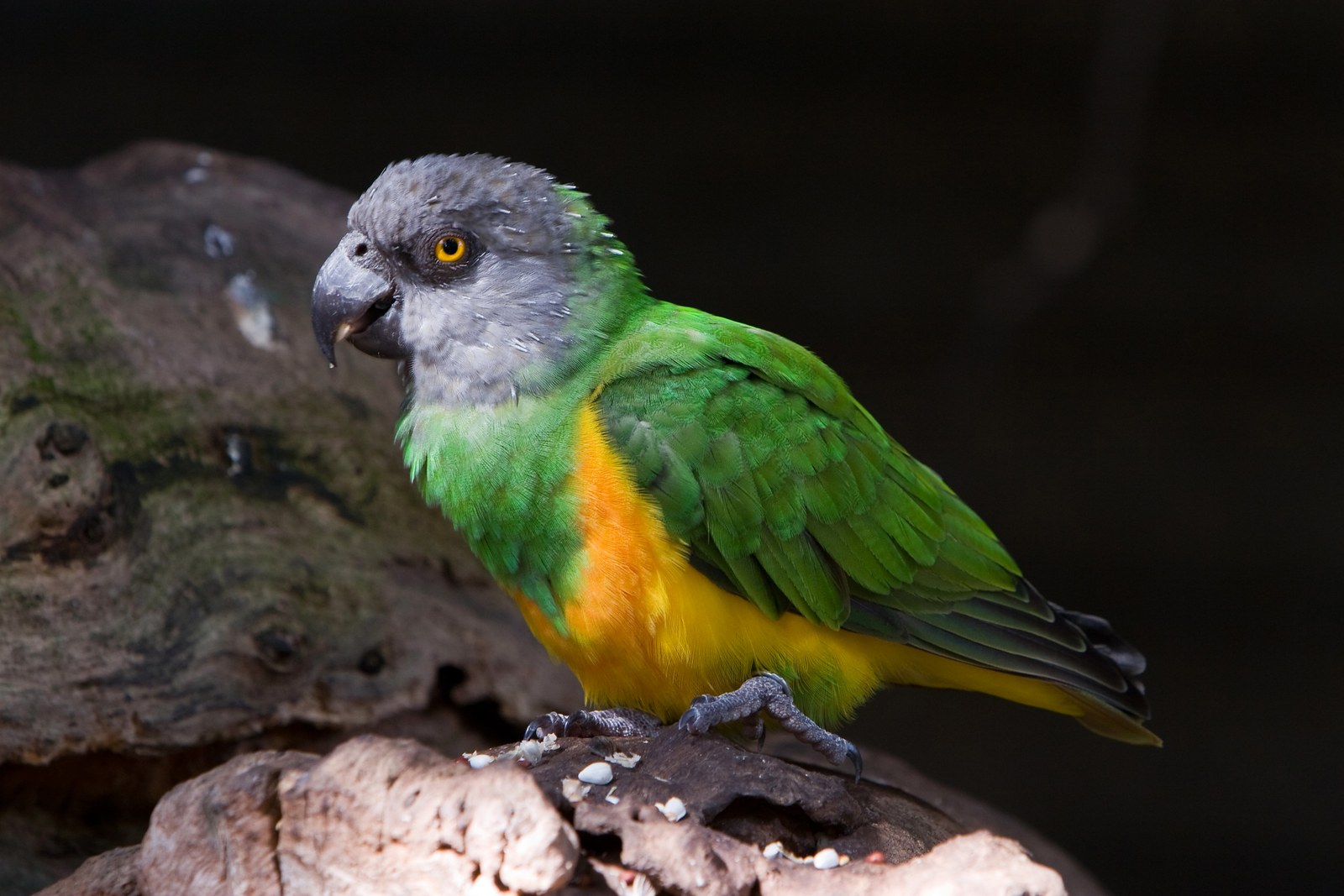
Poicephalus senegalus
A bright West African companion whose trust grows through choice, patient training, and daily discovery.
Deep Dive
The Senegal Parrot, Poicephalus senegalus, comes from West Africa rather than only the modern country of Senegal. Its range includes wooded savannas, farmland with scattered trees, and other woodland habitats across the region. Wild birds eat varied plant foods, including fruits, seeds, buds, and flowers, and may gather with other Senegal parrots at feeding sites. The World Parrot Trust describes birds commonly seen in pairs and sometimes in larger feeding groups. This background helps explain why a companion Senegal needs movement, opportunities to search for food, and meaningful social contact rather than simply a full bowl.
Senegals belong to the African genus Poicephalus and are not the same species as Meyer's parrots. Yellow-bellied Senegal Parrot is an alternative name associated particularly with the nominate form; belly coloration varies across the species. Wild nesting takes place in tree cavities, sometimes holes first made by other birds. A nest box is therefore a reproductive cue, not an essential bedroom for a household companion, and should not be supplied casually.
The history of the species in captivity includes substantial capture for international trade. Choose a reputable rescue or a documented, fully weaned captive-bred bird, and ask for provenance and veterinary records rather than accepting vague claims about origin. Ownership, transfer, and cross-border paperwork depend on local rules. A legal purchase does not replace a welfare assessment: the practical question is whether you can provide suitable care and a succession plan for decades.
A Senegal Parrot may investigate a cardboard package with intense concentration, carry a small object in one foot, or quietly watch a room before approaching. These behaviors can make the species engaging to live with, but they do not establish a universal temperament. Some individuals readily participate in training, while others need considerable distance and predictable routines before they feel secure. A bird's history, health, environment, and current experience matter more than a promise that all hand-reared Senegals will be tame. Speech and mimicry are possible, not guaranteed accomplishments or measures of a good relationship.
Individual bonding deserves particular attention. A Senegal may prefer one person, tolerate another only at a distance, and change its preferences over time. Encourage several trusted adults to offer comfortable, rewarding interactions without demanding equal affection. A voluntary step onto a perch, calm stationing while a bowl is changed, or relaxed play near a less familiar caregiver are valuable social achievements. Never force a frightened bird onto a hand or punish a bite; investigate what happened before the bird felt it needed to defend itself.
Whistles, contact calls, and occasional sharp squawks are part of parrot communication. A Senegal is not a silent apartment pet, even if an individual is less vocal than a neighbor's larger parrot. Provide independent foraging as well as companionship, and let retreat remain possible. The trait scores here are broad care-planning impressions, not measured predictions of your bird's personality or compatibility with children and other animals.
The Senegal Parrot has a compact outline, a relatively short tail, a sturdy curved beak, and predominantly green plumage. Its gray head contrasts with a yellow to orange lower breast and belly, while green feathers form a distinctive chest area above the brighter abdomen. The World Parrot Trust lists a length of about 23 centimeters, or 9 inches, and a representative weight of approximately 155 grams. These figures describe the species rather than an ideal weight for every pet. Your avian veterinarian should interpret your bird's own weight trend alongside muscle, fat, and overall body condition.
Adult eyes are generally yellow, whereas juveniles have darker eyes and duller coloration. Color alone cannot reliably establish a bird's exact age, sex, health, or provenance. The intensity and distribution of yellow and orange can vary, including differences associated with geographic forms. Avoid choosing a companion on a seller's visual sex prediction if that information matters for medical records; a veterinarian can discuss appropriate testing. Senegal parrots should also not be identified as Meyer's parrots simply because both are small African Poicephalus species.
Two toes point forward and two backward, helping the bird grip perches and manipulate food. A powerful beak makes chewing a normal need, not a cosmetic flaw to remove through routine trimming. Healthy feather care consists mainly of self-preening, appropriate bathing opportunities, suitable nutrition, and a safe environment. Patchy feather loss, damaged skin, new asymmetry, or a sudden change in appearance deserves veterinary attention rather than an assumption that the bird is merely molting.
Photo credits: Arjan Haverkamp (CC BY 2.0 Generic). Images resized and compressed for web display. Each image retains its linked license.
Living with a Senegal Parrot means organizing a household around an active flying animal that may need approximately twenty to twenty-five years of care, with individual longevity varying. Think beyond the first cage purchase: veterinary access, daily cleaning, safe exercise space, holiday care, and future housing all belong in the decision. A fully weaned rescue adult can offer useful information about established preferences, although behavior may change after a move. An unweaned bird is not a beginner project, and hand-feeding should never be marketed as a shortcut to a stronger bond.
Provide a spacious enclosure, several safe perch textures, destructible enrichment, and supervised exercise in a secured room. The World Parrot Trust recommends an indoor enclosure at least 1.8 meters long, or a walk-in aviary at least 2.1 meters long; treat these as sourced planning targets, not universal legal minima or a substitute for usable space. Keep the enclosure away from cooking fumes, smoke, sprays, and persistent disturbance. Protect opportunities for quiet overnight rest, and introduce new furnishings gradually rather than repeatedly overturning a cautious bird's familiar surroundings.
Dogs, cats, and other birds require physical separation, not hopeful introductions. A Senegal's beak can seriously injure a smaller bird, and being social does not make mixed-species housing appropriate. The four related species on this page are comparison links only, never suggestions for cage companions. Multiple caregivers should learn voluntary handling and secure-door routines. A written backup plan makes the relationship more resilient when the favorite person is ill, traveling, or no longer able to provide daily care.
At a Glance
Ownership Guide
Use a spacious, secure enclosure with room for unobstructed movement; World Parrot Trust's indoor length recommendation is 1.8 m, a planning target rather than a universal legal minimum. Provide supervised flight in a secured room with fans off, windows protected, and other pets excluded.
Build a veterinarian-guided diet around an appropriate formulated parrot food, vegetables, and smaller additions of fruit and training treats. Never withdraw familiar food to force a conversion; monitor actual intake and weight, and do not provide grit as a requirement.
Offer plain water in a stable shallow bathing dish or a gentle mist if the bird chooses it. Wash bowls and remove spoiled food daily, and avoid oils, shampoos, fragrances, and abrasive perch covers.
Provide safe chewing and easy food-finding tasks, then increase difficulty only when the bird succeeds comfortably. Reward voluntary target touches, stationing, and carrier entry without chasing, food deprivation, or forced handling.
Schedule attentive interaction while also teaching comfortable independent activity. Respect preferred people and personal boundaries, and use separate enclosures for other birds rather than assuming friendship or safe co-housing.
Arrange an avian veterinary examination, keep a weight and behavior baseline, and agree on a quarantine and testing plan before introducing a new bird. Labored breathing, cage-floor sitting, straining, or bleeding requires urgent veterinary attention, not home treatment.
Wellness
Reduced appetite, unusual sleepiness, altered droppings, or a changed voice can precede obvious illness. Record your Senegal's normal weight and behavior, and contact an avian veterinarian promptly when they change.
A diet dominated by favored seeds can supply excess energy while leaving important nutrients unbalanced. Ask your veterinarian to assess body condition and plan a gradual, monitored transition rather than imposing a crash diet.
Keep the bird away from smoke, aerosols, and fumes from overheated nonstick materials. Open-mouth or labored breathing at rest, collapse, or suspected fume exposure warrants immediate veterinary contact and safe removal from the exposure.
Bare patches, broken feathers, or repeated skin chewing can involve medical, behavioral, and environmental factors. Have the bird examined before labeling the problem boredom, and do not apply oils or over-the-counter feather treatments.
A female can lay without a male, and repeated laying or reproductive illness needs veterinary guidance. Straining, sitting on the cage floor, weakness, or breathing difficulty is urgent; never massage the abdomen or try to extract an egg.
Inspect toys and fittings for exposed metal, sharp edges, loose fibers, and reachable electrical cords. Bleeding, suspected ingestion, predator contact, or injury after a collision needs prompt veterinary advice, even when the bird initially looks alert.
A familiar avian clinic, voluntary scale training, clean housing, and written health records make changes easier to recognize. These habits support welfare but cannot guarantee that illness will never occur.
Further Reading
Build a Senegal Parrot care routine around spacious housing, safe flight, balanced food, voluntary handling, and a realistic plan for decades of companionship.
Read articleFeed your Senegal Parrot with a balanced plan for formulated food, vegetables, training treats, safe diet changes, and useful checks on appetite and weight.
Read articleRecognize Senegal Parrot health changes, plan preventive veterinary care, and learn which breathing, bleeding, appetite, or laying signs need urgent attention.
Read articleTrain your Senegal Parrot through voluntary choices, small rewards, and clear signals while respecting individual bonds, body language, and safe flight needs.
Read articleSupport Senegal Parrot feather care with optional plain-water baths, clean perches, careful molt observation, and veterinary help for nail or beak concerns.
Read articleExplore life with a Senegal Parrot, including individual bonds, household noise, safe shared spaces, backup caregivers, and planning beyond the first year.
Read articleYou May Also Like