Society Finch Care: A Comfortable Home for a Social Flock
Give Society Finches room to fly, compatible company and a reliable daily routine, with practical advice on housing, safe feeding and reproductive welfare.
Read article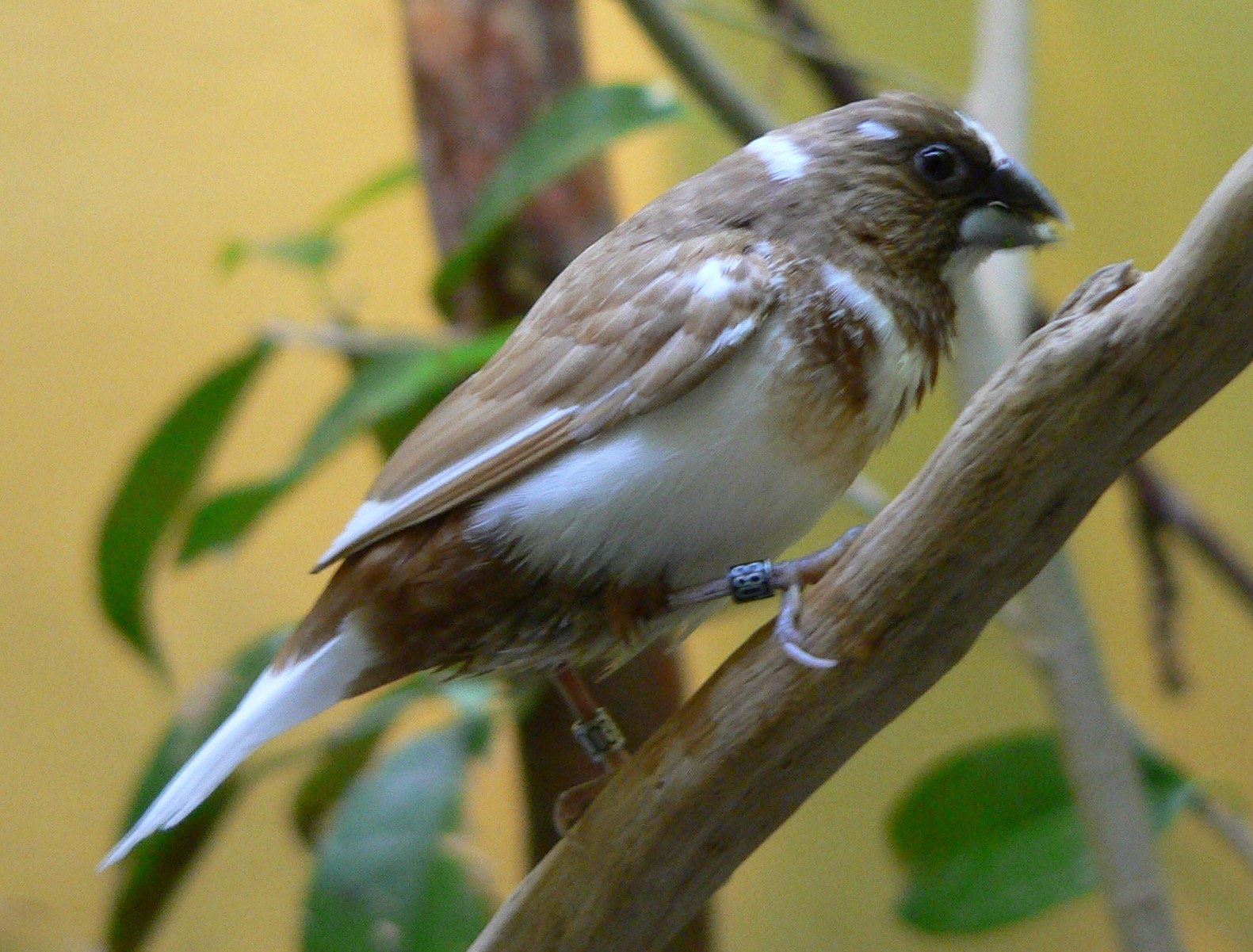
Lonchura striata domestica
A domestic flock companion with soft chatter and a busy social life
Deep Dive
The Society Finch is a domestic bird rather than a wild species waiting to be found in a particular forest. Its scientific name, Lonchura striata domestica, identifies its relationship to the white-rumped munia, Lonchura striata. The alternative name Bengalese Finch does not establish an origin in Bengal. Research describes ancestral munias being brought to Japan and the domestic lineage developing under human selection. Historical aviculture accounts differ in some details, so a precise founding date or a simple story involving several wild species should not be presented as settled fact.
Domestication changed more than appearance. Society Finches occur in patchy brown, cream and white combinations, and research has compared their behavior and vocal learning with those of wild munias. Domestic birds show population-level differences in responses to novelty and aggression, while male song can have more variable sequences. These findings explain why the Bengalese Finch has become useful in studies of learning and domestication; they do not mean every pet is tame, fearless or comfortable in a person's hand.
Aviculturists have also used Society Finches to rear other finches' chicks. That history deserves a welfare qualification: fostering can expose birds to pathogens, impose reproductive demands and affect chicks' social learning. It is a specialized husbandry decision, not an activity required for a happy pet. For a household flock, the better starting point is healthy, fully weaned captive-bred or rescue birds, documented provenance and a plan for companionship without unwanted reproduction.
A settled Society Finch spends much of the day moving between perches, investigating food and staying in contact with companions. Soft calls help maintain that social connection; males normally add a more elaborate song. The appeal is watching relationships develop rather than expecting parrot-like conversation or cuddling. An individual may learn to approach a familiar caretaker, but a bird that prefers a little distance is not failing to bond. Calm, predictable care lets these small prey animals decide how close they feel safe coming.
Their social reputation is deserved, but compatible company matters more than simply increasing bird numbers. Two birds resting together may still compete over one favored feeding station. Watch whether every flock member can eat, drink, bathe and settle without being displaced. A compatible same-sex pair can avoid fertile clutches, although females may still lay eggs without males. Appearance alone does not reliably identify sex, and silence is not proof that a bird is female. Seek knowledgeable help when sex affects your housing plan.
Society Finches are not universal aviary companions. A pushy finch can intimidate them, while a parrot's beak can cause devastating injury. Start with same-species companionship, quarantine newcomers and introduce them gradually under supervision. Separate housing may be necessary if persistent chasing or resource guarding develops. Human attention, a mirror or a recording cannot replace a real compatible companion, and keeping a bird alone to make it easier to handle puts the wrong goal ahead of its social needs.
Society Finches are small, compact birds, commonly described as about 11-12 cm from beak to tail, with an approximate adult weight around 15 g. These figures are useful for appreciating their scale, not for diagnosing body condition. Individuals and breeding lines differ, and an avian veterinarian should interpret weight alongside the bird's history and physical examination. A consistently recorded personal baseline is more informative than trying to make every finch match an internet average.
Domestic selection has produced many combinations of chocolate brown, fawn, cream and white. Pied birds have irregular light patches, so two flockmates can often be recognized by their head, wing or chest markings. Some lines have a crest, but there is no single obligatory pattern that defines every Society Finch. Their compact seed-hulling beak and small perching feet suit a life of picking up tiny foods and making repeated short flights. A white patch does not make one a different wild munia species.
Males and females usually look alike, which makes confident visual sexing unreliable. Male song is a useful clue, but a quiet new bird may simply be unsettled; confirmation may require professional advice. Healthy-looking plumage should be assessed in context: feathers can become temporarily untidy during a molt, but exposed skin, damaged feathers or persistent picking need investigation. Likewise, fluffy feathers during a brief rest can be normal, whereas prolonged fluffing with reduced activity, poor appetite or unusual breathing is a health concern, not a color or personality trait.
Photo credits: BS Thurner Hof (Creative Commons Attribution-ShareAlike 3.0 Unported (CC BY-SA 3.0)). Images resized and compressed for web display. Each image retains its linked license.
Living with Society Finches suits someone who enjoys attentive observation and can provide daily care for a small social flock. Their voices are relatively soft, but there will still be morning activity, scattered seed hulls, bath splashes and feathers. A roomy rectangular flight cage belongs in a settled household area, away from cooking fumes, smoke, sprays, drafts and direct overheating sun. Horizontal flying room is more useful than a tall decorative cage crowded with accessories.
Provide a compatible companion, multiple accessible feeding points, clean drinking water and varied secure perches. A shallow plain-water bath gives the birds a choice about washing; it does not call for shampoo, oils or forced spraying. Nutrition should address the limitations of an all-seed diet without making a sudden, dangerous change. Keep familiar food available while a species-experienced veterinarian helps you introduce suitable alternatives and verify actual intake. Regular observation of droppings and individual weight trends makes changes easier to notice.
Plan for reproductive welfare even if you do not intend to breed. Nests and long light-filled evenings can encourage laying, while females can produce infertile eggs without a male. An active laying problem needs individualized veterinary advice rather than repeated egg removal or improvised supplements. Children can help observe and prepare supplies with adult supervision, but finches are fragile and should not be caught for play. Cats and dogs require secure separation. Budget for avian veterinary care, holiday cover and a backup cage before bringing birds home.
At a Glance
Ownership Guide
Choose a wide rectangular enclosure with a clear flight path and secure finch-safe bar spacing around 1 cm or less. A pair-planning target of 90 cm long by 45 cm deep by 45 cm high uses the upper end of Royal Veterinary Center's 60-90 cm length guidance; depth and height are practical planning recommendations, not legal minima, and more usable flight space is better.
Avoid relying on seed alone, but keep familiar food available while introducing suitable finch-formulated food and small portions of washed vegetables. Confirm that each bird eats the new food, monitor weight and droppings, and involve an avian veterinarian rather than forcing a pellet conversion.
Offer a stable shallow bath of plain water and remove it when soiled or after bathing. Wash dishes, replace dirty liners and let cleaned equipment dry fully; finches do not need shampoo, feather oils or routine cosmetic trimming.
Use accessible foraging trays, changes in safe perch texture and short voluntary approach exercises. Reward relaxed participation without food deprivation, chasing or taking away a companion to encourage dependence.
Keep Society Finches with compatible companions and provide more than one feeding position so quieter birds are not excluded. Quarantine newcomers, introduce gradually and keep a spare cage ready; small size or a gentle reputation does not make mixed-species housing safe.
Arrange an avian veterinary examination and an individualized quarantine and testing plan for new arrivals. Labored breathing, cage-floor sitting, straining, bleeding or sudden weakness need urgent veterinary attention, not an internet treatment trial.
Wellness
Open-mouth breathing, marked tail bobbing at rest or persistent unusual respiratory sounds can signal serious disease or inhaled toxins. Seek urgent avian veterinary care and avoid stressful capture attempts or aerosol remedies.
Females may lay without a male, and repeated clutches can deplete reserves. Straining, weakness, floor sitting or breathing difficulty are emergencies; never massage the abdomen or attempt to extract an egg.
A seed bowl that looks full may contain mostly husks, while an all-seed ration can miss important nutrients. Improve diet gradually with veterinary guidance and track real intake rather than assuming a newly offered food is being eaten.
A falling individual weight trend, fewer droppings, a soiled vent or reduced activity warrants prompt advice. Birds can hide illness, so do not wait for dramatic weight loss or several flockmates to become unwell.
New birds and shared equipment can introduce disease even when an arrival appears well. Testing should guide treatment; do not routinely medicate the flock or presume every click or itch is caused by mites.
Poor perch surfaces, entangling fibers and panic flights can injure tiny feet or damage feathers. Limping, swelling, nail overgrowth or bleeding calls for professional assessment rather than amateur clipping or home splinting.
Familiar routines make it easier to recognize each bird's normal appetite, social behavior and activity. Clean housing, compatible company and preventive veterinary care support wellbeing without guaranteeing that illness cannot occur.
Further Reading
Give Society Finches room to fly, compatible company and a reliable daily routine, with practical advice on housing, safe feeding and reproductive welfare.
Read articleLearn how to feed Society Finches beyond seed alone, check what each bird actually eats and introduce unfamiliar foods without risking a dangerous food fast.
Read articleRecognize Society Finch illness early, from subtle appetite changes to urgent breathing trouble, and learn why egg laying needs careful veterinary support.
Read articleUnderstand Society Finch calls, flock relationships and fear signals, then build useful routines through patient observation and voluntary, low-stress training.
Read articleSupport Society Finch feather care with optional water baths, clean perches and molt monitoring, while leaving nail and beak procedures to professionals.
Read articleFind out what living with Society Finches involves, from household routines and compatible company to responsible choices about breeding and fostering.
Read articleYou May Also Like