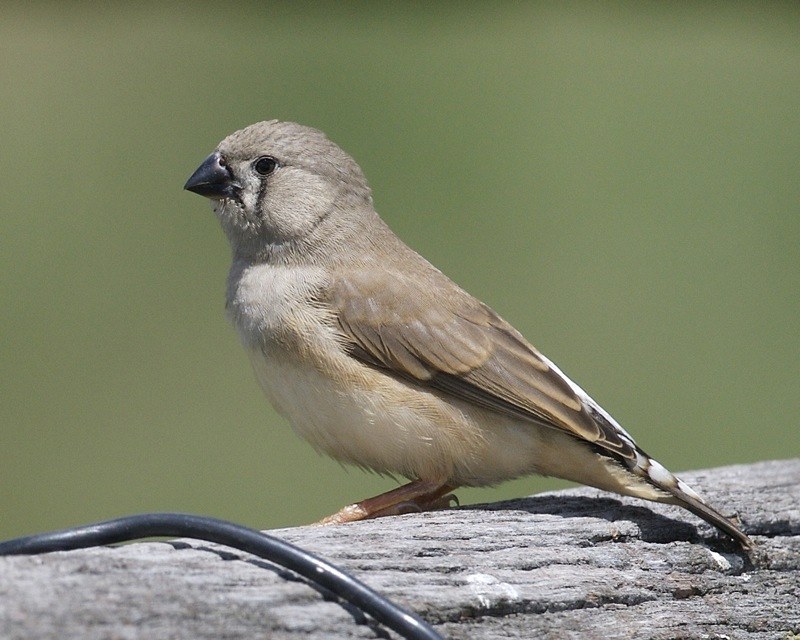
Zebra Finch training works best when it helps a bird feel safe rather than proving that you can touch it. These social Australian finches are often happiest interacting with each other while you become a predictable part of the background. Learning their calls, movement and resource-sharing habits gives you more useful information than measuring success by whether they sit on a finger.
Read the flock before choosing a training goal
Start with quiet observation from a comfortable distance. A settled pair may feed separately, exchange calls, groom their own feathers and rest near each other. They do not have to remain side by side constantly to be compatible. What matters is that each bird can move, eat and rest freely without being persistently displaced.
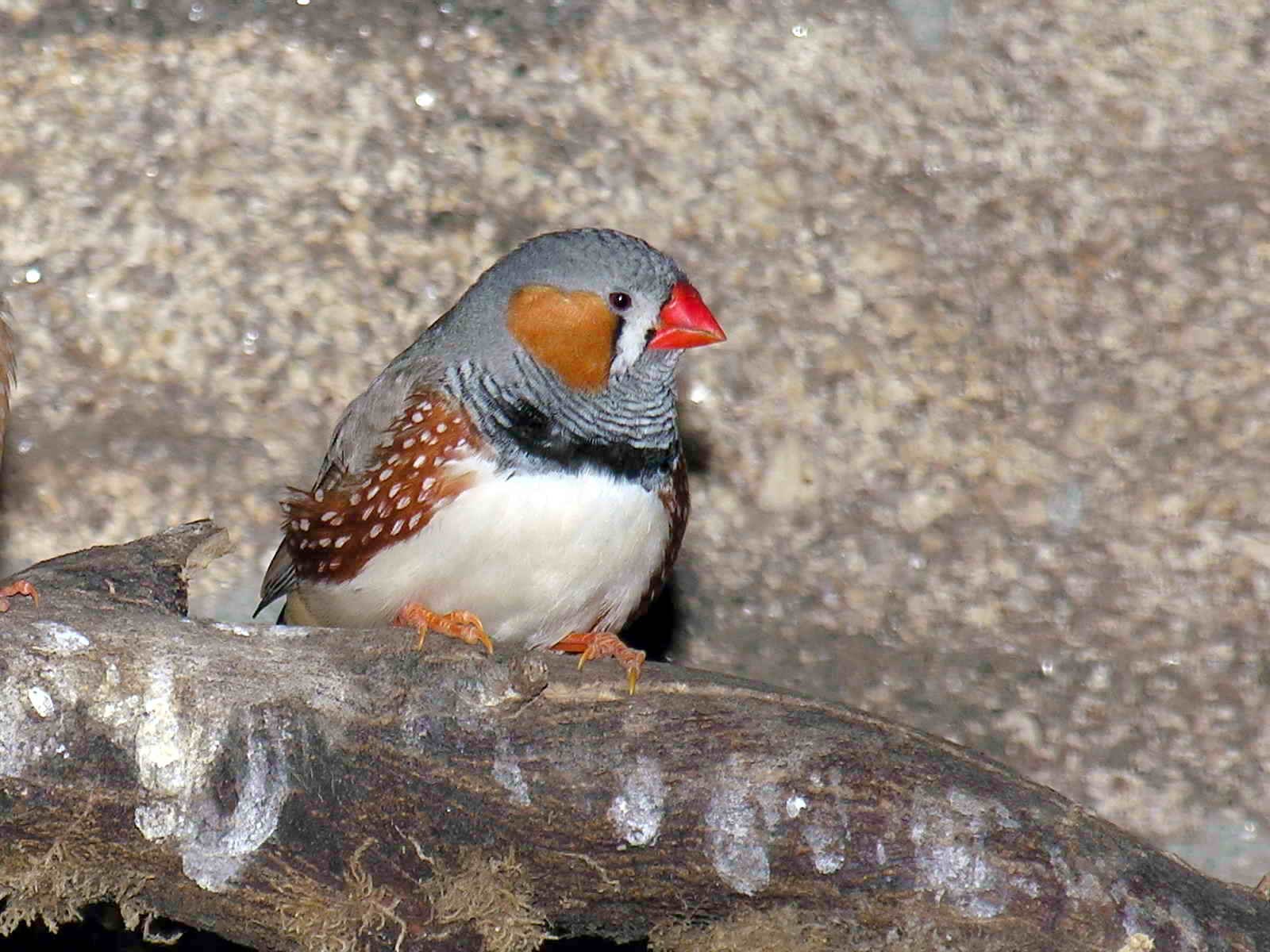
Both sexes use contact calls, while males produce the characteristic learned song. Singing can be part of courtship and other social contexts, not a request for human entertainment. A male singing near another bird does not by itself establish the companion's sex or prove they should breed. Domestic color mutations can obscure familiar sex differences, so seek experienced help when identification matters.
Notice the effect of your own actions. If both birds stop feeding whenever you stand beside the cage, begin farther away. If they resume normal behavior while you sit quietly, that is useful evidence of growing comfort. Stillness caused by fear should not be confused with a bird calmly choosing to remain near you.
Build trust through predictable, small steps
Use the same gentle approach and a short spoken cue before changing dishes. Move steadily rather than reaching suddenly from above, and keep unnecessary hands out of the enclosure. Let the birds observe routine care without cornering them. Your first goal may simply be that they continue eating while you are nearby.
Positive reinforcement means a voluntary action leads to something the bird values. For a Zebra Finch, that might be a tiny familiar food reward placed in a dish after it approaches a designated perch. Use part of the normal food allowance, keep dependable food available, and stop before the birds become anxious. Hunger should never be the tool that makes a finch cooperate.
A practical progression might be:
- Sit at a distance where ordinary feeding continues.
- Pair a quiet cue with placing a familiar reward in a dish.
- Wait for a voluntary approach, without following the bird.
- Repeat at the same comfortable distance on another occasion.
- Move slightly closer only if both birds remain relaxed.
Make carrier practice a useful life skill
A secure transport carrier is more valuable than a collection of tricks. Begin by allowing the birds to see it without having to enter. If using a small cage or carrier inside a larger safe space, check that its doors, mesh and handles cannot trap feet or create an escape route. Never improvise an unsecured opening between two cages.
Place a familiar perch or dish where the bird can investigate voluntarily, and reward small steps such as approaching the entrance. Initial practice should not involve shutting a frightened bird inside. Once entry is comfortable, very brief closure can be introduced gradually, followed by reopening before distress builds. Keep the companion's welfare in mind rather than isolating one bird for extended training.
Training cannot replace necessary medical handling, and an injured bird may need prompt transport before voluntary entry is possible. Ask your veterinarian to demonstrate a safe capture plan in advance. Repeated pursuit around the cage can cause exhaustion or collisions, so avoid turning every routine interaction into a catching exercise.
Distinguish social disagreement from bullying
Zebra Finches are social, not universally peaceful. Nest sites, food stations and limited resting places can become contested resources. A brief chase followed by normal feeding differs from a bird repeatedly driving its companion across the enclosure. Watch the outcome: does the pursued bird get to rest and eat, or does avoidance dominate its day?
Increase practical access to resources and remove unnecessary nest-like items when breeding is not intended. Position feeding stations so one bird cannot stand between both. Ensure perches offer choices rather than one desirable high location. Avoid crowding the cage with toys that remove escape routes or shorten the flight lane.
Do not add another bird as a quick distraction. New arrivals need quarantine and managed introductions, and an established pair may reject an intruder. Likewise, a society finch or small parrot is not automatically a suitable companion. Species comparisons are not permission to share housing.
Offer enrichment that matches a small seed forager
Foraging enrichment can be simple: a small portion of familiar food in an additional clean dish, or a securely attached safe seed spray positioned away from the main flight path. The point is to create choices and movement, not to make all food difficult to obtain. Confirm that a timid bird is not excluded from the new opportunity.
Introduce one object at a time and observe the response. A nervous pair may need to see a new item outside the cage first. Choose bird-safe materials without loops, long fibers, adhesive surfaces or small parts that can trap a finch. Rotate only items the birds can investigate safely, leaving favorite stable perches available.
Avoid stuffing the enclosure with parrot-style climbing equipment. Zebra Finches benefit strongly from clear horizontal flight, and a visually busy cage can offer less usable habitat than a simpler one. Safe bathing opportunities and varied feeding locations may provide more appropriate engagement than a large unfamiliar toy.
Respect the boundary between behavior and illness
A sudden change in song, movement or sociability is not always boredom. A bird that becomes quiet, fluffed, reluctant to fly or unusually irritable may be unwell. Check food access and environmental changes, but seek prompt veterinary advice when the change persists or other signs appear. Labored breathing, bleeding, straining or cage-floor sitting is urgent.
Keep a brief behavior diary if a pattern is unclear. Note the time, the birds involved, what happened immediately beforehand and whether both later ate normally. This helps distinguish a predictable resource conflict from an unexplained decline and gives your veterinarian concrete observations instead of a label such as jealous.
A good human-finch relationship leaves the birds with choices. They can notice you, anticipate a useful routine and remain confident enough to carry on being finches. That is meaningful trust, even when neither bird ever wants to be held.
Continue reading: Zebra Finch Feather Care: Bathing, Molt and Clean Housing.
Sources and further reading:
- Zebra Finch — The Australian Museum
- Australian Zebra Finch Taeniopygia castanotis — BirdLife International
- Proper Care, Husbandry, and Breeding Guidelines for the Zebra Finch, Taeniopygia guttata
- Overview of Pet Birds — MSD Veterinary Manual
- Management of Pet Birds — MSD Veterinary Manual
Photo credits: Lip Kee Yap (Creative Commons Attribution-ShareAlike 2.0 Generic (CC BY-SA 2.0)), Luis Miguel Bugallo Sánchez (Lmbuga) (Creative Commons Attribution-ShareAlike 3.0 Unported (CC BY-SA 3.0)). Images resized and compressed for web display. Each image retains its linked license.

