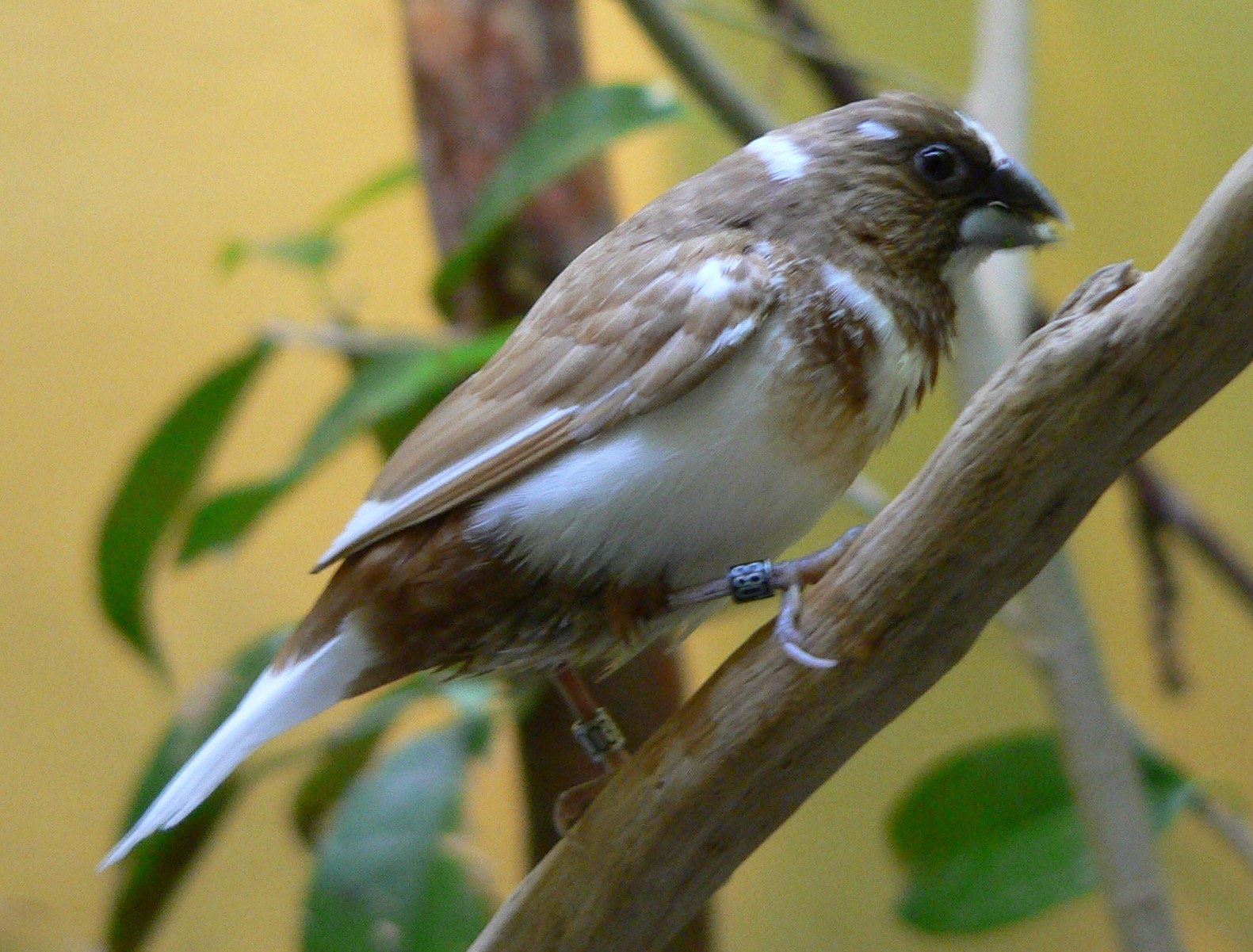
Society Finch grooming is mostly about supporting the work the bird already does. A healthy finch preens, bathes when it chooses and maintains its feathers through normal activity. Your role is to provide clean water, safe perches and a hygienic environment, then recognize when a change is more than ordinary molt. Shampoo, feather oils, cosmetic clipping and frequent catching are not shortcuts to good feather condition.
Let the finch manage its own feathers
Preening aligns feathers and helps maintain their condition. Society Finches may spend quiet periods working through the plumage, and compatible companions can preen one another. Observe whether both birds remain comfortable: gentle contact is different from repeated pulling that leaves one bird trying to escape. Domestic pied markings also vary, so learn each individual's normal pattern rather than comparing every white area with a photograph online.
A bird fluffing briefly after a bath or before resting is not necessarily unwell. Persistent fluffing with reduced activity, a poor appetite or breathing changes is different and deserves veterinary attention. Feather appearance should always be read alongside behavior. A smooth-looking bird may still be sick, while a molting bird can look temporarily untidy without needing any cosmetic intervention.
Do not brush a finch, pull loose-looking feathers or rub products into the plumage. Developing feathers can be sensitive, and unnecessary restraint adds stress. If something appears stuck to feathers, first identify whether it is a harmless speck or potentially hazardous contamination; unknown substances call for professional advice.
Offer a bath without forcing participation
Use a stable, shallow container of clean plain water that the birds can enter and leave easily. Position it away from electrical items, food that could become wet and perches that drop waste into it. Keep a separate source of drinking water available. A finch may inspect the bath several times before using it, or decline altogether on a particular day. That choice is acceptable.
Offer bathing while the room is comfortable and there is time for the birds to dry before their nighttime rest. Remove the bath when soiled or after the bathing opportunity rather than letting it become a second dirty drinking dish. Wash and rinse it before reuse. You do not need to enforce an exact bathing schedule if the environment and individual preferences vary.
Never dunk a bird, spray directly into its face or use soap, scented mist or feather conditioner. Avoid hair dryers and direct heaters. Following a bath, normal preening and drying in a comfortable draft-free area should be enough for a healthy bird.
Distinguish a molt from damage or disease
Molt is the replacement of feathers, not a need for a haircut. You may find more shed feathers and notice emerging pin-like feather shafts. Timing and intensity can vary with the individual and its environment, so a rigid calendar is less useful than comparing the current change with the bird's appetite, activity and previous pattern. Maintain a balanced diet and a stable rest routine rather than adding several unplanned supplements.
Look for the pattern of feather change. Broad bare patches, repeatedly broken feathers, irritated skin or a companion targeting the same area need investigation. Rubbing against cage walls can damage tails, while crowding or reproductive conflict may contribute to feather pulling. A bird persistently scratching or picking should not automatically be treated for mites: irritation, infection and other problems can resemble one another.
Take clear photographs if you can do so without handling and note when the change began. Record any new food, cage accessory, companion or cleaning product introduced around that time. These details can help an avian veterinarian decide what examination or testing is appropriate. Do not assume severe lethargy is simply the effort of growing feathers.
Use perches to support feet, not sand them
Provide secure perches with varied appropriate diameters and safe textures so the feet are not held in one identical position all day. Arrange them to allow flight and comfortable landing without constant tail contact against bars. Inspect natural branches for suitability, contamination and sharp areas before use; an unidentified or pesticide-exposed branch is not automatically safe because it came from outdoors.
Avoid sandpaper sleeves and continuously abrasive standing surfaces. They can irritate the feet and do not replace assessment of abnormal nail growth. Remove frayed ropes, loose threads and damaged fittings that could catch toes. A healthy-looking perch can also become slippery or dirty beneath a favorite resting position, so examine the underside and attachment points during cleaning.
Watch for limping, reluctance to grip, swelling or a bird holding a foot differently from usual. Nails that snag and beaks that appear overgrown should be examined by an avian professional. Trimming without understanding the cause can miss nutritional, structural or medical problems, and these tiny birds leave little room for mistakes.
Build a cleaning routine that protects clean air
Feather care depends on the surrounding environment. Seed hulls, feathers and dried droppings accumulate quickly, while bath splashes can leave hidden damp patches. Plain paper liners make daily waste easier to inspect. Replace soiled material and clean dishes before adding fresh food or water; repeatedly topping up a dirty container preserves the contamination underneath.
- Remove wet leftovers and dirty bath water promptly.
- Wash food and drinking dishes and rinse away cleaning residue.
- Wipe soiled cage areas without spraying toward birds.
- Inspect perches and toys for waste, splinters and loose fibers.
- During deeper cleaning, use safe temporary housing and let equipment dry fully.
Choose cleaning products suitable for the setting, follow their instructions and ventilate without chilling the birds. Strong fragrance is not proof of cleanliness. Keep aerosols, smoke, vaping and cooking fumes away from the enclosure, and never use an occupied cage as the place to test a new disinfectant.
Know when feather care becomes a medical problem
Bleeding, a damaged growing feather, an injured toe or sudden difficulty perching needs prompt professional guidance. If the bird is weak, sits on the cage floor or has labored breathing, seek emergency care. Keep it quiet for transport and avoid repeated inspection that requires capture. Do not pull a damaged feather, apply household powders or improvise a splint.
A nest is not a feather-care accessory, and soft fibers offered as bedding can create entanglement or encourage unwanted reproductive activity. Nonbreeding Society Finches can rest on suitable perches. If a hen is already laying, manage changes with veterinary advice rather than treating cage redesign as a grooming project.
The best feather-care routine is deliberately modest: provide choices, clean surfaces and comfortable conditions, then leave normal preening to the birds. Professional assessment belongs where ordinary maintenance ends.
Continue reading: Living With Society Finches: Companions, Household Routines and Welfare.
Sources and further reading:
- Society Finch (Bengalese Finch) Care Sheet — Royal Veterinary Center
- Bengalese Finch (Society Finch) — Christchurch Bird Club
- The genomics of the domestication syndrome in a songbird model species — 2025
- Management of Pet Birds — MSD Veterinary Manual
- Reproductive Diseases of Pet Birds — MSD Veterinary Manual
Photo credits: BS Thurner Hof (Creative Commons Attribution-ShareAlike 3.0 Unported (CC BY-SA 3.0)). Images resized and compressed for web display. Each image retains its linked license.
