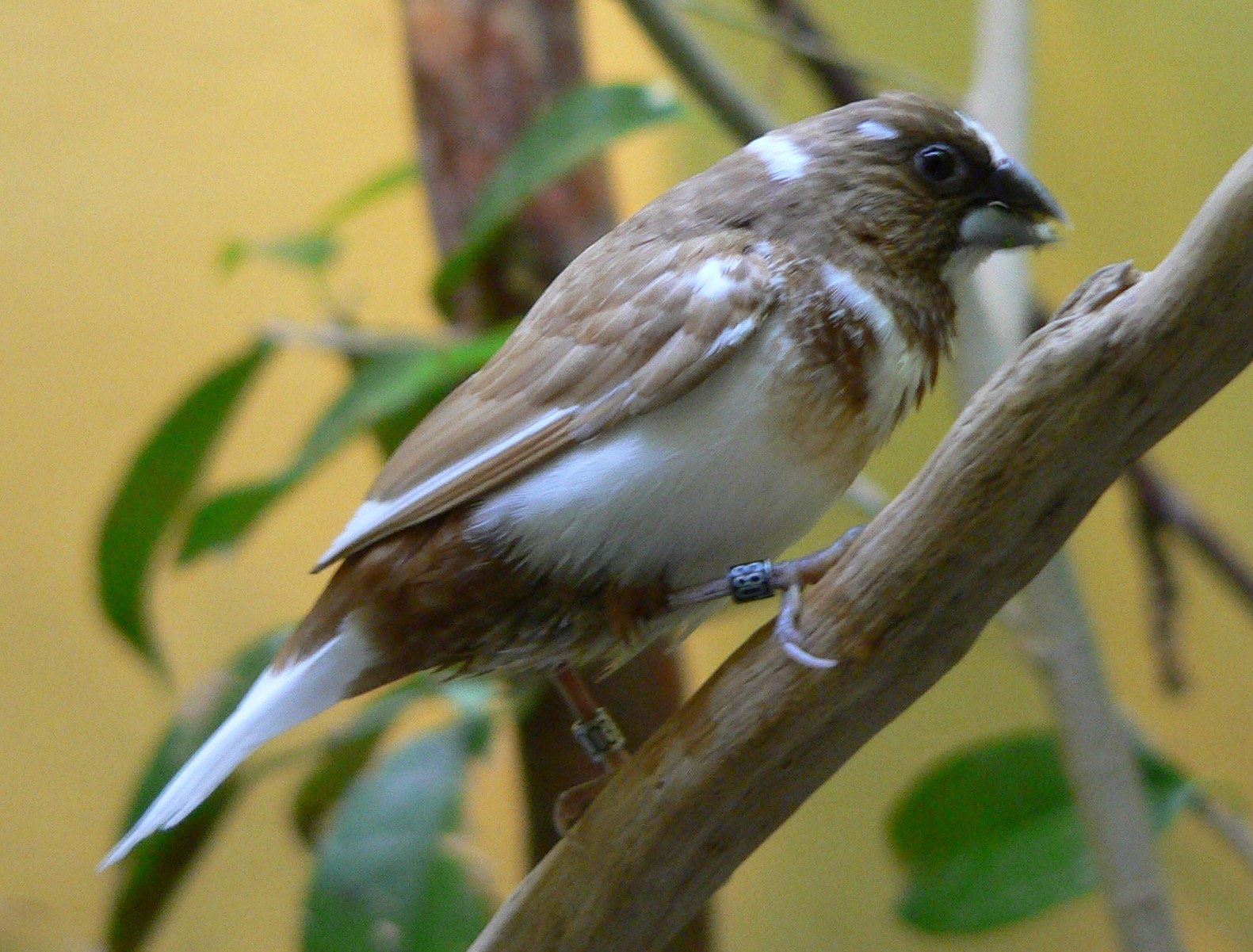
Living with Society Finches means sharing your home with a small social community, not acquiring a low-maintenance decoration. Their soft chatter and domestic pied plumage can suit someone who enjoys watching animals make choices and interact. They are usually less interested in handling than parrots, but that does not mean they need less thoughtful care. Consider the household, companionship plan and long-term responsibilities before deciding that a pair is right for you.
Decide whether observation is the companionship you want
A settled Society Finch may recognize routines, approach when food arrives and carry on its social life while you sit nearby. The reward is often a front-row view of feeding, bathing, male song and relationships between birds. If your main goal is a pet that cuddles or reliably perches on every visitor's hand, these finches are unlikely to meet that expectation. Choosing them for what they naturally offer is fairer to everyone.
They are relatively soft-voiced, not silent. Expect morning activity, contact calls, male song and the sound of movement between perches. Seed hulls can travel beyond the cage, baths can splash and feathers appear during molt. Plan a cleaning area that does not trap debris around electronics or upholstery. A cover cannot turn daytime birds into an invisible, quiet furnishing whenever the household wants silence.
Plan for years rather than a short trial. A commonly quoted captive range is around five to nine years, with substantial individual variation. Veterinary expenses, replacement equipment and a compatible companion remain responsibilities even if a bird lives longer than expected.
Make the room safe for a tiny flying animal
Place the enclosure where the birds can observe ordinary life without being constantly approached from every side. Keep it away from cooking, smoke, scented sprays, vaping and overheating nonstick equipment. Avoid direct hot sun, unstable temperature spots and a cage positioned at a busy doorway where sudden arrivals trigger panic. A predictable room is usually more valuable than a dramatic view with no shaded retreat.
Children can help prepare vegetables, replace supplies and record observations under adult supervision. They should not catch a finch for play or tap the bars to make it move. Cats and dogs require secure physical separation; quiet interest can become a pounce, and contact through cage bars can still injure a bird. Never label the arrangement safe simply because the animals have ignored one another before.
If you plan flight outside the enclosure, obtain advice and prepare a genuinely bird-safe, enclosed room with fans off and windows, doors, glass and other hazards addressed. Do not rely on wing clipping to prevent escape. A roomy flight cage should provide usable exercise even when supervised room access is not practical.
Build a stable group without treating every bird as compatible
Society Finches need compatible finch company, but compatibility is something you observe, not something guaranteed by the species name. An established pair may settle more easily than two strangers. Ask about age, history, health and sex, and quarantine any additions under veterinary guidance. Male song can help identify sex, but appearance alone and temporary silence are unreliable foundations for a breeding-prevention plan.
Provide separate feeding positions and watch whether every bird eats and rests comfortably. If one bird is continually chased or blocked, arrange safe separation and reassess the setup. Human attention cannot make up for an unsuitable group, nor should a finch be isolated to become more dependent on you. Temporary medical separation is different from keeping a social bird alone as a handling strategy.
Comparisons with zebra finches, Bourke's parakeets, Pacific parrotlets or Senegal parrots can help you choose a pet with different needs. They are not recommendations for shared housing. Beak strength, territorial behavior and activity patterns differ, and a calm reputation in one context does not predict what happens inside a cage.
Keep breeding and fostering separate from ordinary pet care
The Society Finch is a domestic lineage, Lonchura striata domestica, descended from white-rumped munias and developed through human selection in Asia, notably Japan. It is not a zebra finch or a wild species from Bengal. Purchase or adopt from a source that can document provenance and explain local requirements. Do not release domestic birds outside or assume that being captive-bred removes every transport or animal-welfare obligation.
Society Finches have a long history of rearing other finches' young, which has encouraged an appealing but incomplete image of universal foster parents. Fostering is a specialized decision, not enrichment every pair needs. It can expose foster parents and chicks to pathogens, add parental demands and influence developing birds' social and vocal learning. Different species' needs, screening, chick placement and contingency care must be considered before breeding begins.
Nonbreeding pets do not need nest baskets or constant nesting material. Females may lay without males, and repeated laying can harm their condition. If eggs appear, ask a veterinarian how to manage the current clutch and reduce future triggers; straining, weakness or breathing difficulty needs urgent care.
Share daily tasks without losing individual oversight
A household care plan should identify who checks the birds, not just who pours seed. One person can refresh bowls while another records observations, but everyone needs to recognize empty hulls, dirty water and the bird that is hanging back. Keep the current diet stable enough that changes in appetite are meaningful. Major food transitions belong in a monitored plan, not an improvised decision by a helpful visitor.
- Name a primary caretaker and a reliable backup.
- Label the foods and explain which are already accepted.
- Show how to close doors and feeders securely after maintenance.
- Record individual markings, routine behavior and any ongoing concerns.
- Keep avian veterinary contacts and transport arrangements accessible.
A simple routine also prevents accidental reproductive triggers. Agree on the evening quiet period and avoid one person extending bright light late into the night. Discuss new toys, nests or cage companions before introducing them. Small changes can affect birds even when every household member intends to be helpful.
Plan for holidays, illness and the loss of a companion
Arrange a sitter who can check the birds daily, clean dishes and recognize illness, rather than leaving extra food for several unattended days. Demonstrate tasks before departure and provide the normal food, cleaning supplies and a suitable carrier. Leave consent and payment arrangements for veterinary care. Avoid starting a diet conversion, adding a bird or changing the whole enclosure immediately before travel.
Budget for preventive examinations and urgent care, not just purchase price. A spare cage is useful for supervised introductions, conflict management or veterinary-directed separation. Keep records together so a sitter or emergency clinic can understand the flock's history without guessing.
If a companion dies, seek veterinary advice about the cause and the survivor's health before immediately adding another bird. Monitor eating and behavior, then plan compatible company with appropriate quarantine. Long-term Society Finch welfare depends on this continuing attention to individuals: their relationships matter, and so does the health of each bird within the flock.
Continue reading: Society Finch Care: A Comfortable Home for a Social Flock.
Sources and further reading:
- Society Finch (Bengalese Finch) Care Sheet — Royal Veterinary Center
- Bengalese Finch (Society Finch) — Christchurch Bird Club
- The genomics of the domestication syndrome in a songbird model species — 2025
- Management of Pet Birds — MSD Veterinary Manual
- Reproductive Diseases of Pet Birds — MSD Veterinary Manual
Photo credits: BS Thurner Hof (Creative Commons Attribution-ShareAlike 3.0 Unported (CC BY-SA 3.0)). Images resized and compressed for web display. Each image retains its linked license.
