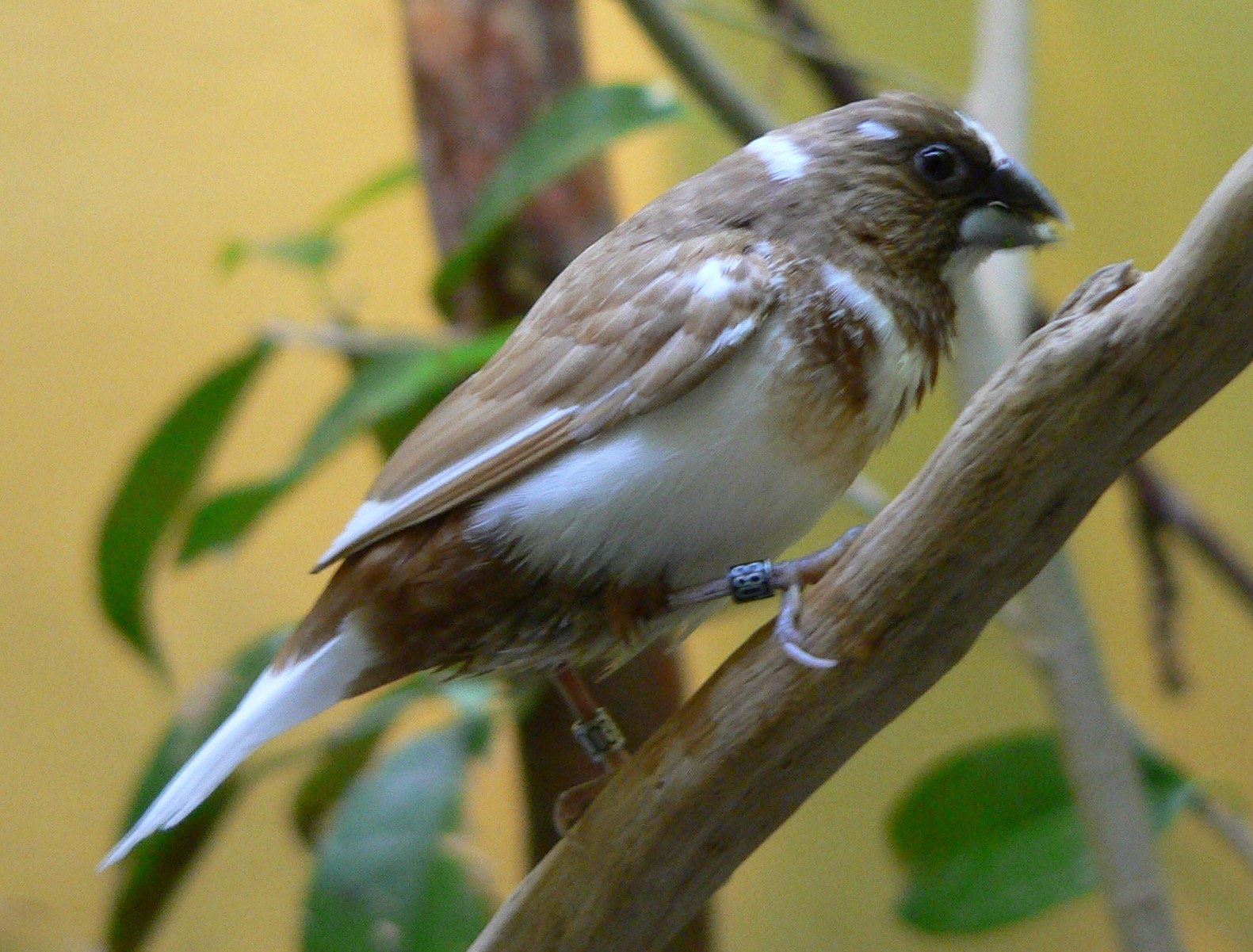
Society Finch health problems are easier to address when you notice a change before a bird is obviously struggling. These tiny flock birds may continue perching or approach food despite illness, and their social reputation can distract from an individual that is quietly falling behind. Learn each bird's baseline, arrange preventive avian care and treat reproductive warning signs seriously. The aim is early recognition and appropriate veterinary help, not home diagnosis from a symptom list.
Learn each bird's normal pattern
Spend a few minutes observing before changing dishes or cleaning. A settled Society Finch usually moves between resting, feeding, social interaction and short flights. Notice who calls, who sings, which bird approaches food first and where each prefers to rest. A quiet individual is not automatically ill, but an abrupt change in its own pattern is meaningful. Identify birds by markings so a flock-level impression does not replace individual attention.
Record weight under consistent conditions using a suitable gram scale and a method your veterinary team considers low-stress. Voluntary weighing is ideal when it can be taught without disrupting feeding. The approximate species weight is not a diagnostic target: a persistent downward trend can matter even before a bird falls outside a published range. Watch droppings on clean paper for changes in quantity, appearance or distribution, and note reduced eating, persistent fluffing or unusually prolonged sleep.
Separate emergencies from routine questions
Breathing difficulty is urgent. Open-mouth breathing at rest, pronounced tail movement with each breath or an inability to perch comfortably warrants immediate contact with an avian veterinarian. Cage-floor sitting, collapse, active bleeding, repeated straining or sudden severe weakness also justify emergency assessment. A bird that briefly pants after a fright should recover promptly; continuing distress is not a reason to wait for the next scheduled appointment.
Call ahead and transport in a secure, ventilated carrier kept quiet and at a comfortable temperature. Avoid unnecessary handling, loud activity and temperature extremes. If the bird cannot perch, ask the clinic how best to arrange the carrier safely. Bring useful records without delaying departure: a brief symptom timeline, current foods, exposure information and a short video taken without disturbing the bird can help.
Take egg laying seriously even without a male
Female Society Finches can lay infertile eggs, so same-sex housing does not eliminate reproductive disease. Repeated clutches can deplete nutritional reserves, while a retained egg or other reproductive problem can become life-threatening. Straining, weakness, floor sitting, breathing difficulty or a change in abdominal shape need prompt assessment. An owner cannot reliably distinguish egg binding from other serious illness by looking through the cage bars.
Review reproductive triggers before problems become established. Nest baskets, nesting materials and long artificial days can encourage breeding activity. For nonbreeding pets, provide suitable perches rather than adding a nest as a cozy bedroom. Maintain a predictable rest schedule and discuss persistent laying with the veterinarian. If a hen already has eggs, ask for a plan for that clutch; do not repeatedly discard eggs, encourage replacement clutches or abruptly remove everything without guidance.
Nutrition is one part of prevention, not a home cure. A hen may need a professionally tailored diet and evaluation of calcium status, but indiscriminate supplementation is not equivalent to treatment. Do not restrict essential food to suppress reproduction. A laying record, including dates and any change in condition, helps the vet assess whether husbandry changes alone are sufficient or further investigation is needed.
Investigate appetite, weight and dropping changes
A Society Finch that appears to visit the bowl may be finding mostly husks or losing access to a more assertive companion. Check for real edible food and observe swallowing. Provide separated feeding positions and note whether the bird approaches normally but abandons the dish. Reduced intake is especially concerning in a small bird; do not conduct a pellet-conversion experiment while trying to decide whether it is sick. Keep familiar food available and obtain advice.
Droppings can change after a different food, but persistent abnormalities, a soiled vent, reduced output or a combination of digestive and behavioral signs merit examination. A photograph and a recent clean liner may be useful if the clinic requests them. Avoid diagnosing infection from color alone or treating with leftover medication. The cause could involve diet, systemic illness, reproductive disease or another problem requiring a different response.
All-seed feeding can contribute to poor nutrition even when body weight seems stable. Conversely, a newly offered balanced product does not help if the finch refuses to eat it. Review actual consumption and gradual dietary improvements with your veterinarian rather than assuming the package description settles the question.
Use quarantine and testing, not blanket treatments
A newcomer can carry disease without obvious signs. Arrange an individualized quarantine plan in a separate room or airspace where feasible, with dedicated dishes, cleaning supplies and sensible hand hygiene. Ask the avian veterinarian about testing and the appropriate duration based on provenance and resident birds. A second cage beside the flock is an introduction tool after medical clearance, not a substitute for quarantine.
Respiratory noises, itching or scruffy feathers do not prove mites. Parasites are among the possibilities a veterinarian may investigate, but infections and environmental irritation can produce overlapping signs. Routine antibiotics, antiparasitic products or medications added to communal drinking water can obscure the problem and expose birds unnecessarily. Diagnosis also helps determine whether companions require evaluation, separation or treatment.
Society Finches' history as foster parents does not make cross-species rearing medically neutral. Close contact and shared feeding can transfer pathogens, including from birds that look well. Breeding or fostering plans require more stringent veterinary and biosecurity decisions than simply putting a nest into a pet enclosure.
Examine the environment when several birds change
If multiple finches suddenly become quiet or breathe abnormally, consider a shared exposure while seeking emergency advice. Cooking fumes, smoke, aerosols, cleaning sprays and overheating nonstick equipment can endanger birds. Move away from an ongoing airborne hazard only if this can be done safely and without delaying veterinary contact. Do not mask odors with another scented product or return birds to a room merely because the smell seems weaker.
Less dramatic housing problems can also damage health. Dirty, uniform or abrasive perches can affect feet; loose fibers can entangle toes; panic flights can cause collisions. Inspect the enclosure for broken fittings and rubbing points. A limp, swollen foot, damaged beak or overgrown nail deserves professional assessment. Tiny finch anatomy leaves little margin for amateur clipping, splinting or attempts to remove embedded material.
Prepare a prevention and emergency checklist
A preventive visit establishes a baseline and lets you discuss diet, reproductive management, safe restraint and transport before a crisis. The frequency of follow-up should reflect age, history and current concerns. Even birds that never leave home need a plan for illness, and low purchase cost does not predict the cost of diagnostics or urgent care.
- Keep the avian clinic and after-hours service numbers accessible.
- Maintain individual notes on weight, appetite and laying history.
- Store a suitable carrier where every caretaker can find it.
- Explain emergency signs to sitters and other household members.
- Review food hygiene, air quality and quarantine before adding birds.
Good prevention cannot guarantee that a Society Finch will never become ill. It does make subtle changes easier to recognize and reduces the temptation to improvise when rapid, informed action matters.
Continue reading: Society Finch Behavior: Build Trust Without Forcing Contact.
Sources and further reading:
- Society Finch (Bengalese Finch) Care Sheet — Royal Veterinary Center
- Bengalese Finch (Society Finch) — Christchurch Bird Club
- The genomics of the domestication syndrome in a songbird model species — 2025
- Management of Pet Birds — MSD Veterinary Manual
- Reproductive Diseases of Pet Birds — MSD Veterinary Manual
Photo credits: BS Thurner Hof (Creative Commons Attribution-ShareAlike 3.0 Unported (CC BY-SA 3.0)). Images resized and compressed for web display. Each image retains its linked license.
