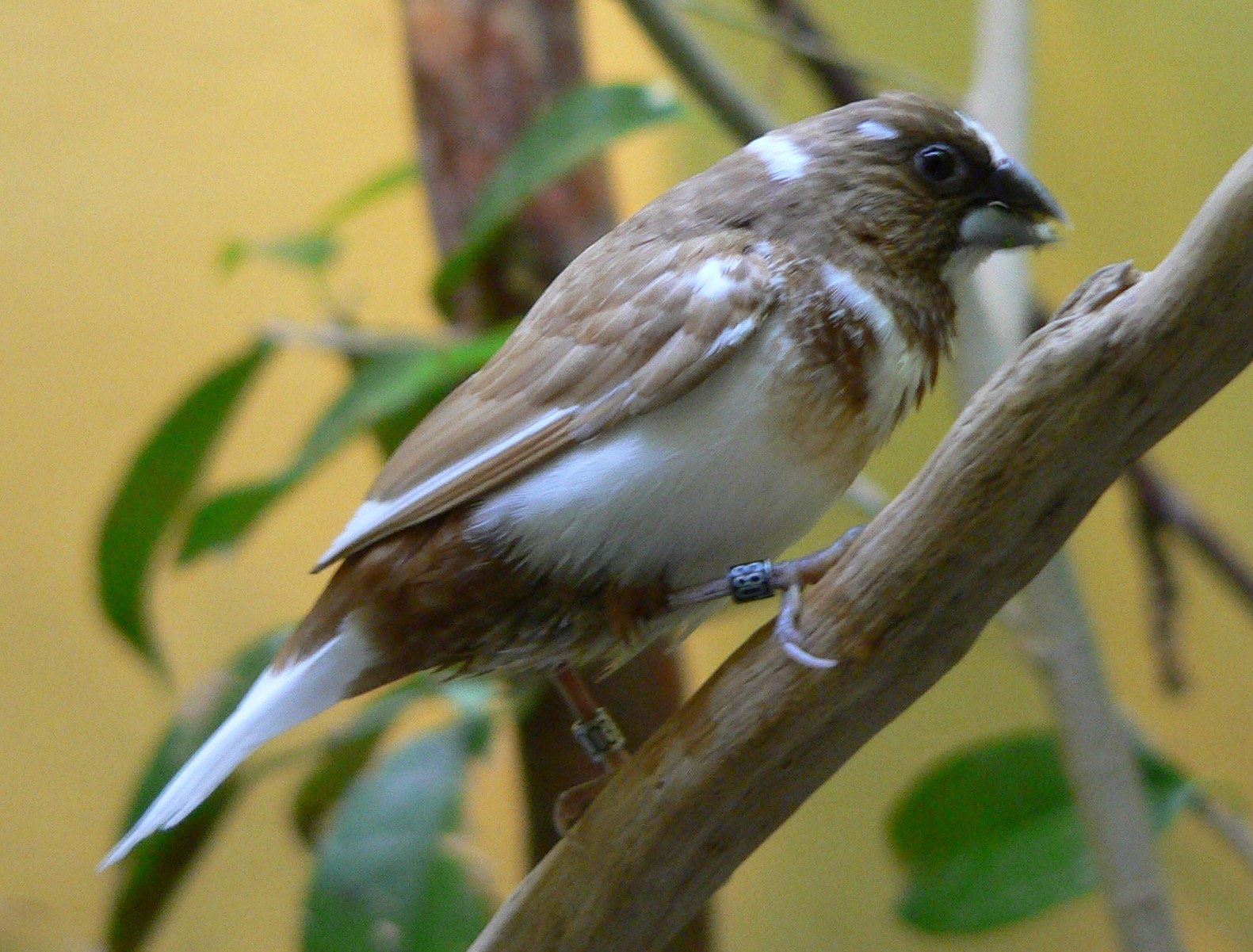
Society Finch care works best when you think in terms of a small flock rather than a tiny parrot. Also called the Bengalese Finch, this domestic descendant of the white-rumped munia thrives on compatible bird company, repeated short flights and predictable routines. Its gentle reputation does not remove the need for careful housing or health monitoring. Prepare the environment before bringing birds home, then let their behavior show you what needs adjusting.
Start with fully weaned birds and a veterinary plan
Choose healthy, fully weaned captive-bred or rescue Society Finches from someone who can explain their history, current diet and social arrangements. Ask whether birds already live comfortably together and whether sex has been reliably established. Males and females look similar; a seller's guess based on feather color is not enough when you are trying to avoid breeding. Do not accept an unweaned bird on the assumption that hand-feeding will create a stronger bond.
Identify a veterinarian experienced with finches before an emergency. Arrange an initial examination and ask how to quarantine new arrivals away from resident birds, including separate equipment and appropriate testing. A bird looking bright at collection does not prove that it is infection-free. Keep food labels, previous records and the seller's contact information, and have a secure carrier available from the first day.
Build a cage around horizontal flight
A Society Finch exercises by flying, not by climbing a tower of toys. Royal Veterinary Center recommends a cage length of at least 60-90 cm for these birds. For a compatible pair, a practical planning target is 90 cm long by 45 cm deep by 45 cm high, choosing more usable flight space whenever possible. The length uses the upper end of that published guidance; the depth and height are planning recommendations, not legal minima or a universal stocking formula.
Use bar spacing around 1 cm or less, checking doors, corners and feeder openings for escape gaps. Position secure perches toward opposite ends without placing them so close to walls that tails rub. Vary safe perch diameters and surfaces, and keep the central flight route open. Put food and water where droppings from overhead perches cannot fall into them. A cluttered enclosure can offer less exercise than a simpler cage with the same outside measurements.
Choose companions by compatibility, not reputation
Plan for compatible Society Finch company. An established pair can be a useful starting point, but every bird must have access to food, water and resting space. Provide separated feeding positions so one confident bird cannot guard the whole menu. Observe actual interactions: companionable resting is encouraging, while repeated pursuit, cornering or exclusion from dishes means the arrangement needs intervention. Keep a second suitable cage ready rather than hoping persistent bullying will resolve itself.
Same-sex companions can avoid fertile clutches, although hens can still lay infertile eggs. Introduce unfamiliar birds only after veterinary quarantine, beginning with separate nearby housing when medically appropriate and progressing under supervision. Do not add a parrot, zebra finch or another species simply because it is also small. A Society Finch's social nature is not protection from a stronger beak or a more territorial neighbor.
Feed the birds, not the appearance of the bowl
Seed hulls can make an almost empty dish look full. Examine and refresh food daily, and confirm that every flock member actually eats. Seed alone is not a balanced long-term diet, but changing a tiny finch's familiar ration overnight can be dangerous. Discuss a suitable finch-formulated food, an appropriate seed component and small servings of washed vegetables with your veterinarian. New foods should be introduced alongside familiar food while you verify intake.
Offer clean drinking water at all times and wash dishes rather than repeatedly topping up dirty containers. Remove moist food before it spoils, sooner in warm rooms, and discard anything contaminated with droppings. Do not give avocado, chocolate, caffeine or alcohol. Seed-hulling finches do not need insoluble grit to grind whole seed shells. Supplements, especially for a laying hen, should fit the complete diet and veterinary assessment rather than be added indiscriminately.
Protect clean air, rest and bathing choice
Locate the cage away from cooking, smoke, vaping, aerosols and overheating nonstick equipment. Good ventilation is useful, but a direct draft, hot sun through glass or a radiator beside the enclosure is not. Choose a stable position where people can approach predictably and where birds can retreat from close attention. Cats and dogs need physical separation even when they appear calm around the cage.
Provide a consistent quiet nighttime period rather than leaving household lights and television on beside the birds late into the evening. Offer a shallow, stable bath of plain water during the day, allowing time to dry in a comfortable room. Bathing is voluntary: no soap, oils, forced dunking or hair dryer. Finches do not need routine wing clipping, and their small nails and beaks should be assessed professionally if they become overgrown.
Make the daily routine easy to repeat
A manageable routine helps you notice changes without repeatedly catching birds. Spend a few quiet minutes watching before you open the cage. Learn each individual's markings, favorite perch and usual approach to feeding. If weighing can be taught voluntarily using a suitable scale and perch, record readings under consistent conditions; otherwise ask the veterinary team for a low-stress monitoring method. A personal trend matters more than matching a generic average weight.
- Each morning, confirm that every bird is alert, perching and eating.
- Check water, real food availability, droppings and cage security.
- Remove wet leftovers, dirty bath water and visibly soiled material.
- Clean dishes and inspect perches for dirt, cracks or loose fibers.
- Record unusual behavior and make sure the evening routine allows rest.
During deeper cleaning, use safe temporary accommodation, follow disinfectant instructions and rinse and dry equipment thoroughly. Never spray cleaners near occupied housing.
Prevent unwanted breeding and recognize emergencies
A nest basket is not necessary bedroom furniture for nonbreeding Society Finches. Nest access, nesting material and prolonged light can encourage reproductive activity. Hens may lay without a male, so an all-female group still needs observation. If eggs appear, consult your avian veterinarian about the current clutch, nutrition and environmental triggers. Repeatedly removing eggs or supplying extra nests without a plan can make management more difficult.
For transport, keep the bird quiet in a secure, well-ventilated carrier and call the clinic for instructions. Avoid unnecessary handling and temperature extremes. The foundation of good Society Finch care is not constant intervention: it is reliable observation, room to behave like a finch, compatible company and prompt professional help when normal patterns change.
Continue reading: Feeding Society Finches: A Safer Route Beyond Seed Alone.
Sources and further reading:
- Society Finch (Bengalese Finch) Care Sheet — Royal Veterinary Center
- Bengalese Finch (Society Finch) — Christchurch Bird Club
- The genomics of the domestication syndrome in a songbird model species — 2025
- Management of Pet Birds — MSD Veterinary Manual
- Reproductive Diseases of Pet Birds — MSD Veterinary Manual
Photo credits: BS Thurner Hof (Creative Commons Attribution-ShareAlike 3.0 Unported (CC BY-SA 3.0)). Images resized and compressed for web display. Each image retains its linked license.
