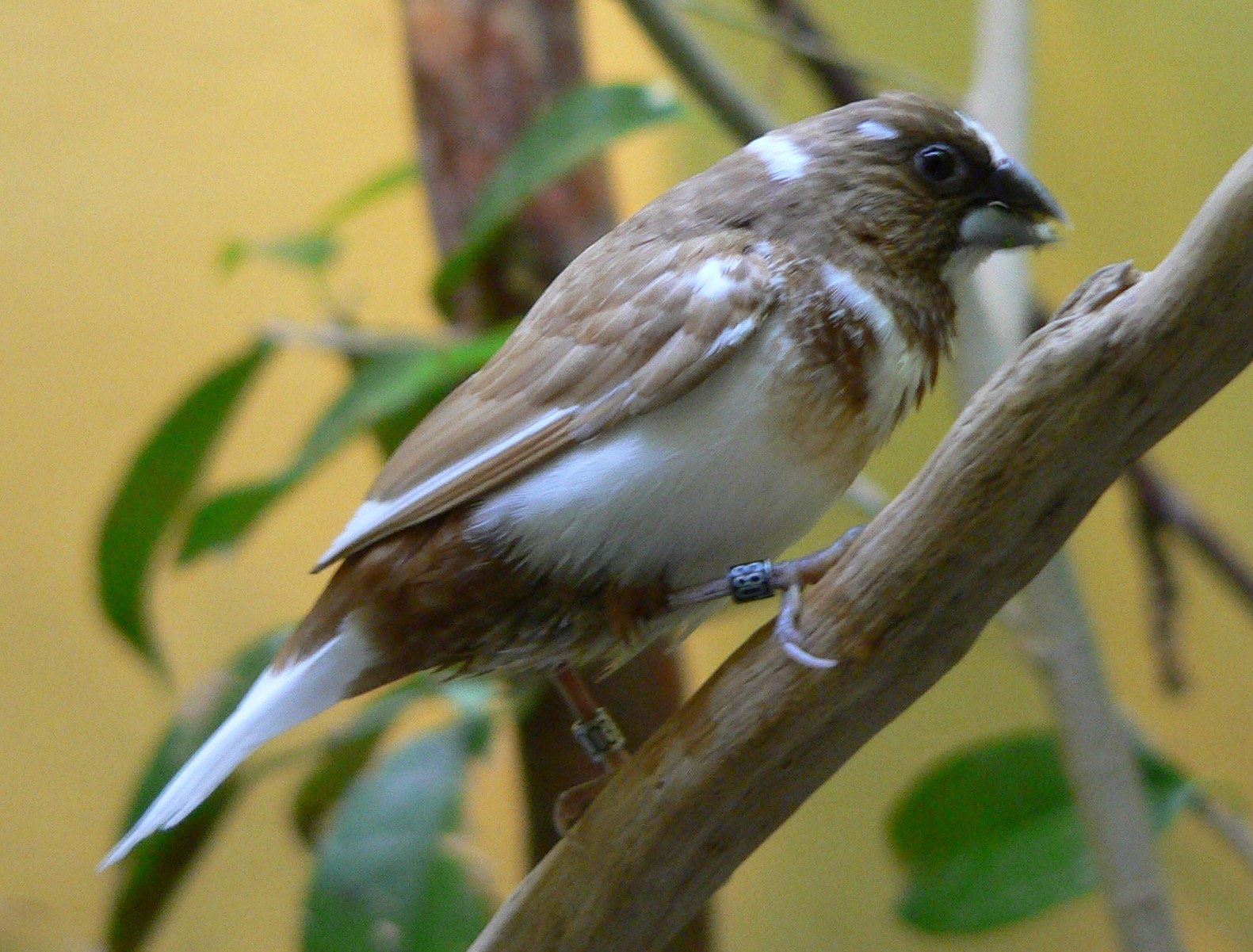
Feeding Society Finches is partly a nutrition task and partly an observation task. These small, social seed-hulling birds can look busy at a bowl without consuming a balanced ration, and one flockmate may eat differently from another. The goal is not to replace familiar food as quickly as possible. It is to improve the diet while preserving dependable intake, clean feeding conditions and enough access for every individual.
Understand what seed provides and what it misses
Society Finches remove seed husks before swallowing the edible contents. Seeds are familiar, useful foods, but a bowl of selected favorites is not automatically a complete diet. General veterinary guidance warns that seed-heavy feeding and selective eating can produce nutritional imbalance. A commercial label saying finch food also does not prove that every component is eaten or that the product alone suits a particular bird's age, condition and reproductive status.
Discuss a practical ration with a veterinarian who sees finches. Suitable finch-formulated foods, an appropriate seed component and modest portions of selected vegetables may all have a place. There is no need to invent a universal calorie target or copy a large parrot's pellet percentage. The amount consumed and the bird's body condition matter more than an attractive assortment in the dish. Keep packaging so the veterinary team can assess the actual products rather than a description such as mixed bird food.
Introduce unfamiliar food without creating a fast
A Society Finch may not immediately recognize a pellet or unfamiliar vegetable as edible. Gradual conversion means offering opportunities to learn while keeping reliable food available. Begin when the birds are settled and well, not during an illness, a move or active reproductive difficulty. Use a particle size appropriate for a tiny finch, and place the new food somewhere accessible rather than hiding the only familiar ration beneath it.
Observe individual eating, droppings and weight trends. Picking up a pellet, scattering crumbs or following another bird to a bowl does not prove meaningful consumption. A vet-guided weighing routine can help distinguish exploration from actual dietary change. If intake drops or a bird becomes quiet, seek advice promptly and keep its known safe food available. Do not wait until it becomes visibly thin.
- Record the current foods and identify what each bird reliably eats.
- Offer a small amount of the new food beside the familiar ration.
- Watch several feeding sessions rather than relying on one brief visit.
- Review droppings and consistent individual weights with your veterinarian.
- Adjust the familiar ration only after dependable new-food intake is established.
Make fresh foods safe and useful
Offer small portions of thoroughly washed vegetables in pieces the birds can investigate, such as finely chopped broccoli or carrot and suitable leafy greens. Introduce one item at a time so you can see what is accepted and whether droppings change. A finch may nibble rather than finish a serving; fresh produce is not a substitute for the rest of its ration. Avoid relying on one favored green as the solution to every nutritional concern.
Wet foods spoil more readily than dry food. Use clean dishes, remove leftovers promptly and shorten the exposure time in warm conditions. Sprouted seeds are not automatically safer or more nutritious in every home: poor preparation and storage can encourage microbial growth. Owners who cannot control hygiene should choose easier-to-manage foods instead. Do not offer moldy seed, stale damp mixtures, unknown garden plants or produce exposed to pesticides.
Keep avocado, chocolate, caffeinated drinks and alcohol completely out of reach. Salty, sugary or seasoned human snacks are not useful finch treats. Drinking water must remain plain and fresh unless a veterinarian has prescribed a specific addition; supplements in water can affect palatability and make intake uncertain.
Audit shared bowls and hidden competition
A communal cage can hide individual feeding problems. One Society Finch may quietly wait until another leaves, then find mostly hulls or the least favored ingredients. Provide more than one feeding position, separated enough that one bird cannot control them all. Place dishes within easy reach of secure perches and away from overhead droppings. Check that a timid or newly introduced finch can approach without being repeatedly displaced.
Empty seed hulls deserve particular attention. Stirring a bowl or topping it up can leave a misleading layer of waste and old food. Inspect what remains, discard contaminated contents and refresh clean dishes daily. Do not blow husks around the room or toward the birds. Watching each finch swallow food is a better check than assuming the busiest bird has demonstrated that the whole flock is eating.
Treat molt and egg laying as individual needs
Growing feathers places nutritional demands on a molting bird, but that does not justify adding several powders to an unknown base diet. First check whether the finch is eating its intended ration and maintaining condition. A balanced plan is more useful than an assortment of overlapping supplements. Commercial egg food may be used in some finch diets, but it is not a universal requirement in unlimited quantities, and moist preparations need careful hygiene.
A laying hen needs special attention because repeated clutches can deplete reserves, including calcium. Ask the veterinarian to assess the whole diet and reproductive pattern. A mineral block or cuttlebone is not proof that a hen consumes enough calcium, and extra calcium cannot by itself solve every laying problem. Do not add a male or encourage another clutch as a nutritional remedy.
Seed-hulling Society Finches do not require insoluble grit to process intact seed coats. Distinguish grit from a professionally recommended mineral source. If a hen strains, becomes weak or sits on the cage floor, treat that as a possible reproductive emergency rather than trying to correct the menu first.
Keep a feeding plan that survives everyday life
Consistency matters when several people share bird care. Write down product names, storage instructions, dish locations and which foods are currently accepted. Store dry food in a clean, dry container and retain the batch information. Buy quantities you can use while fresh rather than keeping a large sack through prolonged heat or humidity. Include replacement water and dish cleaning in the feeding routine, not as optional extras.
Before travel, show the sitter the difference between edible seeds and empty hulls and demonstrate how to check every flock member. Leave the veterinary contact and explain which changes warrant a call. Avoid starting a major food transition immediately before handing care to someone else. A successful Society Finch diet is one the birds actually eat, the household can maintain and the veterinary team can adjust when life stage or health changes.
Continue reading: Society Finch Health: Spotting Illness and Protecting Laying Hens.
Sources and further reading:
- Society Finch (Bengalese Finch) Care Sheet — Royal Veterinary Center
- Bengalese Finch (Society Finch) — Christchurch Bird Club
- The genomics of the domestication syndrome in a songbird model species — 2025
- Management of Pet Birds — MSD Veterinary Manual
- Reproductive Diseases of Pet Birds — MSD Veterinary Manual
Photo credits: BS Thurner Hof (Creative Commons Attribution-ShareAlike 3.0 Unported (CC BY-SA 3.0)). Images resized and compressed for web display. Each image retains its linked license.
