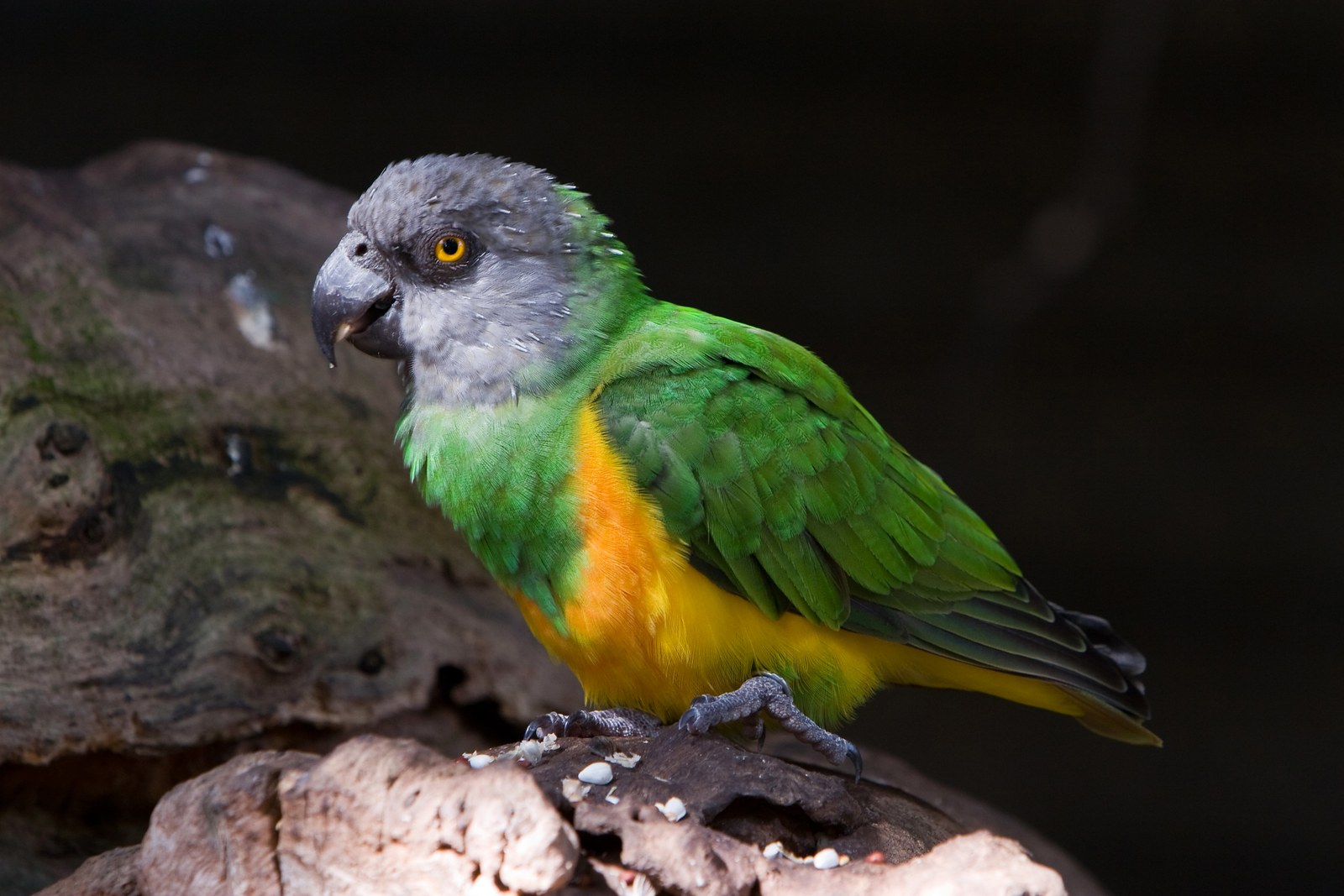
Living with a Senegal Parrot is less like adding a decoration to a room and more like welcoming a new participant in household routines. Your bird may watch breakfast preparations, dismantle a safe toy, call when someone leaves, and decide that one person's company feels easier than another's. These experiences can be rewarding, but they are not guarantees of cuddling or conversation. A good match depends on space, patience, shared responsibility, and plans that extend beyond the excitement of arrival.
Judge the fit by an ordinary weekday
Imagine a workday when you are tired, the weather is poor, and appointments run late. Can someone still refresh water, check appetite, clean soiled surfaces, provide enrichment, and arrange safe movement? A Senegal's compact body does not make a small cage and occasional attention sufficient. Plan a spacious enclosure and a secured activity area before calculating how conveniently the bird might fit on a desk or in a corner.
World Parrot Trust's twenty-to-twenty-five-year longevity estimate is a reminder to think in decades, not a fixed prediction for any individual. Renting, career changes, children, disability, and retirement can all alter the practical arrangement. Check lease conditions and local ownership or travel requirements without assuming that a bird permitted today can automatically move anywhere with you. Ask a rescue about an adult Senegal's established habits and history; that information can be more useful than choosing a young bird based on imagined future personality.
Let relationships develop without requiring equal affection
A Senegal may form a strong preference for one person. That can feel flattering initially, but making that person the only source of food, handling, and reassurance creates a fragile care system. Other adults should gradually build their own comfortable interactions. They might offer a reward, refresh a bowl while the bird stations elsewhere, or share quiet room time without attempting touch. The aim is reliable care, not a contest for favorite status.
Respect retreat and avoid passing the bird between people to force socialization. A hand-reared bird is not guaranteed to accept every hand, and an adult rescue is not beyond learning. Preferences may shift as the bird settles, matures, or experiences changes. Keep observations specific: comfortable taking a treat from Alex is more useful than friendly with everyone. If behavior changes suddenly, investigate health and context before blaming jealousy or assuming that the bird needs firmer discipline.
Plan honestly for sound, debris, and possessions
Senegals whistle, call, and can produce sharp loud squawks. Do not treat the species as a silent alternative to larger parrots. Speak with household members about sound tolerance and realistic quiet periods before bringing a bird home. Natural contact calls are communication; shouting back may add excitement, while punishment can create fear. Provide predictable attention and rewarding independent activities rather than responding only when noise has become intolerable.
Chewed paper, shed feathers, and scattered food are ordinary parts of the workload. Protect valued possessions by preventing access and offering suitable chewing alternatives, not by expecting the Senegal to distinguish expensive furniture from permitted wood. Keep electrical cords, small metal objects, and unsafe coatings inaccessible. Choose cleaning routines and products that do not expose the bird to sprays or fumes. A manageable enclosure layout and washable surrounding surfaces make daily care easier, but convenience must not come at the cost of crowded movement or an isolated, unstimulating location.
Use physical boundaries in shared rooms
Before the Senegal leaves its enclosure, everyone needs to know that the room is in bird-safe mode. Close exterior doors and windows, stop fans, protect glass, cover water hazards, and remove hot food or drinks. Keep the bird away from cooking, smoke, aerosols, and fumes from overheated nonstick materials. Visitors and deliveries are predictable escape risks, so have a simple system for securing the bird before anyone opens an outside door.
Cats and dogs should be separated by reliable barriers, and other birds need their own secure accommodation. A Senegal can seriously injure a finch or another small parrot with its beak; apparent curiosity is not proof of compatibility. Comparison links to zebra finches, society finches, Bourke's parakeets, or Pacific parrotlets are not housing recommendations. Children can help with appropriate tasks under adult direction, but a parrot should never be placed on a child's shoulder to demonstrate trust.
Make absences ordinary rather than emergencies
Build comfortable independent activity while you are still nearby. Offer an easy foraging task or suitable chewing item, then step away briefly without making every departure dramatic. Increase duration according to the bird's response rather than leaving suddenly for a long period to teach independence. Independent play complements social contact; it does not make an unattended weekend with extra food acceptable.
A shared-care plan gives another adult practical skills as well as written instructions. Prepare that backup caregiver through ordinary practice:
- Demonstrate food preparation, water changes, and daily safety checks.
- Show voluntary stationing, perch transfer, and carrier routines.
- Explain body-language observations and interactions the bird dislikes.
- Share the avian clinic's contacts and transport arrangements.
- Leave clear instructions for urgent signs and authorization to seek care.
Discuss holiday arrangements early, including quarantine and exposure policies if boarding involves other birds. Familiarity with the caregiver is helpful, but it does not replace appropriate hygiene and secure accommodation.
Give the future a practical written plan
Set aside money for routine veterinary visits and unexpected problems, and consider how transport will work if the usual driver is unavailable. Keep medical records, food details, provenance documents, and current contact information together. A succession plan should identify someone genuinely willing and able to care for the Senegal, with discussion of resources and realistic alternatives. Naming a relative without asking them is not a plan.
Review arrangements after moves, relationship changes, illness, or changes in the bird's needs. An older Senegal may need easier access to resources or a veterinary review of mobility; modify the environment around the individual rather than assuming age explains every new difficulty. If rehoming becomes necessary, involve a reputable rescue and disclose health and behavior accurately. Responsible companionship is measured not by keeping a promise regardless of welfare, but by consistently securing appropriate care for the bird through changing human circumstances.
Continue reading: Senegal Parrot Care: A Safe Home for a Long-Term Companion.
Sources and further reading:
- World Parrot Trust: Senegal Parrot
- MSD Veterinary Manual: Management of Pet Birds
- MSD Veterinary Manual: Feeding a Pet Bird
- MSD Veterinary Manual: Household Hazards for Pet Birds
- MSD Veterinary Manual: Reproductive Diseases of Pet Birds
Photo credits: Arjan Haverkamp (CC BY 2.0 Generic). Images resized and compressed for web display. Each image retains its linked license.
