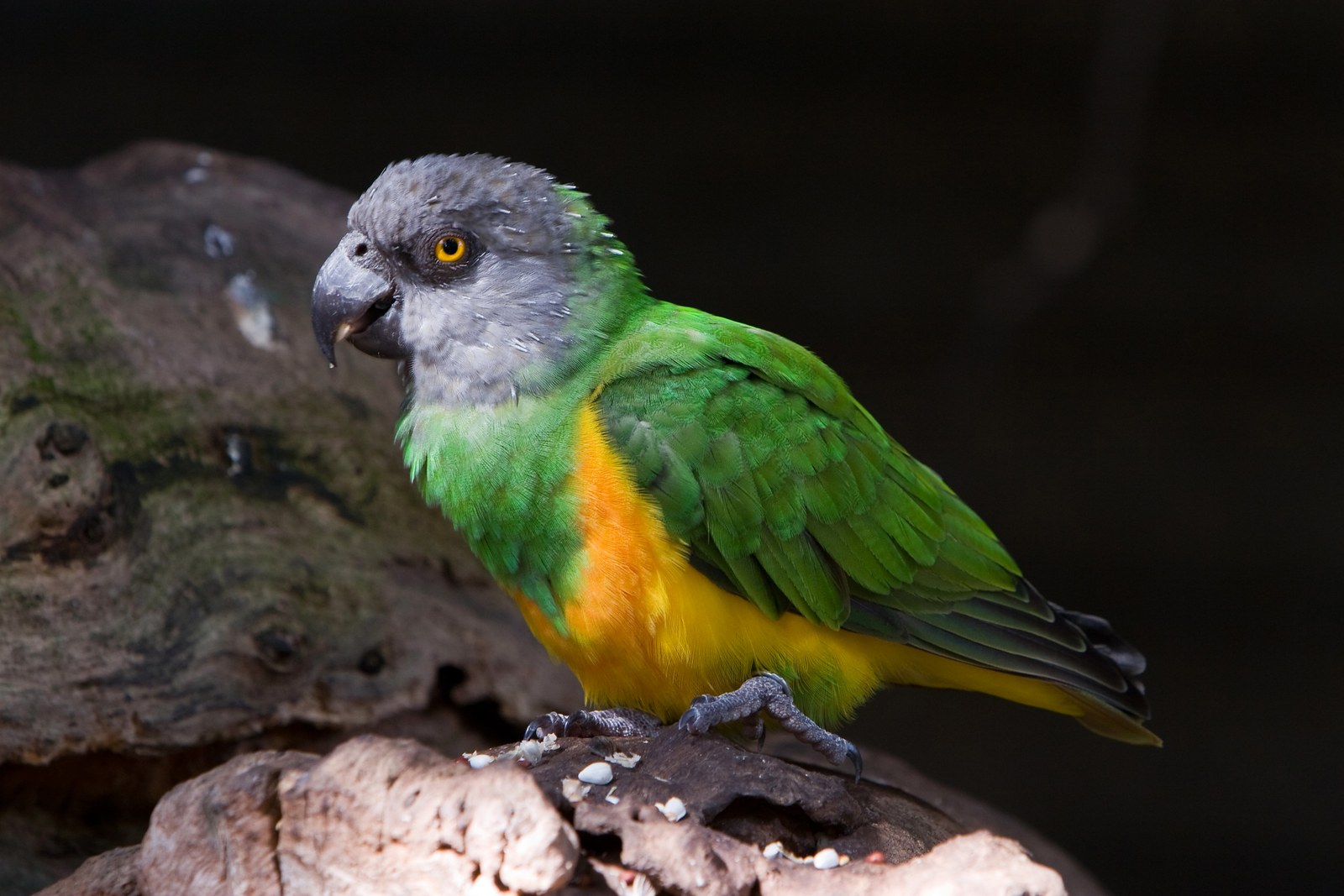
Senegal Parrot care begins with a practical question: can your household support an active, intelligent bird through years of ordinary weekdays? Poicephalus senegalus is compact, but its needs are not small. A secure enclosure, safe flight, varied food, social choice, and access to an avian veterinarian must work together. Good care does not depend on the bird becoming cuddly or learning words; it depends on meeting the needs of the individual in front of you.
Plan the commitment before the homecoming
World Parrot Trust lists Senegal Parrot longevity at approximately twenty to twenty-five years. That estimate is not a promise or an expiry date. Budget for food, replacement chewing materials, veterinary examinations, emergency transport, and a caregiver who can manage the bird when you cannot. Check which nearby clinic actually sees birds and where you would go outside normal opening hours. A general emergency hospital may need to refer you elsewhere.
Choose a documented rescue or reputable captive-bred source, and ask about weaning, diet, previous housing, medical history, and handling preferences. A bird that eats independently is essential; buying an unweaned parrot to create a stronger bond is not a safe beginner strategy. Keep records of ownership and check locally applicable transfer or travel requirements. Before arrival, agree who handles doors, cooking, cleaning products, and other pets. These household rules matter as much as the shopping list. During the first days, keep familiar food and an uncomplicated perch arrangement while you learn the bird's preferences. Let observation guide introductions to toys and people. A Senegal that sits quietly after a move is not necessarily settled or content; check actual eating, droppings, and responsiveness. Keep the veterinary appointment even when the bird looks bright, and avoid entertaining visitors with handling demonstrations before a comfortable routine exists.
Build usable space rather than a crowded display
A Senegal needs room to move between perches, stretch both wings, and investigate without constantly brushing cage fittings. World Parrot Trust recommends an indoor enclosure at least 1.8 meters long, or a walk-in aviary at least 2.1 meters long. Treat those sourced lengths as planning targets rather than universal legal minima. Width and height must also accommodate the individual comfortably; a long, narrow enclosure packed with toys does not provide equivalent usable space.
Select secure, bird-appropriate construction with spacing that prevents head entrapment, and have uncertain hardware or coatings assessed before use. Provide stable natural-texture perches of varied suitable diameters, leaving a clear travel route. Put food and water where droppings cannot fall directly into them. Keep the cage away from kitchens, smoke, aerosols, and fumes from overheated nonstick materials. Position one side near a wall or another reassuring boundary, while allowing the bird to observe household activity without being surrounded or constantly approached. Inspect doors and latches daily because a curious beak can explore them repeatedly.
Make flight a household safety routine
Flight is normal exercise, not a privilege a bird earns by obeying. Prepare a closed room before opening the cage: stop ceiling fans, shut exterior doors and windows, protect glass and mirrors from collisions, cover open water, and remove hot drinks. Keep cats, dogs, and other birds physically separated. Even a familiar animal can frighten or injure a parrot, and an apparently minor predator encounter needs veterinary advice.
Provide obvious landing places and let a new Senegal inspect the space gradually. Do not chase a bird around to produce exercise. Begin voluntary stationing and return-to-cage practice while the bird is calm, rewarding comfortable participation. A clipped bird still needs the same precautions; trimming does not reliably prevent flight or escape. Outdoor time requires a secure carrier or properly designed enclosure, not confidence that the bird likes you enough to stay.
Combine balanced feeding with purposeful activity
Discuss an appropriate formulated parrot food with your avian veterinarian, supplemented with suitable vegetables and smaller additions of fruit and treats. Seeds and nuts can be useful rewards, but a bowl dominated by favorite seeds encourages selective eating and nutritional imbalance. Continue familiar food during any planned transition, check what is actually swallowed, and track weight. An apparently full bowl does not prove that a new food is being eaten.
Make some easy meals into foraging, meaning food-finding activity rather than simply reaching into an open dish. A familiar pellet beside a folded piece of clean plain paper is a reasonable starting point. Show the reward, keep the task easy, and leave reliable food access available while the bird learns. Add safe destructible items and foot toys that cannot trap toes or shed ingestible fibers. Replace damaged materials promptly, and change one feature at a time if your Senegal is cautious. Complexity is useful only when it creates successful exploration rather than frustration or missed meals.
Establish a rhythm that respects social choice
A Senegal may prefer one household member strongly, but care should not depend entirely on that relationship. Let other adults offer rewards, refresh bowls, or sit nearby at a comfortable distance. Invite stepping onto a hand or stable perch without pressing into the chest or pursuing a retreating bird. A voluntary move onto a perch can be a better early goal than direct handling. Stop before the bird has to bite to end an interaction.
A workable daily checklist keeps small tasks from disappearing during busy weeks:
- Observe appetite, posture, activity, and droppings before cleaning.
- Refresh drinking water and wash food and water containers.
- Offer safe movement, short reward-based practice, and independent foraging.
- Remove spoiled fresh food and inspect toys, perches, and latches.
- Provide a predictable, quiet overnight period away from screens and late household activity.
Prepare for health changes before they happen
Arrange an initial avian examination and ask about a suitable schedule for preventive visits, weight checks, and any testing justified by the bird's history. Teach voluntary standing on a gram scale, then compare readings taken under similar conditions rather than chasing a species-average target. If another bird joins the home, agree on quarantine, separate equipment, and veterinary assessment before considering any introduction. Quarantine is a medical plan, not merely placing two cages a little farther apart.
Birds can conceal illness, so reduced eating, unusual sleepiness, altered droppings, or a changed voice deserves prompt attention. Labored breathing, cage-floor sitting, straining, bleeding, collapse, and suspected poisoning require urgent veterinary contact. Keep handling minimal and prepare a secure, well-ventilated carrier while following the clinic's instructions. Do not force food or water into a sick bird or attempt a home procedure. Over the long term, safe routines and familiar caregivers make veterinary action easier; they do not eliminate the possibility of disease. Review your backup-care plan whenever your household changes, not only when a crisis arrives.
Continue reading: Feeding a Senegal Parrot: Balanced Meals Without Forced Diet Changes.
Sources and further reading:
- World Parrot Trust: Senegal Parrot
- MSD Veterinary Manual: Management of Pet Birds
- MSD Veterinary Manual: Feeding a Pet Bird
- MSD Veterinary Manual: Household Hazards for Pet Birds
- MSD Veterinary Manual: Reproductive Diseases of Pet Birds
Photo credits: Arjan Haverkamp (CC BY 2.0 Generic). Images resized and compressed for web display. Each image retains its linked license.
