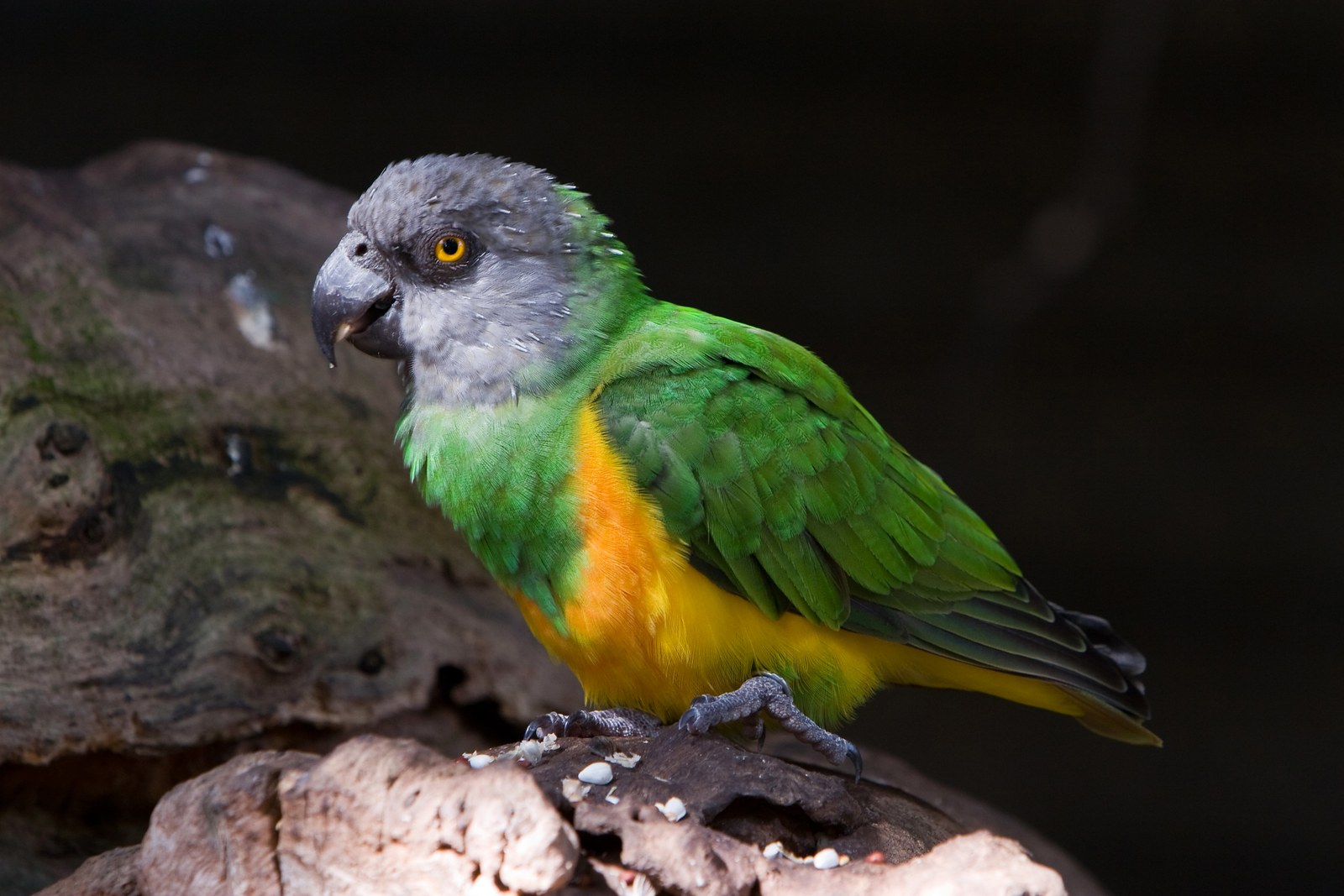
Feeding a Senegal Parrot is an exercise in observation as much as meal preparation. A bird can have an attractive bowl and still select only its favorite pieces. Wild Senegals eat varied plant foods and spend time obtaining them; a pet offered unlimited rich seeds has a very different lifestyle. Build your plan around nutritional balance, confirmed intake, clean water, and opportunities to forage, rather than a long list of foods placed in the cage.
Start with the diet your bird actually eats
Before changing anything, record several ordinary days of feeding. Note the familiar brand or mix, which pieces disappear, how much ends up on the floor, and which fresh foods are swallowed rather than shredded. Ask a previous caregiver for this information when a Senegal moves into your home. Moving and changing the entire menu simultaneously makes it harder to identify why appetite has dropped.
An avian veterinarian can assess body condition, including muscle and fat, alongside a weight history. The species profile's approximate weight is not a calorie target or a reason to restrict a naturally larger individual. Activity, age, reproductive status, health, and the energy density of the food all affect the plan. Bring food packaging and a realistic description of treats to the appointment. Owners sometimes carefully measure breakfast while overlooking the seeds offered by several family members throughout the day.
Give balanced foods the central role
An appropriate formulated parrot food helps prevent the selective eating associated with mixed seed bowls. Discuss a suitable product and proportions with your veterinarian rather than applying an exact universal percentage to every Senegal. Choose a form the bird can manage and store it according to the manufacturer's directions. A colorful mixture containing pellets does not guarantee a balanced intake if the pellets are consistently left behind.
Offer suitable washed vegetables in manageable pieces, exploring textures such as leafy greens, broccoli, carrot, and sweet pepper. Smaller portions of fruit can add variety without displacing the rest of the diet. Introduce unfamiliar items one at a time so you can observe acceptance and any changes in droppings. Plain thoroughly cooked pulses may also be part of a planned menu; avoid raw or undercooked dried beans. Variety is useful, but simply increasing the number of ingredients does not automatically correct a deficient diet.
Change a seed-heavy diet without creating hunger
A Senegal that does not recognize pellets as food may ignore them even when hungry. Conversion therefore needs a gradual, individualized plan with familiar food retained until sufficient replacement intake is confirmed. Never remove all accepted food to make the bird give in. A sick, underweight, newly arrived, or otherwise vulnerable bird needs veterinary assessment before a major dietary experiment begins.
Use small, repeatable observations rather than dramatic overnight changes:
- Establish a reliable weight and appetite baseline with your veterinarian.
- Offer the new food beside familiar food in an accessible location.
- Watch for swallowing and inspect waste rather than counting missing pieces alone.
- Keep notes on weight, droppings, and behavior as the plan progresses.
- Pause the transition and contact the clinic if intake falls or the bird becomes unwell.
Use treats and foraging with a clear purpose
Seeds and nuts can be valuable rewards because a small piece may be highly motivating. Break a suitable treat into small manageable rewards and include them in the overall feeding plan. This makes it possible to reward several easy training successes without repeatedly handing over large, energy-dense portions. Do not withhold ordinary meals to increase willingness to work, and avoid treating a hungry bird's compliance as evidence that the method is kind.
Introduce food-finding challenges gradually. Begin with a visible familiar reward in an open paper cup or on a clean tray, then add a simple fold of plain paper once the task is understood. Keep dependable food available elsewhere. If your Senegal abandons the puzzle or becomes agitated, simplify it rather than making every meal harder. Check materials for staples, sticky coatings, loose fibers, or openings that could trap a beak or foot.
Keep preparation, storage, and water dependable
Wash fresh produce, use clean utensils, and serve portions that can be removed before spoiling. Moist foods deteriorate faster in warm rooms, so do not leave them unattended all day. Refrigerate prepared food promptly and discard anything moldy or questionable. Large batches are convenient only if their preparation and storage remain safe; a complicated homemade mixture is not inherently healthier than a straightforward veterinarian-guided menu.
Wash food and water containers in hot soapy water, rinse thoroughly, and dry them before reuse where appropriate. Replace drinking water daily and whenever contaminated by food or droppings. Some parrots soak food in the water bowl, making extra checks necessary. If you change the drinking system, confirm that your Senegal knows how to use it before removing the familiar one. Water bottles require inspection and cleaning too; their appearance can conceal a blocked outlet or residue.
Set firm boundaries around unsafe extras
Keep avocado, chocolate, caffeine, alcohol, and heavily salted or otherwise unsuitable human snacks out of reach. Do not let a bird sample a hot drink or lick plates while you are deciding whether their ingredients are safe. Cooking also introduces burn and fume hazards, so prepare bird meals while the Senegal is securely separated from the kitchen. A trusted relationship does not make counter-surfing safe.
Senegal parrots hull seeds and do not require insoluble grit. Avoid casual vitamin, mineral, or calcium supplementation, particularly alongside formulated food; deficiencies and excesses both need informed assessment. If appetite changes unexpectedly, consider illness rather than continually offering richer treats to tempt the bird. Contact your avian veterinarian with the feeding record, weight trend, and relevant packaging. The most useful feeding plan is one your household can carry out consistently while recognizing when the bird needs medical attention rather than a new recipe.
Continue reading: Senegal Parrot Health: Recognizing Changes and Acting Early.
Sources and further reading:
- World Parrot Trust: Senegal Parrot
- MSD Veterinary Manual: Management of Pet Birds
- MSD Veterinary Manual: Feeding a Pet Bird
- MSD Veterinary Manual: Household Hazards for Pet Birds
- MSD Veterinary Manual: Reproductive Diseases of Pet Birds
Photo credits: Arjan Haverkamp (CC BY 2.0 Generic). Images resized and compressed for web display. Each image retains its linked license.
