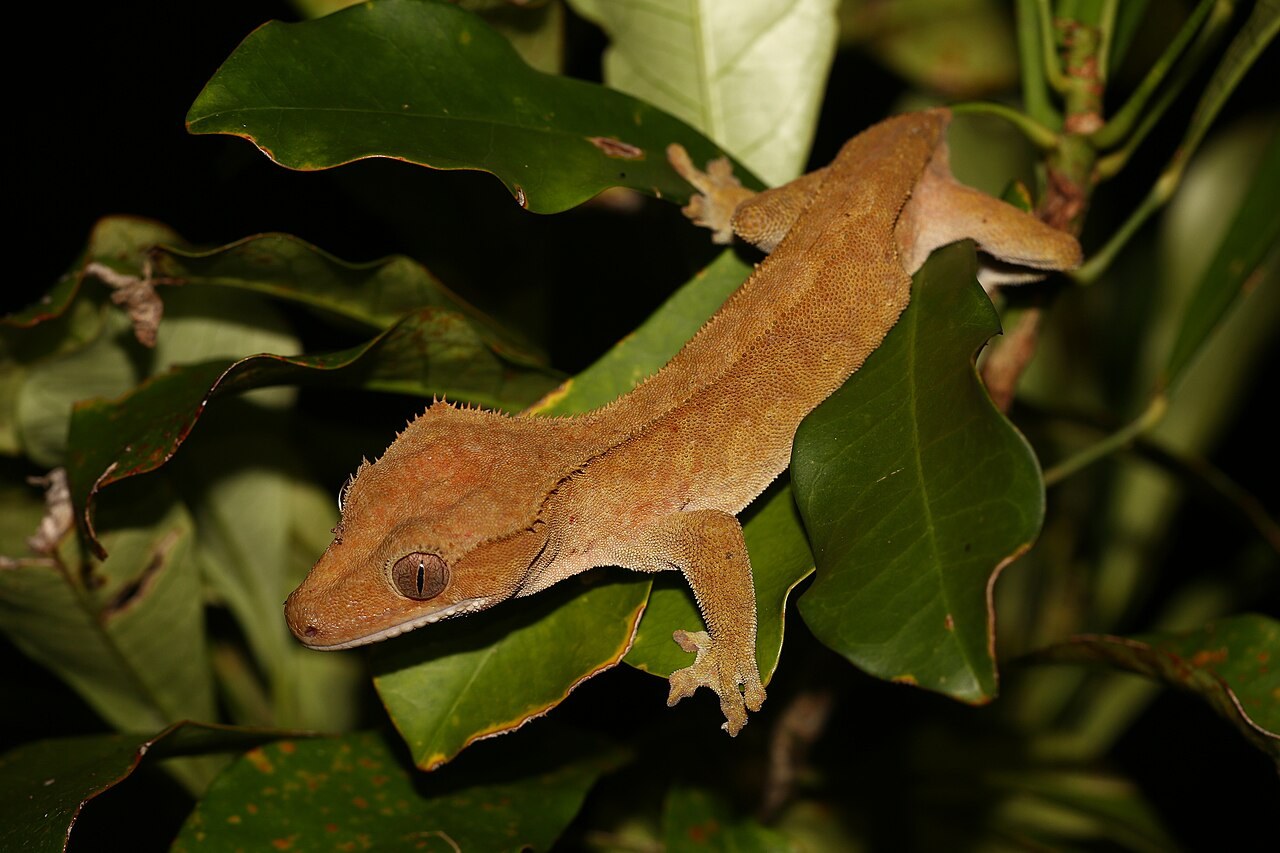
Crested gecko handling should be a small, optional part of a life built around secure housing and predictable care. These arboreal lizards can leap before a person recognizes the intended landing point. Understanding crested gecko behavior means respecting that ability, noticing when contact is unwelcome and accepting that an animal can thrive without becoming comfortable with frequent handling.
Read the evening routine before approaching
Crested geckos are most active around dusk and during the night. Daytime concealment among leaves is usually expected, so repeatedly uncovering a sleeping animal to prove it is friendly undermines its sense of security. Observe from outside the enclosure when it naturally emerges. Notice where it pauses, how it approaches the food ledge and which routes it uses after misting.
This baseline helps distinguish ordinary behavior from a worrying change. A gecko that usually climbs confidently but now slips or remains unusually weak needs a husbandry review and potentially veterinary assessment, not handling practice. Color changes alone do not tell you whether it is relaxed, frightened or ill.
Look at the whole posture. Repeated scrambling, persistent attempts to flee, rapid breathing or defensive movements suggest that you should increase distance. Remaining motionless can also be a fear response. Stillness is not consent, and a quiet animal should still have a clear opportunity to retreat into cover.
Let a new gecko settle without a deadline
After arrival, prioritize feeding, hydration and a stable enclosure routine. Wait until the animal is reliably eating and behaving consistently rather than promising that every gecko will be ready after a particular number of days. A juvenile, a recently rehomed adult and an animal recovering from illness may need very different amounts of time.
Make routine maintenance predictable. Open the enclosure calmly, replace food or water without chasing the gecko and close the door securely. Approach from the side when possible rather than descending abruptly from above. Your hand should not become a cue that every hiding place will be dismantled.
Later, rest a hand near a stable perch and allow investigation without touching. If the gecko moves away, end the attempt. You can build familiarity through quiet, consistent care without using hunger, restraint or repeated capture as persuasion. A gecko that chooses not to approach is communicating useful information, not failing a training exercise.
Prepare a secure room and support every movement
Before opening the door for contact, close windows and room doors, remove other pets and turn off fans. Block narrow gaps behind heavy furniture and keep the activity low over a clear, padded surface. Avoid a bed piled with blankets where a small gecko can disappear unnoticed. No enclosure should be left open while you fetch missing equipment.
Offer a flat hand beside a branch so the gecko can step onto it. Support the body and let all feet find purchase; do not squeeze the abdomen or pin the animal down. Place the other hand ahead as an available landing surface rather than chasing it from behind.
A practical sequence is:
- Prepare the room and return route before making contact.
- Offer a hand from a stable perch without cornering the gecko.
- Keep the body supported and movement close to the safe surface.
- Return it to a branch while the session is still calm.
Keep first sessions brief and finish earlier if behavior changes. There is no required daily handling quota.
Protect the tail and respond appropriately to stress
A crested gecko can shed its tail as a defensive response, and the tail will not regrow. Unlike a leopard gecko, it cannot replace the lost structure. Never grab the tail to stop a jump, lift the animal or pull it out of a tight space. Reduce the chances of a dangerous jump before handling begins rather than relying on a last-second catch.
If the animal repeatedly rushes away, tries to jump without a supported landing or shows rapid breathing, return it to the enclosure calmly. Continuing until it stops struggling does not demonstrate successful habituation. Persistent abnormal breathing after contact ends needs veterinary advice, particularly if overheating or illness is possible.
Many healed, tailless geckos move well with secure branching and horizontal rest sites. Adapt the surroundings without assuming they need repeated rehabilitation handling.
Use enrichment instead of forced interaction
A good habitat offers more worthwhile activity than a long session on a person's shoulder. Provide diagonal routes, broad horizontal rests and leafy cover at different heights. House one adult in an upright enclosure at least 18 × 18 × 36 in (45.7 × 45.7 × 91.4 cm), length by width by height, with larger usable space preferred.
Change only part of the furnishing arrangement at a time so familiar shelters and food access remain available. Suitable insect opportunities can support hunting when they fit the chosen complete diet and body condition. Extra feeding should not become a reward for enduring unwanted contact or a reason to overfeed an adult.
Solitary housing is the default. Geckos do not need a partner for emotional enrichment, and apparently peaceful cohabitation can conceal resource competition. A bearded dragon, leopard gecko, corn snake or ball python is a species to compare before choosing a pet, never a companion to place in this enclosure.
Plan for escapes and family involvement
If a gecko escapes, close the room, remove other animals and move carefully. Search nearby vertical surfaces, foliage, curtain folds and sheltered spaces before shifting heavy furniture. Do not use glue traps, pesticides or a vacuum. Avoid pulling on a visible tail when the body is concealed; create a safe route into a ventilated container instead.
A recovered animal should return to a secure enclosure for quiet observation. Check for visible injury without repeated restraint and seek advice if movement, breathing or grip is abnormal. Identify the exit point and repair the enclosure before resuming normal access.
An adult must supervise any appropriate family observation or contact. Children under five should not handle reptiles or their habitats, and households with young children, older adults or immunocompromised people need to consider the increased Salmonella risk before choosing this pet. Wash hands after contact, keep the gecko away from faces and kitchens, and never allow dogs or cats to investigate it at close range.
Successful handling ends with the animal safely back under cover, not with a photograph or a longer session than yesterday.
Continue reading: Crested Gecko Shedding and Skin Care Without Harmful Peeling.
Sources and further reading:
- RSPCA: Caring for your Crested Gecko
- ReptiFiles: Crested Gecko Care Manual and Terrarium Size Guidelines
- ReptiFiles: Crested Gecko Temperatures & Humidity
- ReptiFiles: Crested Gecko Food
- CDC: Reptiles and Amphibians
Photo credits: Lennart Hudel (CC BY 4.0 International). Images resized and compressed for web display. Each image retains its linked license.
