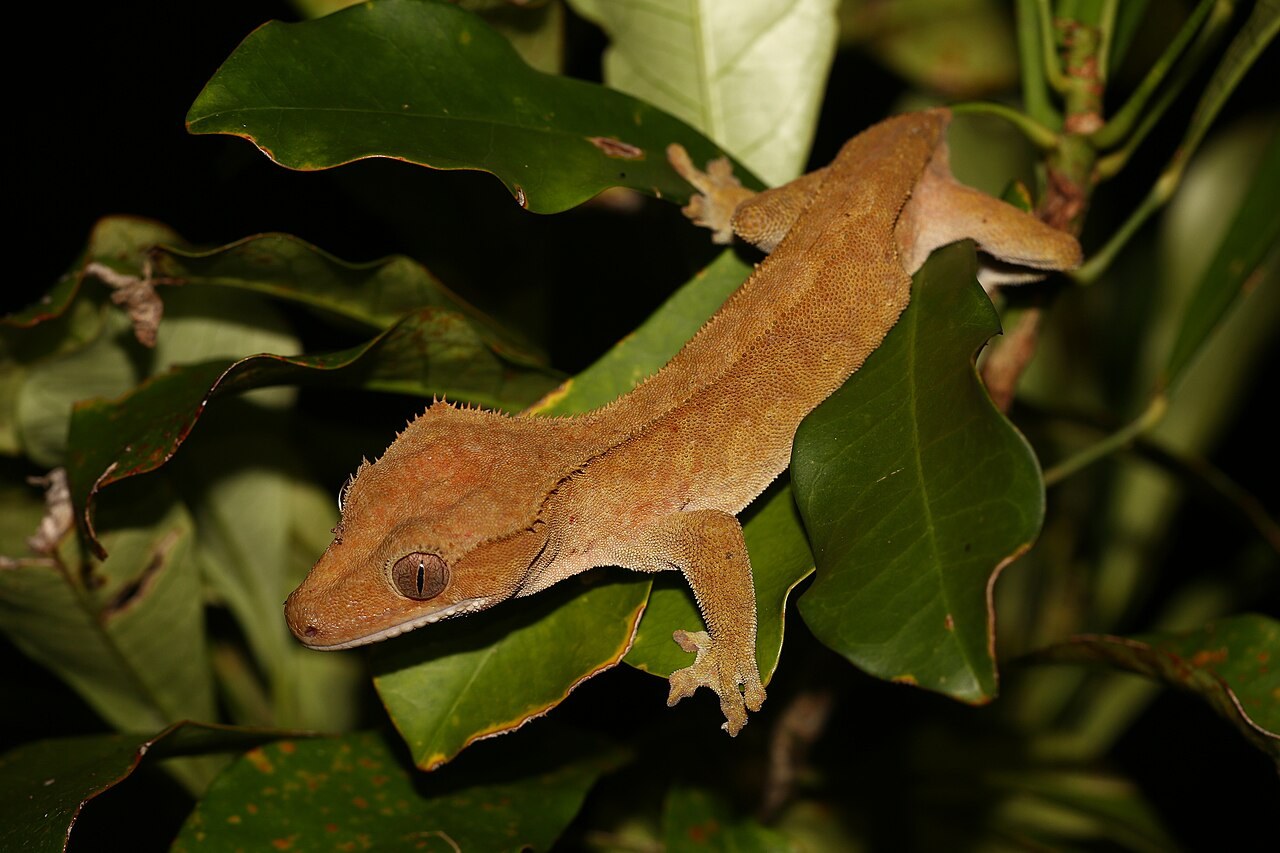
Crested gecko feeding is convenient only when the word complete means something on the food label. A sweet powder, mashed banana and baby fruit puree may all look similar in a dish, but they are not interchangeable diets. Good nutrition combines the right commercial formula, an age-appropriate routine and records that show what your particular gecko is actually eating.
Start with a genuinely complete crested gecko diet
CGD means crested gecko diet, usually a powder mixed with water. Select a reputable species-appropriate product explicitly described as nutritionally complete for the relevant life stage. Read the full directions, not just the fruit pictured on the front. Some powders are treats, supplements or components of a feeding system that includes insects; they cannot automatically serve as the whole ration.
Baby fruit puree lacks the balanced protein, minerals and vitamins required for ongoing crested gecko care. Organic ingredients and the absence of added sugar do not fix that mismatch. Fruit alone and insects alone are also poor default substitutes for a complete feeding plan. Avoid homemade recipes that claim a pinch of supplement makes every ingredient combination balanced.
Ask the previous keeper which exact food the gecko has been accepting. Starting with that familiar complete formula can simplify the transition. Once appetite is established, introduce any new suitable formula gradually, while retaining enough consistency to judge intake and droppings.
Match feeding opportunities to age and condition
As a representative starting schedule, offer complete CGD daily to juveniles under about 12 months, and every 2–3 days to established adults. These are feeding opportunities rather than instructions to make the gecko finish a fixed volume. An animal's growth, health, reproductive status and actual product directions matter more than a birthday alone.
Serve food in the evening when the gecko is becoming active. Use a stable feeding ledge with a sheltered approach, and offer a manageable amount that allows you to see licking marks. A large, deep bowl can make a small meal almost invisible. Never assume an apparently untouched surface proves that the animal has eaten nothing.
Record the date, formula and visible intake, then compare those observations with body condition and weight over time. Growing juveniles need closer attention than a stable adult. If appetite falls alongside weight loss or weakness, seek veterinary advice rather than simply making the food sweeter or increasing every supplement.
Prepare food safely and make water easy to find
Follow the manufacturer's powder-to-water ratio rather than using a universal recipe. Formulas absorb water differently, and an overly diluted mix changes the nutrition delivered in each lick. Stir with dedicated clean equipment and avoid contaminating the dry powder with a wet spoon. Store opened food as its label directs, keeping its batch details and expiry information.
Remove prepared food within 24 hours, or sooner if the label requires it or the food becomes contaminated, unusually warm or visibly spoiled. Do not keep topping up an old bowl. Wash the dish, rinse thoroughly and offer a fresh portion when the schedule calls for it. Food safety matters especially in a moist enclosure.
Provide fresh drinking water daily, even though the gecko also drinks droplets after misting. Water mixed into CGD is not a reason to remove the water dish.
Decide what insects add to the actual formula
Separate insect feeding is product-dependent, not an identical requirement for every bag labeled CGD. Some complete insect-containing formulas provide balanced nutrition without additional feeders. Other feeding systems expect insects as part of the ration. Read the directions for your specific product and ask a reptile veterinarian to review unclear or conflicting instructions.
Representative insect opportunities are 1–2 times weekly for juveniles and 0–1 time weekly for adults, adjusted to the formula and condition. Suitable insects can encourage natural hunting, but enrichment does not justify continually adding calories to an overweight adult. Some established geckos show little interest in feeders; that alone is not proof of deficiency when they eat an appropriate complete diet.
Choose captive-produced feeders of suitable size, generally no wider than the space between the gecko's eyes. Gut-load them with an appropriate nutritious feeder diet before use, following that product's instructions. Offer them where the gecko will not strike into loose substrate, supervise and remove uneaten insects. Avoid wild-caught prey with unknown pesticide or parasite exposure.
Coordinate calcium, vitamin D3 and UVB
Calcium dusting improves the mineral balance of many feeder insects, but the correct supplement plan depends on everything else the gecko receives. Prepare a list of the CGD, insect gut-load and dusting products rather than treating each in isolation. A powder containing vitamin D3 and another containing several vitamins can overlap with an already fortified complete food.
This care approach provides approximately UVI 0.7 at an exposed upper perch, grading to zero in dense shade. Actual exposure depends on lamp placement, mesh and the gecko's access to cover. Having a lamp somewhere above the tank is not enough information to select a supplement automatically. Where UVB is appropriately supplied, additional D3 on insects may be unnecessary; review the whole diet with a reptile veterinarian.
Keep the product labels available so advice can be based on the actual formulations.
Interpret appetite using the whole husbandry picture
A gecko may eat poorly because food is inaccessible, the habitat is unsuitable, it is stressed or it is ill. Check warm daytime air at 24–26°C (75.2–78.8°F) and cool air at 21–24°C (69.8–75.2°F). Independently check perch surfaces for hotspots and maintain night air at 18–20°C (64.4–68°F). Do not turn a source's unspecified warm-zone reading into a numerical surface target. Do not respond to poor appetite by creating a hotter desert-style basking spot.
Use a suitable small-animal scale and a secure container for brief, consistent weighing when the animal tolerates it. A trend is more useful than one reading after a meal. Record these practical checkpoints:
- Whether the complete food is familiar and correctly mixed.
- Whether the feeding ledge remains accessible under cover.
- Recent changes in weight, droppings, activity or shedding.
- All insects, treats and supplements offered since the last check.
Contact a reptile veterinarian promptly for persistent refusal with weight loss, marked lethargy, abnormal droppings or weak climbing. Never force-feed or syringe water into the mouth without veterinary direction; investigating the cause is safer than hiding the warning sign.
Continue reading: Crested Gecko Health Issues: Warning Signs and Prevention.
Sources and further reading:
- RSPCA: Caring for your Crested Gecko
- ReptiFiles: Crested Gecko Care Manual and Terrarium Size Guidelines
- ReptiFiles: Crested Gecko Temperatures & Humidity
- ReptiFiles: Crested Gecko Food
- CDC: Reptiles and Amphibians
Photo credits: Lennart Hudel (CC BY 4.0 International). Images resized and compressed for web display. Each image retains its linked license.
