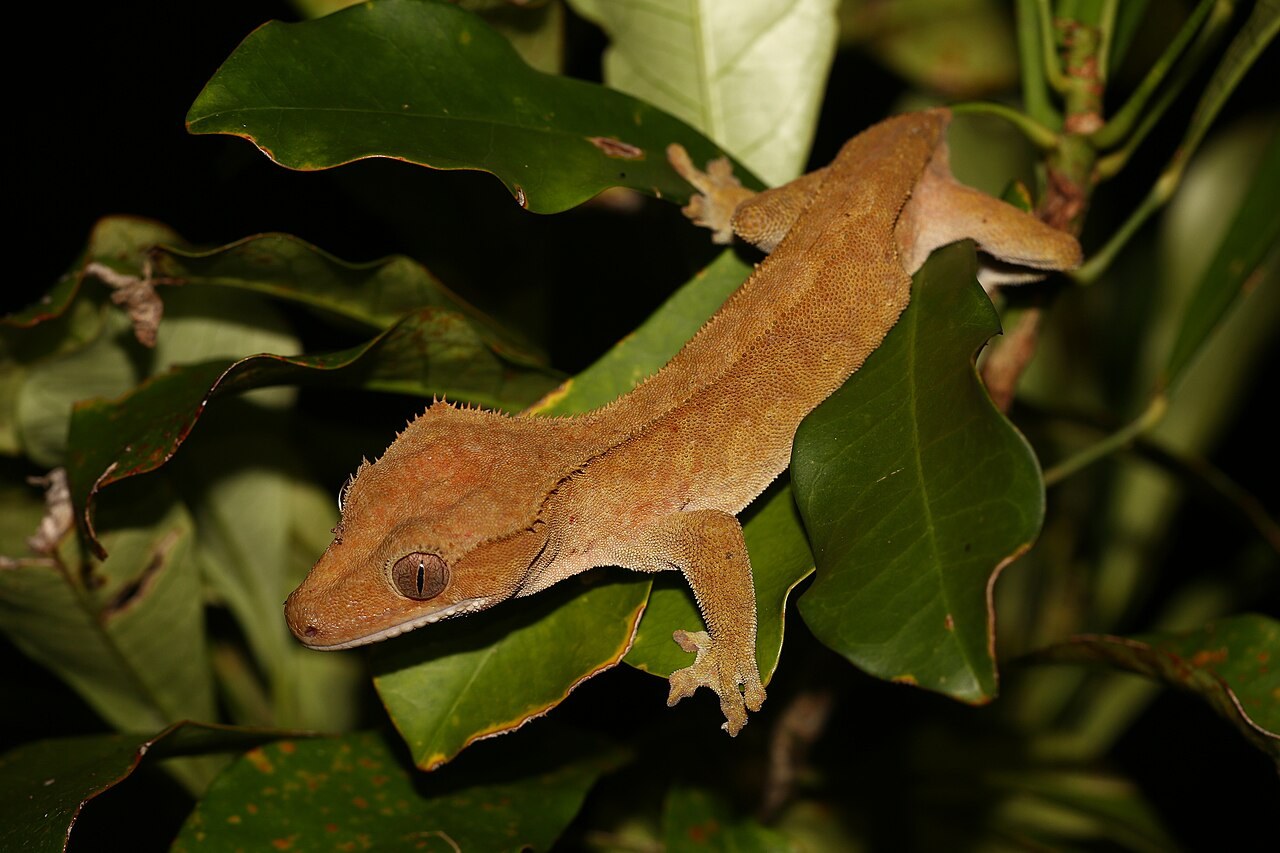
Crested gecko shedding care is mostly environmental care, not grooming. A healthy gecko usually removes old skin without help and may eat it before you see any evidence. Your role is to provide hydration, a measured humidity cycle and clean, secure climbing surfaces, then notice when retained skin or an underlying illness prevents normal movement. Pulling skin away is not a shortcut.
Recognize an ordinary shed without disturbing it
Before shedding, a crested gecko may look duller or paler than usual and spend extra time under cover. Color also changes for other reasons, so appearance alone cannot confirm that shedding is imminent. Observe the familiar evening routine, food intake and movement rather than repeatedly waking the animal to inspect every patch of skin.
Shedding often happens during the active nighttime period, and eating the discarded skin is normal. Finding no shed on the floor is not proof that something is wrong. Younger, growing animals tend to shed more frequently than established adults, but there is no universal calendar that every healthy individual must follow.
Avoid unnecessary handling while the gecko is shedding. Do not remove the skin it is actively working loose, and do not add supplements merely because a shed is underway. What matters afterward is comfortable movement, intact toes and the absence of persistent constricting skin or abnormal eye changes.
Use a measured humidity cycle rather than permanent dampness
Aim for a brief 70–80% RH rise after misting, followed by a daytime drying phase toward 40–50% RH before the next substantial misting. This cycle gives the animal access to moisture without keeping exposed surfaces perpetually wet. Place the hygrometer near occupied perches and away from the direct spray path so its reading represents the local air.
Mist foliage in the evening, then adjust the next application to how the enclosure actually dries. Room humidity, ventilation, plant growth and substrate depth all influence that pattern. A fixed misting timer can be useful, but it cannot determine whether a sensor has moved or a ventilation panel is blocked.
Provide fresh drinking water daily even if you often see droplets being licked. Check that the bowl and climbing route remain accessible. Do not interpret one good humidity reading as proof of adequate hydration; appetite, overall condition and persistent shedding problems may still require veterinary assessment.
Offer humid cover while protecting ventilation and temperature
A sheltered, lightly damp refuge can give a shedding gecko another option, particularly if the room dries quickly. It must be stable, easy to enter and suitable for an arboreal animal, not a precariously attached container that can fall. Check it frequently and replace contaminated material rather than adding water to soiled bedding.
Maintain cross-ventilation. Blocking every vent, soaking all substrate or using an enclosed steam chamber does not reproduce a useful humidity cycle. Wet conditions combined with dirty surfaces can create additional skin and hygiene problems. The animal should have clean, dry resting choices outside the humid refuge.
Keep warm daytime air at 24–26°C (75.2–78.8°F), cool air at 21–24°C (69.8–75.2°F) and night air at 18–20°C (64.4–68°F). Independently check accessible perch surfaces for hotspots; this guide does not adopt a separate numerical surface target. Never raise heat to speed shedding. Measure air with secured probes and surfaces directly with an infrared thermometer; a warm, wet box can become unsafe surprisingly quickly.
Inspect toes and eyes without pulling retained skin
After a suspected shed, watch the gecko move along familiar branches. If it tolerates a brief visual check, look for persistent skin around toes or the tail tip without restraining those structures. Tiny toes are vulnerable to constriction, and worsening difficulty gripping deserves attention even when you cannot see a clear band.
Crested geckos lack movable eyelids and normally lick the transparent covering of their eyes. An eye that appears swollen, persistently abnormal or associated with discharge is not a household cleaning task. Do not rub it with a swab, apply eye drops intended for people or attempt to lift an apparent layer of skin.
If retention keeps recurring, ask the veterinarian to review hydration, nutrition, lighting and general health alongside the enclosure conditions.
Keep skin-contact surfaces clean and secure
Branches, leaves, ledges and hides are the surfaces the gecko actually touches. Remove droppings promptly and clean food residue before it dries into difficult patches. Inspect artificial leaves for sharp edges and damaged attachments, and keep live plants free of unsafe chemical residues. A decorative surface that cannot be cleaned should not remain indefinitely because it looks natural.
Use reptile-appropriate cleaning and disinfection products according to their directions, with the animal safely elsewhere when necessary. Never mix cleaners. Rinse and allow furnishings to dry as required before returning them, and preserve a familiar secure route when possible so maintenance does not remove every refuge simultaneously.
For routine checks, focus on these details:
- Fresh water and clean food dishes without old mixture underneath.
- No persistent puddles, sour odors or waterlogged resting areas.
- Secure branches and attachments that support normal climbing.
- No accessible adhesive strips, abrasive damage or exposed hot fittings.
Wash hands after habitat work and keep equipment out of kitchens. A bioactive enclosure still needs inspection and spot cleaning; cleanup organisms do not remove every pathogen or husbandry error.
Know when the problem is more than a shed
Persistent difficulty gripping can reflect retained skin, but it can also occur with nutritional bone disease, trauma or other illness. Weight loss, marked lethargy or reduced appetite should not automatically be excused as shedding. Record the changes and call a reptile veterinarian, especially when more than one sign appears together.
Complete commercial CGD provides a better nutritional foundation than baby fruit puree. Coordinate any insects, calcium and vitamin D3 with the exact product and measured UVB provision rather than adding a new powder for every skin problem. Keep a list of all foods and supplements for the appointment.
A fresh tail injury needs separate consideration: crested gecko tails do not regrow, and a wound is not simply another patch of shed. Seek advice, maintain clean surfaces and avoid manipulating the area. Significant bleeding, exposed tissue or breathing distress is urgent.
The goal is a gecko that can complete normal skin renewal with minimal interference. Better measurements, appropriate moisture choices and timely veterinary care are more helpful than a more elaborate grooming routine.
Continue reading: Living With a Crested Gecko: Daily Care and Long-Term Planning.
Sources and further reading:
- RSPCA: Caring for your Crested Gecko
- ReptiFiles: Crested Gecko Care Manual and Terrarium Size Guidelines
- ReptiFiles: Crested Gecko Temperatures & Humidity
- ReptiFiles: Crested Gecko Food
- CDC: Reptiles and Amphibians
Photo credits: Lennart Hudel (CC BY 4.0 International). Images resized and compressed for web display. Each image retains its linked license.
