Oscar Care Guide: Build the Adult Aquarium First
Plan an adult Oscar aquarium with room to turn, secure equipment, stable water and sensible stocking. Learn what to prepare before bringing your fish home.
Read article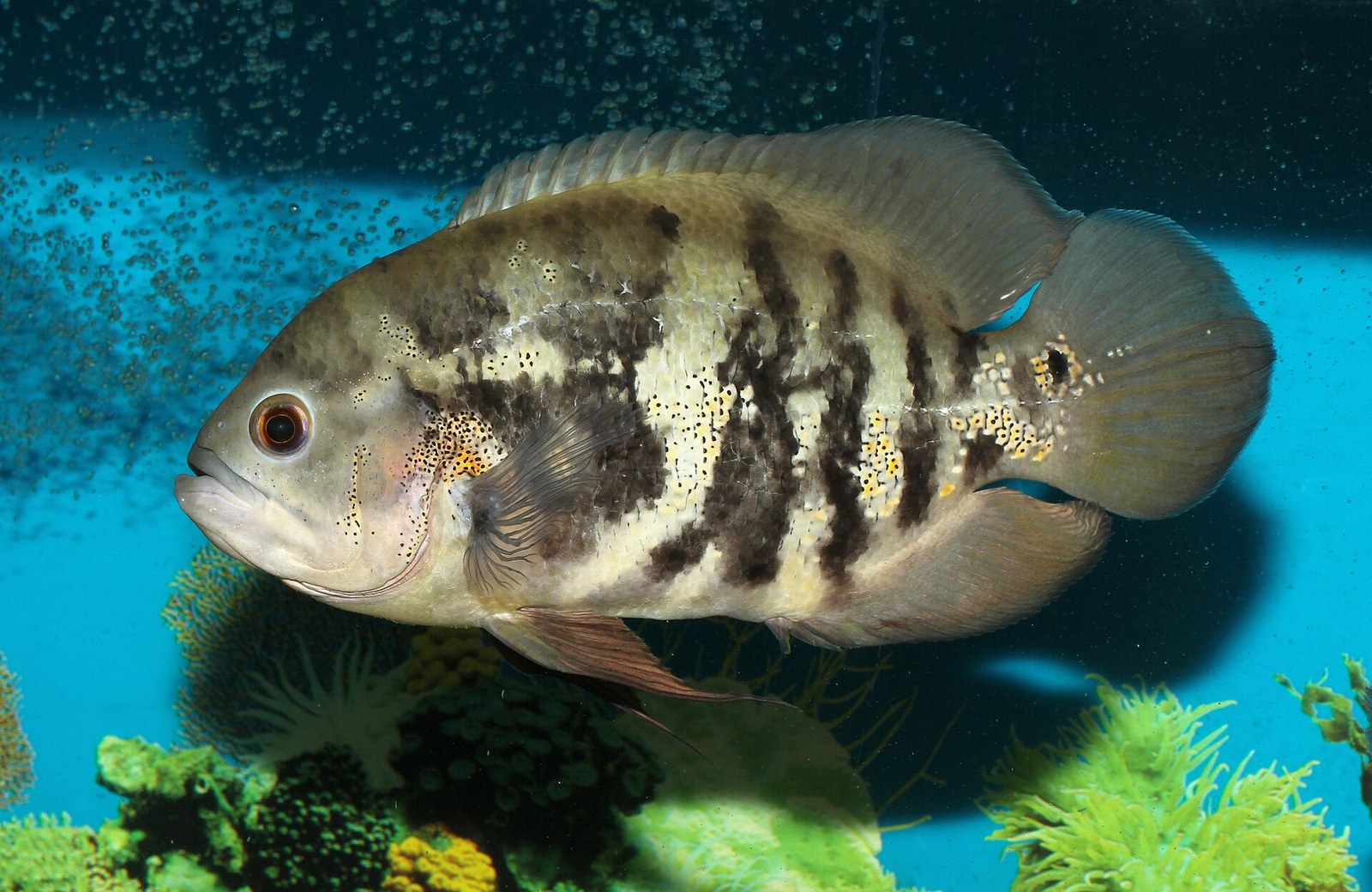
Astronotus ocellatus
A big, watchful freshwater cichlid that needs adult-sized space and a keeper who enjoys the daily details.
Deep Dive
History
The Oscar, Astronotus ocellatus, comes from South America's Amazon region. Seriously Fish describes shallow areas of slow-moving or still water, including silt-laden white water. This is useful context for an aquarium, but not an instruction to reproduce muddy water in your living room. A fish can originate in a turbid habitat and still require clean, oxygenated water with a functioning biological filter. Understanding that distinction prevents the familiar mistake of treating hardiness as permission to neglect maintenance.
Aquarium names such as tiger Oscar, red Oscar and velvet cichlid describe familiar forms or common names rather than separate care categories. The small fish offered for sale is the beginning of a large-animal commitment. Seriously Fish reports a maximum of 350 mm standard length, which excludes the tail fin, and a typical lifespan of ten to twenty years. Those figures should shape housing decisions before purchase, rather than becoming reasons for an emergency upgrade later.
Published husbandry opinions are not completely uniform. Seriously Fish supplies a tank base for one adult while favoring pairs; Maidenhead Aquatics places greater emphasis on compatible pairs or larger groups. Neither position makes an arbitrary pair safe in a small tank. This profile uses a clearly identified single-adult housing reference and treats additional Oscars as a separate, more demanding plan. Responsible ownership also means arranging rehoming if needed, never releasing an aquarium fish into a pond, river or other natural waterway.
Personality
An Oscar often becomes the fish you watch rather than merely the fish you display. It may follow movement outside the glass, investigate a familiar feeding position and rearrange items that seemed perfectly placed the day before. These behaviors make daily observation rewarding, but they are not reliable evidence of human-like affection or an empty stomach. Food anticipation can continue after a sufficient meal, so a lively response to your arrival should not automatically earn another portion.
Territorial behavior and predation limit the Oscar's suitability for a mixed aquarium. Seriously Fish explicitly describes it as not a community fish, and much smaller companions may become prey. A fish that coexists with a juvenile Oscar is not necessarily safe once that Oscar matures. Even similarly sized animals can compete or injure each other. A compatible pair is a relationship to observe, not a label that can be created simply by buying two individuals.
Look for patterns before attaching meanings to behavior. An Oscar resting after lights dim is different from one suddenly lying down while breathing hard. A brief retreat during cleaning is different from persistent avoidance of a tank mate. Give the fish secure surroundings, predictable routines and the option to move away from activity. The trait scores here are practical editorial comparisons, not scientific temperament measurements. Your own records of appetite, posture and territory use are more helpful than assuming every Oscar will behave alike.
Appearance
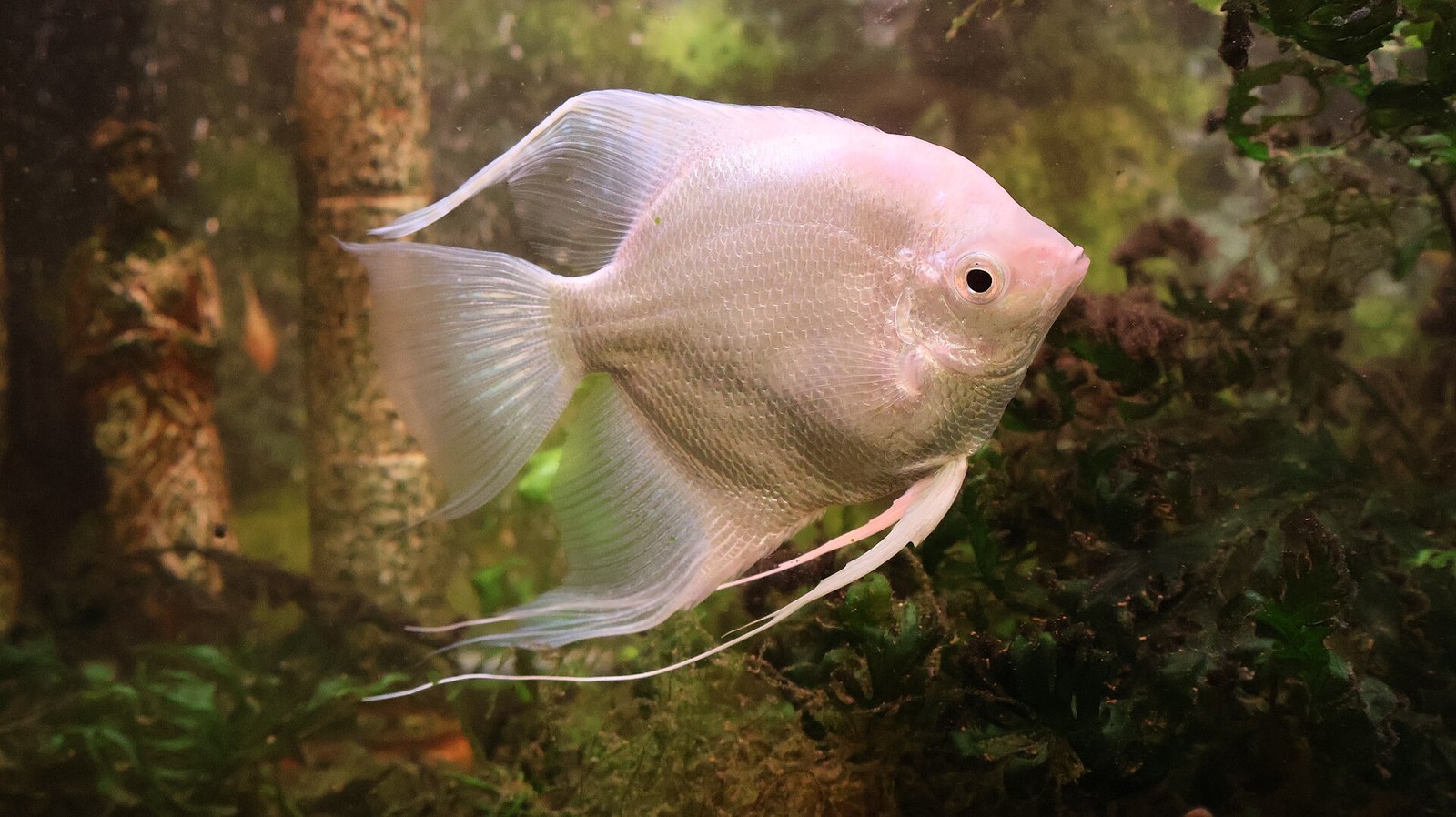
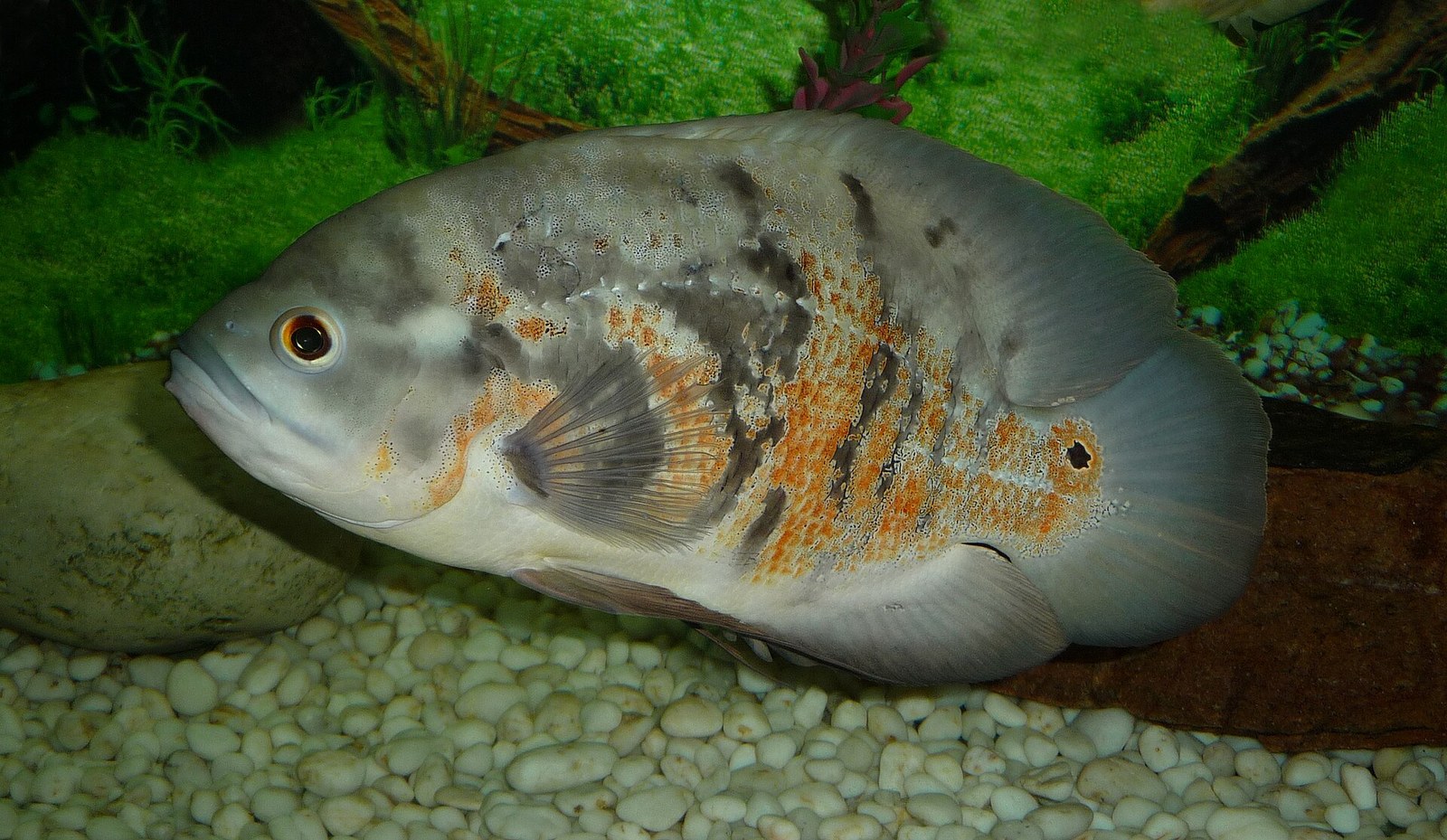
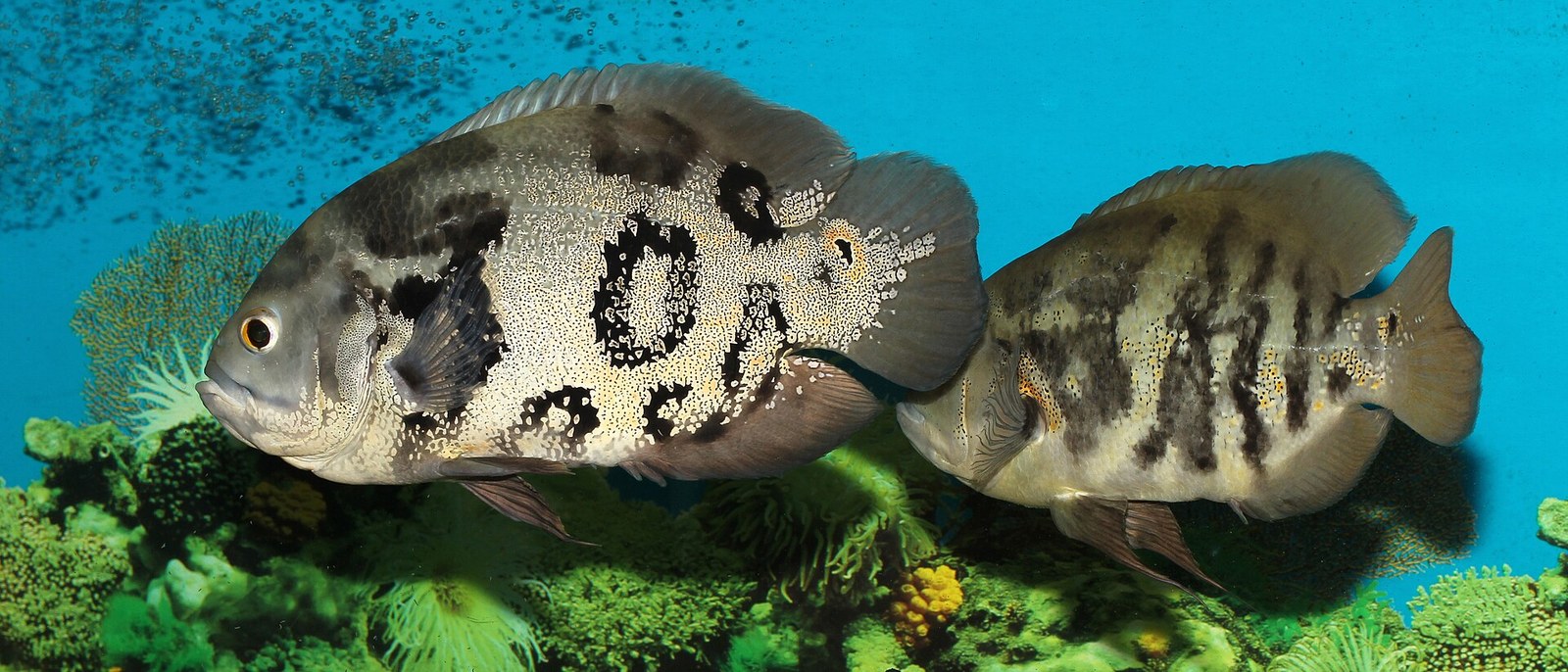
The Oscar has a substantial, deep body, broad fins and a mouth that makes its feeding strategy easy to understand. Familiar aquarium forms show dark patterning with orange or red areas, while pale forms can make the same body outline look strikingly different. Color labels are not a dependable guide to adult space requirements. Whatever the pattern, you are planning for a muscular cichlid that needs room to turn comfortably and equipment that remains secure when investigated.
Size claims need their measurement labels. Seriously Fish lists 350 mm standard length, meaning the tail fin is excluded. Maidenhead Aquatics lists a maximum size of 34 cm without specifying the length convention. These are not interchangeable measurements to average into a supposedly exact adult size. Use the clearly defined standard-length figure when describing this profile, and assess the actual fish's total body clearance when choosing a tank. A narrow aquarium can restrict turning even if its advertised volume sounds impressive.
Appearance also gives you a baseline for health checks. Notice the normal outline of the abdomen, the shape of the fin edges and any existing marks around the head. Photograph the fish occasionally under similar lighting rather than relying on memory or dramatic color changes alone. New pits, swelling, cloudiness, missing scales or persistent clamping deserve investigation, but none identifies a disease by itself. Pair visual observations with water tests and feeding history, and seek an aquatic veterinarian for progressive changes or obvious distress.
Photo credits: George Chernilevsky (Public domain (copyright holder release; not CC0)), George Chernilevsky (Public domain (copyright holder release; not CC0)), George Chernilevsky (Public domain (copyright holder release; not CC0)). Images resized and compressed for web display. Each image retains its linked license.
Living With
Living with an Oscar is largely about making a large freshwater system easy to care for consistently. Seriously Fish calls a 150 by 60 cm tank base just large enough for a single adult. That is a footprint reference, not a stated aquarium volume or permission to add a second fish. Depth, equipment space and usable swimming room still matter. A compatible pair requires a larger design and a realistic way to separate the fish if the relationship fails.
Your regular work includes measured feeding, observation, water testing and partial water changes based on the aquarium's actual waste load. Oscars can shift substrate, dislodge plants and disturb hardware. Secure rockwork, protected heaters and accessible filter components are therefore more useful than a delicate display that must constantly be rebuilt. A mature filter processes waste; it does not remove the need to siphon debris or replace water. Arrange the aquarium so those tasks are manageable when you are busy or tired.
Before bringing an Oscar home, consider holidays, electricity interruptions and future moves. Someone must be able to check that equipment is running and recognize a fish that is breathing abnormally. A large tank also needs a suitable stand, safe access and appropriate support for its filled weight. The reward is not a maintenance-free pet or a guaranteed cuddly personality. It is a long relationship with an observant animal whose routines you can learn while giving it a stable, well-managed home.
At a Glance
Ownership Guide
Use the Seriously Fish 150 x 60 cm base reference for one adult, not a pair or juvenile group. Choose adequate depth and clear turning space; additional Oscars require a larger plan and separation capacity.
Build the diet around an appropriately sized complete cichlid food, with suitable frozen foods for variety. Live feeder fish are unnecessary; adjust portions to consumption, body condition and waste.
Establish biological filtration before adding the fish and monitor ammonia, nitrite and nitrate. Seriously Fish gives 20-28 C, pH 6.0-7.5 and 5-20 dGH; maintain stable conditions rather than chasing range endpoints.
Offer safe opportunities to explore around stable decor while keeping swimming room open. Use a portion of the normal ration for simple feeding-position routines, without tapping glass, forced contact or extra treats.
Small fish may be eaten and larger companions are not automatically safe. Sources differ on solitary versus social housing; a compatible pair needs more space than the single-adult reference and close observation.
Arrange an aquatic-veterinary contact and a properly filtered isolation option before trouble starts. Quarantine new arrivals with separate tools and avoid preventive antibiotics or treatment based only on a photograph.
Wellness
Gasping, rapid gill movement or loss of balance requires prompt water and equipment checks. Improve aeration and seek urgent aquatic-veterinary advice if distress is severe or persists.
New pits or erosions are a reason to review water quality and nutrition and obtain a diagnosis. Appearance alone does not prove a particular parasite or justify a medication.
Oscars can move objects and injure companions. Secure heavy structures and separate an injured or relentlessly chased fish into an appropriate prepared system.
Persistent refusal, swelling or weight loss needs investigation beyond changing food brands. Record meals, waste and water results for your veterinarian.
White spots, excess mucus, ulcers or deteriorating fins have several possible causes. Do not combine remedies or use antibiotics prophylactically.
Steady respiration, coordinated swimming and a consistent feeding response help you recognize changes early. These observations complement tests rather than replacing them.
Mature filtration, suitable nutrition and quarantine reduce avoidable problems. Good care lowers risk but does not make an Oscar immune to disease.
Further Reading
Plan an adult Oscar aquarium with room to turn, secure equipment, stable water and sensible stocking. Learn what to prepare before bringing your fish home.
Read articleFeed your Oscar a balanced staple, choose useful frozen extras and control messy meals. Learn why begging, feeder fish and fixed pellet counts can mislead.
Read articleRecognize Oscar health warning signs, check water before guessing at disease and gather useful records. Know when breathing changes need urgent expert help.
Read articleUnderstand Oscar digging, food anticipation and territorial behavior without guessing at emotions. Build calm routines and spot changes that deserve a check.
Read articleKeep Oscar tank maintenance practical with waste tracking, careful filter cleaning and prepared replacement water. Build a routine that protects stability.
Read articleConsider the space, household routines, holidays and future moves involved in living with an Oscar. Make a realistic plan for a large, long-lived aquarium pet.
Read articleYou May Also Like