Angelfish Care Guide: Plan for the Adult Fish
Plan an angelfish aquarium around adult size, stable water and safe social space, with practical advice on setup, feeding, quarantine and daily observation.
Read article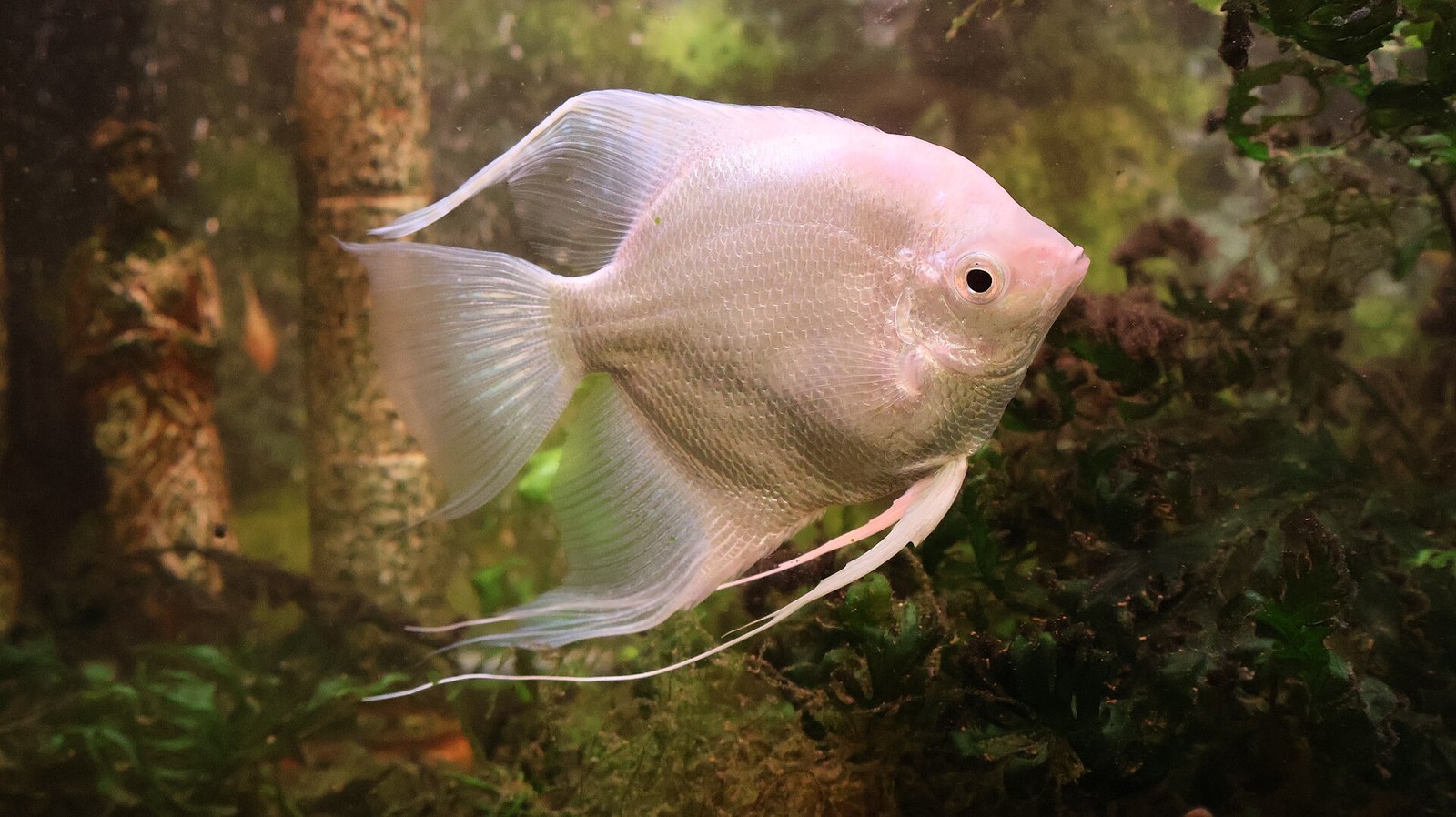
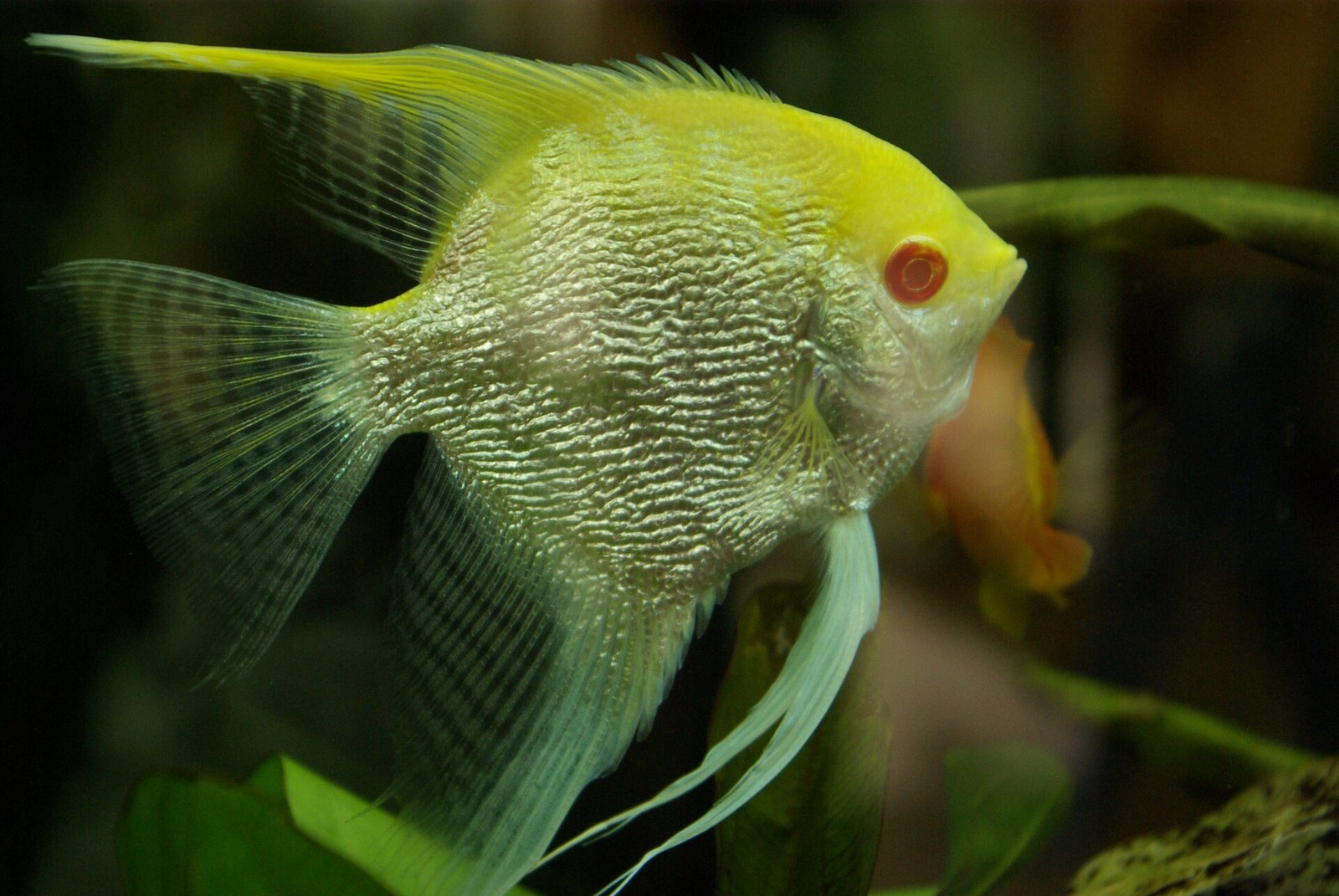
Pterophyllum scalare
Graceful freshwater cichlids whose tall fins need space and whose neighbors need careful choosing.
Deep Dive
History
The freshwater angelfish belongs to the cichlid family, despite a common name also used for unrelated marine fishes. Pterophyllum scalare is associated with South American river systems, including the Amazon basin. Tropical Fish Hobbyist identifies the lower Amazon in Brazil as its type locality, while other care references describe a wider regional distribution. These statements have different purposes: a type locality records the place attached to a scientific description, not every place the fish occurs. Thinking in terms of river habitats also helps explain why an angelfish aquarium needs shelter and usable swimming space rather than simply a decorative water column.
Most familiar shop angelfish are captive-bred, and domestic appearances should not be treated as reliable evidence of a particular wild collection locality. Seriously Fish even presents the name with quotation marks, reflecting caution around the broader species identity. This profile uses Pterophyllum scalare for the common aquarium fish without promising that every commercial strain has a documented ancestry. Ask a seller whether stock is captive-bred and what conditions it currently experiences. A healthy fish already eating prepared food is a more useful starting point than an impressive variety name. Our reviewed references do not establish a reliable lifespan range, so the honest ownership message is a long-term commitment, not an unsupported birthday estimate. Angelfish are cichlids, a family whose members vary widely in adult size, social behavior, and aquarium requirements.
Personality
An angelfish can drift quietly beside a plant and then become the most determined diner in the aquarium. Care references describe both generally docile behavior and disputes between individuals. Those descriptions are compatible: a fish may tolerate distant neighbors while vigorously defending its immediate space. Watch who approaches food, who retreats, and whether every individual can rest without being displaced. A quiet subordinate is not necessarily a contented subordinate. Repeated hiding, missed meals, or damaged fins deserve intervention rather than reassurance that the species is usually peaceful. Predation is another separate issue; a tiny companion can become food without any preceding territorial display.
Group recommendations must be read alongside aquarium size and an individual backup plan. Maidenhead Aquatics suggests at least four in a large aquarium, but that is not permission to fit four adults into any tank advertised for angelfish. Allow retreat routes and barriers that interrupt sight lines without trapping a fish in a dead end. Established social relationships can change, particularly when fish mature or form a pair. Avoid provoking displays with tapping, repeated chasing, or forced encounters. The trait scores on this page are editorial care indicators rather than experimental measurements or promises about a purchase. Your own feeding and behavior notes are the better guide to whether this particular group is working.
Appearance
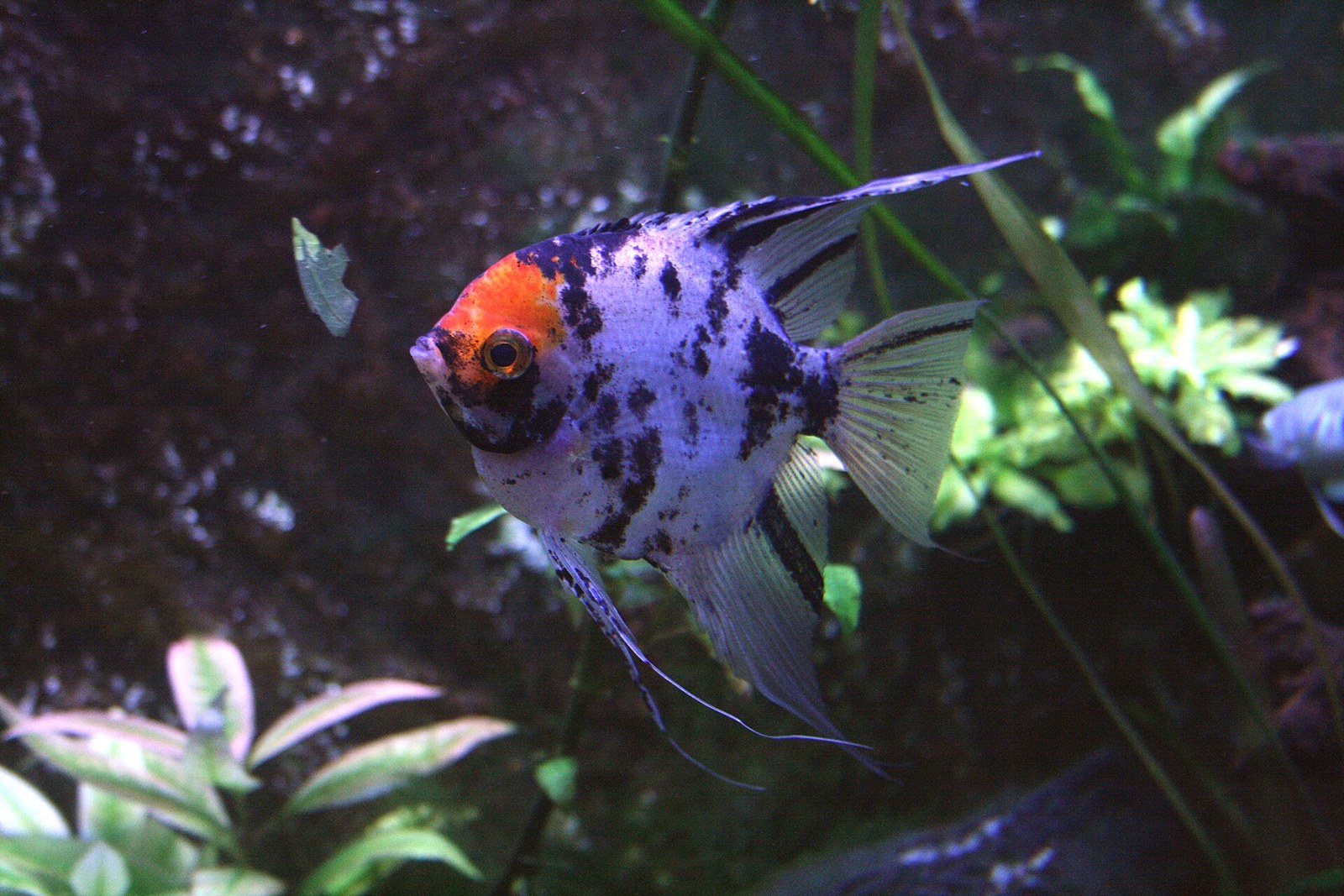
Freshwater angelfish have a laterally compressed body, extended dorsal and anal fins, and slender pelvic fins that make the whole fish look much taller than a simple length measurement suggests. Seriously Fish reports a maximum standard length of 150 mm, or 15 cm. Standard length excludes the caudal fin; it is neither total length nor the distance between the upper and lower fin tips. Do not turn that figure into a claim that an adult needs only fifteen centimeters of water depth. Fin shape, posture, and domestic variety all affect the space an individual uses, and no single vertical span is established by the sources reviewed here.
Silver, dark, and patterned domestic forms can look very different while sharing the same underlying need for unobstructed movement. Use photographs to appreciate appearance, not to infer temperament or precise ancestry. In a shop, observe the fish turning and feeding rather than choosing solely from a side-on pose. Look for balanced swimming, intact fins, and a body that is not visibly wasting. Long fins should move freely without snagging decorations or being pushed continuously by the filter outlet. Compare any future changes with your own baseline photographs, because ordinary pigment patterns can otherwise be mistaken for new marks. A tall aquarium helps, but height cannot compensate for inadequate floor space or aggressive stocking.
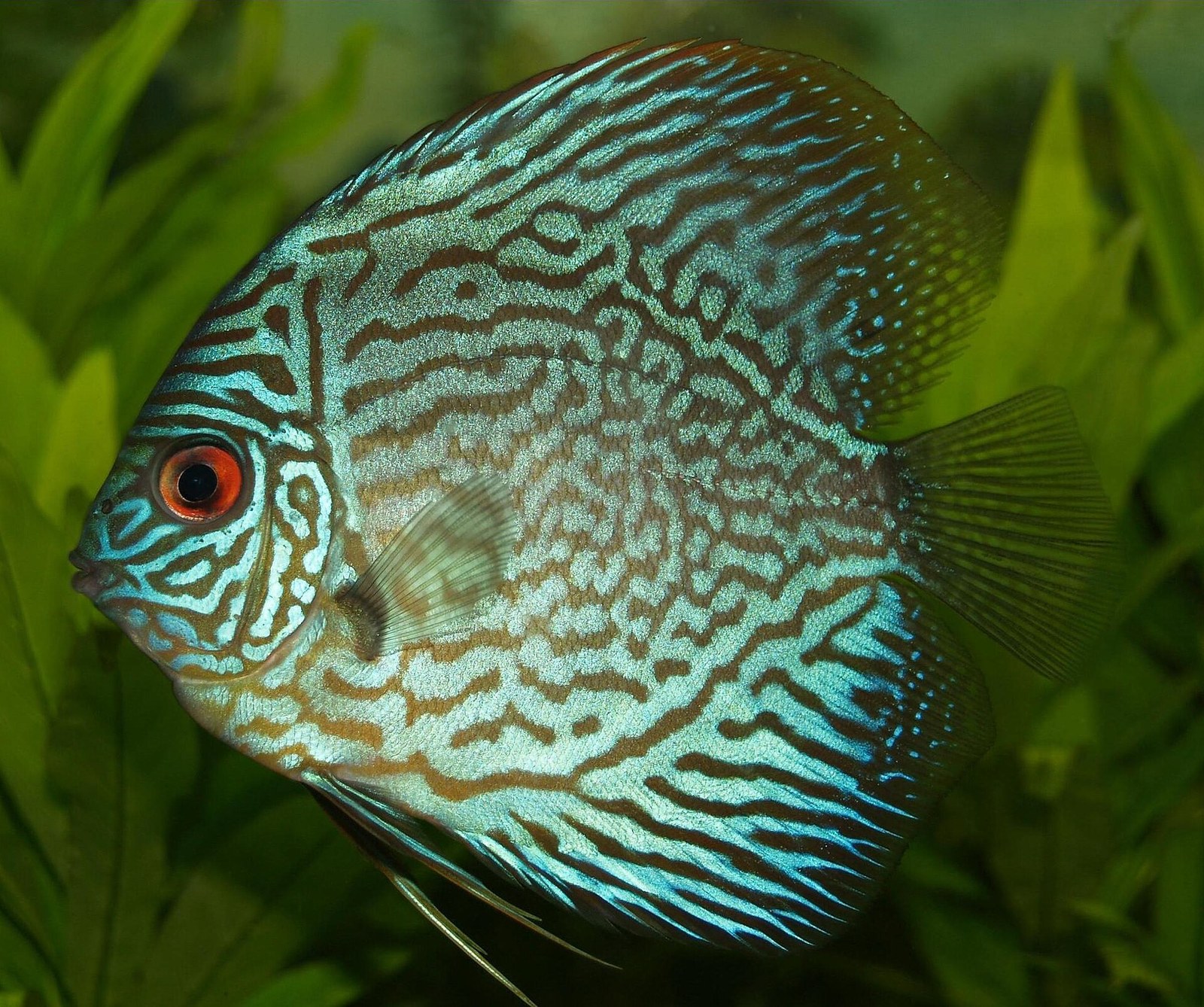
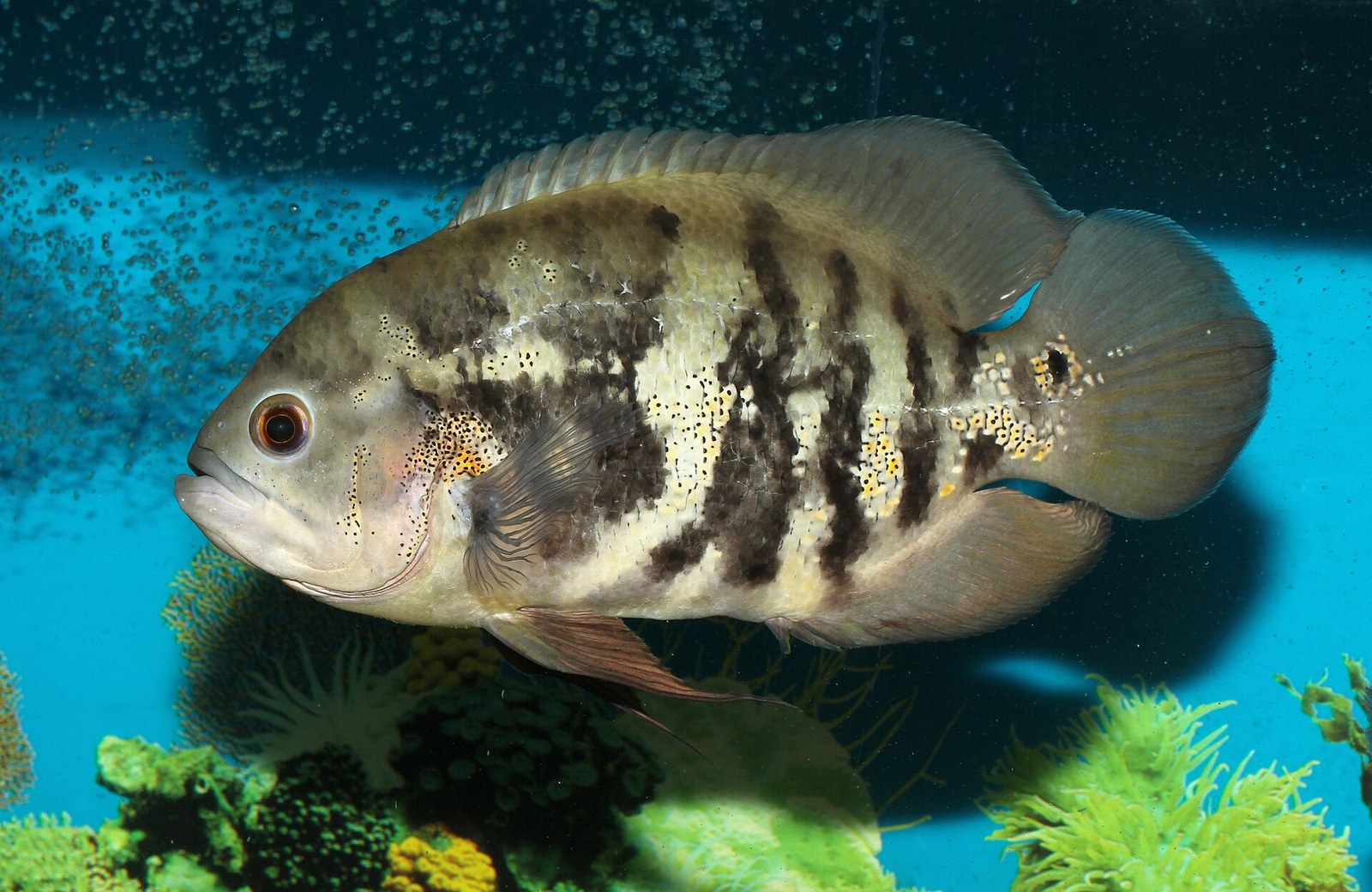
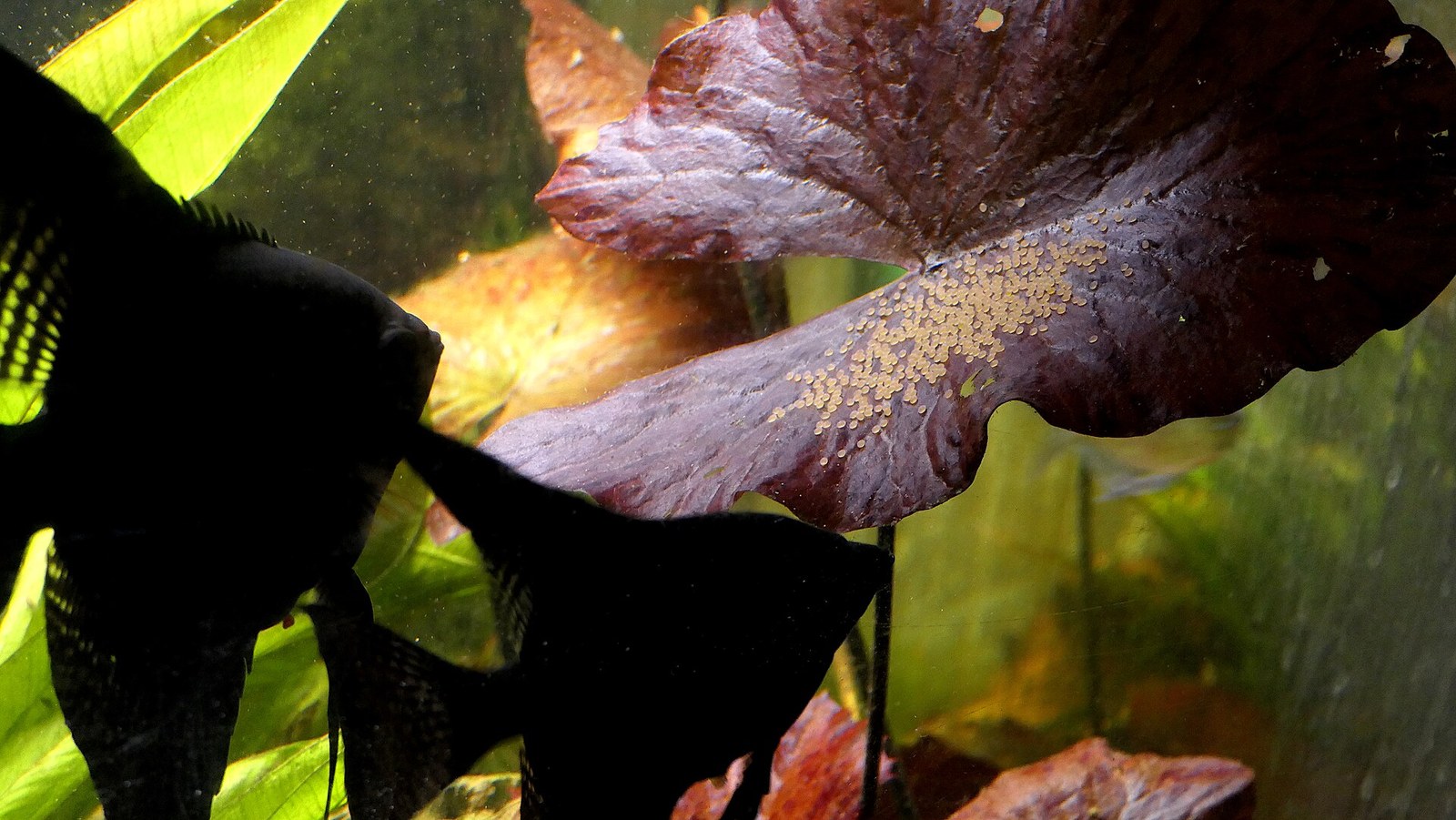
Photo credits: SmallSonMarex (CC0), Karelj (Public domain (copyright holder release; not CC0)), Love Krittaya (Public domain (copyright holder release; not CC0)), 5snake5 (CC0). Images resized and compressed for web display. Each image retains its linked license. Dimly lit breeding scene, retained as a secondary photograph rather than the cover.
Living With
Living with angelfish works best when the aquarium is planned for adults before juveniles arrive. This guide adopts Aqueon's recommendation of 55 US gallons or larger as a starting point, approximately 208 liters, and retains its emphasis on tall aquariums. It is not a fixed allowance for a pair or group. Seriously Fish separately lists dimensions of 100 by 40 by 50 centimeters without assigning a fish count. Use dimensions, filtration capacity, and observed social space together. The water recommendations used here come from Seriously Fish: 24-30 C, pH 6.0-7.4, and general hardness of 0-15 dGH. They describe a published aquarium range, not endpoints to alternate between.
A mature biofilter, dechlorinated replacement water, and testing are less glamorous than a striking centerpiece fish but make the display sustainable. Offer a suitable complete prepared food with modest frozen variety, then remove leftovers. Inspect each fish daily and arrange a separate, functioning quarantine system before buying additions. Small tankmates and fin nippers are poor experiments, and even apparently suitable companions need monitoring. Keep money and space available for separation if relationships fail. Our sources do not confirm a reliable lifespan range, so plan for ongoing care, holidays, equipment replacement, and responsible rehoming without assuming a short commitment. Never release an unwanted aquarium fish into outdoor waters.
At a Glance
Ownership Guide
Start adult planning at 55 US gallons or larger, with generous height and a useful footprint. This whole-aquarium recommendation is not a stocking formula; groups and disputed territories may need substantially more space.
Use a complete tropical fish food the angelfish can swallow, alongside modest frozen variety. Distribute food so shy fish can eat and remove leftovers instead of feeding the dominant fish repeatedly.
Use the Seriously Fish aquarium ranges of 24-30 C, pH 6.0-7.4 and 0-15 dGH as source-specific guidance, keeping conditions stable. Test ammonia and nitrite, preserve biological media, and prepare replacement water before changes.
Provide sheltered edges and open routes for deliberate midwater exploration. Observe feeding responses without tapping glass, forcing tricks, or adding mirrors to provoke territorial displays.
Exclude bite-sized fish and habitual fin nippers. Group recommendations do not guarantee harmony; monitor feeding access and keep a safe separation plan.
Arrange a separate heated, filtered quarantine aquarium before new arrivals; MSD gives 30 days as a general minimum, not automatic clearance. Breathing distress, wounds, or persistent refusal to eat warrant prompt water checks and aquatic veterinary advice.
Wellness
These should be undetectable in an established aquarium. An unexpected reading calls for prompt investigation, suitable conditioned water changes, and checks on filtration and feeding.
Labored breathing or several fish gathering at the surface is urgent. Check water quality, temperature, circulation and aeration while seeking qualified help; do not assume a parasite diagnosis.
Inspect social interactions and snagging hazards as well as possible illness. Protect a targeted fish with a safe, functioning separation system rather than a tiny unfiltered container.
Record which fish misses meals and whether it is being displaced. Water problems, food access and disease can overlap, so ongoing loss of appetite or body condition needs veterinary assessment.
Photograph changes and record their timing. Appearance alone cannot reliably distinguish parasites, injury and infection; avoid mixing medications without a diagnosis.
Steady feeding, ordinary breathing and intact fins provide helpful comparison points. They are reassuring observations, not proof that quarantine or water tests can be skipped.
Separate equipment, careful introductions and a maintained biofilter reduce avoidable problems. General preventive guidance is not a guarantee against every fish disease.
Further Reading
Plan an angelfish aquarium around adult size, stable water and safe social space, with practical advice on setup, feeding, quarantine and daily observation.
Read articleFeed angelfish with a balanced staple, useful frozen variety and portions you can observe, while preventing bullying, leftovers and avoidable water problems.
Read articleRecognize angelfish health warning signs, check water and social stress, and prepare useful records for a fish veterinarian without guessing at medications.
Read articleRead angelfish chasing, hiding and feeding behavior in context, with practical ways to assess group tension, protect shy fish and choose safer tankmates.
Read articleMaintain an angelfish tank with matched replacement water, test records and protected filter media, while keeping hardness units and cleaning tasks clear.
Read articleDecide whether angelfish fit your household by planning adult space, shared care, travel cover and emergency options before bringing these cichlids home.
Read articleYou May Also Like