Discus Care Guide: Build a Stable Home for a Group
Build a discus care plan around stable warm water, mature filtration and adult group space, with clear distinctions between domestic strains and wild fish.
Read article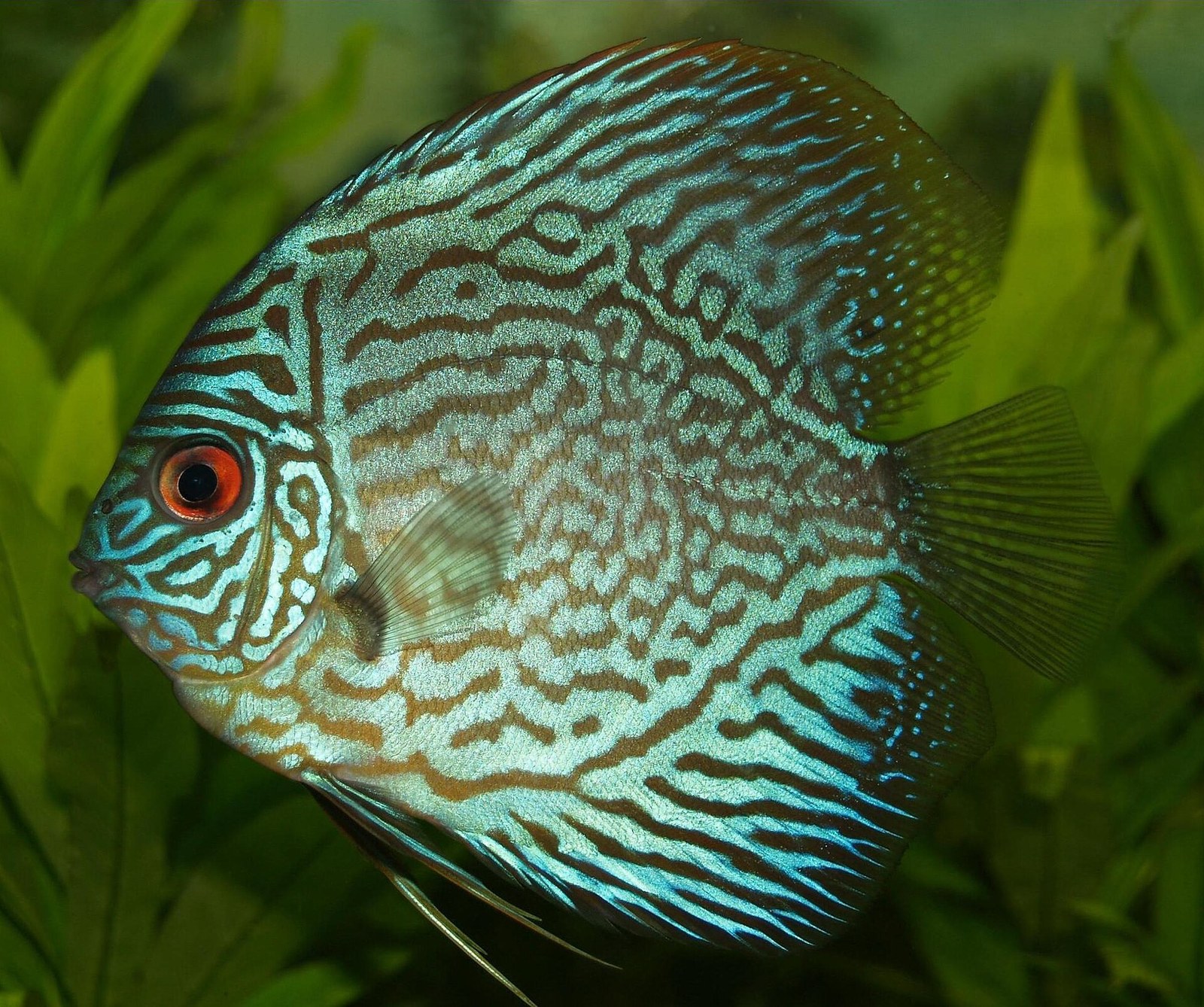
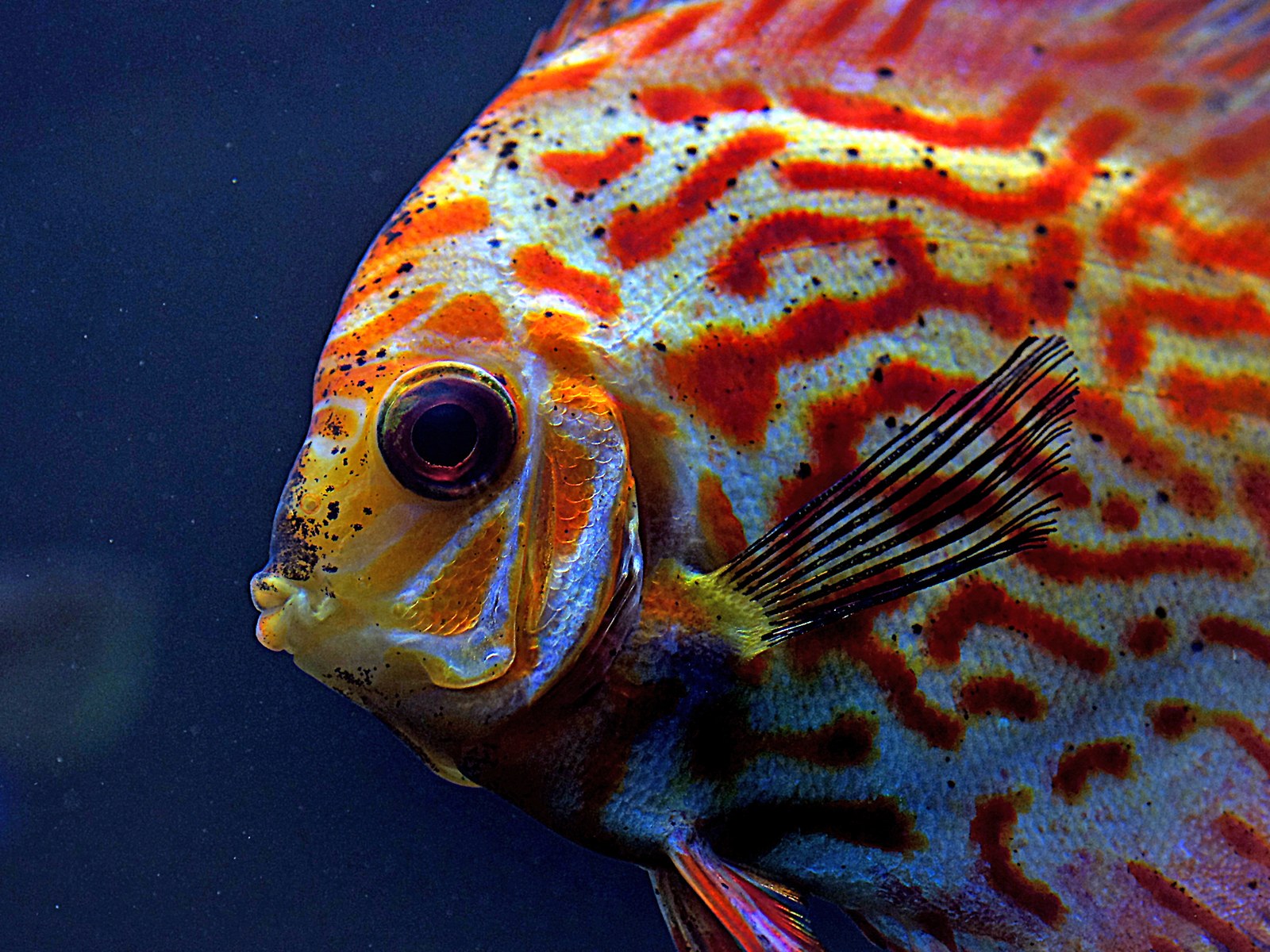
Symphysodon aequifasciatus
Colorful Amazonian cichlids that need a settled group, warm water and a keeper who enjoys careful routines.
Deep Dive
History
Discus come from the Amazon basin, but the name covers a more complicated identity than a single shop label suggests. Seriously Fish describes Symphysodon aequifasciatus in slow-moving tributaries and forest pools, using sheltered areas around roots and rocks. This is a species-specific account, not proof that every domestic color strain comes from the same locality. Wild collection histories matter when known, and unfamiliar wild fish should not be treated as interchangeable with established domestic stock. The practical lesson from these habitats is to provide security and suitable water management, not to reproduce a river photograph while ignoring the needs of the actual fish you buy.
The classification of Symphysodon has been debated, with competing schemes discussed by UF/IFAS. Maidenhead Aquatics presents three species and acknowledges geographical forms and natural hybridisation; these references do not settle every species boundary. UF/IFAS also describes crossbreeding among species, subspecies and varieties in commercial production. A retail color name therefore identifies an appearance or strain, not a certified ancestry. This page retains Symphysodon aequifasciatus as its catalog identity while labeling measurements that apply specifically to that species. Care guidance for domestic discus is kept separate from claims about wild populations. Ask suppliers about origin, established water conditions and accepted foods, and record what is known without turning an uncertain pedigree into a precise scientific statement.
Personality
Discus are social fish, but social does not mean that every member of a group enjoys equal access to food or shelter. Seriously Fish describes shy shoaling behavior and a need for cover. Maidenhead Aquatics recommends beginning with five or six fish so a natural hierarchy can develop. Watch how the whole group uses the aquarium: a fish lingering at the edge may be avoiding a stronger neighbor rather than choosing solitude. Repeatedly missed meals, persistent cornering or declining body condition matter more than whether the group forms a pleasing arrangement for the viewer. No purchase size or group number can guarantee peaceful relationships between individuals.
A settled aquarium helps you distinguish ordinary caution from a problem. Approach calmly, keep feeding and lighting routines predictable, and avoid tapping the glass or repeatedly rearranging every shelter. Give fish somewhere to withdraw without disappearing into an inaccessible trap. During meals, check that each individual swallows food rather than relying on the enthusiasm of the boldest fish. If one fish remains excluded, review space and layout and prepare a suitable separation option while also checking health and water quality. The trait scores here are editorial care indicators, not measured personality tests. They summarize the planning burden and should never replace direct observation of a particular group over time.
Appearance
Discus have a deep, laterally compressed body that gives them their familiar round silhouette when viewed from the side. Their shape makes a single length figure an incomplete guide to accommodation. Seriously Fish reports about 140 mm standard length for Symphysodon aequifasciatus, while FishBase lists a maximum of 13.7 cm SL for that species. Standard length excludes the tail fin. It is not total length, body height, or an established maximum for every domestic discus strain. Maidenhead's broader discus profile gives a different size description without the same measurement detail, so those figures are not merged into an artificial universal adult range.
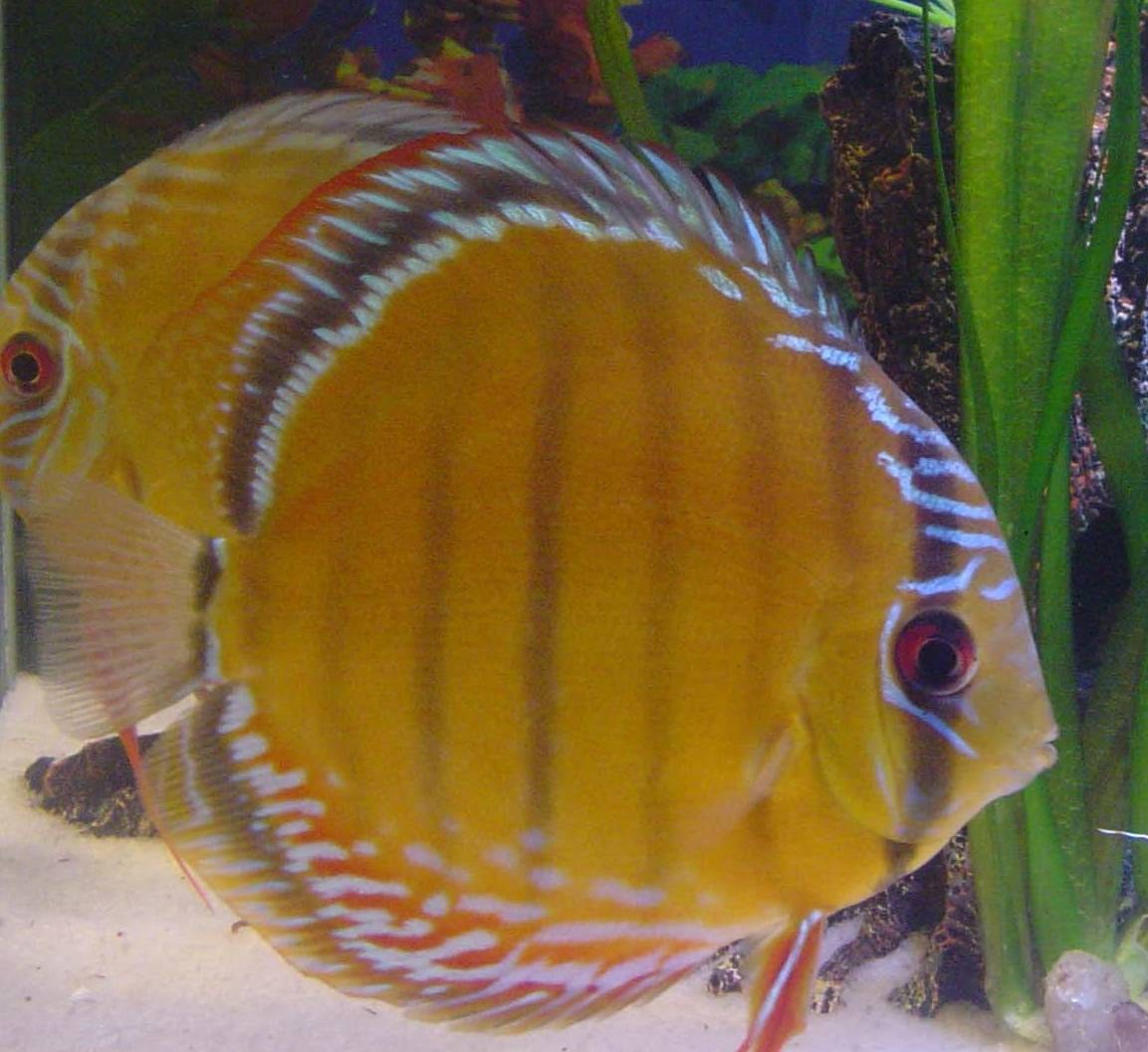
Commercial breeding has produced many colors and patterns, but color is a poor shortcut to exact ancestry, health or temperament. A bright fish can still be socially excluded, and normal markings differ between strains. At a retailer, observe the fish moving, turning and taking food, not just holding a flattering side-on pose. Look for balanced swimming, intact fins and a body outline that is not visibly wasting. Ask to see the whole group so that a single impressive specimen does not distract from unhealthy companions. Keep baseline photographs after purchase to help recognize new changes. Appearance can guide useful questions, but diagnosing disease or certifying lineage requires more evidence than a photograph supplies.
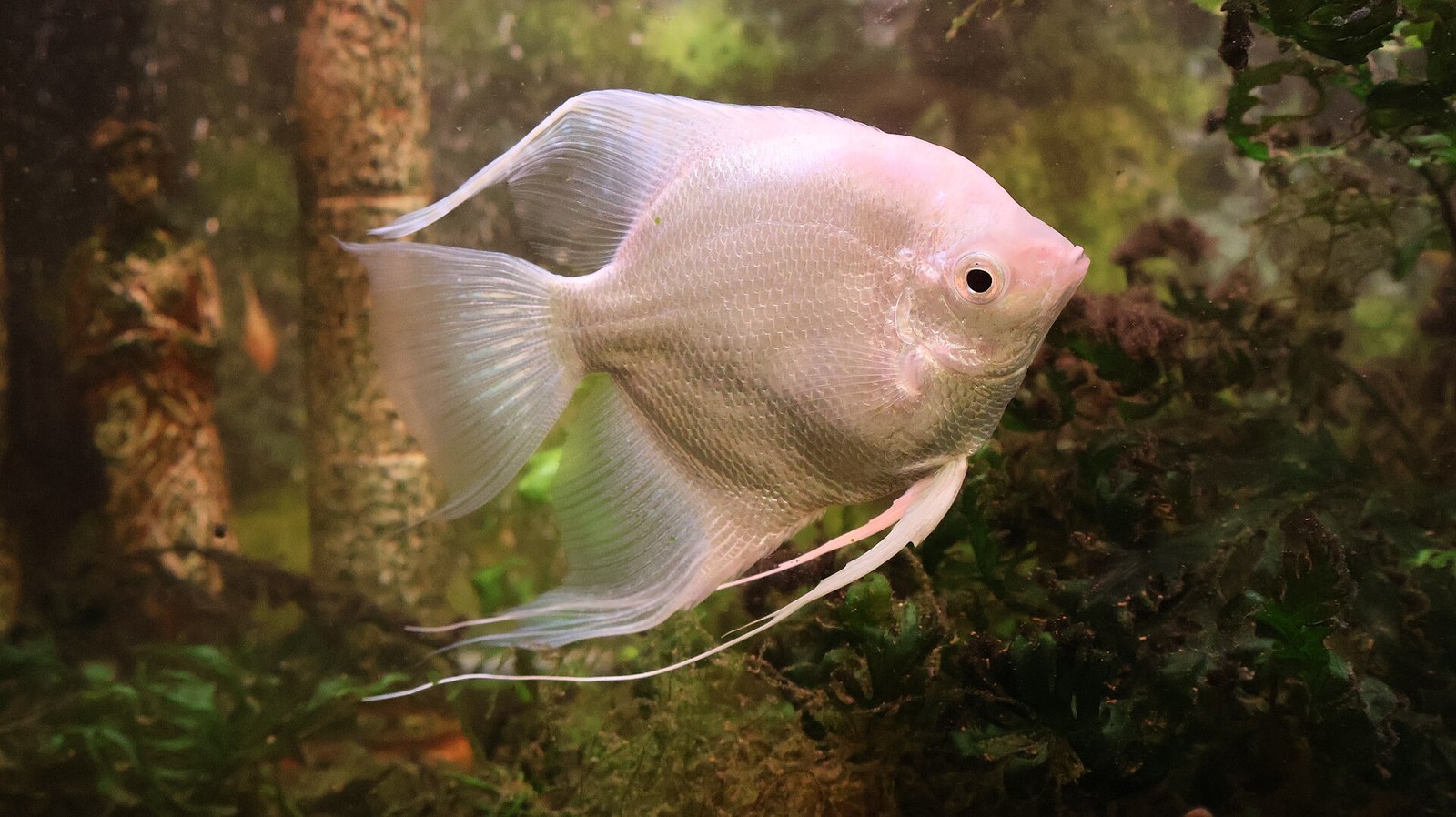
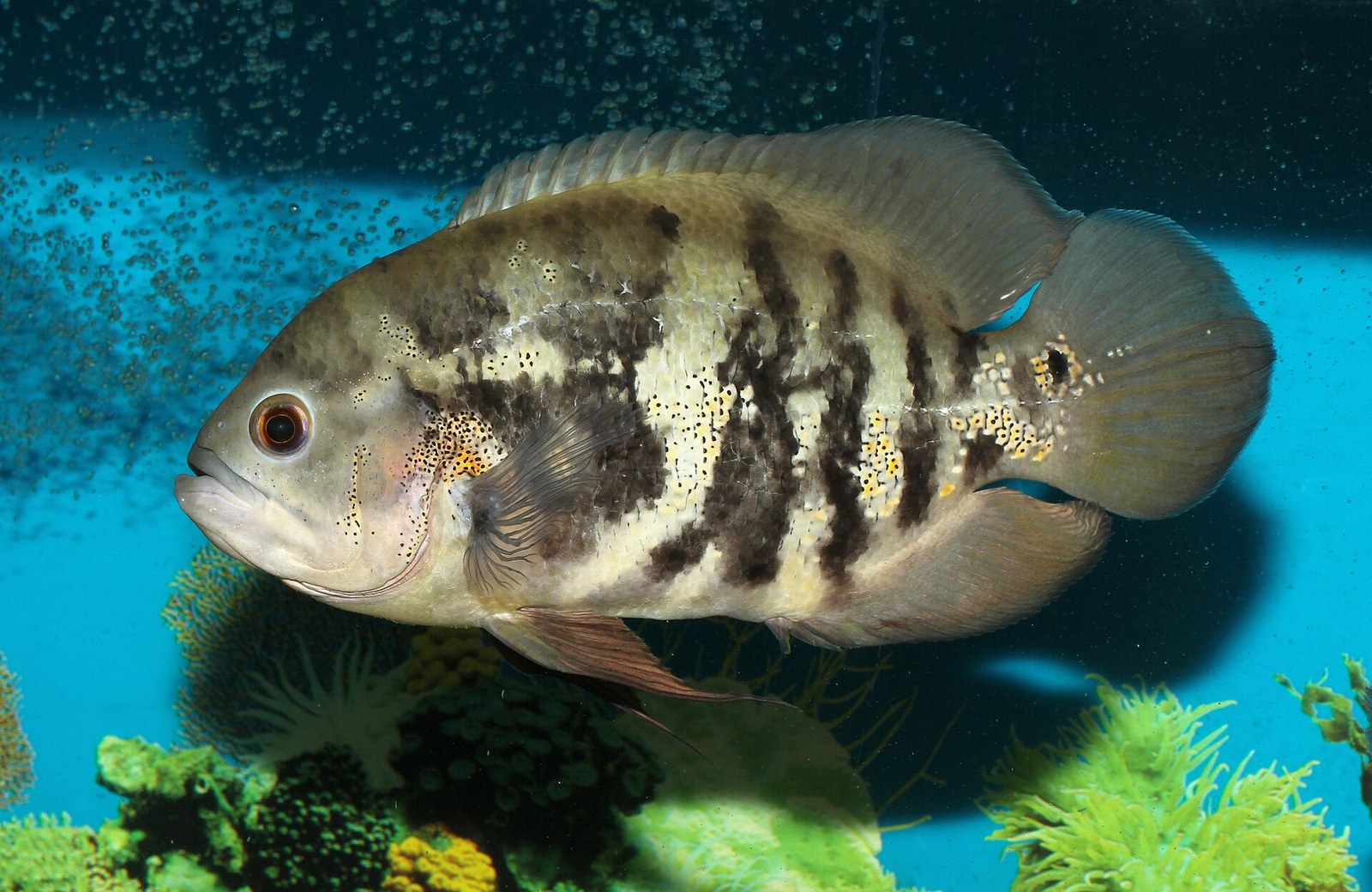
Photo credits: Patrick Farrelly (Public domain (copyright holder release; not CC0)), Gladstone Peixoto Moraes (Public domain (copyright holder release; not CC0)), Bernard Spragg. NZ from Christchurch, New Zealand (CC0). Images resized and compressed for web display. Each image retains its linked license. Photo by Patrick Farrelly. Commons marks the image public domain, but its permission text also requests author acknowledgement; attribution is retained here. Not a CC0 dedication. Commercial ancestry is not established by this photograph. Head-and-shoulder crop only, used as a detail shot rather than the species cover.
Living With
Discus suit keepers who enjoy preparation and observation as much as the finished display. This profile adopts Maidenhead Aquatics' aquarium guidance of 27-30 C and pH 6.0-6.5. Its hardness wording is dH up to eight degrees; the source does not explicitly define GH or KH there, so no dKH or ppm target is invented. FishBase's broader environmental values describe wild habitat and are not a shortcut to alternative care settings. Discuss the seller's actual water with an experienced specialist before moving fish into a substantially different supply. Stability comes from a repeatable preparation method, not from repeatedly dosing the occupied aquarium to chase a reading.
Space must match the intended adults. Seriously Fish gives approximately 120 by 45 by 45 centimeters, quoted as 255 liters, for a breeding pair or a few juveniles. That limited recommendation is not a verified home for five or six mature discus. Plan larger group accommodation and a separation option before buying a social group. Provide mature filtration, regular suitably matched partial water changes, cover and clear feeding areas. Maidenhead recommends small varied meals at least three times daily, making food access and leftover removal recurring tasks. Our reviewed sources do not establish a reliable lifespan range; budget for long-term care, holidays, equipment replacement and veterinary help rather than an unsupported numerical promise.
At a Glance
Ownership Guide
The 120 x 45 x 45 cm Seriously Fish reference applies to a breeding pair or a few juveniles, not a mature group. Plan larger adult-group housing with experienced advice, cover, open routes and a functioning separation option.
Offer a suitable complete prepared food with modest frozen variety in small meals; Maidenhead recommends at least three feeding opportunities daily. Observe each individual eating and remove leftovers so frequent feeding does not become frequent pollution.
Use Maidenhead's aquarium guidance of 27-30 C and pH 6.0-6.5, with a repeatable soft-water preparation plan. Its dH up to eight degrees is not relabeled as dKH or ppm; check GH and KH separately with qualified advice.
Offer sheltered edges, aquarium-safe roots or planting, and open feeding space. Keep observation calm and predictable rather than provoking displays or making constant large layout changes.
Begin with the needs of the discus group rather than a long community wish list. Every companion must match the warm-water plan and avoid overwhelming shy feeders; individual compatibility is never guaranteed.
Quarantine additions in a separate heated and biologically filtered system with dedicated equipment; thirty days is MSD's general minimum, not automatic clearance. Breathing trouble, persistent food refusal or body-condition loss needs prompt water checks and aquatic veterinary advice.
Wellness
Maidenhead warns of sensitivity to dissolved metals and organics. Use properly prepared water and track tests and maintenance rather than treating clear water as proof of safety.
Both should be undetectable in a mature aquarium. Frequent feeding requires reliable filtration; an unexpected reading calls for prompt suitable water changes and investigation.
Check water quality, temperature, surface movement and equipment immediately. Obtain urgent advice for persistent distress rather than increasing heat or choosing a medication from appearance alone.
A socially subordinate discus may miss meals despite plentiful food. Record individual intake and investigate persistent refusal or body-condition loss with an aquatic veterinarian.
New sores, spots, clamped fins or rubbing need context and assessment. Similar signs can have different causes, so avoid assuming a parasite diagnosis or mixing remedies.
Predictable meals let you compare appetite and swimming between individuals. Normal behavior is useful evidence but does not eliminate the need for testing or quarantine.
Dedicated equipment, mature backup filtration and written care records support safer responses to problems. Preventive care improves management without guaranteeing disease-free fish.
Further Reading
Build a discus care plan around stable warm water, mature filtration and adult group space, with clear distinctions between domestic strains and wild fish.
Read articlePlan discus meals with a complete staple, modest frozen variety and individual feeding checks, while managing leftovers and spotting fish excluded by the group.
Read articleAssess discus health changes through water tests, individual appetite records and veterinary advice, avoiding automatic heat treatments or parasite assumptions.
Read articleUnderstand discus group behavior by tracking shelter, feeding access and repeated exclusion, with practical ways to distinguish ordinary caution from distress.
Read articleCreate a repeatable discus maintenance routine with prepared replacement water, protected biofiltration and clear records that separate pH, GH and KH readings.
Read articleDecide if discus fit your life by planning adult group housing, frequent small meals, water preparation, holiday cover and honest questions for the supplier.
Read articleYou May Also Like