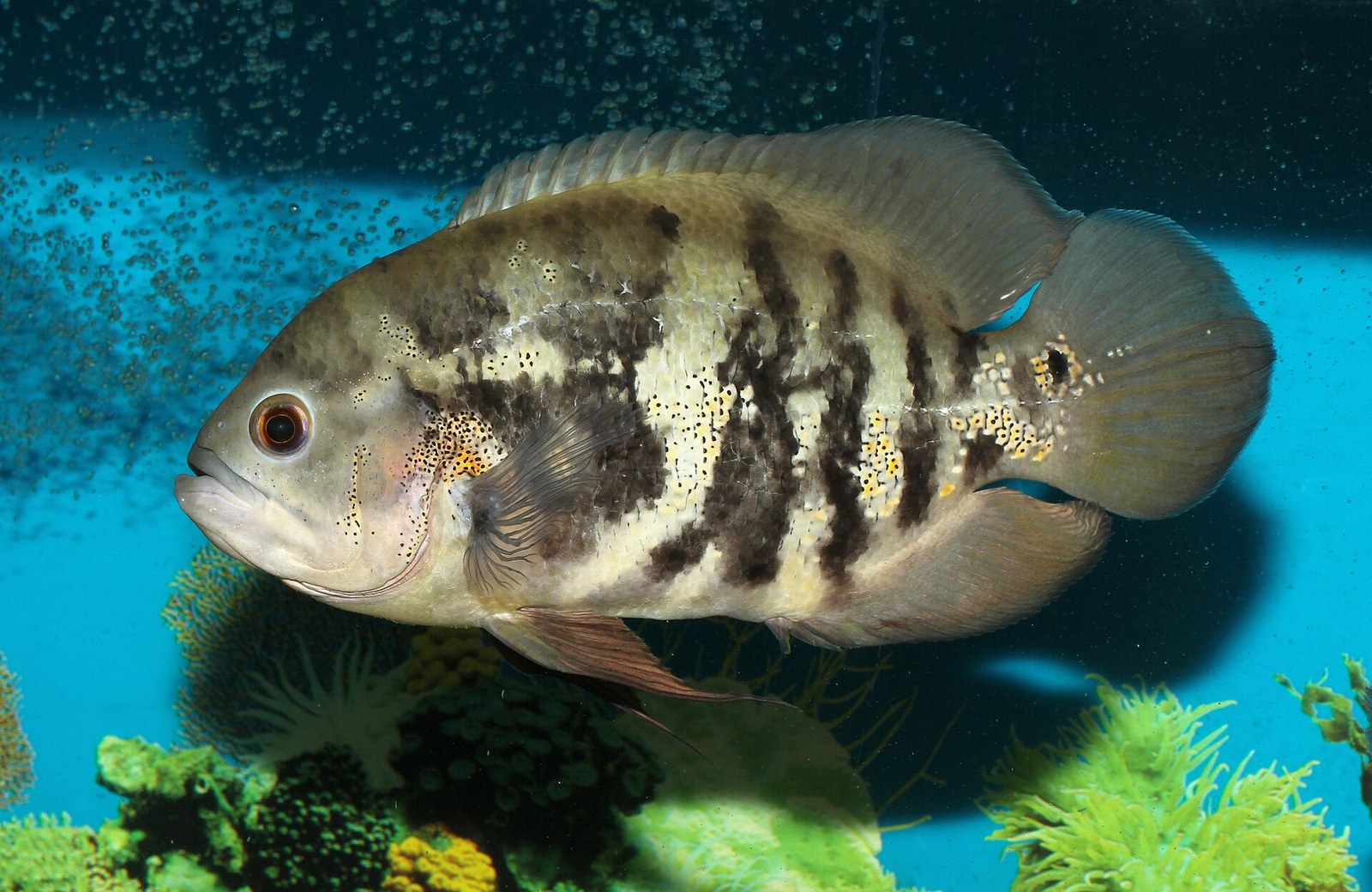
Oscar behavior attracts affectionate labels: moody, clever, stubborn, even dog-like. Those descriptions capture the pleasure of keeping an observant fish, but they can hide practical information. A fish approaching the glass may anticipate food; a fish lying still may be resting, frightened or unwell. Learn the sequence and context of what your Oscar does before deciding what it means.
Establish the ordinary before interpreting the unusual
Spend some observation time away from meals. Notice where the Oscar rests, how it moves around the tank and how its breathing looks when undisturbed. Watch from a distance occasionally, because approaching the glass may itself trigger a feeding response. An ordinary baseline is more useful than comparing your fish with a dramatic online video.
Write short descriptions rather than emotional labels. For example, record that the fish stayed behind wood after a water change, then resumed swimming, rather than saying it was angry. The first description captures a time course you can compare next time. Include changes in light, noise, water tests or nearby activity.
A consistent routine also helps you recognize a meaningful departure. If an Oscar that normally arrives promptly for food suddenly hides while breathing rapidly, do not dismiss it as a personality quirk. Check the environment and seek help according to the severity of the signs.
Understand food anticipation without rewarding it endlessly
Oscars often learn that a person, container or position predicts a meal. This gives you a convenient way to inspect the fish without chasing it. Approach calmly, wait for voluntary movement and offer the planned portion where you can see whether it is swallowed. You do not need hand-feeding to make this interaction rewarding.
Use food anticipation as a cue to observe, not as a cue to increase the ration. A fish may keep approaching long after a sufficient meal. If several people enjoy feeding it, a shared record prevents the same enthusiastic display from earning multiple dinners.
You can build a simple station routine using part of the normal food allowance. Present the same quiet visual cue near the usual feeding area, then deliver food when the fish approaches. Keep the interaction brief and stop if the fish withdraws. Do not withhold necessary nutrition to force performance or tap the glass to demand attention.
Make digging and rearranging safe
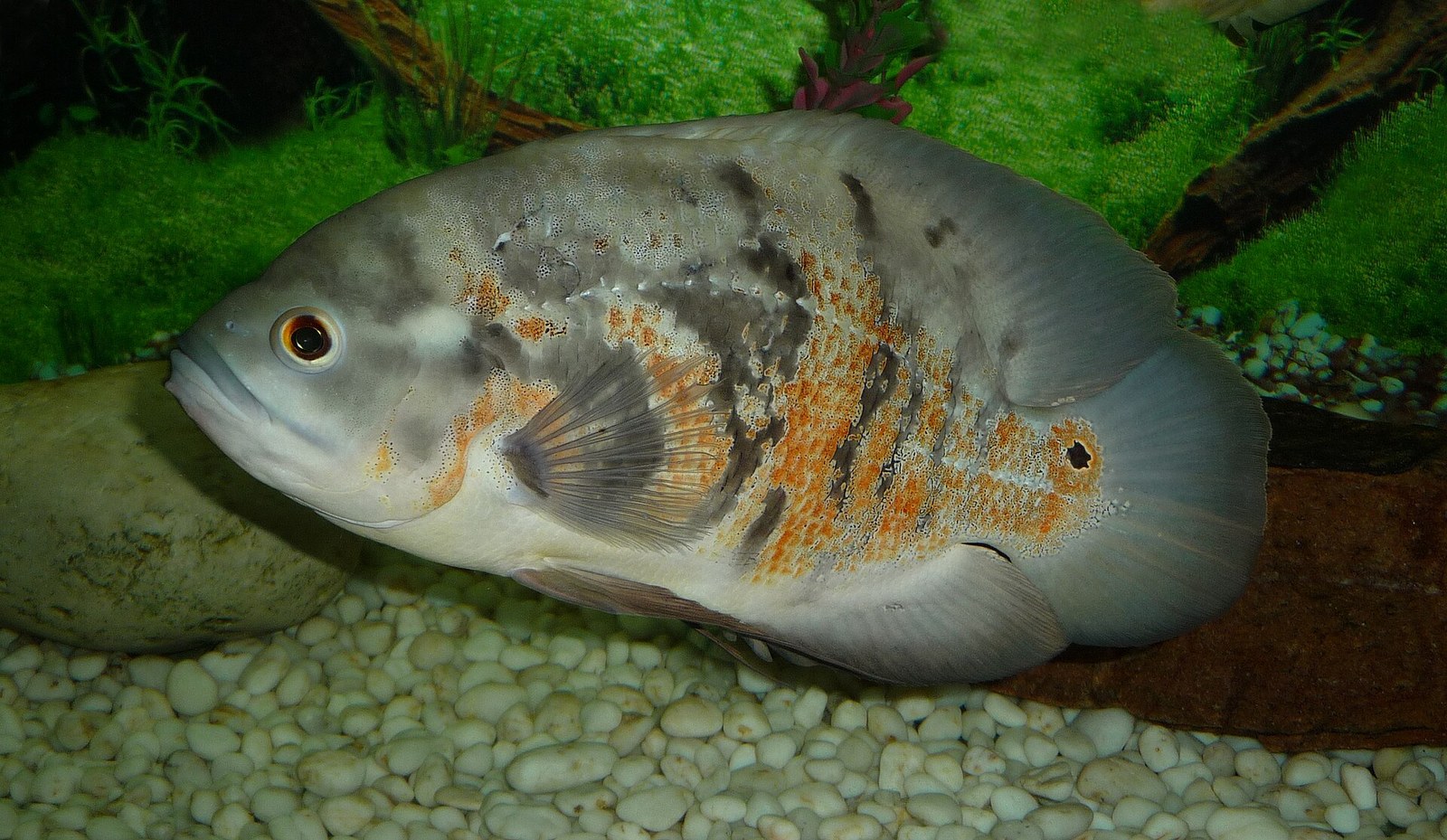
A tidy aquascape may not stay tidy around an Oscar. Substrate can be shifted, plants displaced and lightweight ornaments investigated. Maidenhead Aquatics warns that Oscars uproot plants and that unstable rockwork can fall. The practical response is structural safety, not repeatedly rebuilding a fragile arrangement and expecting the fish to leave it alone.
Secure heavy elements so their stability does not depend on movable substrate. Keep heater protection and intake guards in place, and check clearances as the fish grows. Smooth, aquarium-safe materials are preferable to objects with unknown coatings or openings that can trap the fish.
- Leave a broad, open route for swimming and turning.
- Inspect shifted decor after active digging.
- Remove damaged or unsafe ornaments promptly.
- Preserve a sheltered area without blocking maintenance access.
Distinguish territorial displays from safe compatibility
An Oscar's interest in another fish is not necessarily companionship. Following, blocking, chasing and excluding a tank mate from food can all matter before an obvious injury appears. Similarly sized fish are not automatically compatible, and small fish may be treated as prey. Seriously Fish explicitly rules out an ordinary community-fish role for this species.
Housing recommendations differ between the sources used here. Seriously Fish offers a single-adult footprint while favoring pairs, whereas Maidenhead Aquatics advocates compatible pairs or larger groups in very large aquariums. Do not combine those statements into a recommendation for several adults in the single-fish space.
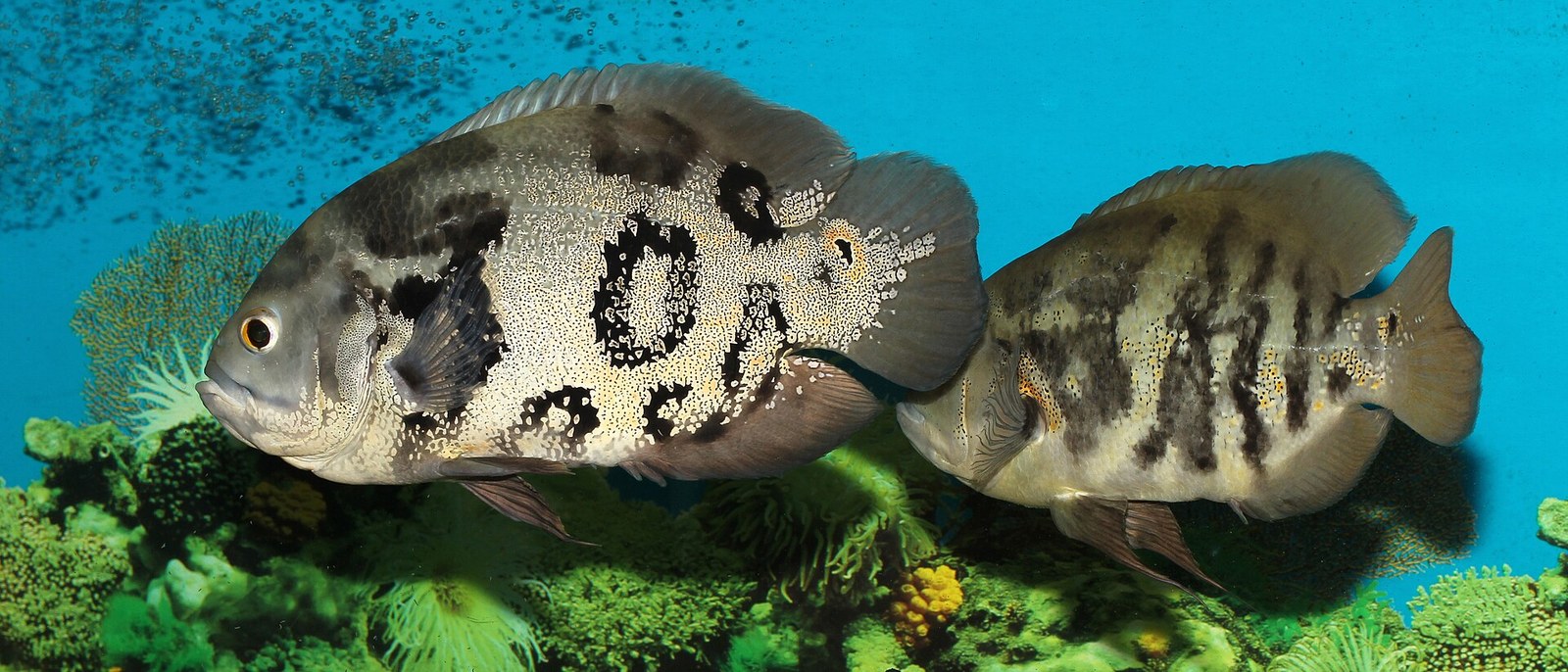
If keeping a pair, observe both animals separately: can each eat, rest and move without persistent pursuit? Have appropriate separation accommodation ready. Do not wait for a supposed hierarchy to settle when one fish is being injured or denied basic access. A pair's compatibility can change, particularly around reproductive activity or alterations to the environment.
Avoid turning stress into entertainment
Mirrors, repeated tapping and deliberate challenges may produce impressive displays, but a display is not proof that the fish is enjoying itself. Avoid provoking an apparent rival that never leaves. Household interaction should allow the Oscar to approach or retreat rather than trapping it in a confrontation at the glass.
Keep outside activity predictable where possible. A busy walkway, sudden lighting changes or objects repeatedly pressed against the aquarium can make observation less useful and the environment less comfortable. Children can help record feeding or sketch the fish without touching the glass or putting toys into the water.
Enrichment should fit the animal and the system. Offer safe exploration, a stable day-night routine and manageable changes introduced one at a time. Novelty is not automatically beneficial if it reduces shelter or creates hazardous equipment access.
Know when behavior becomes a health question
Resting, retreating and changes in activity need context, but persistent abnormalities deserve investigation. Rapid respiration, loss of balance, repeated scraping, refusal to eat or a sudden inability to move normally should shift your attention from interpretation to water tests and veterinary advice. Video can document the problem without another stressful capture.
Check whether a recent event explains the timing: a filter stopped, a tank mate was added, a large meal was offered or decor collapsed. Correct an obvious hazard while gathering evidence. Do not assume that a darker or quieter fish needs another Oscar, a treat or a chemical remedy.
A satisfying relationship with an Oscar comes from noticing detail and responding appropriately. You do not have to prove that the fish loves you to give it excellent care. Predictable routines, voluntary interaction and prompt attention to change provide something more dependable than a nickname: an environment in which the individual fish can behave without avoidable fear or discomfort.
Continue reading: Oscar Tank Maintenance: Manage Waste Without Resetting the Filter.
Sources and further reading:
- Astronotus ocellatus (Oscar) - Seriously Fish
- Oscar - Maidenhead Aquatics
- Management of Aquarium Fish - MSD Veterinary Manual
Photo credits: George Chernilevsky (Public domain (copyright holder release; not CC0)), George Chernilevsky (Public domain (copyright holder release; not CC0)), George Chernilevsky (Public domain (copyright holder release; not CC0)). Images resized and compressed for web display. Each image retains its linked license.


