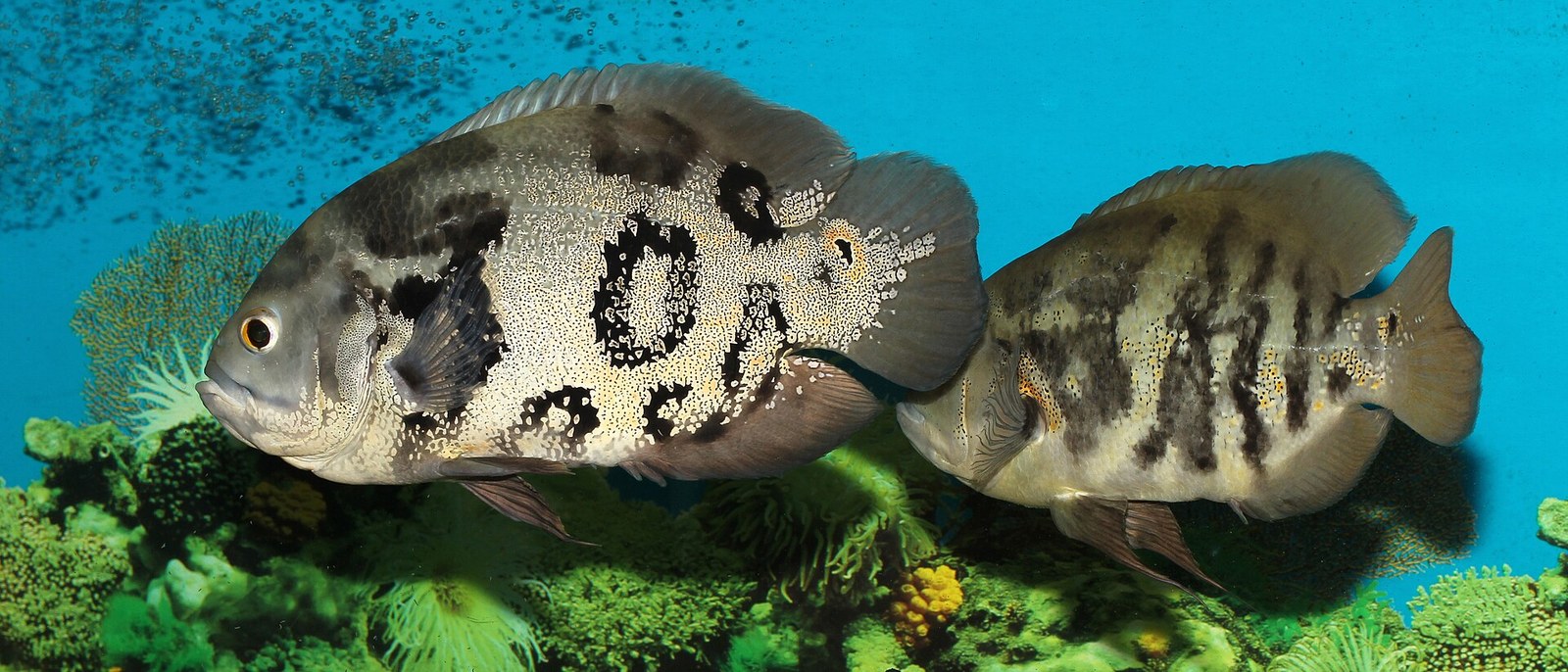
Oscar health problems are easy to misread because this expressive fish has acquired a reputation for sulking. An Oscar that rests after a disturbance may settle normally, but one breathing hard on the bottom needs more than reassurance. Begin with the environment and the severity of the signs. A careful sequence of observations can protect the fish and give an aquatic veterinarian information that a guessed disease name cannot.
Decide whether the situation is urgent
Watch the gill covers and the fish's ability to remain upright. Severe gasping, loss of balance, collapse, substantial bleeding or rapidly worsening distress calls for urgent aquatic-veterinary advice. If several fish become affected together, an environmental failure is particularly important to investigate, although it is not the only possibility.
Check power, filter flow, aeration and actual water temperature immediately. Improve aeration if oxygen supply may be compromised, while avoiding a violent current that exhausts the fish. Take a water sample if it will not delay necessary action. When water quality is unsafe, an appropriate partial water change with conditioned, temperature-matched freshwater may be needed while you seek professional guidance.
Do not make a distressed Oscar endure repeated netting for photographs. Observe through the glass when possible. A large, struggling fish can injure itself or the handler, and every unnecessary capture adds stress without necessarily adding useful diagnostic information.
Test water before assigning a disease
Clear water can contain harmful dissolved waste. Test ammonia, nitrite and nitrate, then assess pH and temperature in context. Record the actual results, test type and units rather than writing that everything was fine. An expired reagent, a missed shaking step or an incorrect reading time can produce misleading reassurance.
A mature aquarium can still experience trouble after a power outage, a major filter replacement, overfeeding or the addition of another large fish. Biological filtration has limits and depends on living microorganisms. The MSD Veterinary Manual describes both new-system and neglected-system water-quality problems; aquarium age is not a health certificate.
Review the replacement water too. Was it conditioned for chlorine or chloramine where necessary? Was the temperature checked? Did the source or preparation method change? If chemistry has drifted substantially in a neglected aquarium, discuss a controlled correction plan rather than blindly making abrupt adjustments that create a second problem.
Describe lesions without naming their cause
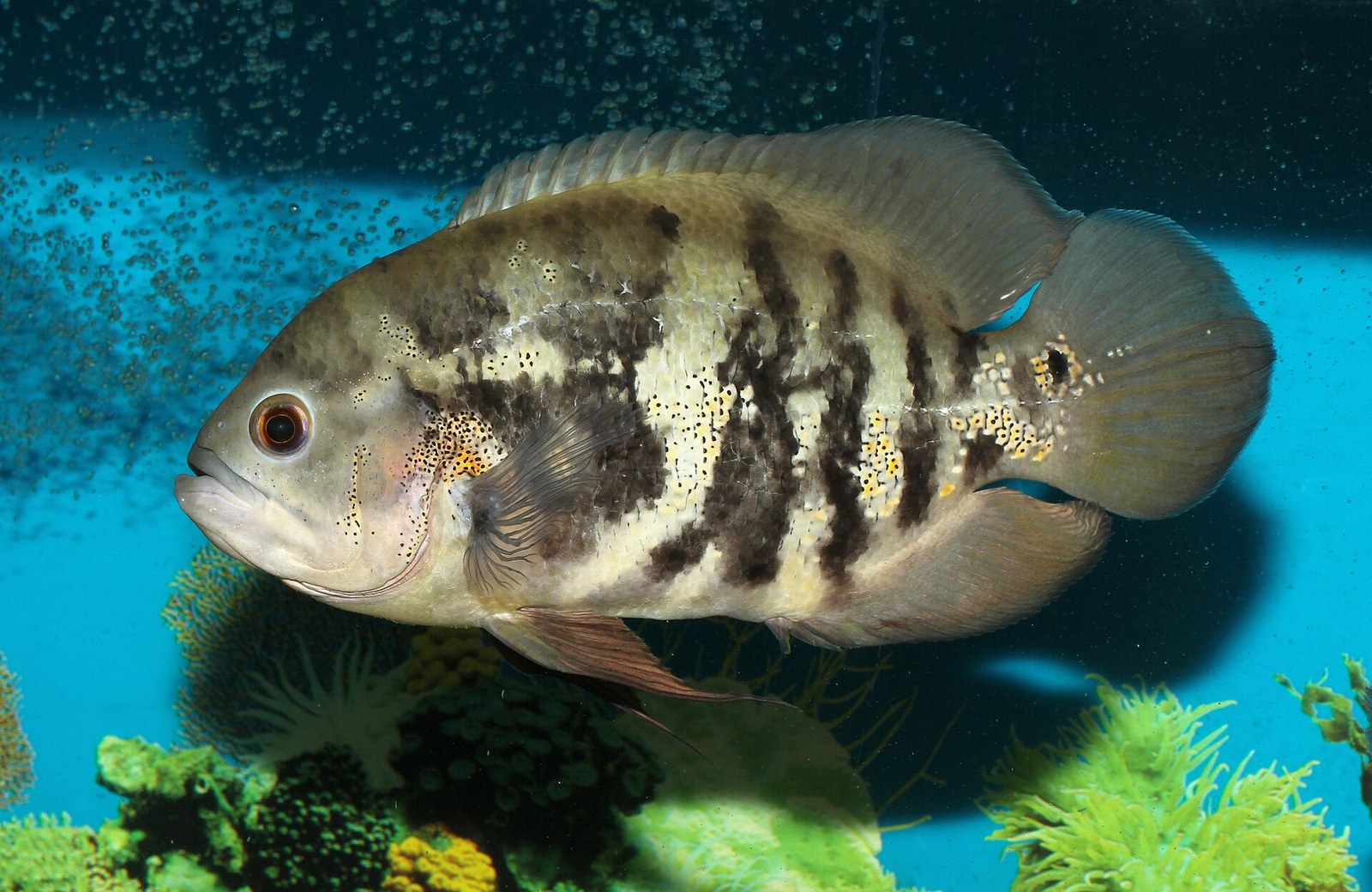
Oscars with pits or erosions around the head are often labeled as having hole-in-the-head disease. That phrase describes a recognizable problem area, but a photograph alone cannot establish the underlying cause or the correct treatment. Review water quality, diet, chronic stress and the progression of the lesions with a veterinarian.
The same restraint applies to white spots, mucus, cloudy eyes and ragged fins. Several conditions can produce similar appearances, and an injury can later develop additional complications. Note where the change began, whether it is spreading and whether breathing or appetite has changed at the same time.
Useful photographs show the whole fish as well as the affected area under ordinary lighting. Color-enhancing filters and flash reflections can hide the details a clinician needs, so preserve the original images when asking for help.
Look for mechanical and social causes
An Oscar can disturb rockwork, damage equipment and injure a companion. Inspect the aquarium for shifted structures, exposed heater components, sharp edges and openings where the fish could become trapped. Maidenhead Aquatics specifically warns about falling rockwork and recommends protecting heaters. A repeated injury in the same location may have a physical explanation.
Observe interactions when the dominant fish is not distracted by your approach. A subordinate animal may be prevented from reaching food or forced into a corner without a spectacular fight. Torn fins and missing scales should prompt a review of compatibility, not just a bottle purchase.
If separation is necessary, use a prepared, adequately sized system with appropriate filtration and temperature. Moving an injured Oscar into an uncycled container can replace aggression with water-quality stress. Handle only when needed, use suitable equipment and obtain experienced help if the fish's size makes safe transfer difficult. Preventing another injury is part of treatment, not an optional extra.
Make quarantine meaningful
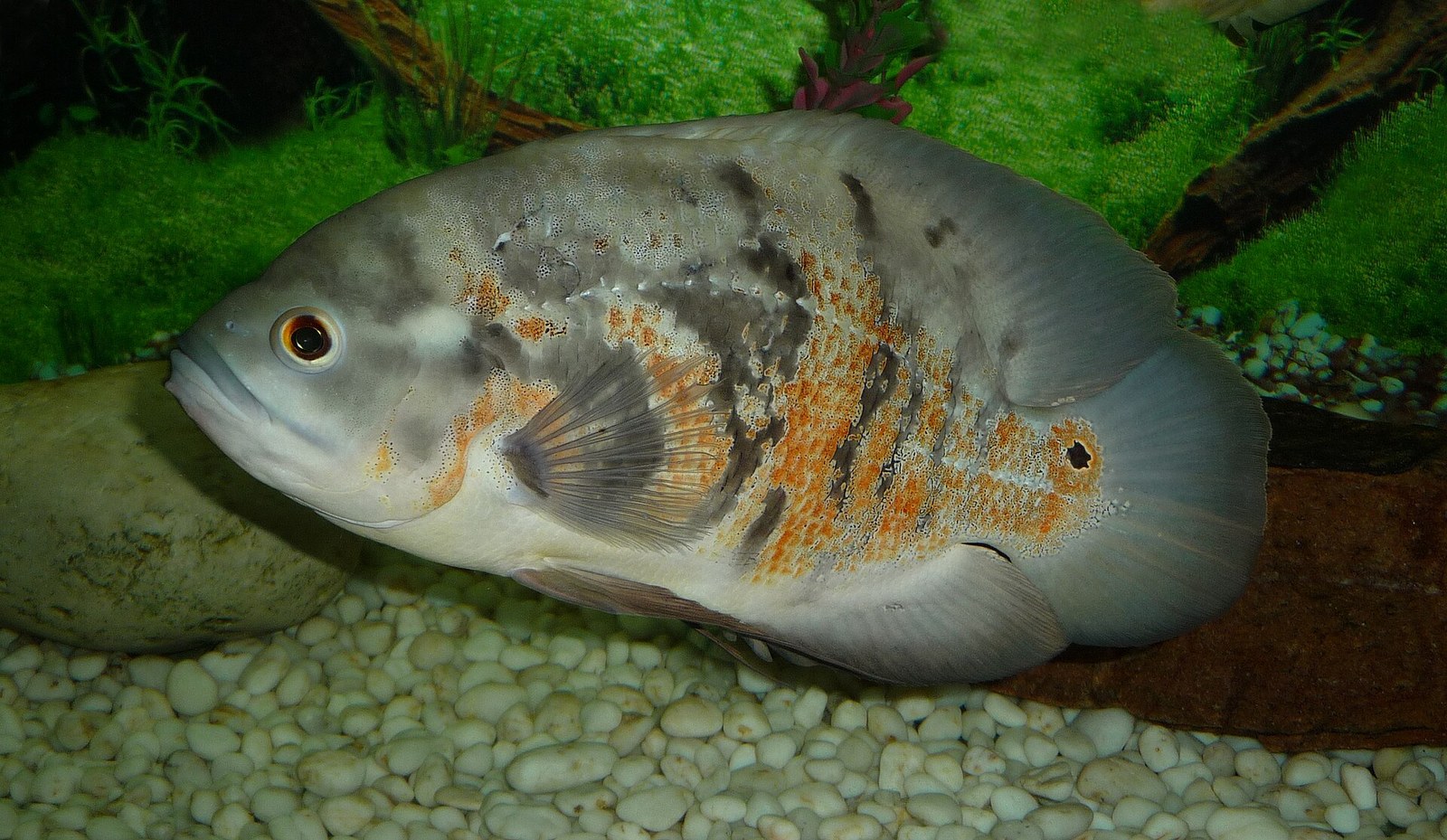
Quarantine separates a new arrival from established fish while you observe its health and manage any problems. The MSD Veterinary Manual gives thirty days as a minimum for pet fish, but time alone does not prove freedom from infection. A veterinarian may recommend a different duration or specific testing based on origin, symptoms and exposure history.
Use dedicated nets, siphons and containers so that separate tanks do not quietly share water through equipment. Care for healthy established fish before suspect fish, and clean hands and tools appropriately between systems. Maintain the quarantine filter and test its water just as carefully as the main display.
- Record arrival date and seller information.
- Track appetite, breathing and skin changes.
- Keep water results with the observation log.
- Document every treatment and the reason for it.
Bring a usable history to the veterinarian
A concise timeline often reveals more than a long list of suspected diseases. Start with when the fish last looked normal. Add new livestock, diet changes, power failures, cleaning events and products used shortly before the symptoms. Include the aquarium's dimensions and stocking, not just its nominal capacity.
Ask the veterinarian whether to bring a water sample, a video or the fish itself, and follow their transport instructions. Do not scrape skin, take gill samples or attempt injections at home. Diagnostic procedures that look straightforward in a demonstration require training and suitable handling of the animal.
The MSD Veterinary Manual strongly discourages prophylactic medication without diagnostic testing. That is especially relevant when an Oscar seems merely off color and the temptation is to treat everything. Good care is active rather than passive: correct identifiable environmental problems, reduce avoidable stress, gather evidence and obtain targeted help before a manageable issue becomes a crisis.
Continue reading: Oscar Behavior: Read the Fish, Not the Nickname.
Sources and further reading:
- Astronotus ocellatus (Oscar) - Seriously Fish
- Oscar - Maidenhead Aquatics
- Management of Aquarium Fish - MSD Veterinary Manual
Photo credits: George Chernilevsky (Public domain (copyright holder release; not CC0)), George Chernilevsky (Public domain (copyright holder release; not CC0)), George Chernilevsky (Public domain (copyright holder release; not CC0)). Images resized and compressed for web display. Each image retains its linked license.


