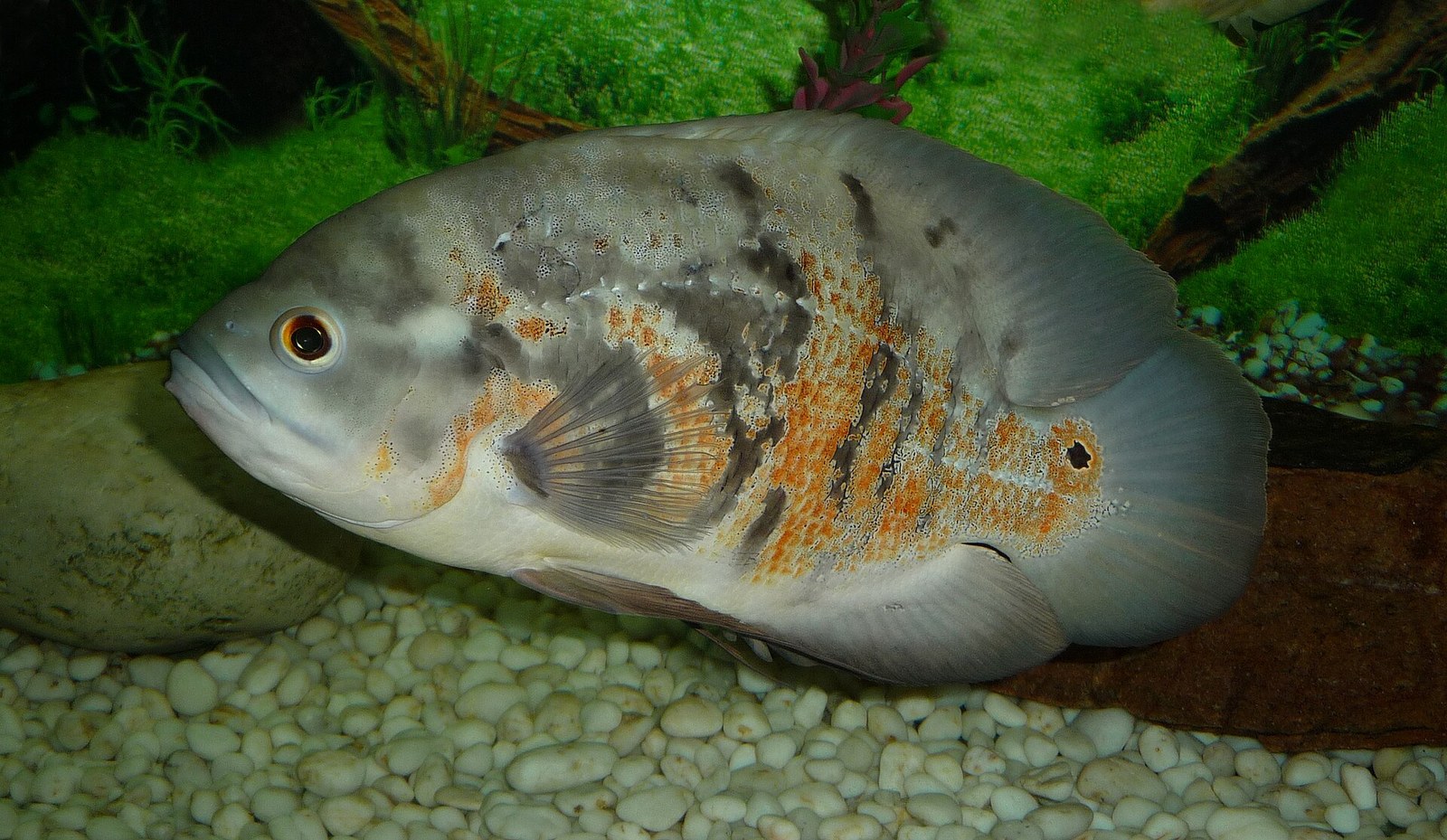
Oscar feeding can look deceptively simple: the fish rushes forward, food disappears and the keeper feels appreciated. The difficult part is deciding what should disappear and when to stop. An Oscar's enthusiasm is not a measuring instrument. A useful nutrition plan combines a balanced staple, restrained variety and observation of what is actually swallowed, while keeping the aquarium's waste load in view.
Start with an omnivore's complete staple
Seriously Fish describes Astronotus ocellatus as a generalized omnivore with a preference for meatier foods. That does not mean its entire diet should consist of chunks of muscle meat. Choose a complete prepared food formulated for appropriate cichlids or omnivorous aquarium fish, with a pellet size the individual can handle comfortably.
Read the product's intended use rather than judging by a dramatic photograph on the package. A treat, color supplement or single-ingredient food is not automatically a complete ration. Follow the manufacturer's storage and feeding guidance as a starting point, then adapt to the fish's life stage, condition and response.
Watch a feeding closely from the side. An Oscar may take a pellet into its mouth and then expel fragments, so apparent capture is not the same as consumption. If food repeatedly falls apart before being swallowed, a different size or texture may reduce waste. The goal is nutrition reaching the fish, not simply food entering the tank.
Give variety a defined job
Suitable frozen foods can broaden texture and feeding opportunities. Maidenhead Aquatics lists options including mysis, krill and chopped shellfish, with portions appropriate to fish size. Use aquarium foods from reputable suppliers and choose pieces without hard, sharp fragments that the fish cannot manage. Variety should complement the staple rather than turn the week into a sequence of unrelated treats.
Thaw the amount you need according to the product instructions and maintain hygienic handling. Avoid repeatedly thawing and refreezing a package. A small separate preparation container helps keep food handling distinct from aquarium cleaning and household meal preparation. Wash your hands after working with aquarium water or raw foods.
Do not assume that a food is balanced because the Oscar likes it. A selective fish can train its keeper to replace every refused pellet with a richer alternative. If you are changing a healthy fish's diet, make the change gradually and track consumption. Persistent refusal deserves a health review, not a contest of wills.
Replace pellet counts with a feedback loop
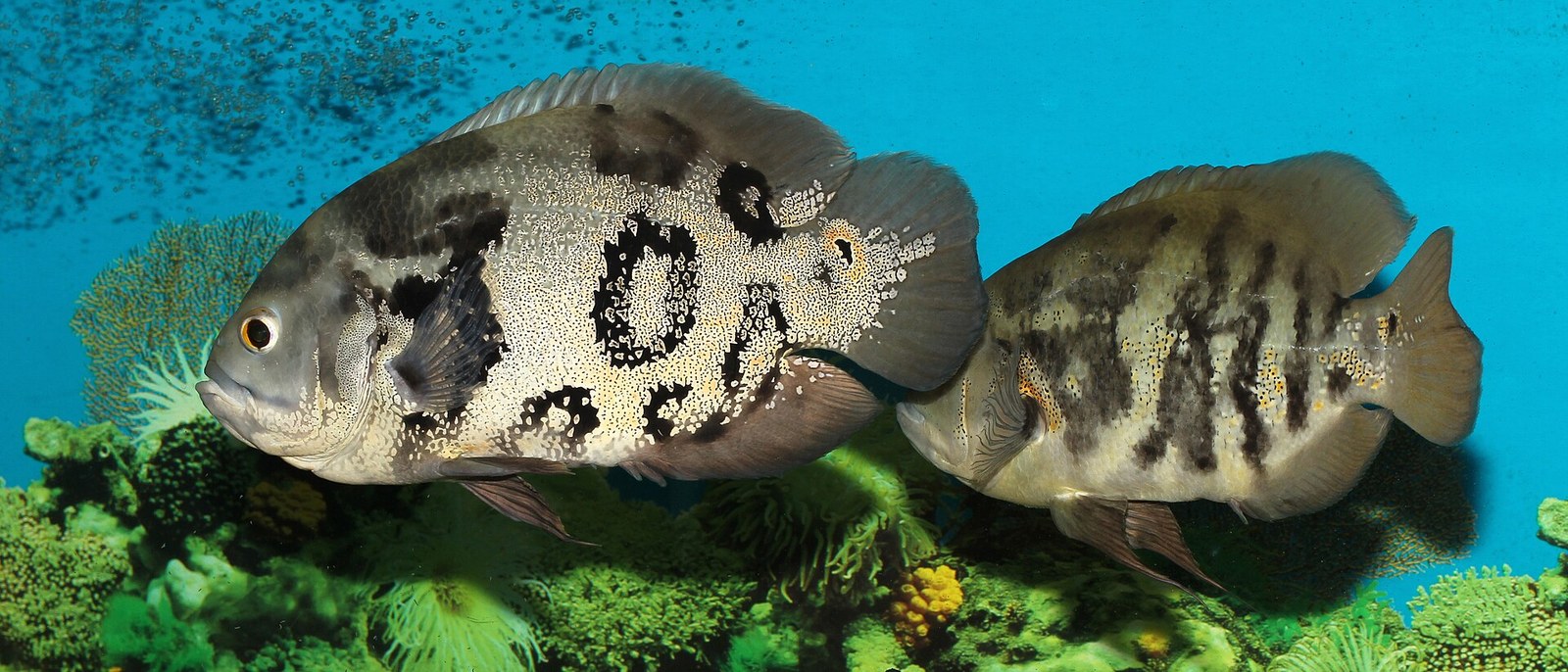
A fixed number of pellets sounds reassuring but ignores pellet diameter, density and the fish's actual size. Start conservatively with the chosen food's instructions and deliver food in small increments. Pause to see whether the previous portion was swallowed before adding more. Stop when interest declines or uneaten pieces begin accumulating.
Record the amount offered in a repeatable household measure or by counting one specific pellet product. That count is useful for your own consistency, not as a universal recommendation for every Oscar. Include frozen supplements in the overall ration instead of treating them as nutritionally invisible extras.
- Note the food and amount offered.
- Record leftovers and repeated spitting.
- Compare body shape under similar viewing conditions.
- Review nitrate trends and filter debris alongside appetite.
Keep live feeders out of the plan
An Oscar does not require live feeder fish to express normal feeding behavior or remain healthy. Maidenhead Aquatics is explicit that they are unnecessary. Adding feeder fish introduces living animals with their own infection risks and an uncertain nutritional history. It also creates a welfare problem for the prey without supplying a benefit that a sensible prepared diet cannot provide.
Do not collect insects or aquatic animals from places that may contain pesticides, pollutants or parasites. A creature that looks natural is not necessarily safe. Likewise, seasoned household leftovers are not substitutes for a formulated aquarium diet; their ingredients and nutrient balance were not designed for this fish.
Food-based enrichment can still be simple. Offer part of the regular ration at a consistent location and allow the fish to approach voluntarily. There is no need to create a hunt involving another vertebrate.
Separate food preference from a health change
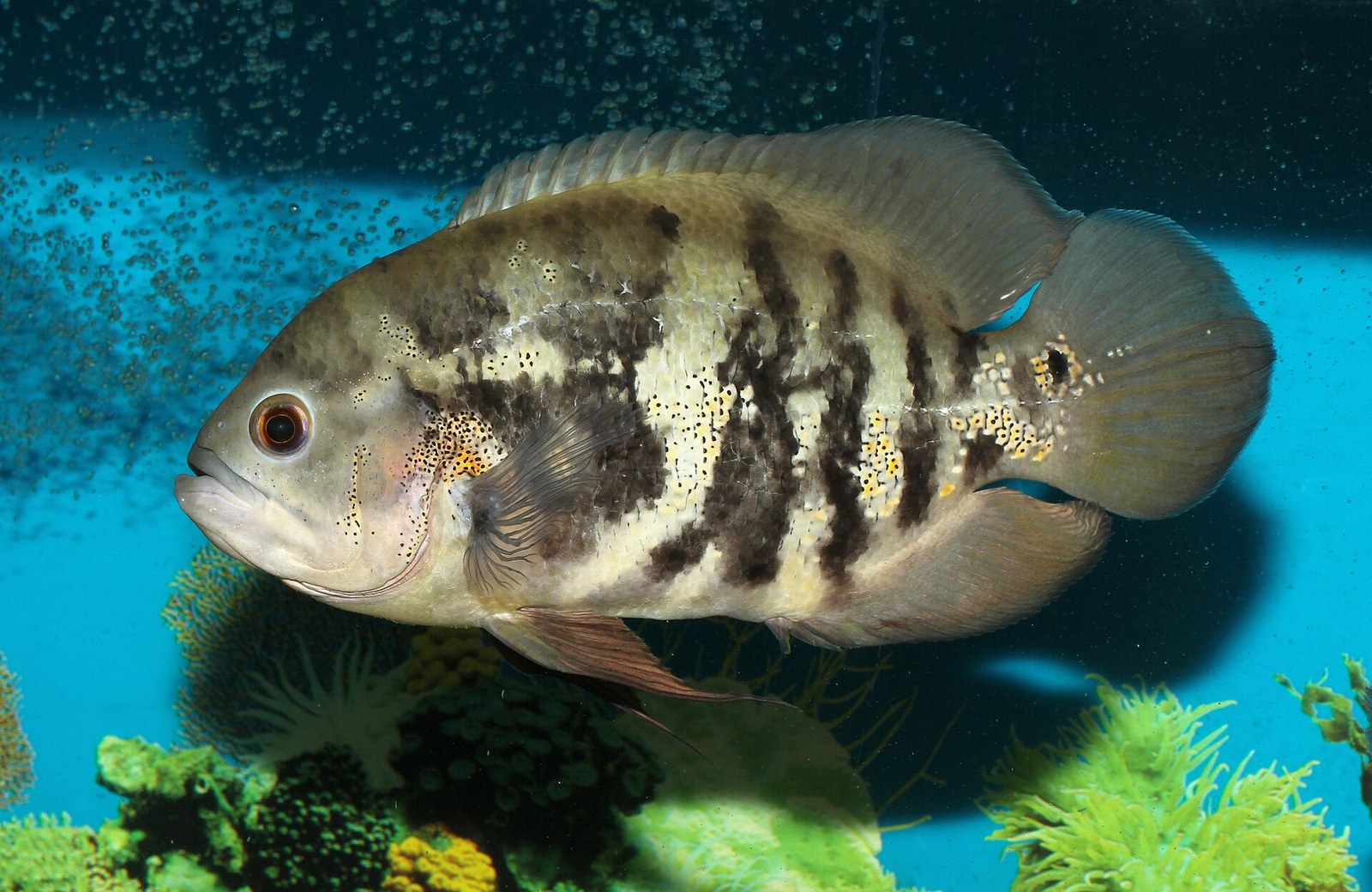
A newly moved Oscar may hesitate over an unfamiliar meal, but appetite loss should be interpreted alongside the rest of the fish's behavior. Check water quality, temperature and equipment first. Note whether breathing is comfortable, whether the fish is being chased and whether it approaches food but cannot take or swallow it.
Look at the timeline. Refusing one new pellet after eating a familiar food is different from refusing everything while losing condition. Photograph changes in body shape and describe feces without treating their appearance as a diagnosis. Stringy waste, swelling or spitting alone cannot establish a specific parasite.
Avoid cycling through rich foods in increasing quantities, since uneaten offerings can worsen the very water problem suppressing appetite. Remove leftovers and seek aquatic-veterinary advice for persistent refusal, progressive weight loss, significant swelling or accompanying distress. Severe breathing trouble or loss of balance warrants urgent help rather than another feeding experiment.
Let nutrition and maintenance inform each other
The MSD Veterinary Manual connects large, protein-rich meals with nitrogenous waste production. This matters particularly for a sizeable Oscar. If the filter fills rapidly with food fragments or nitrate rises faster after a diet change, review the ration and food handling as well as the cleaning schedule. More filtration is not always the first solution to overfeeding.
Keep dry food sealed, cool and dry as directed, and avoid buying a container so large that it remains open long beyond its useful life. Use clean, dry utensils rather than dipping wet fingers into the package. Discard food that is spoiled or has been stored outside the manufacturer's guidance.
Reassess the plan as the fish grows or its activity changes. A growing juvenile and a mature adult are not interchangeable feeding units. Your most useful outcome is a stable pattern: the Oscar eats readily, maintains an appropriate outline, leaves little waste and lives in water you can keep consistently healthy.
Continue reading: Oscar Health Problems: Triage Before Treatment.
Sources and further reading:
- Astronotus ocellatus (Oscar) - Seriously Fish
- Oscar - Maidenhead Aquatics
- Management of Aquarium Fish - MSD Veterinary Manual
Photo credits: George Chernilevsky (Public domain (copyright holder release; not CC0)), George Chernilevsky (Public domain (copyright holder release; not CC0)), George Chernilevsky (Public domain (copyright holder release; not CC0)). Images resized and compressed for web display. Each image retains its linked license.


