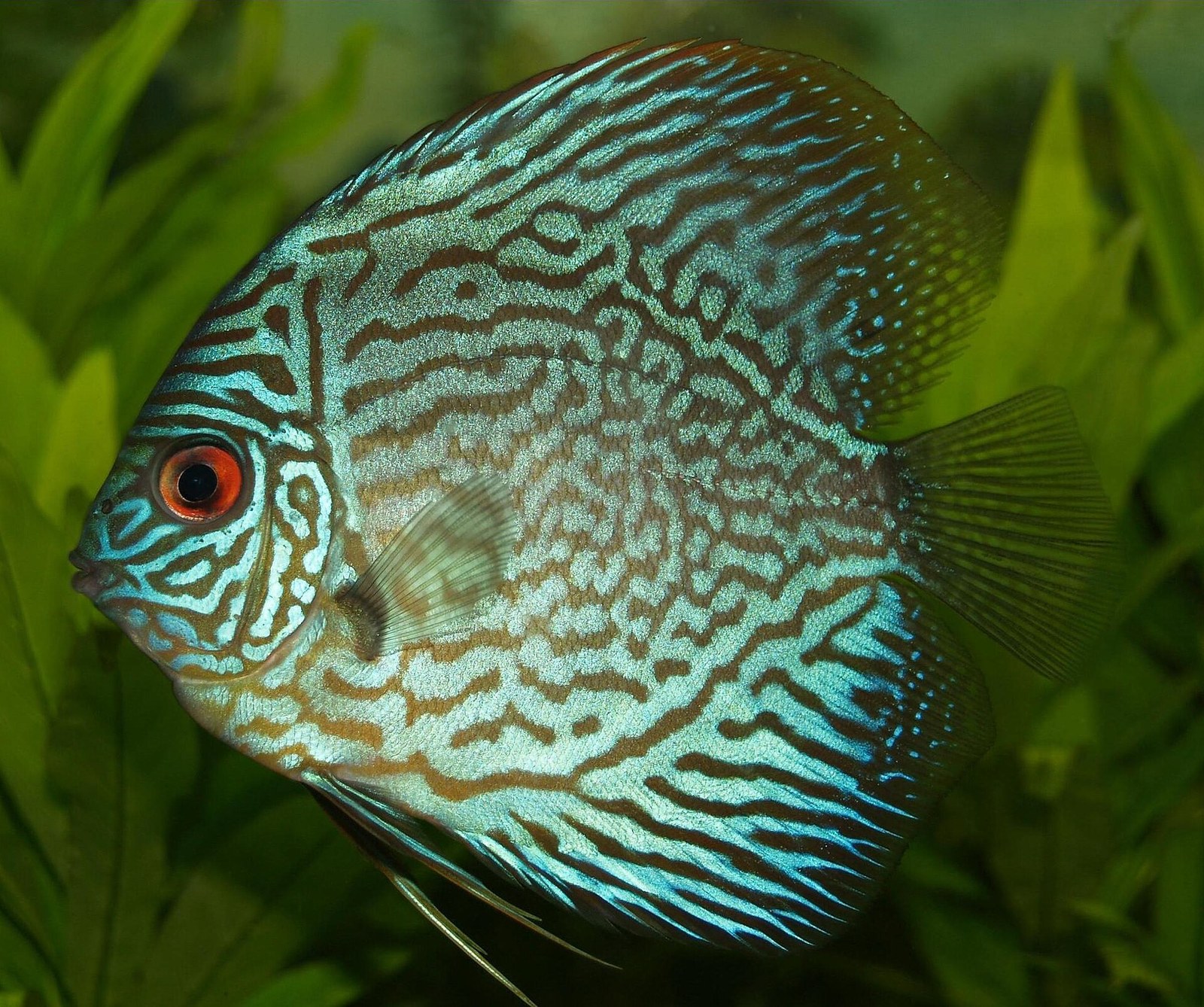
Discus behavior often makes more sense when you stop looking at the group as one moving ornament. Some fish approach first, others wait, and one may quietly lose access to the best feeding area. Read individual opportunity, not just visible activity, to decide whether a group is settled or a shy fish is being left behind.
Understand what social does and does not promise
Seriously Fish describes S. aequifasciatus as a shy shoaling fish that needs cover. Maidenhead Aquatics recommends starting with five or six discus so a natural hierarchy can form. These sources support social housing, but neither establishes that every group of that size will be harmonious. Aquarium dimensions, maturity and individual relationships still shape the outcome.
A social hierarchy becomes a welfare concern when a fish repeatedly loses access to food or rest. Do not excuse injury or wasting as something the group must work out alone. A subordinate that survives behind equipment is not necessarily coping well simply because it has not been visibly attacked during your observation.
Avoid choosing fish by color as a shortcut to temperament. Domestic strain names describe appearances and may cover mixed ancestry; they are not personality certificates. Ask about the actual group's history and watch the fish together before making a decision.
Distinguish ordinary caution from persistent withdrawal
A discus using cover when a person approaches may be responding to a disturbance. Give the aquarium a quiet interval and observe from farther away. Does the fish resume swimming and eating, or remain apart while others use the tank? Context and duration are more useful than labeling every retreat as stress or every still fish as peaceful.
Compare behavior with the individual's baseline. Sudden withdrawal after maintenance suggests different questions from a pattern that began when a new fish arrived. Record the timing, water tests, feeding response and interactions rather than changing several things at once.
If withdrawal comes with labored breathing, abnormal posture, wounds or persistent food refusal, investigate health promptly. Social explanations should not delay water-quality correction or veterinary help. Likewise, normal test results do not prove that repeated intimidation is harmless. The environmental, social and medical pictures need to be considered together.
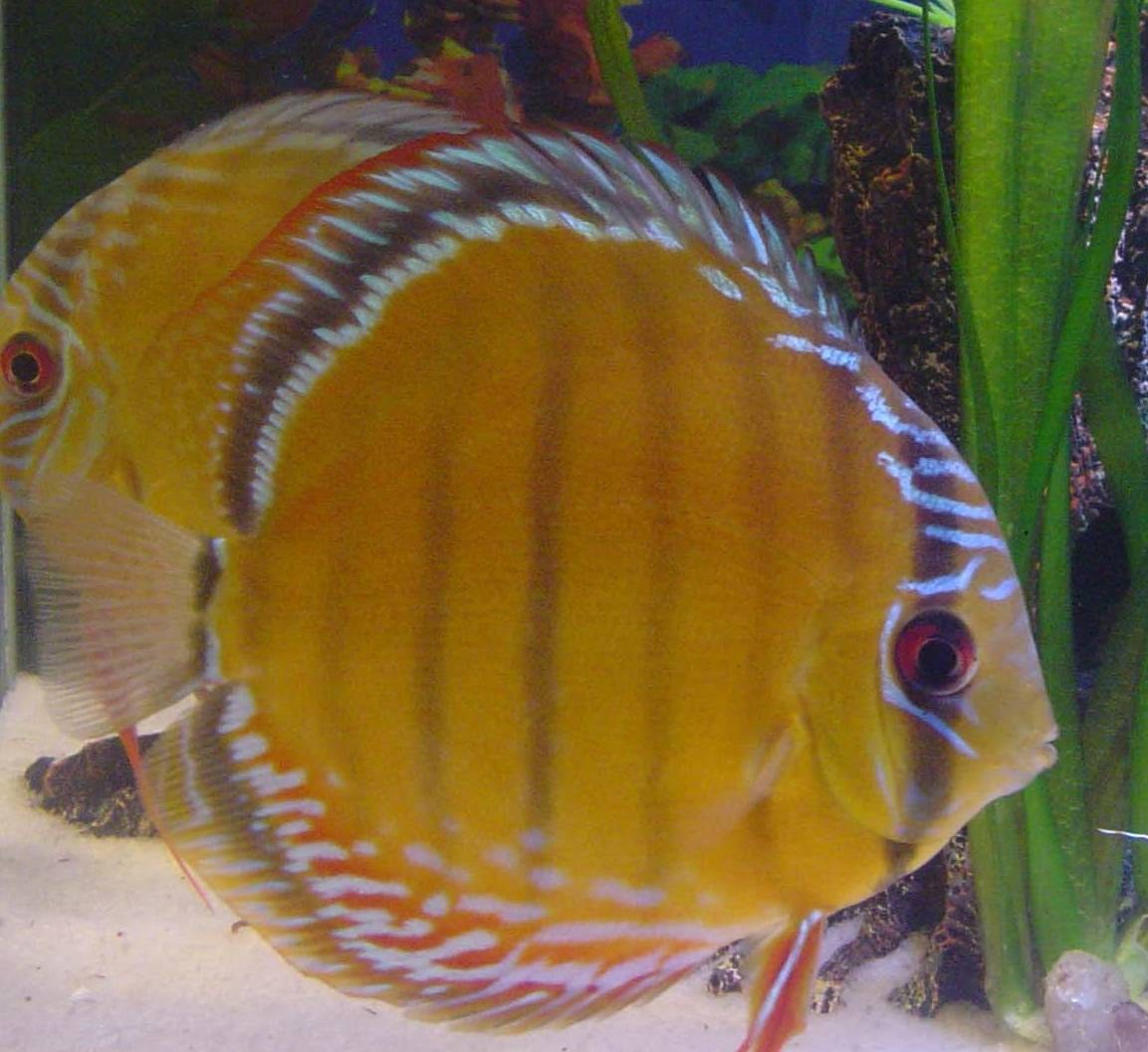
Watch the meal from the quiet fish's perspective
Feeding often reveals a problem that general swimming does not. Follow the least assertive fish visually: can it approach a particle, swallow and return to shelter without repeated displacement? A dominant fish can monopolize a small feeding area without an extended chase. Brief threats may be enough to keep another hungry.
Maidenhead's recommendation of small meals at least three times daily gives several observation opportunities. Use them to check individuals, not to keep adding food until the group looks satisfied. Distribute an established modest ration across accessible areas if that improves fair access. Confirm the outcome rather than assuming that food placed near a hiding fish was eaten.
- Mark individual identities in a notebook or photo reference.
- Record actual swallowing rather than approaches to food.
- Note repeated displacement and the fish responsible.
- Check body condition over time instead of judging one meal.
Persistent exclusion calls for a housing review, and potentially safe separation, rather than an unlimited increase in food.
Design shelter with exits and observation in mind
Roots, planting and other aquarium-safe cover can create security around the edges of a discus tank. Arrange them so fish can move between shelter and open areas without squeezing through a single guarded passage. A visually dense corner that traps a subordinate is not useful refuge. Leave enough access for you to see the fish and remove leftover food.
Keep circulation effective without directing a concentrated outlet through every resting area. A fish avoiding one zone may be reacting to flow or disturbance rather than another discus. Assess lighting, movement around the room and the maintenance routine as part of the setting.
Avoid constant major rearrangements. Make a considered change, then observe its effects unless immediate safety requires a faster intervention. Predictability helps you interpret behavior and keeps cleaning manageable.
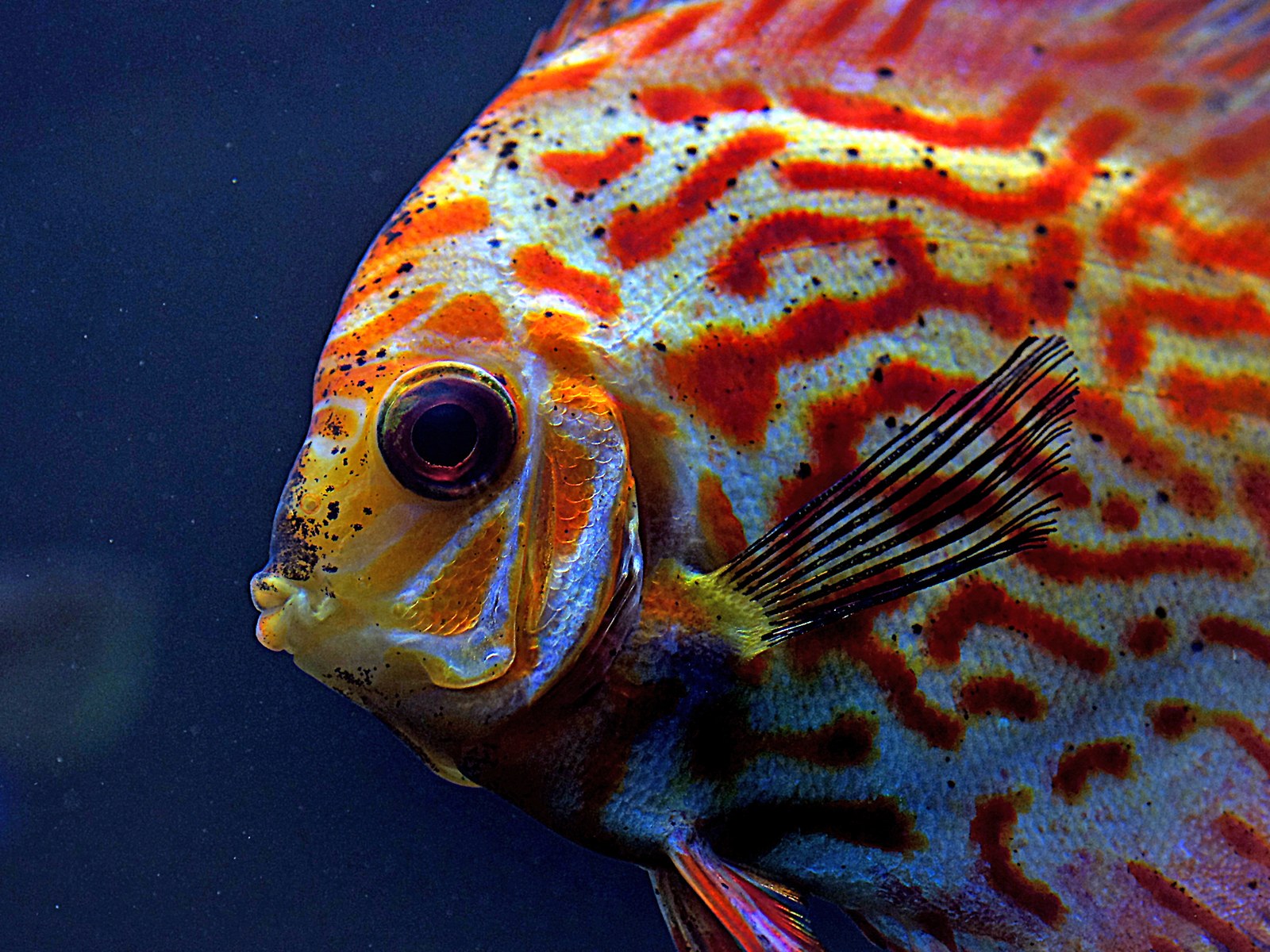
Be cautious with additions and community ambitions
A settled group can change after introductions or as fish mature. Do not add another discus simply because a suggested group number appears on a care sheet; first confirm sufficient adult space, quarantine capacity and a reasoned introduction plan. Adding fish to unresolved aggression can create more variables rather than a solution.
For other species, check the complete water requirements, adult size, activity and feeding competition. Sharing an Amazonian origin does not make two fish automatic companions, and a general community label cannot account for every aquarium. A fast feeder may be unsuitable even without obvious aggression. Consider whether a discus-focused setup better fits your ability to supervise meals.
Any apparently compatible combination still needs direct observation and an exit plan if one fish cannot thrive.
Intervene according to welfare, not appearance
Repeatedly missed meals, damaged fins, confinement to one corner or visible loss of condition justify action. A suitable separate aquarium should be heated, filtered and large enough for the fish to function normally. A small temporary container is not an acceptable long-term substitute for resolving a group problem. Get experienced help deciding whether to change the layout, group arrangement or accommodation.
Continue water testing and health assessment during social changes. A fish may improve after protection yet still need treatment for an injury, while another may remain withdrawn because the original problem was medical rather than behavioral. Record what changed and what did not.
The aim is not a group that performs constant synchronized swimming. It is a group in which every fish can feed, move and rest without ongoing exclusion. Patience is valuable, but it should mean careful observation and timely decisions, not waiting indefinitely while the quietest discus deteriorates.
Continue reading: Discus Tank Maintenance: Make Soft-Water Care Repeatable.
Sources and further reading:
- Symphysodon aequifasciatus (Discus) - Seriously Fish
- Symphysodon aequifasciatus - FishBase
- Discus-Symphysodon - Maidenhead Aquatics
- Management of Aquarium Fish - MSD Veterinary Manual
- Candidate Species for Florida Aquaculture: Discus Symphysodon spp., a Profitable but Challenging Species for Florida Aquaculture
Photo credits: Patrick Farrelly (Public domain (copyright holder release; not CC0)), Gladstone Peixoto Moraes (Public domain (copyright holder release; not CC0)), Bernard Spragg. NZ from Christchurch, New Zealand (CC0). Images resized and compressed for web display. Each image retains its linked license. Photo by Patrick Farrelly. Commons marks the image public domain, but its permission text also requests author acknowledgement; attribution is retained here. Not a CC0 dedication. Commercial ancestry is not established by this photograph. Head-and-shoulder crop only, used as a detail shot rather than the species cover.


