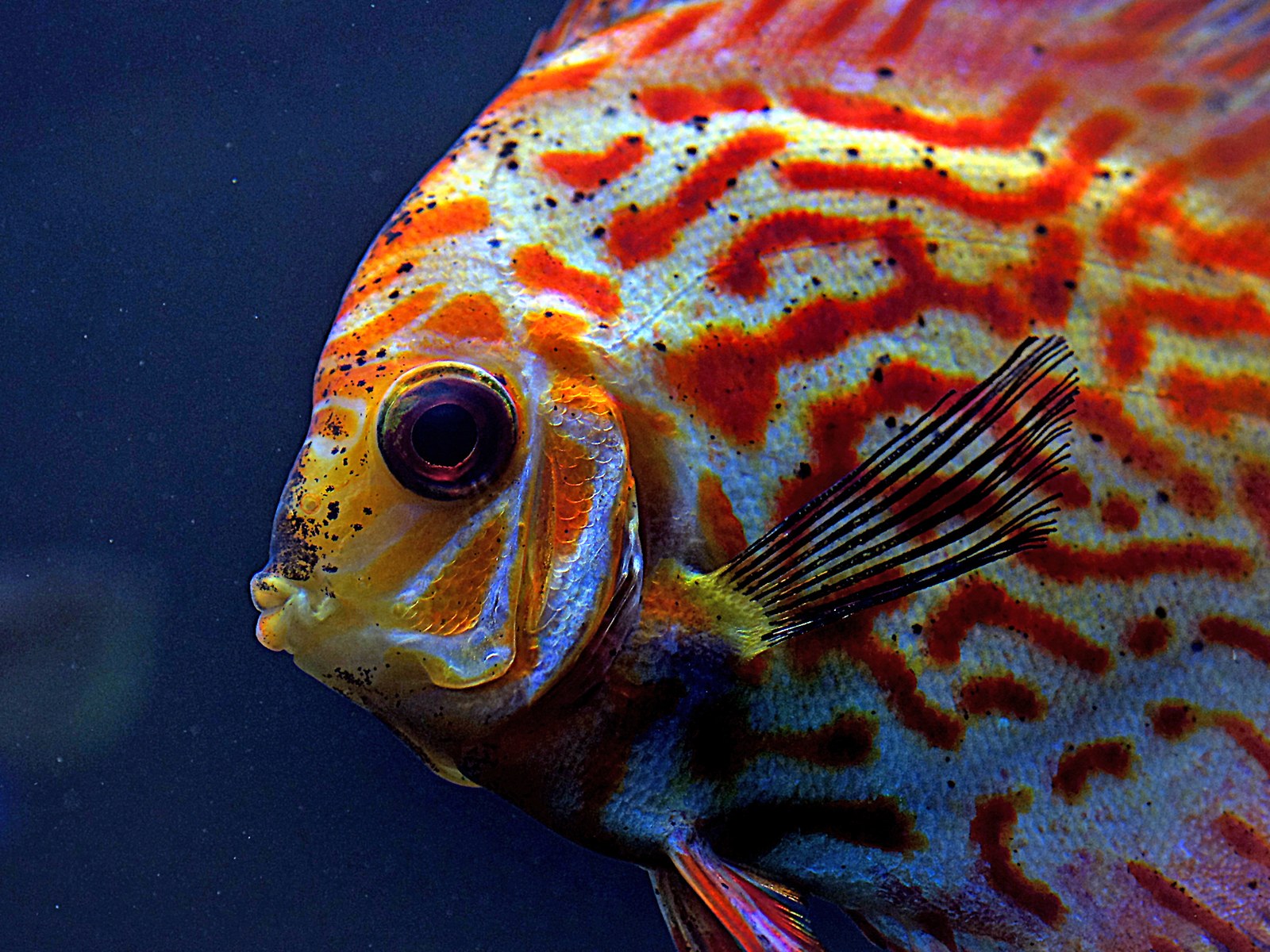
A discus that stops eating can make a keeper reach for heat settings, medicated food or a familiar parasite remedy. The safer first step is to collect evidence while protecting the fish. Water quality, social access and medical causes can overlap, so a useful health response considers all three rather than diagnosing from one dramatic sign.
Know the fish before interpreting a change
Observe individuals at ordinary meals and quiet periods. Record which fish eats readily, which waits, and where each normally rests. Domestic strains differ in appearance, so an unfamiliar pattern or a comparison with a different color variety is not a reliable diagnosis. Your own baseline photographs are usually more useful than an internet image of a supposedly identical symptom.
Note changes in breathing effort, body outline, fin posture and swimming, as well as food intake. A fish that approaches food but does not swallow has not completed a normal meal. Compare repeated observations rather than relying on one brief look from across the room.
This guide does not assign disease prevalence to discus or claim every sign has one cause. New sores, persistent refusal, obvious wasting or loss of balance need professional assessment. Severe breathing trouble requires action immediately, without waiting to complete an ideal diary.
Investigate the water and equipment promptly
Test temperature, ammonia and nitrite first, and review pH and recent maintenance records. Ammonia and nitrite should be undetectable in an established aquarium. Check the thermometer independently and look at actual filter output and surface movement. A device making noise or showing a light does not necessarily mean it is performing its job.
Maidenhead Aquatics warns that discus are sensitive to dissolved metals and organics. Consider source-water changes, conditioner use, food accumulation and possible contamination near the tank. Clear water and a familiar routine do not eliminate these possibilities. If several fish change behavior at once, an environmental investigation is particularly urgent.
The adopted aquarium guidance here is 27-30 C and pH 6.0-6.5, not FishBase's broader wild habitat ranges. Do not move a sick fish abruptly toward a published endpoint. Correct identified problems using suitably conditioned, matched water and qualified advice when chemistry or contamination makes the situation uncertain.
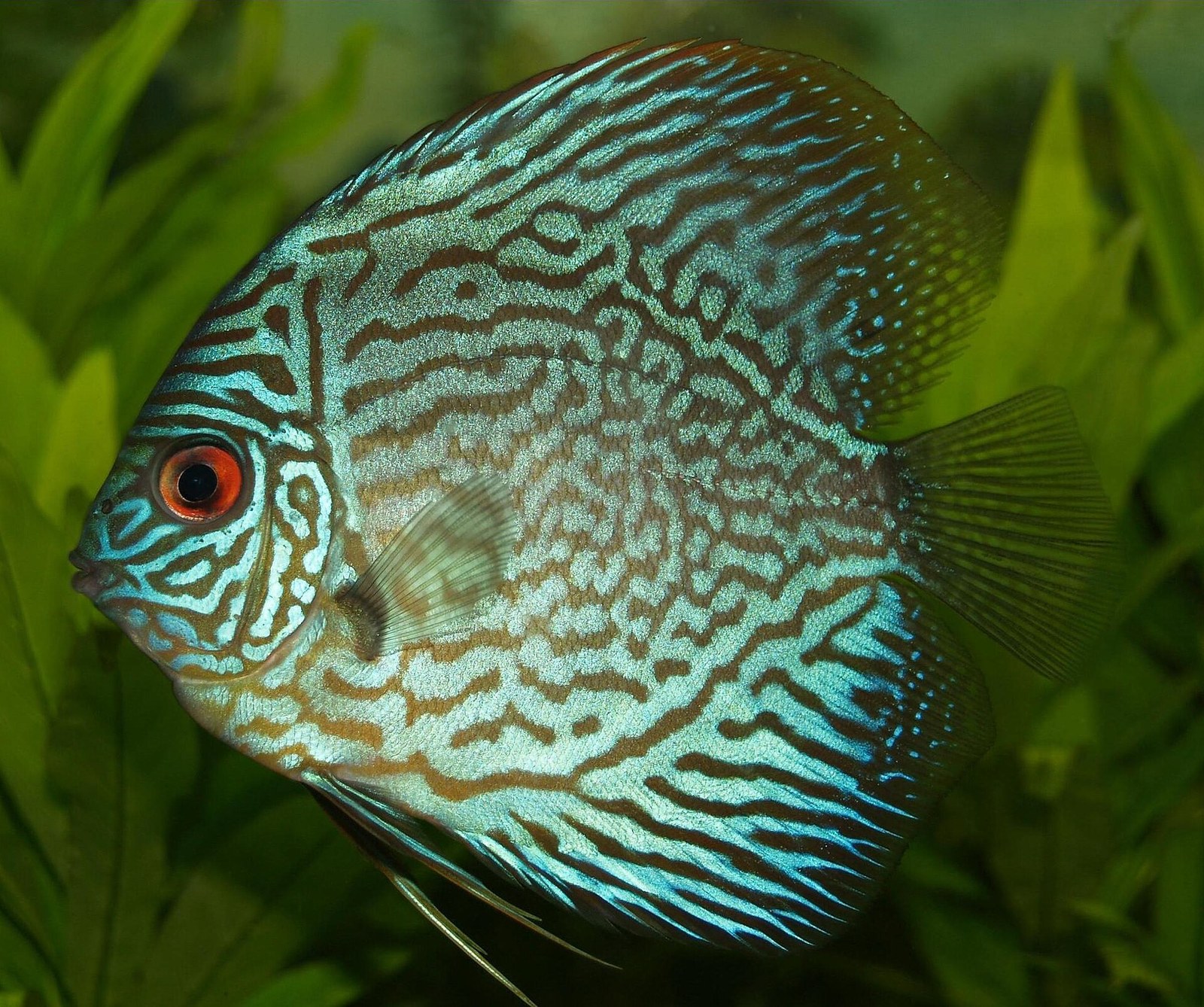
Respond to breathing trouble before debating labels
Labored respiration, repeated surface gathering or inability to maintain position can signal an emergency. Check aeration, circulation, temperature and test results at once. Restore appropriate gas exchange if it is inadequate, investigate equipment failure and contact an aquatic veterinarian, especially when several fish are affected or distress continues.
- Record the first noticed time and the number of fish affected.
- Check whether a recent cleaning or power interruption preceded the change.
- Note all products, aerosols or treatments used nearby.
- Share current water results and a short video with the clinician.
A hospital transfer is useful only when the receiving aquarium has appropriate water, heating, aeration and filtration. Moving a distressed fish into an improvised bowl can create additional instability without addressing the original cause.
Separate food exclusion from unexplained illness
A group may consume every offered particle while one discus steadily loses access. Watch the individual that stays behind cover: does it attempt to feed and retreat when another approaches, or does it ignore accessible food entirely? These observations help distinguish a social problem from reduced appetite, although both may be present together.
Try a carefully distributed modest ration and verify that the quieter fish swallows. If exclusion persists, protect the fish and review accommodation with experienced help. Do not continually increase the whole group's ration; that can reward dominant fish and increase the waste burden without feeding the intended individual.
Persistent refusal or declining condition needs veterinary investigation. Report unusual feces, but do not assume that white or stringy material identifies an internal parasite. Likewise, skin marks or rubbing behavior are useful observations rather than proof of a specific organism. Diagnosis may require examination and tests beyond what a photograph can show.
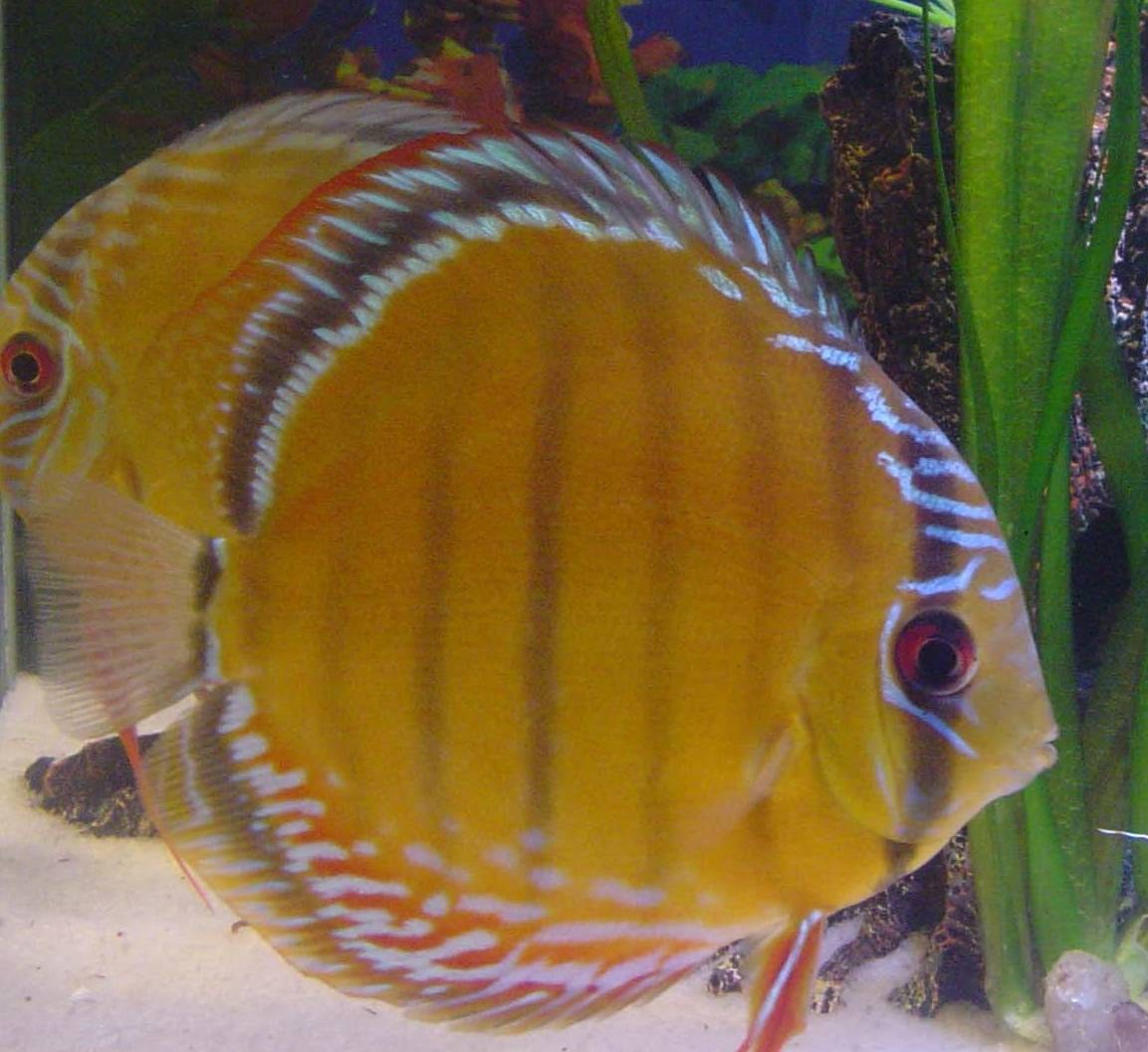
Use quarantine to protect both groups
Prepare a separate, suitably sized, heated and biologically filtered system before buying additions. Dedicated nets, siphons and other wet tools reduce the chance of carrying material between aquariums. MSD gives thirty days as a general minimum for quarantine; symptoms, treatment or a particular history can justify a longer veterinarian-directed plan. The calendar alone does not establish health.
Quarantine also lets you learn each arrival's normal feeding response. Keep the food familiar, record intake and monitor water carefully, especially if the filter is newly established or the feeding load changes. An isolated aquarium still needs full husbandry, not merely distance from the display.
Avoid automatic medication programs without a reasoned veterinary plan. Treatments differ in target and effects, and unnecessary combinations can make both diagnosis and aquarium management harder.
Prepare a focused veterinary handover
Tell the veterinarian the aquarium's dimensions, estimated working volume, fish number and sizes, water preparation method, feeding routine and recent changes. Include exact test results with units, not a general statement that the water is fine. List every treatment already used, its product name and the instructions followed.
Ask the clinic how to transport the fish or any requested samples. Do not attempt invasive sampling based on a general article, and contact the veterinarian promptly for handling advice if a fish dies and examination is being considered. Suitable sample handling can affect what information remains available.
After improvement, review what was actually established. Recovery after several simultaneous changes does not prove which guessed disease was present. Maintaining a mature filter, preventing food exclusion and organizing quarantine can reduce avoidable problems, but no routine guarantees that discus will never become ill. Early observation plus a clear evidence trail makes the next decision safer.
Continue reading: Discus Behavior: Shyness, Hierarchy and Feeding Access.
Sources and further reading:
- Symphysodon aequifasciatus (Discus) - Seriously Fish
- Symphysodon aequifasciatus - FishBase
- Discus-Symphysodon - Maidenhead Aquatics
- Management of Aquarium Fish - MSD Veterinary Manual
- Candidate Species for Florida Aquaculture: Discus Symphysodon spp., a Profitable but Challenging Species for Florida Aquaculture
Photo credits: Bernard Spragg. NZ from Christchurch, New Zealand (CC0), Patrick Farrelly (Public domain (copyright holder release; not CC0)), Gladstone Peixoto Moraes (Public domain (copyright holder release; not CC0)). Images resized and compressed for web display. Each image retains its linked license. Head-and-shoulder crop only, used as a detail shot rather than the species cover. Photo by Patrick Farrelly. Commons marks the image public domain, but its permission text also requests author acknowledgement; attribution is retained here. Not a CC0 dedication. Commercial ancestry is not established by this photograph.


