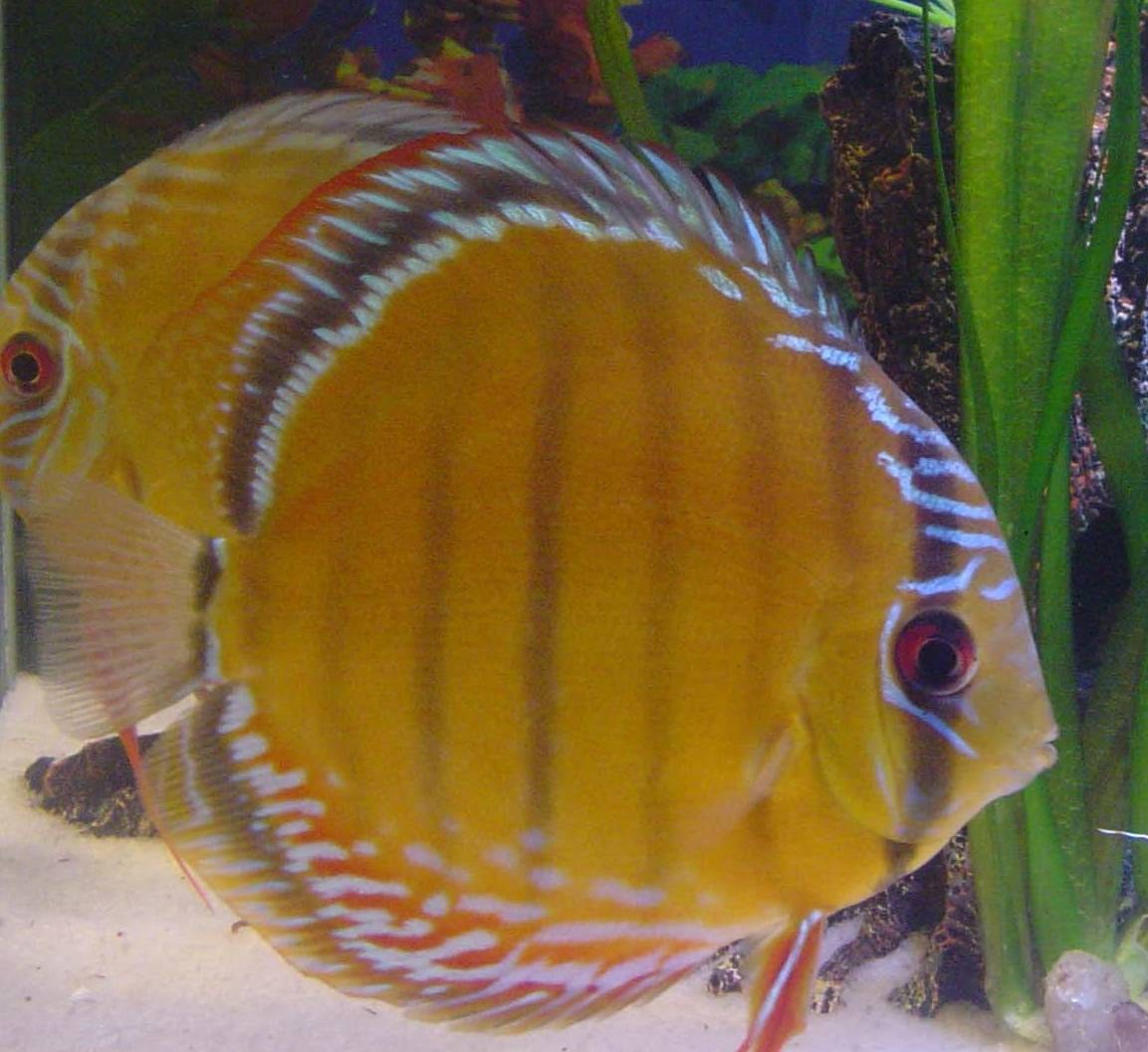
Discus tank maintenance becomes less intimidating when every change follows a reproducible method. The challenge is not keeping a particular bottle of conditioner on hand; it is knowing what the replacement water contains and whether the filter can manage frequent feeding. Build a preparation and testing routine that another competent keeper could repeat without guessing.
Separate aquarium recommendations from habitat records
This guide adopts Maidenhead Aquatics' aquarium temperature range of 27-30 C and pH 6.0-6.5. Its hardness entry says dH up to eight degrees, but the page does not explicitly define GH or KH there. That limitation matters: a source's shorthand should not become an invented carbonate-hardness or ppm target in a maintenance recipe.
FishBase's environmental ranges for S. aequifasciatus describe wild habitat, not a home-aquarium prescription. Using the broadest endpoint from each reference would create a recommendation neither source actually gives. Do not expand your planned conditions simply because a database records fish occurring somewhere outside the aquarium care range.
Ask the supplier for the actual conditions in which your discus are established. Domestic strains and wild-origin fish should not be treated as interchangeable. Where your supply differs substantially, work out a stable preparation method with an experienced specialist before purchase rather than improvising adjustments around occupied fish.
Measure source water and replacement water separately
Test and label your source water, prepared replacement water and aquarium water. Record temperature, pH and the individual hardness tests used. General hardness and carbonate hardness are different properties; a conductivity or dissolved-solids reading is not a substitute for knowing both. Keep units attached to every number you save.
If you use reverse osmosis or another treatment process, do not assume the output is ready for fish without further planning. Work out how the desired mineral content and buffering will be maintained, and verify the finished water rather than relying only on a mixing recipe. Avoid adding unmeasured powders or household acids directly to the occupied aquarium.
- Label containers and measuring tools clearly.
- Follow test-kit sample volumes and timing exactly.
- Record any change in source supply or treatment equipment.
- Check the finished replacement water before use.
Repeatability is especially valuable when someone else must perform maintenance during an absence.
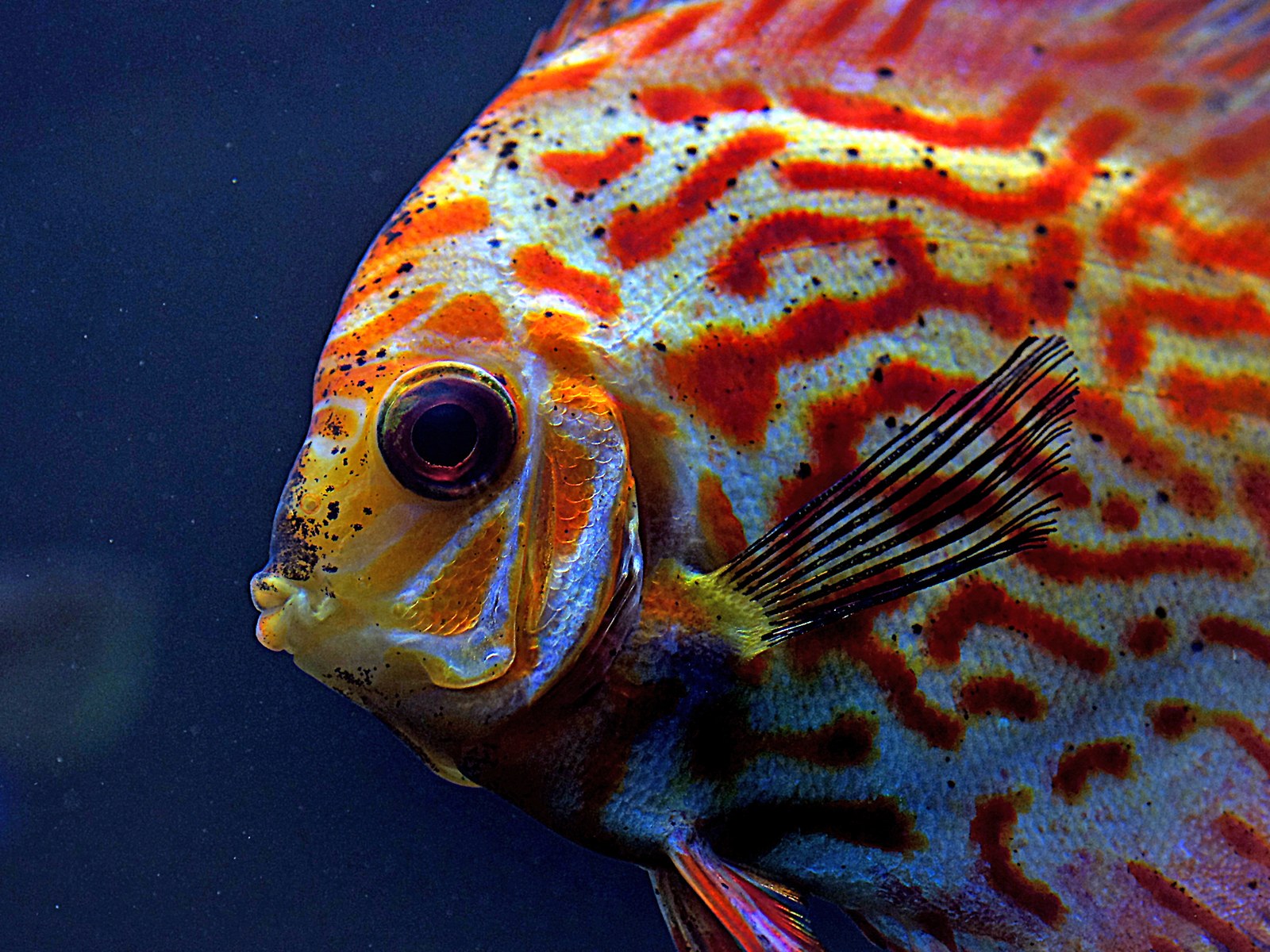
Match water changes to the actual waste load
Maidenhead recommends efficient filtration and regular partial changes, while frequent small meals are part of its discus feeding guidance. The amount of food consumed, leftovers, stock and source-water quality all affect how quickly conditions change. A fixed percentage copied from another aquarium is not a complete maintenance plan.
Use ammonia and nitrite tests to verify waste processing; both should be undetectable in a mature system. Track nitrate trends and visible debris alongside the water-change record. If a routine stops keeping pace after growth or extra feeding, revise the workload rather than waiting for fish to show obvious distress.
Prepare conditioned water with suitable temperature and compatible chemistry before refilling. Follow equipment instructions when lowering the water level so heaters and pumps are not operated unsafely. Refill gently and confirm that circulation and heating resume. A maintenance session is not finished until the fish and every essential device have been checked.
Preserve the biological filter while removing dirt
Biological filtration depends on established microorganisms, not the appearance of clean filter plastic. Distinguish mechanical media that trap particles from the surfaces carrying much of the biological community. Service clogged components according to manufacturer guidance while avoiding a complete routine replacement or sterilization of all mature media.
Keep biological media from drying and avoid exposing it to untreated chlorinated water during normal cleaning. If the filter design relies on replaceable cartridges, ask how to retain a stable biological stage. Recheck ammonia and nitrite after substantial servicing, a prolonged interruption or a suspected loss of function.
Look at actual flow after reassembly. A powered motor may still have an airlock, obstruction or reduced output that compromises circulation.
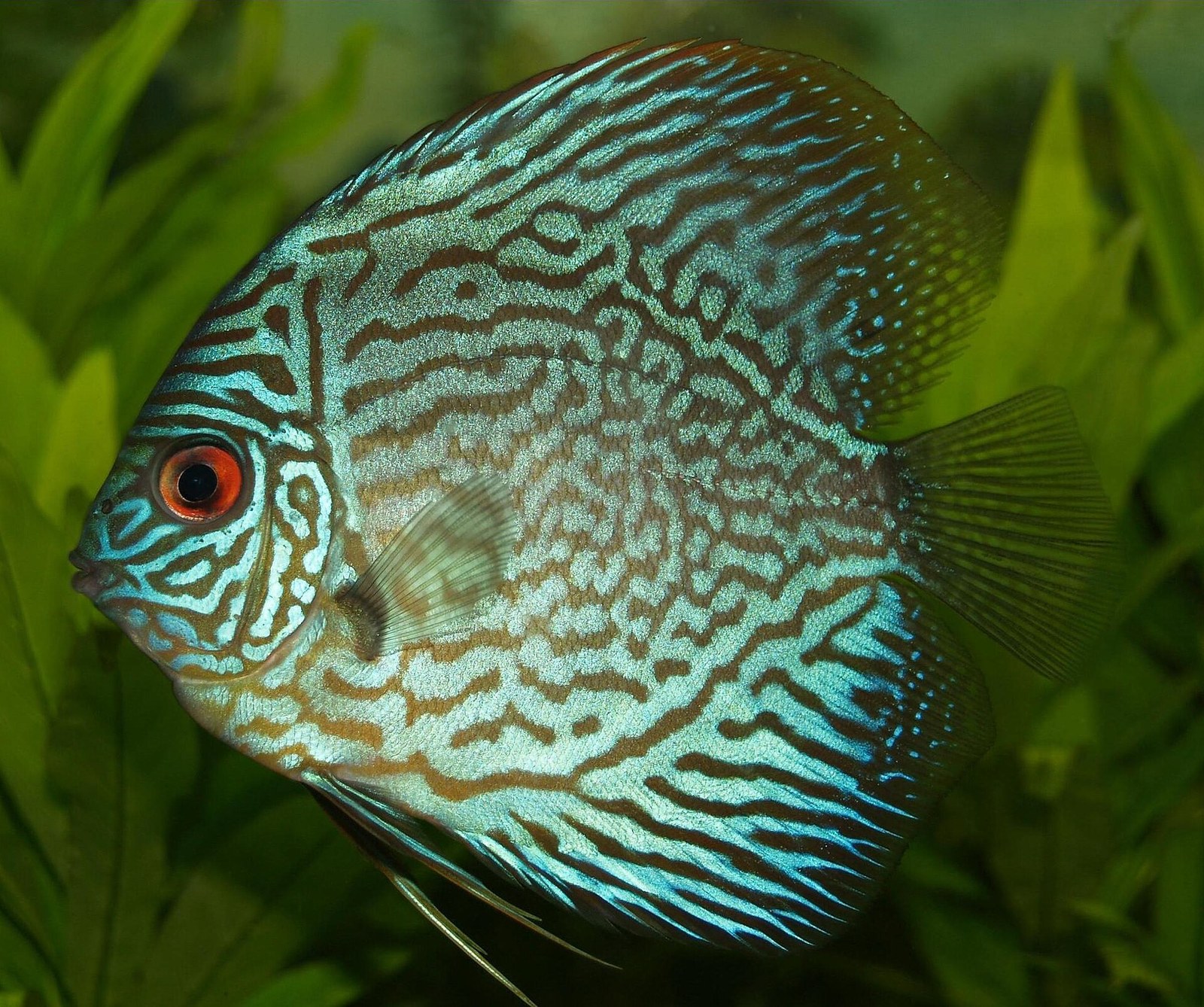
Keep food routes and cleaning routes connected
Discus need cover, but food should not routinely disappear into unreachable spaces beneath it. Choose feeding positions you can observe and siphon. Remove accessible leftovers and inspect the bases of roots or plants where fine particles accumulate. If the same area repeatedly collects waste, alter the presentation or layout instead of simply adding more filter equipment.
A sparse quarantine aquarium can make observation easier, but it still needs suitable shelter and water quality. Conversely, an elaborate planted display is not automatically safer because it looks natural. Choose a layout that supports the intended fish while remaining manageable during ordinary working weeks, not just on a free weekend.
Evaporation top-ups only restore volume. They do not export accumulated waste, so keep them separate in your records from changes that actually remove and replace aquarium water.
Prepare for a result outside the usual pattern
When a test changes unexpectedly, verify the procedure and compare the aquarium with prepared and source-water samples. Review recent food, stock, servicing, power events and products added. An ammonia or nitrite reading needs prompt correction with suitable water changes and restored filtration, not merely another entry in the log. Reduce feeding during a waste-processing problem while addressing its cause.
If fish are breathing hard, check aeration and temperature and seek urgent aquatic veterinary advice. Do not automatically increase heat or dose a disease treatment because discus are associated with warm water. Maintaining the established appropriate environment is different from using temperature as medicine.
Keep a suitable backup aeration option and clear shutdown and restart instructions. Label which equipment must be checked after a change. Discus water care is most sustainable when it is predictable: prepared water, preserved biology, useful measurements and a keeper willing to investigate a trend before it becomes an emergency.
Continue reading: Living With Discus: Choose the Routine Before the Colors.
Sources and further reading:
- Symphysodon aequifasciatus (Discus) - Seriously Fish
- Symphysodon aequifasciatus - FishBase
- Discus-Symphysodon - Maidenhead Aquatics
- Management of Aquarium Fish - MSD Veterinary Manual
- Candidate Species for Florida Aquaculture: Discus Symphysodon spp., a Profitable but Challenging Species for Florida Aquaculture
Photo credits: Gladstone Peixoto Moraes (Public domain (copyright holder release; not CC0)), Bernard Spragg. NZ from Christchurch, New Zealand (CC0), Patrick Farrelly (Public domain (copyright holder release; not CC0)). Images resized and compressed for web display. Each image retains its linked license. Head-and-shoulder crop only, used as a detail shot rather than the species cover. Photo by Patrick Farrelly. Commons marks the image public domain, but its permission text also requests author acknowledgement; attribution is retained here. Not a CC0 dedication. Commercial ancestry is not established by this photograph.


