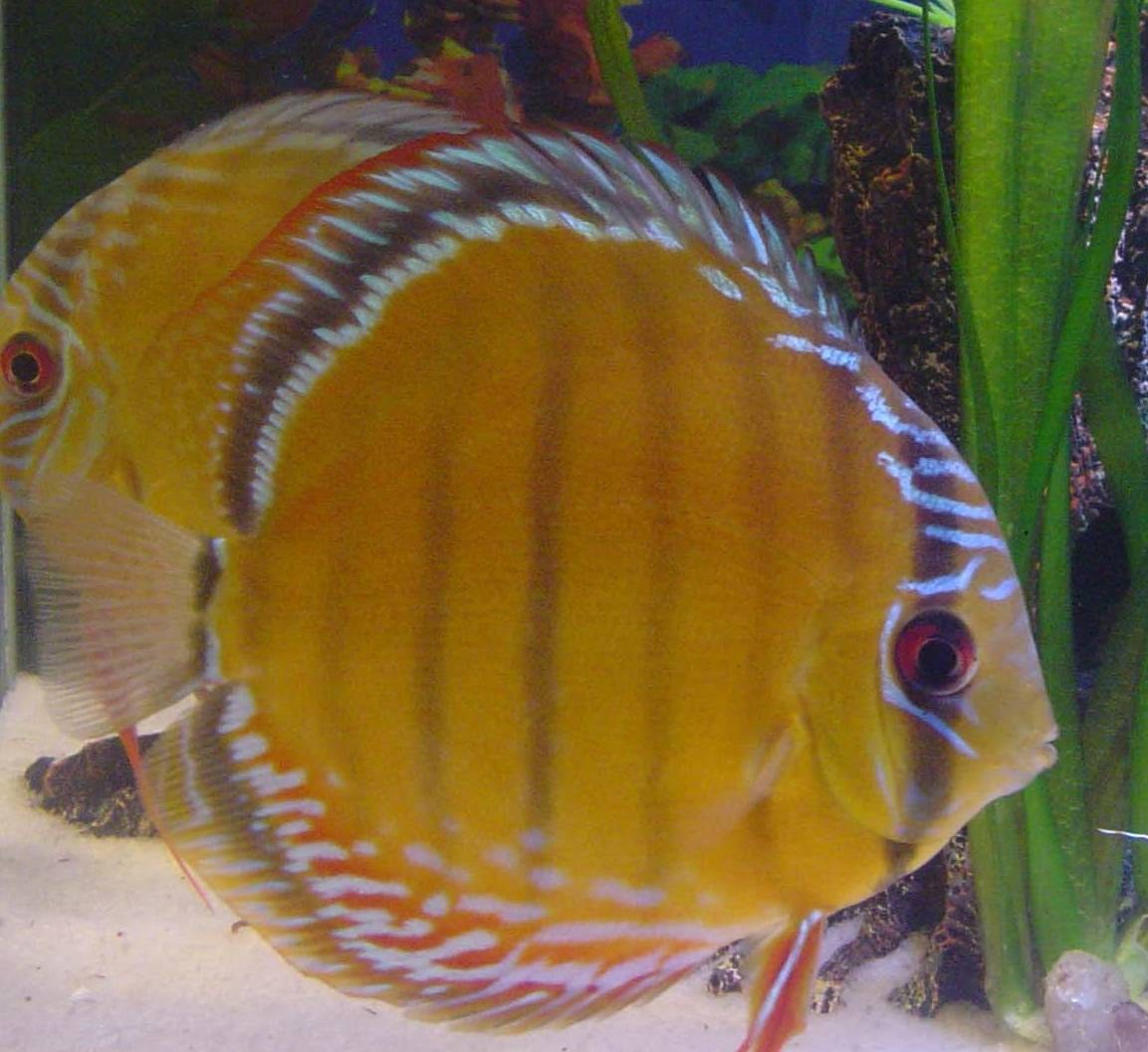
Feeding discus is a chance to inspect the whole social group several times a day. The brightest fish at the front may receive most of the food while a quieter individual falls behind. A good discus diet therefore depends on nutritional quality and fair access, with leftover removal built into the routine rather than treated as an optional extra.
Separate natural feeding from a complete aquarium diet
Seriously Fish describes wild S. aequifasciatus eating zooplankton, insects and other small invertebrates. That account explains an interest in small animal foods, but it does not provide a complete recipe for every domestic discus strain. Aquarium fish need a diet that is practical, appropriately sized and nutritionally suitable throughout their particular life stage.
Choose a reputable complete prepared food intended for discus or otherwise appropriate to their needs. Read whether the product is a staple or a supplementary treat. Add modest frozen variety that the fish readily accept, such as suitable brine shrimp or other aquarium foods listed by an experienced supplier. One eagerly eaten item should not displace the whole feeding plan.
Maidenhead lists beefheart among possible foods, but a list of accepted items is not evidence that beefheart is required or complete. This guide does not prescribe a homemade meat mixture, ingredient percentage or unverified supplement formula.
Make the first meals familiar
Before buying discus, ask the supplier to demonstrate the food the group currently eats. Note the product, particle size, presentation and feeding schedule. This is especially useful when moving between breeders using different routines. Buying a fish that has never eaten in front of you makes it harder to distinguish transport-related caution from a pre-existing problem.
Keep the initial diet familiar while the fish settle in a suitable quarantine system. Introduce a new staple alongside a known food and observe whether it is swallowed, rather than assuming that approach or repeated mouthing means successful feeding. Food that is rejected and falls out of sight still adds waste.
Store dry products sealed and handle frozen foods according to their instructions. Use clean dedicated utensils, and avoid touching food with wet aquarium tools before returning them to the container. Good storage protects consistency; it also makes an unexplained change in appetite easier to investigate.
Use frequent small meals without a fixed pellet rule
Maidenhead Aquatics recommends small varied meals at least three times daily. That advice creates repeated opportunities to feed and observe, not a requirement to add a full ration when the previous one remains uneaten. Plan portions around the product, fish size, growth and body condition, and ask the breeder or aquatic veterinarian for help with juveniles or compromised fish.
There is no useful universal pellet count because pellets differ greatly in size and composition. Begin conservatively using the food manufacturer's guidance, watch consumption and adjust deliberately. Frequent feeding should remain compatible with the aquarium's biological filtration and maintenance capacity.
- Offer a measured small portion where you can see it.
- Confirm which individuals actually swallow food.
- Stop adding food when interest declines or waste accumulates.
- Remove accessible leftovers and note repeated refusals.
Weighing or measuring portions consistently is more informative than remembering that yesterday's meal looked about the same.
Protect the fish that does not win the feeding race
Discus form social groups, and hierarchy can become obvious when food is concentrated in one place. A subordinate may approach, hesitate and retreat every time another fish turns toward it. If you watch only from the front for a few seconds, you may mistake this for feeding. Observe the quiet fish long enough to confirm a swallow.
Distribute the established ration across separated accessible areas if this gives quieter individuals a chance. Keep those areas visible for the keeper and avoid dropping food into dense cover where it cannot be checked or removed. Changing presentation helps only if the targeted fish actually benefits.
Persistent exclusion requires a housing review and possibly safe separation, not ever larger meals. At the same time, check health and water quality: a fish can be both socially stressed and unwell.
Keep frequent meals from becoming a water problem
Discus care involves a warm aquarium and a regular supply of food, so waste management must be reliable. Uneaten particles hidden behind roots and planting decompose even when the open foreground appears clean. Plan accessible feeding areas and siphon routes before adding elaborate decorations.
Test ammonia and nitrite, which should be undetectable in an established system, and track nitrate trends alongside maintenance. If waste processing fails, MSD advises reducing feeding while correcting the environmental problem. Use suitable conditioned water changes and inspect filter function; withholding food alone is not a complete response to toxic water.
Treat a change of food as a possible change in waste load. Different particles may sink, crumble or be rejected differently, so inspect the aquarium closely after switching products instead of assuming the same portion behaves the same way.
Investigate refusal and prepare for absences
When a discus repeatedly refuses food, record when the change began and whether other fish are affected. Check water, temperature, harassment and the food previously accepted. Note visible body-condition changes and breathing effort. Persistent refusal, wasting, abnormal swimming or wounds warrants aquatic veterinary assessment rather than a succession of enticing treats.
Do not diagnose internal parasites solely from a pale or stringy dropping. Such observations belong in a case history, but they do not identify the cause by themselves. Avoid unprescribed medicated food, because a fish that does not eat may receive little treatment while other fish receive an unintended dose.
For holidays, organize feeding cover around the established schedule and the fish's age and condition. Provide measured portions and a clear instruction to report leftovers or missed meals. Test any automatic feeder in advance, including whether shy fish can use its delivery point. A machine can dispense food, but it cannot confirm that every discus ate or notice that the filter stopped.
Continue reading: Discus Health Problems: A Calm, Evidence-Based Response.
Sources and further reading:
- Symphysodon aequifasciatus (Discus) - Seriously Fish
- Symphysodon aequifasciatus - FishBase
- Discus-Symphysodon - Maidenhead Aquatics
- Management of Aquarium Fish - MSD Veterinary Manual
- Candidate Species for Florida Aquaculture: Discus Symphysodon spp., a Profitable but Challenging Species for Florida Aquaculture
Photo credits: Gladstone Peixoto Moraes (Public domain (copyright holder release; not CC0)), Bernard Spragg. NZ from Christchurch, New Zealand (CC0), Patrick Farrelly (Public domain (copyright holder release; not CC0)). Images resized and compressed for web display. Each image retains its linked license. Head-and-shoulder crop only, used as a detail shot rather than the species cover. Photo by Patrick Farrelly. Commons marks the image public domain, but its permission text also requests author acknowledgement; attribution is retained here. Not a CC0 dedication. Commercial ancestry is not established by this photograph.


