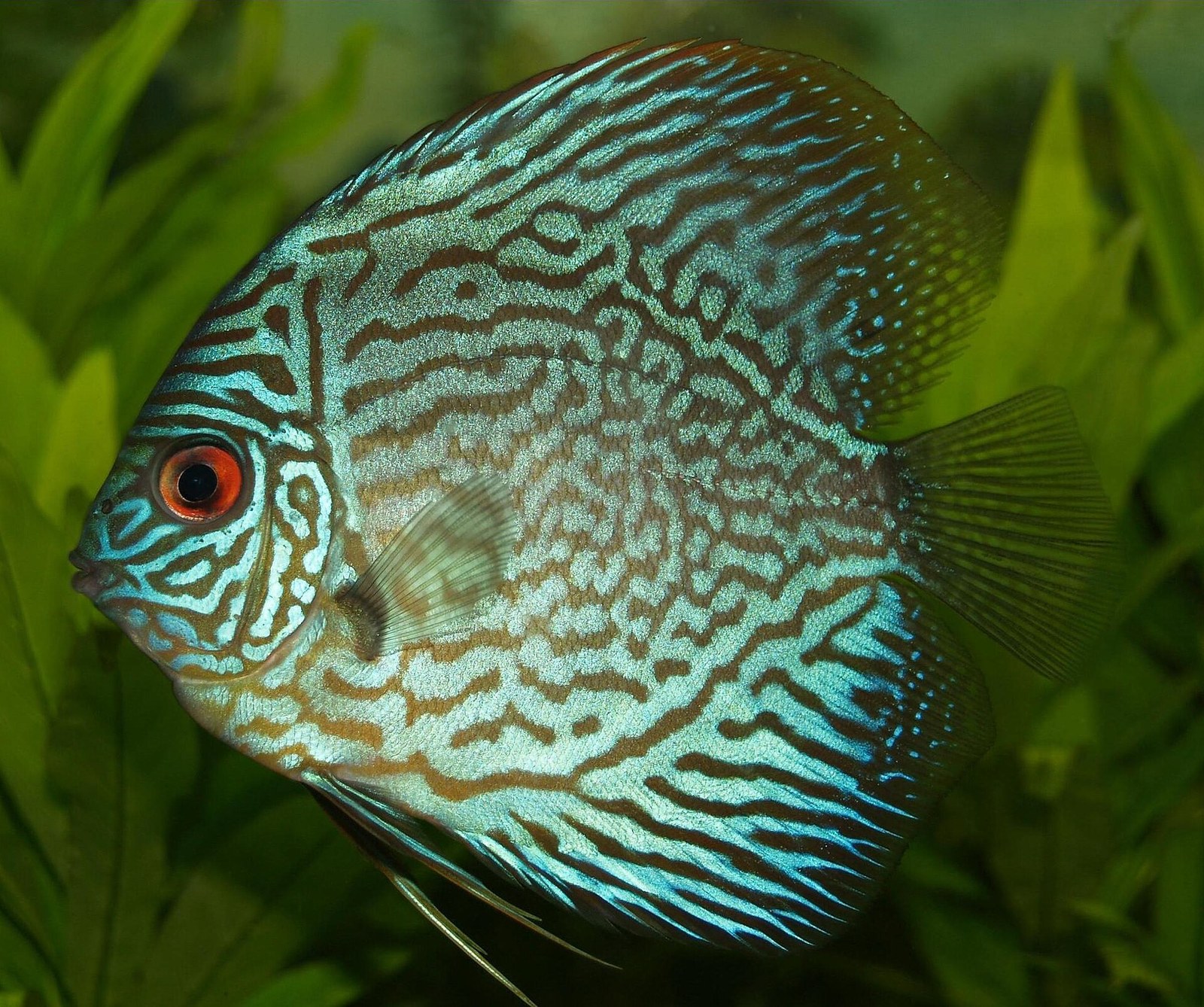
Discus care begins with a group and a water-management plan, not a color chart. These deep-bodied cichlids can be shy, and a beautiful aquarium is useful only if every fish can eat, rest and move without persistent exclusion. Prepare adult accommodation, mature filtration and repeatable water care before bringing home a set of juveniles.
Know which discus your information describes
The catalog identity on this site is Symphysodon aequifasciatus, but commercial discus should not automatically be assigned that exact ancestry. UF/IFAS discusses competing classifications of Symphysodon and crossbreeding among species, subspecies and varieties. A retail name such as blue diamond describes a strain's appearance, not a documented wild population or guaranteed genetic history.
Species-specific measurements must retain that context. Seriously Fish reports approximately 14 cm standard length for S. aequifasciatus; standard length excludes the tail fin and is not body height. It is not an established maximum for every domestic strain. Ask a supplier about the expected adult size and history of the actual stock rather than sizing the aquarium from one number alone.
Choose established captive stock when you want guidance designed around domestic discus. Wild-origin fish can require a more specialized plan, and unknown origins should remain unknown rather than being filled in from a photograph.
Plan adult group space before buying juveniles
Maidenhead Aquatics recommends beginning with five or six discus so they can form a natural hierarchy. A group still needs enough room for individuals to withdraw and feed. More fish in too little space is not a reliable treatment for bullying, and a suggested group number does not override adult accommodation requirements.
Seriously Fish gives an aquarium around 120 by 45 by 45 cm, quoted as 255 liters, for a breeding pair or a few juveniles. This is a limited-use reference, not a recommendation for five or six mature fish. Plan a larger adult-group system with experienced help; the sources reviewed here do not establish one universal minimum volume for every adult group.
Provide sheltered edges, open swimming routes and accessible feeding areas. Keep a functioning separation option available in case one fish becomes injured or persistently excluded. Buying juveniles only postpones adult needs; it does not reduce them.
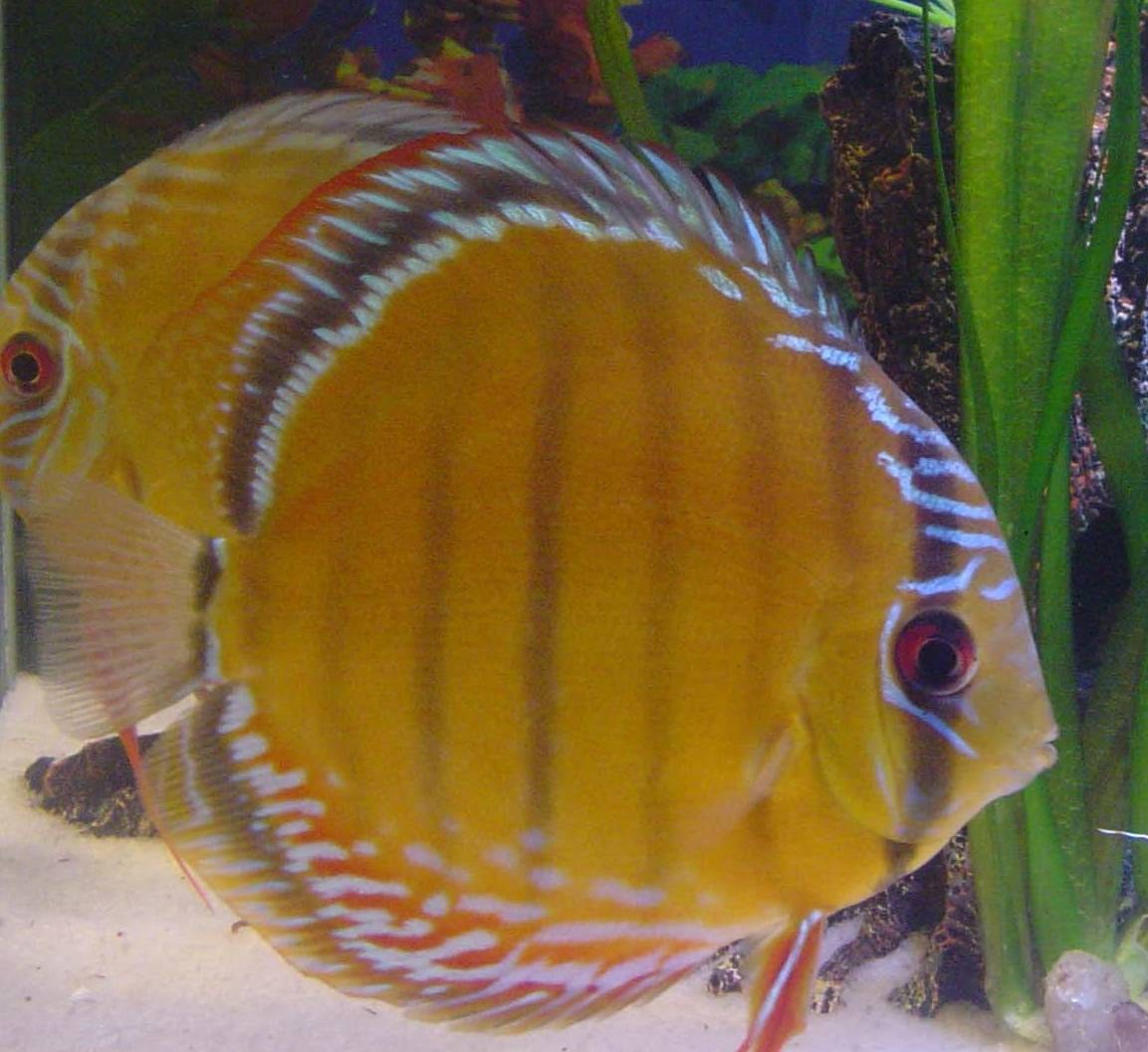
Adopt aquarium guidance rather than habitat extremes
This guide uses Maidenhead's aquarium temperature range of 27-30 C, approximately 81-86 F, and pH 6.0-6.5. The same source lists hardness as dH up to eight degrees without explicitly explaining GH or KH on that page. Retain that limitation and seek help measuring general hardness and carbonate hardness separately; do not invent a dKH or ppm conversion.
FishBase's broader environmental values for S. aequifasciatus are habitat observations, not alternative aquarium targets. Combining the widest values from both sources would create a care recommendation neither actually makes. The seller's current water is also important when planning a safe introduction.
Establish filtration and a practical cleaning layout
A biological filter needs to process the waste produced by the intended inhabitants. Cycle the aquarium without exposing fish to toxic waste and confirm performance with ammonia and nitrite tests. MSD notes that a tropical biofilter can take up to eight weeks to establish; time elapsed is not proof of readiness.
Choose equipment that provides reliable circulation and gas exchange without making sheltered areas unusable. Install a heater and independent thermometer, and ensure you can reach the substrate and service the filter without dismantling the display. Warm water, frequent feeding and shy fish make an inaccessible layout particularly inconvenient.
- Test the system before purchase day.
- Prepare conditioned replacement water using a repeatable method.
- Leave clear routes for siphoning uneaten food.
- Keep essential spare equipment and emergency contacts accessible.
A clean-looking display can still contain ammonia or nitrite. Use tests, not clarity, to judge whether the filter and maintenance routine are keeping pace.
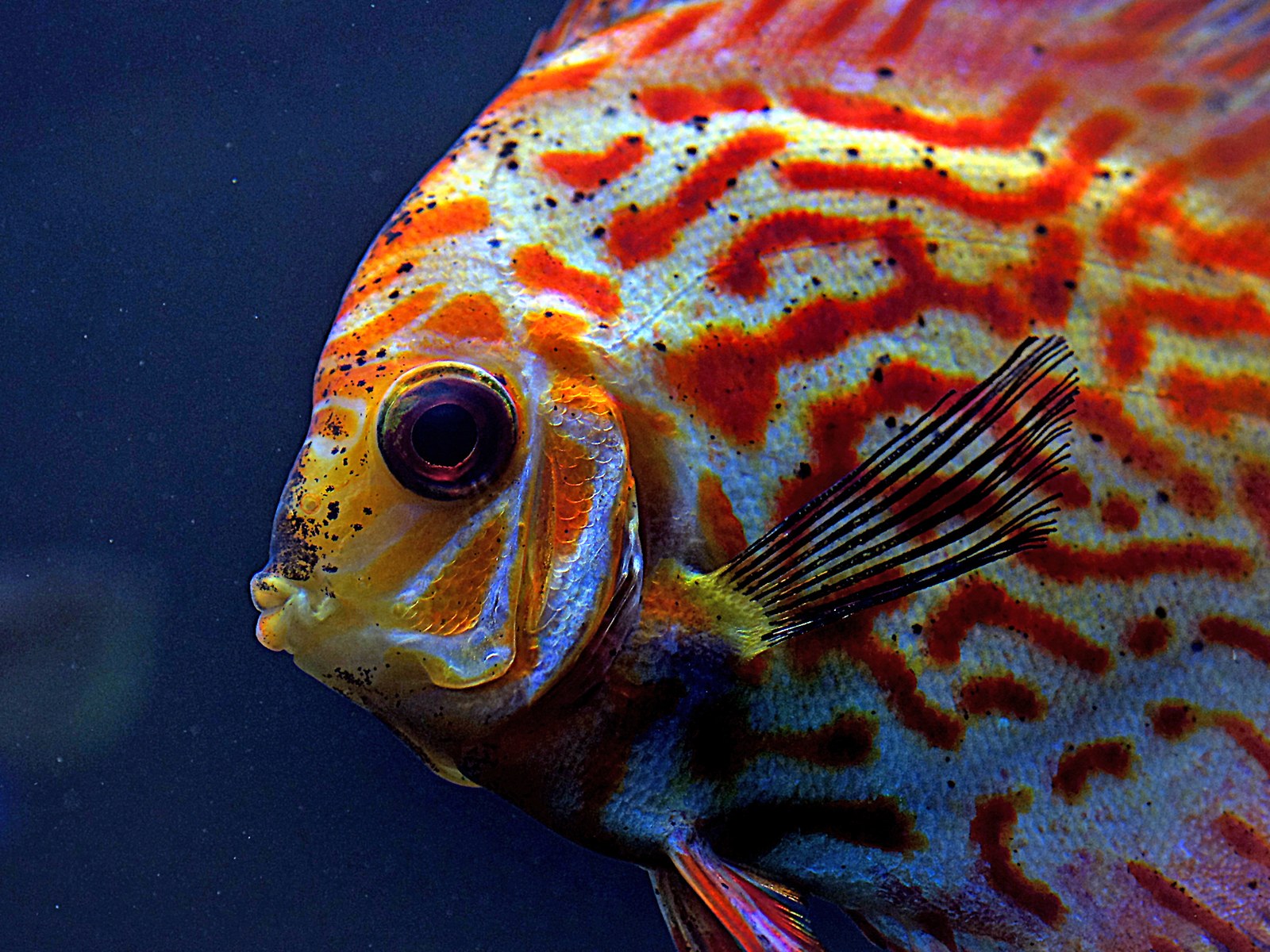
Introduce and feed fish as individuals
Arrange separate, heated and biologically filtered quarantine with dedicated tools. MSD gives thirty days as a general minimum; signs of illness or treatment may require a different veterinarian-directed plan. An attractive fish from a trusted shop still needs observation, and transport water should not be added to the display.
Maidenhead recommends small varied meals at least three times daily. Use a suitable complete prepared food with modest frozen variety, and observe actual consumption. A feeding schedule is not permission to add food three times regardless of leftovers. Adjust portion size and presentation to growth, body condition and the ability of the filter to manage the load.
Keep the system stable and revise when needed
Check temperature, equipment, breathing, posture and appetite daily. Perform regular suitably matched partial water changes and remove accumulating debris while preserving mature biological media. Do not replace the entire filter's established biology during a routine clean. Keep records so a change in fish behavior can be compared with maintenance, feeding or source-water events.
If one fish becomes withdrawn, investigate both social access and health. Persistent refusal to eat, body-condition loss, wounds or labored breathing need prompt attention; neither a peaceful species label nor a previous healthy week rules out a problem. Seek aquatic veterinary guidance rather than trying a succession of medicines.
Our reviewed sources do not establish a reliable lifespan range. Plan for a long-term commitment that includes holidays, replacement equipment and responsible rehoming if circumstances change. Discus are most manageable when the routine is sustainable, not when the keeper relies on constant improvisation to maintain the display.
Continue reading: Feeding Discus: Small Meals and Equal Opportunity.
Sources and further reading:
- Symphysodon aequifasciatus (Discus) - Seriously Fish
- Symphysodon aequifasciatus - FishBase
- Discus-Symphysodon - Maidenhead Aquatics
- Management of Aquarium Fish - MSD Veterinary Manual
- Candidate Species for Florida Aquaculture: Discus Symphysodon spp., a Profitable but Challenging Species for Florida Aquaculture
Photo credits: Patrick Farrelly (Public domain (copyright holder release; not CC0)), Gladstone Peixoto Moraes (Public domain (copyright holder release; not CC0)), Bernard Spragg. NZ from Christchurch, New Zealand (CC0). Images resized and compressed for web display. Each image retains its linked license. Photo by Patrick Farrelly. Commons marks the image public domain, but its permission text also requests author acknowledgement; attribution is retained here. Not a CC0 dedication. Commercial ancestry is not established by this photograph. Head-and-shoulder crop only, used as a detail shot rather than the species cover.


