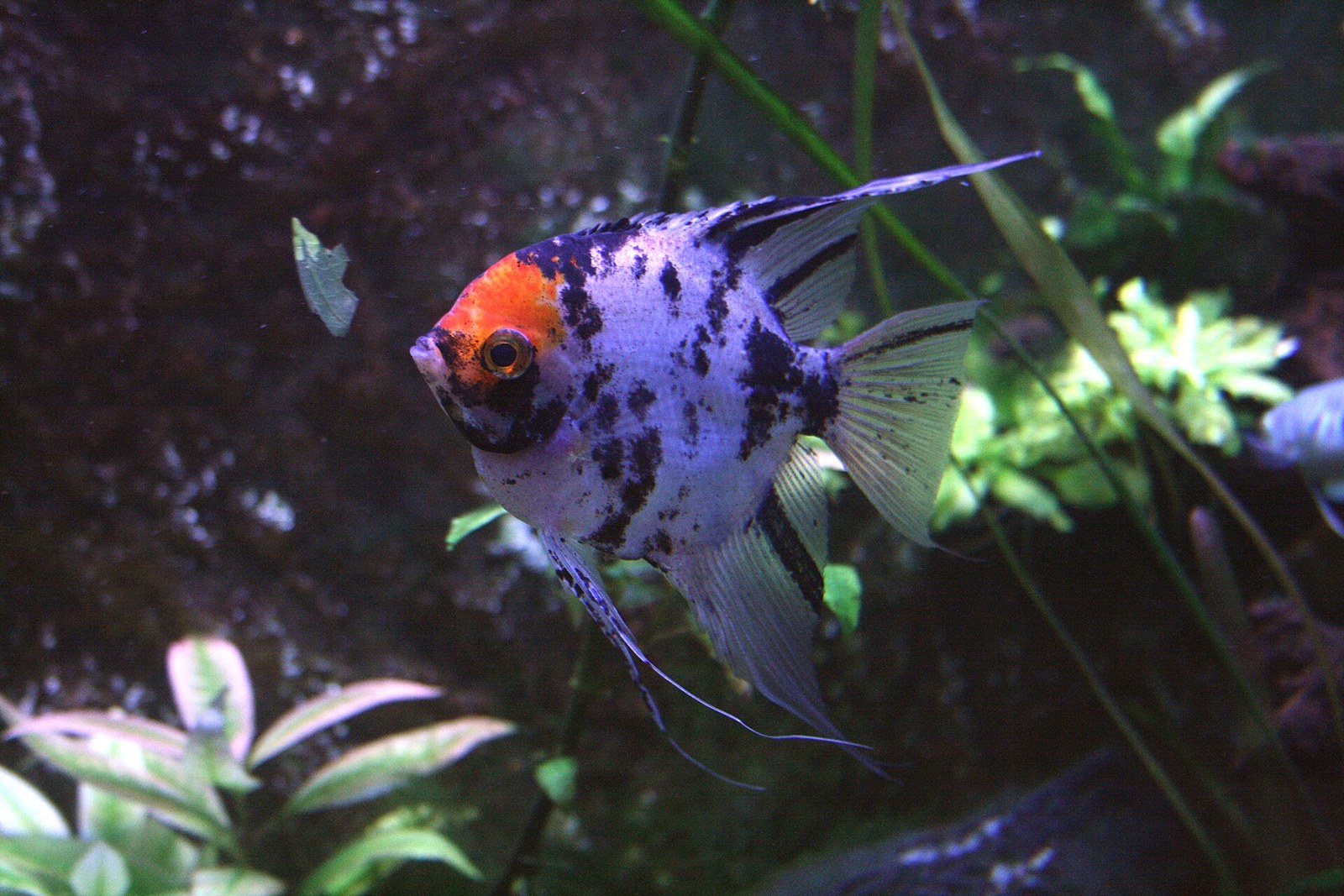
Feeding angelfish is partly a nutrition task and partly a social one. An eager fish at the glass can distract you from a tankmate that never reaches the meal. Build a routine around food quality, individual access and waste control, rather than assuming that an empty water surface means every fish has eaten enough.
Understand what the diet labels mean
The reviewed sources use different shorthand. Seriously Fish calls angelfish omnivorous and describes acceptance of flakes or pellets alongside live or frozen foods. Tropical Fish Hobbyist emphasizes largely carnivorous feeding and a strong appetite. These are not instructions to alternate between incompatible diets. Together they support a practical distinction: angelfish readily take animal foods, but a varied aquarium diet should not depend on one favorite item.
Use a reputable complete prepared food suitable for tropical fish as your nutritional foundation. Check that the product is intended as a staple rather than a treat, and choose particles the fish can swallow without repeated spitting. A spectacular feeding response to a frozen item tells you about preference, not whether that item supplies a complete diet.
Small fish are also potential prey. That behavior is a compatibility concern, not a reason to buy feeder fish or to expect an extra meal to protect tiny neighbors.
Choose foods that fit your fish and aquarium
Flakes and suitably sized pellets are practical options for captive-bred angelfish already accustomed to prepared foods. Maidenhead Aquatics also lists slowly sinking pellets and frozen foods such as brine shrimp, Mysis and daphnia. Choose a few useful options you can store correctly rather than collecting many open containers that lose freshness before they are used.
Ask the seller to demonstrate feeding and write down the actual product used. That makes the first meals less of an experiment. If you want to change the staple, introduce the replacement gradually alongside an accepted food, watching whether the fish swallows it. Do not interpret every rejected particle as illness, but do not allow an unsuccessful transition to become persistent underfeeding.
Keep dry food sealed and away from moisture and excessive heat. Handle frozen products according to their labeling and use clean utensils dedicated to aquarium feeding. Discard spoiled or mishandled food rather than relying on a fish's appetite to judge safety.
Build portions from observation, not a magic count
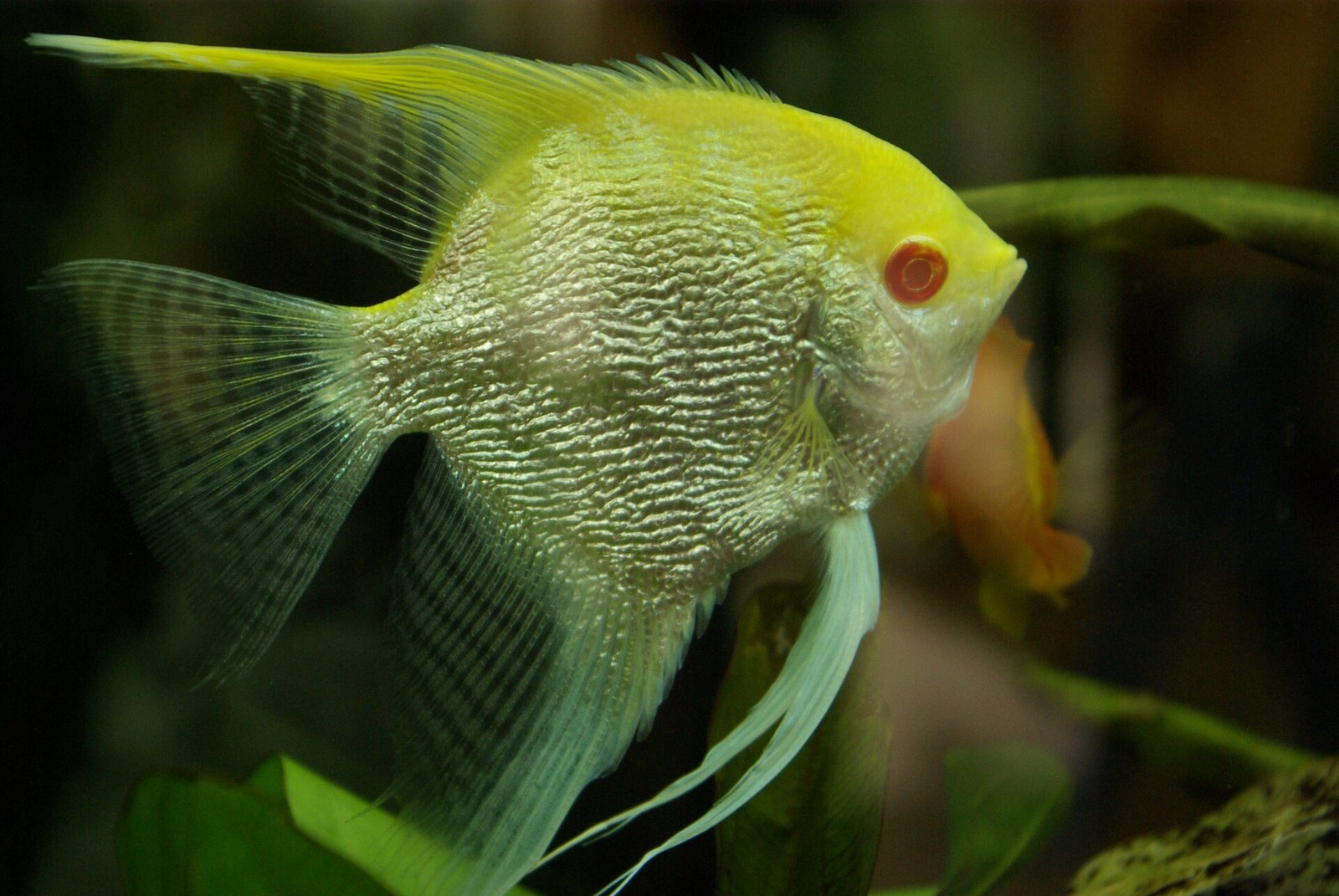
A fixed pellet count sounds reassuring but ignores differences in pellet diameter, fish size, temperature, growth and the rest of the diet. Begin with the manufacturer's guidance as a reference, then offer a modest amount and watch the response. You want food being eaten deliberately, not drifting behind wood while the fish continues searching at the surface.
Use small planned meals that fit the fish's age and condition. Young growing fish may need a different feeding schedule from mature adults; get specific guidance from the breeder or an aquatic veterinarian rather than applying an adult ration to every purchase. Record what actually went into the aquarium when changing the routine.
- Watch each fish swallow, not merely approach the feeding area.
- Stop adding food when interest falls or leftovers accumulate.
- Remove accessible uneaten food without chasing fish around the tank.
- Recheck portions after growth, stock changes or a change of product.
Give subordinate angelfish a real chance to eat
An angelfish group can appear calm until a concentrated food supply arrives. One fish may patrol the feeding corner while another remains behind a plant. Simply adding more food at the same spot often rewards the dominant fish and increases the amount reaching the filter. Observe the route a shy fish takes, and check whether another individual blocks it.
Try distributing a modest ration between separated feeding areas with clear sight lines for the keeper and visual shelter for the fish. Slowly sinking food may help a fish that avoids the surface, but only if it is actually eaten before reaching the substrate. Adjusting presentation is a test, not a guaranteed cure for aggression.
If exclusion continues, address the housing arrangement. A fish losing condition while food is plentiful needs protection and assessment, not increasingly elaborate tricks to feed around a bully.
Connect feeding to water quality
Food becomes part of the aquarium's waste load whether it is eaten or decomposes behind a decoration. Biological filtration processes nitrogenous waste, but it does not make overfeeding consequence-free. Use ammonia and nitrite tests to check filter performance, and monitor nitrate trends and debris when planning maintenance. A clear-looking tank can still have a problem.
During an unexpected ammonia or nitrite event, MSD advises reducing feeding while correcting the underlying water-quality issue. Combine suitable conditioned water changes with checks on filter function and recent changes in stocking or cleaning. Do not leave fish in toxic water while trying to solve the issue only by withholding meals.
Recognize when feeding advice is not enough
A fish that refuses a new pellet once needs observation; one that repeatedly misses meals, loses body condition or breathes abnormally needs investigation. Check temperature and water chemistry, observe harassment, and note changes in food storage or product. Record a short video of attempted feeding if it helps an aquatic veterinarian understand the problem.
Do not diagnose an internal parasite from a single unusual dropping or assume every swollen fish needs a household-food remedy. Similar outward signs can have different causes. Unsupervised medications or repeated large dietary changes can obscure the history and delay useful treatment. Seek prompt help when refusal accompanies wounds, loss of balance or respiratory distress.
For holidays, premeasure the established ration and explain how to remove leftovers. Avoid asking a sitter to improvise generous portions, and test an automatic feeder well before depending on it. The best feeding plan is one another responsible person can repeat without changing the fish's diet, social access or water quality overnight.
Continue reading: Angelfish Health Problems: Observe, Test and Act.
Sources and further reading:
- Pterophyllum scalare (Angelfish) - Seriously Fish
- Pterophyllum scalare Care - Tropical Fish Hobbyist Magazine
- Angelfish Care Guide - Aqueon
- Angel Fish Pterophyllum scalare - Maidenhead Aquatics
- Management of Aquarium Fish - MSD Veterinary Manual
Photo credits: Karelj (Public domain (copyright holder release; not CC0)), Love Krittaya (Public domain (copyright holder release; not CC0)), 5snake5 (CC0). Images resized and compressed for web display. Each image retains its linked license. Dimly lit breeding scene, retained as a secondary photograph rather than the cover.


