Angelfish health problems are easier to investigate when you know what ordinary behavior looks like. A fish drifting behind a leaf may be resting, avoiding a bully, or becoming unwell. This guide offers observation and triage, not a diagnosis or a claim that any named disease is especially common in angelfish. Water testing and timely professional help remain central.
Establish an individual baseline
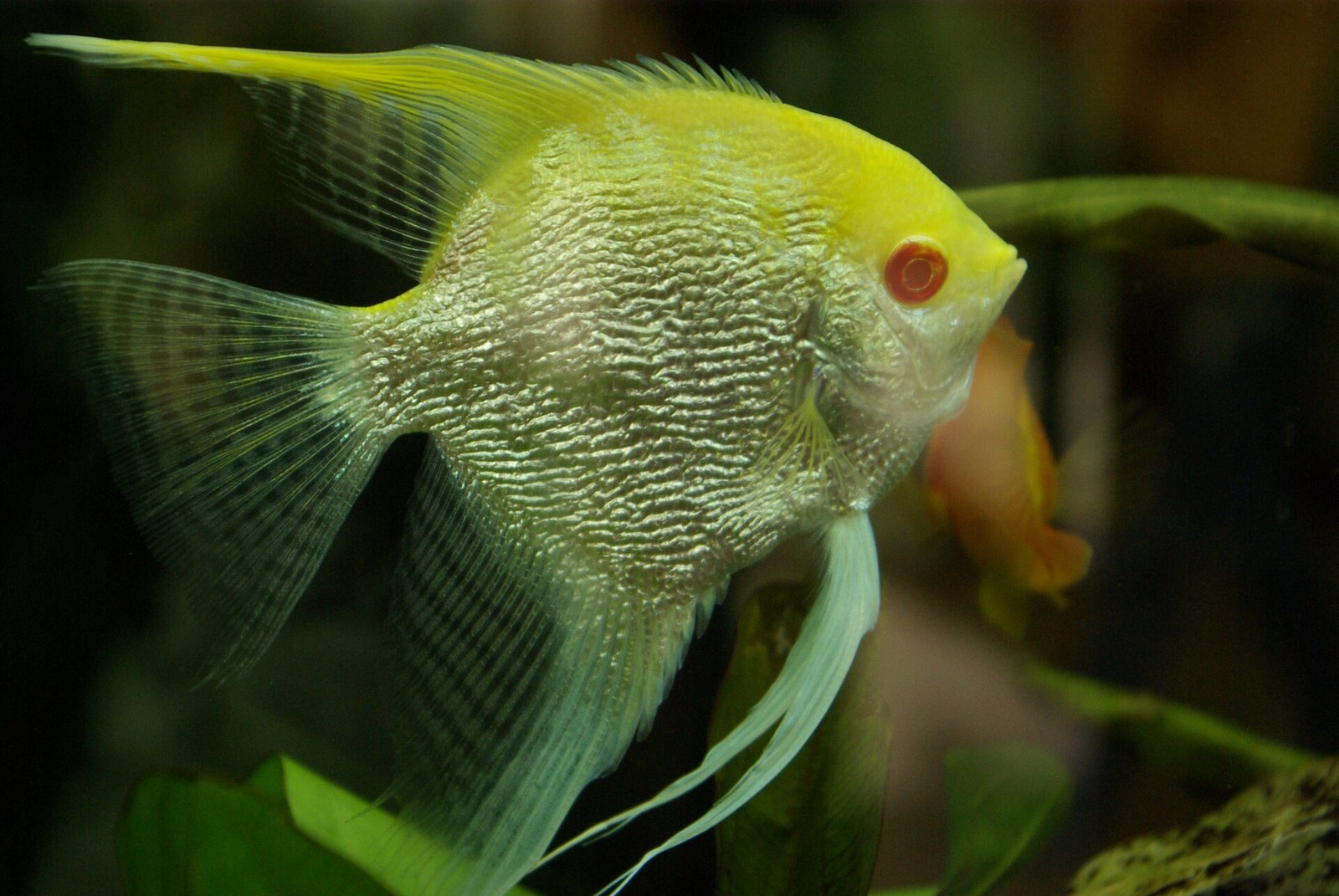
Watch each fish before feeding, during a meal and after the aquarium settles. Note its usual breathing effort, swimming position, fin posture and willingness to approach food. An angelfish's markings can help you distinguish individuals, allowing a record of who ate rather than a vague impression that the group looked active.
Take occasional clear photographs without chasing the fish or repeatedly flashing a light at it. Images provide a comparison when a fin edge, body outline or patch of skin changes. Record major events such as new arrivals, a filter service, a missed water change or a different food. A timeline can reveal connections that an isolated photograph cannot.
A baseline does not mean waiting for perfect documentation before acting. Labored breathing, inability to remain upright, serious wounds, or several fish suddenly becoming distressed justify an urgent response while you gather information.
Test the environment before naming a disease
Start with temperature, ammonia and nitrite, then consider pH, recent nitrate trends and source-water changes. Ammonia and nitrite should be undetectable in an established system. Check the actual thermometer and filter flow rather than trusting that an illuminated heater or humming motor proves normal operation. A blockage or a recent loss of biological media may matter more than the fish's color.
The adopted angelfish care ranges here are 24-30 C, pH 6.0-7.4 and general hardness of 0-15 dGH from Seriously Fish. They are background husbandry guidance, not a prescription for rapidly moving an ill fish toward a particular endpoint. Record the current water and the replacement water separately.
If tests reveal a problem, take suitable corrective action, including conditioned, appropriately matched partial water changes and restoration of filtration or aeration. Get qualified advice when the chemistry is unfamiliar or the fish is severely affected. Do not delay an obvious environmental correction while searching for a photograph of a matching disease.
Treat respiratory distress as urgent
A fish working hard to breathe, especially when multiple occupants are affected, needs immediate attention. Check that water is circulating and the surface is being disturbed sufficiently for gas exchange. Increase aeration where appropriate and look for equipment failure, overheating, contamination or an unexpected ammonia or nitrite reading. Several causes can occur together.
- Record when the breathing change started and which fish are affected.
- Test the aquarium and note the exact results with units.
- Check for recent sprays, cleaning products or maintenance near the tank.
- Contact an aquatic veterinarian with the observations and equipment history.
Move a fish only when the receiving system offers a genuine welfare improvement. A panicked transfer into an unheated, unfiltered bowl can add a second emergency.
Investigate fins, skin and appetite together
Long angelfish fins can be damaged by tankmates or unsuitable decorations. Watch for chasing, cornering and repeated contact with rough surfaces. A fish that cannot escape harassment needs separation in a functioning aquarium or another carefully planned protected arrangement. Inspect any injury over time, because worsening damage or surrounding changes may require veterinary treatment.
Spots, sores, flashing against objects and unusual mucus are signs to describe, not diagnoses to assign from a picture alone. An aquatic veterinarian may need samples or microscopy to distinguish causes. Do not assume a product labeled for a familiar disease is appropriate simply because one visible feature seems similar.
Persistent food refusal also deserves context. Determine whether the fish can reach food, recognizes it, and has lost body condition. A subordinate may be hungry but excluded; an unwell fish may be offered food without being able to eat. Keep these observations separate so that behavioral and medical problems are not confused.
Make quarantine a separate working system
Quarantine is not just waiting before adding fish. It requires a suitably sized, heated and filtered aquarium with observation, water testing and dedicated tools. MSD gives thirty days as a general minimum. The appropriate duration may change after illness, treatment or advice based on the animal's origin and history. An apparently healthy arrival can still introduce problems.
Keep nets, siphons and wet equipment separate from the display, and organize care so that suspect water is not carried between systems. Monitor the quarantine biofilter just as carefully as the main filter; a newly assembled spare tank can develop waste problems quickly when occupied. Ask your veterinarian about any testing or treatment rather than automatically dosing every arrival.
Give your veterinarian a useful case history
Provide aquarium dimensions, estimated water volume, occupants, purchase dates, recent maintenance, foods and every product added. Include photographs, a short breathing or swimming video, and water-test results with the sampling time. If you have already used a medication, report its exact name and directions followed rather than simply saying the fish was treated.
Ask how to transport the fish or any requested samples safely. Do not perform invasive procedures yourself based on a general online guide. If a fish dies, contact the veterinarian promptly for instructions about examination and handling; guessing how to preserve a specimen may reduce its diagnostic value.
After the immediate problem, review the cause without assuming recovery proves a guessed diagnosis. Better feeding access, maintained filtration and sensible quarantine can prevent avoidable stress, but none guarantees lifelong health. The most useful habit is noticing a change early and responding with evidence instead of a growing collection of remedies.
Continue reading: Angelfish Behavior: Read the Whole Social Picture.
Sources and further reading:
- Pterophyllum scalare (Angelfish) - Seriously Fish
- Pterophyllum scalare Care - Tropical Fish Hobbyist Magazine
- Angelfish Care Guide - Aqueon
- Angel Fish Pterophyllum scalare - Maidenhead Aquatics
- Management of Aquarium Fish - MSD Veterinary Manual
Photo credits: Love Krittaya (Public domain (copyright holder release; not CC0)), 5snake5 (CC0), SmallSonMarex (CC0). Images resized and compressed for web display. Each image retains its linked license. Dimly lit breeding scene, retained as a secondary photograph rather than the cover.


