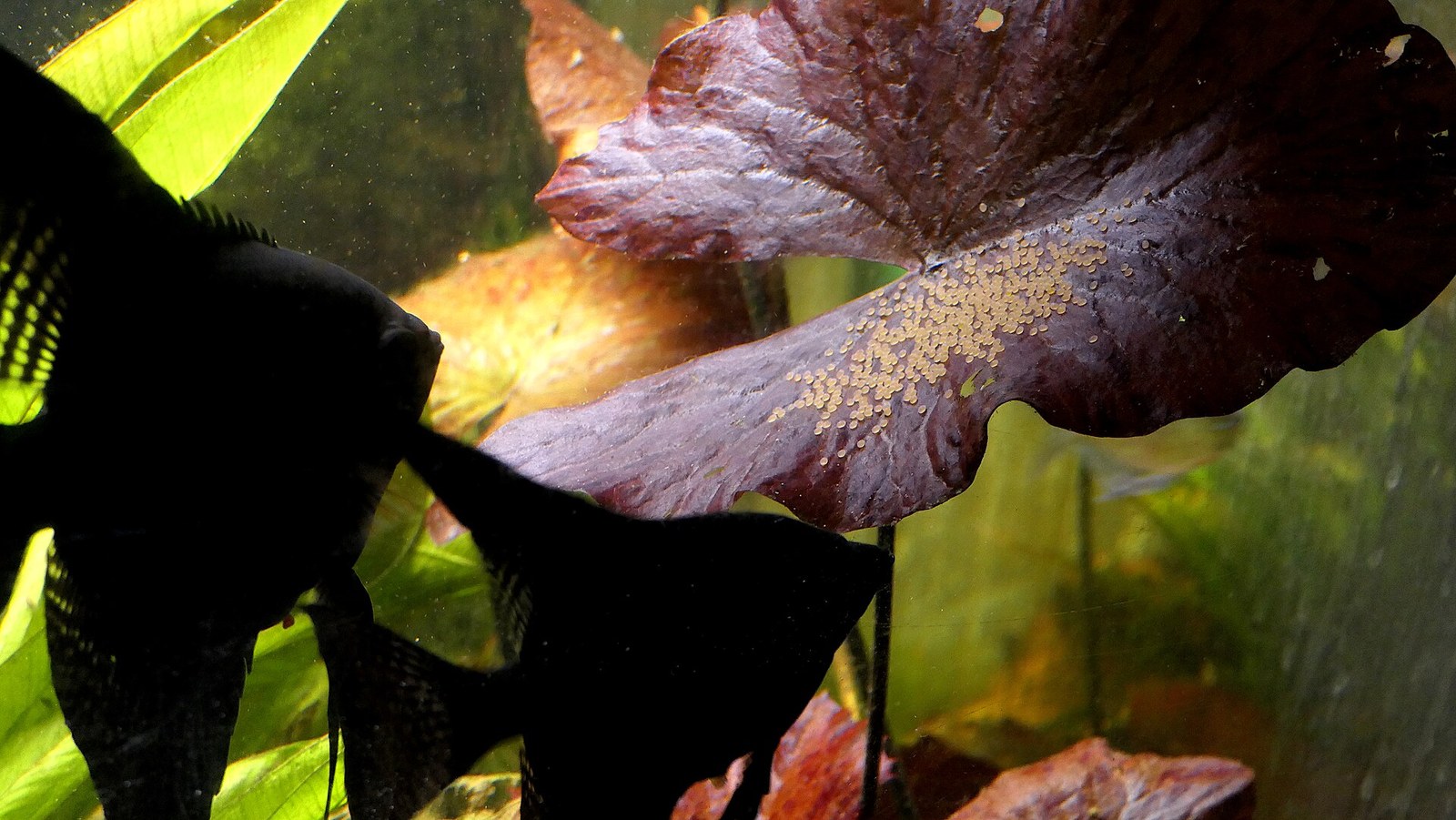
Angelfish behavior is not captured by choosing either peaceful or aggressive on a shop label. A fish can tolerate a neighbor across the aquarium, chase it away from food, and ignore it again moments later. To understand the situation, watch access to space, rest and food rather than judging a single dramatic encounter.
Separate predation from social aggression
Seriously Fish describes generally docile angelfish that nevertheless experience internal disputes and prey on very small tankmates. These are different behaviors with different solutions. A tiny fish disappearing into an angelfish's mouth is not evidence that the predator needed more enrichment or a larger breakfast. It is evidence that the size combination was unsafe.
Social aggression involves how fish interact around one another, including displacement from a preferred area or food source. A tankmate can be too large to swallow and still be repeatedly harassed. Conversely, a small companion can be at risk even when no chasing has been observed. Adult size relationships matter more than the appearance of a newly assembled juvenile community.
Make separate notes for predation concerns and social tension. Prevent the former by excluding bite-sized companions; manage the latter through appropriate space, thoughtful layout and a realistic separation plan. Extra food is not a reliable solution to either problem.
Observe where each fish can actually go
Look at the aquarium as a map of usable areas. Which fish occupies the feeding corner? Can another swim past without retreating? Does a plant provide shelter with more than one exit, or does it conceal a fish that cannot safely leave? Space on paper is not necessarily space every occupant can use.
Observe outside feeding time as well as during meals. A targeted angelfish may emerge briefly for food and then spend the rest of the day pressed behind equipment. Repeatedly missing food, losing condition, or developing fin damage makes the pattern more concerning than one short chase followed by ordinary activity.
- Identify fish individually using stable markings where possible.
- Record who initiates and who receives repeated approaches.
- Note whether the same fish always retreats to the same place.
- Check whether every fish can feed and rest without interruption.
A short video taken from a distance can be more informative than standing close enough to change the group's behavior.
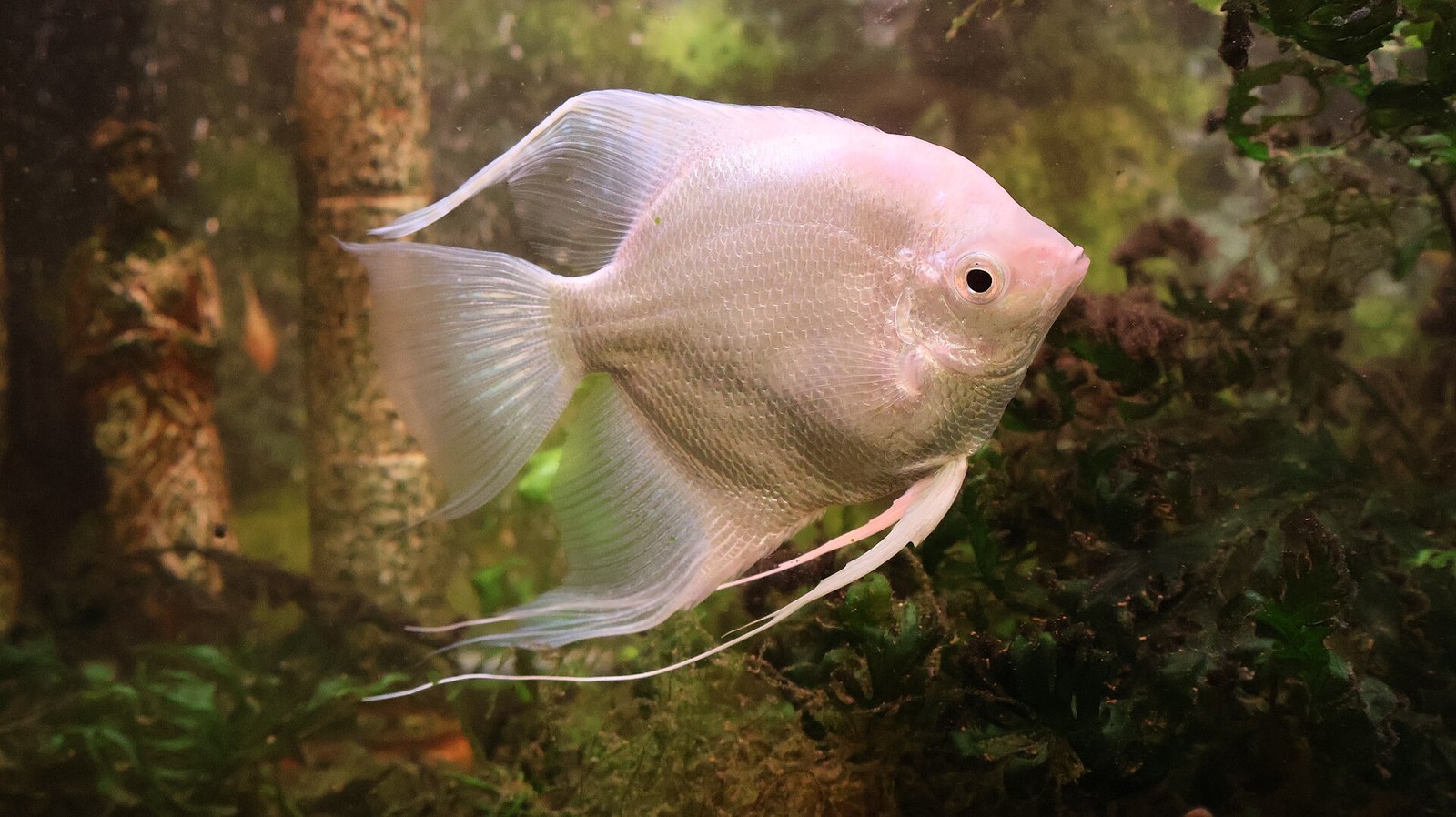
Interpret group advice without turning it into a formula
Seriously Fish advises group housing, and Maidenhead Aquatics recommends at least four individuals in a large aquarium. This guidance recognizes the social nature of angelfish, but it does not establish that four fish are safe in every tank. Group size interacts with adult dimensions, individual temperament, layout and changes as the fish mature.
The 55 US gallon adult aquarium starting point adopted elsewhere in this profile is likewise not a guarantee for a group. Do not add fish merely to reach a number when the existing aquarium already has persistent conflict or inadequate space. Introductions also bring quarantine and disease-management responsibilities.
When fish form a pair, their use of space can change and other individuals may be displaced. You do not need to prove breeding intent before responding to injury or exclusion. A fish's welfare matters whether the behavior is reproductive, competitive, or simply difficult to interpret. Seek experienced help when deciding how to reorganize an established group.
Change the environment carefully
Visual barriers can interrupt a direct line of pursuit, but they work only when fish still have escape routes and useful swimming room. Choose smooth aquarium-safe structures and plants, leaving access for cleaning. Avoid filling the center so densely that tall-bodied angelfish must squeeze past hard edges or one dominant individual controls the only passage.
If you adjust the layout, make one considered change and observe the result. Constantly moving all the furniture can make it harder to understand the pattern and interfere with a stable maintenance routine. Check filter flow too: a fish avoiding one side may be responding to a forceful outlet rather than another fish.
Do not use mirrors or tapping to provoke impressive displays. An artificial confrontation adds no useful evidence about whether everyday housing is suitable.
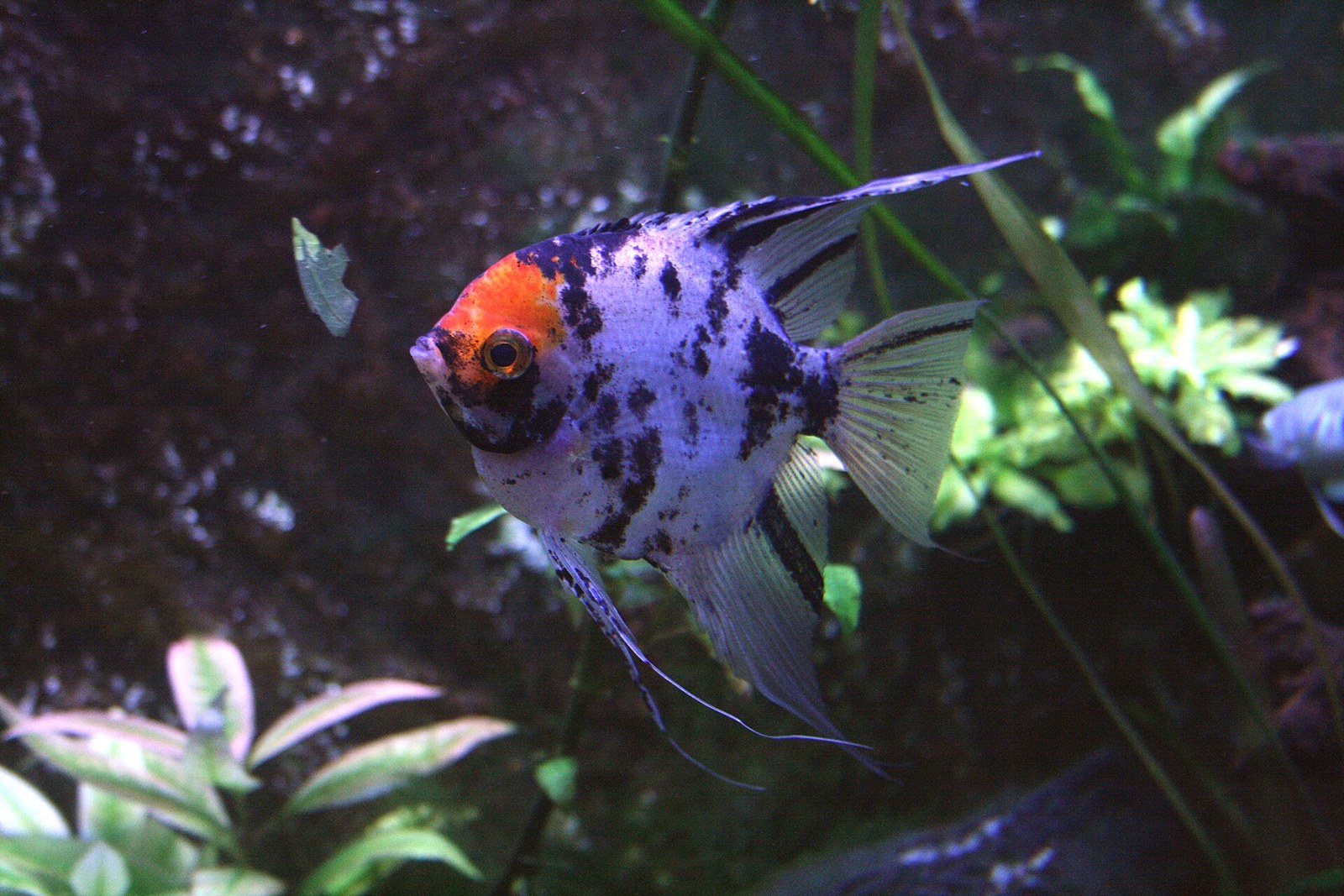
Evaluate tankmates through several filters
Start with compatible water conditions and adult size, then consider activity level, feeding competition and fin-nipping tendencies. A species that shares a temperature range may still be a poor neighbor for a long-finned cichlid. Equally, a general list of compatible fish cannot account for the particular personalities, sizes and layout in your aquarium.
Observe potential companions at the seller's premises, but treat that scene as a snapshot rather than a guarantee. Ask about adult requirements and typical behavior, quarantine additions, and introduce only when the receiving aquarium has sufficient capacity. Avoid buying a fish because an empty-looking corner seems available.
Related species on an encyclopedia page are reading suggestions, not a stocking list. In particular, links to neon tetras or guppies should not imply that they are safe angelfish companions.
Know when to protect rather than observe
Observation is useful only while the fish remains safe. Persistent pursuit, inability to reach food, serious fin damage or confinement behind equipment calls for a practical change. Move an affected fish to a suitable functioning system or use another safe arrangement developed with experienced advice. A tiny floating container is not a long-term solution for a tall-bodied adult.
If hiding persists without an obvious aggressor, investigate water quality and health. Behavior can be an early sign of illness, and moving decorations will not correct ammonia exposure or a breathing problem. Record the evidence for an aquatic veterinarian when appetite, posture or respiration changes.
Successful angelfish keeping does not require predicting every interaction. It requires enough space, careful choices and willingness to revise the plan. Judge success by all individuals eating, moving and resting normally, not by whether the aquarium matches the community you originally imagined.
Continue reading: Angelfish Tank Maintenance Without Chemistry Guesswork.
Sources and further reading:
- Pterophyllum scalare (Angelfish) - Seriously Fish
- Pterophyllum scalare Care - Tropical Fish Hobbyist Magazine
- Angelfish Care Guide - Aqueon
- Angel Fish Pterophyllum scalare - Maidenhead Aquatics
- Management of Aquarium Fish - MSD Veterinary Manual
Photo credits: 5snake5 (CC0), SmallSonMarex (CC0), Karelj (Public domain (copyright holder release; not CC0)). Images resized and compressed for web display. Each image retains its linked license. Dimly lit breeding scene, retained as a secondary photograph rather than the cover.


