Great Dane Care Guide: A Safe Start for a Giant Companion
Build a practical Great Dane care routine with safe home access, steady puppy growth, gentle exercise, calm handling, and an emergency plan for a giant dog.
Read article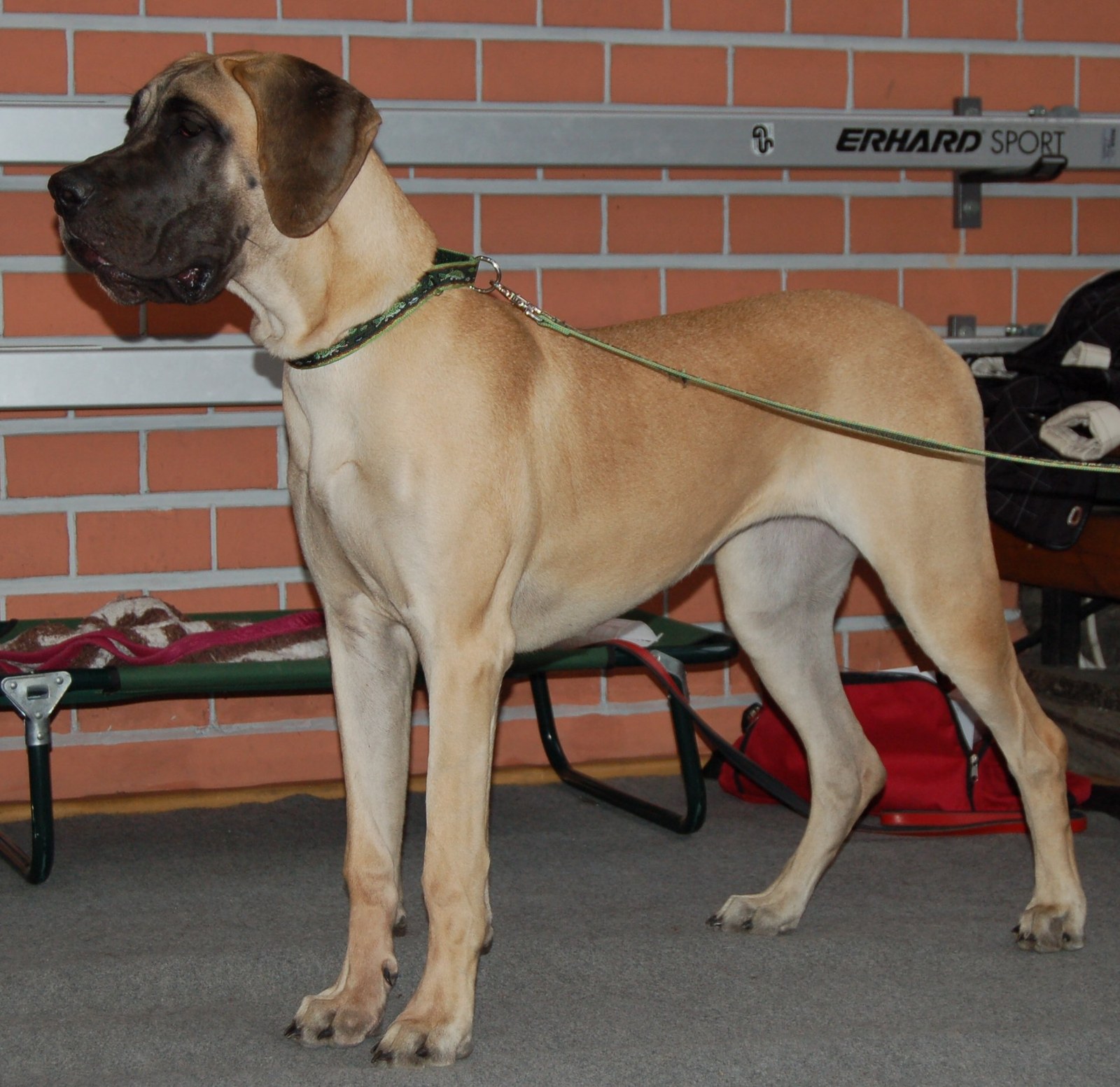
Canis lupus familiaris
An affectionate German giant who needs gentle guidance and room to grow safely.
Deep Dive
Despite its English name, the Great Dane developed in Germany, not Denmark. Its German name, Deutsche Dogge, reflects that identity; German Mastiff is another name encountered in breed writing. Ancestors were used for demanding hunting work, including wild boar, and later for guarding estates. The modern companion belongs to the Working Group, but historical employment is not a prescription for a pet's daily activities. Owners should not recreate dangerous hunting encounters or encourage confrontation because a dog looks imposing. Today, its size is most relevant when choosing housing, transport, equipment, and the skills that make ordinary public life safe.
Breed development has produced an instantly recognizable, tall, deep-chested dog, yet recognizability is not proof of pedigree or sound health. Rescue organizations and responsible breeders can provide much more useful information than a photograph: veterinary records, family health screening, previous experiences, and an honest description of temperament. Ask specifically about heart disease and gastric emergencies in relatives rather than accepting the phrase healthy bloodline as evidence. The Great Dane Club of America identifies hips, heart, thyroid, and eyes as important screening areas. Results reduce uncertainty but do not guarantee an unaffected puppy. Published lifespan estimates also need perspective: PetMD gives approximately seven to ten years. That is a planning reference, not an expiry date or a promise that excellent care prevents every illness. Choose the breed for a compatible daily relationship, not the ambition to own the largest dog in the neighborhood.
Many Great Danes are affectionate companions that enjoy being near their household, sometimes without appreciating how much sofa they occupy. The familiar gentle giant description captures an appealing tendency, but it must not become a safety guarantee. A playful adolescent can knock someone over without aggression, and an uncomfortable adult may need distance rather than another hug. Learn your dog's relaxed posture, preferred resting places, and early signs of unease. Reward quiet greetings and settling while providing an easy way to withdraw from visitors. Social confidence grows through safe experiences and choice, not through being surrounded by strangers until resistance stops.
Trait scores are editorial tendencies, not measured behavioral results or promises about an individual. Age, health, learning history, and environment can change how much a Dane plays, barks, explores, or tolerates solitude. A youngster that finds every leaf exciting and a senior that enjoys gentle sniffing may both fit the breed. Use short reward-based sessions to teach useful skills before physical strength makes mistakes harder to manage. Start with following a handler, waiting at an open door, resting on a mat, and accepting brief body checks. Do not punish growling, use dominance rituals, or expect a larger collar correction to create understanding. Sudden withdrawal, irritability, reluctance to move, or unusual clinginess can be health information and deserves veterinary attention. Children and other animals need active adult supervision and protected spaces even when the dog has previously been friendly.
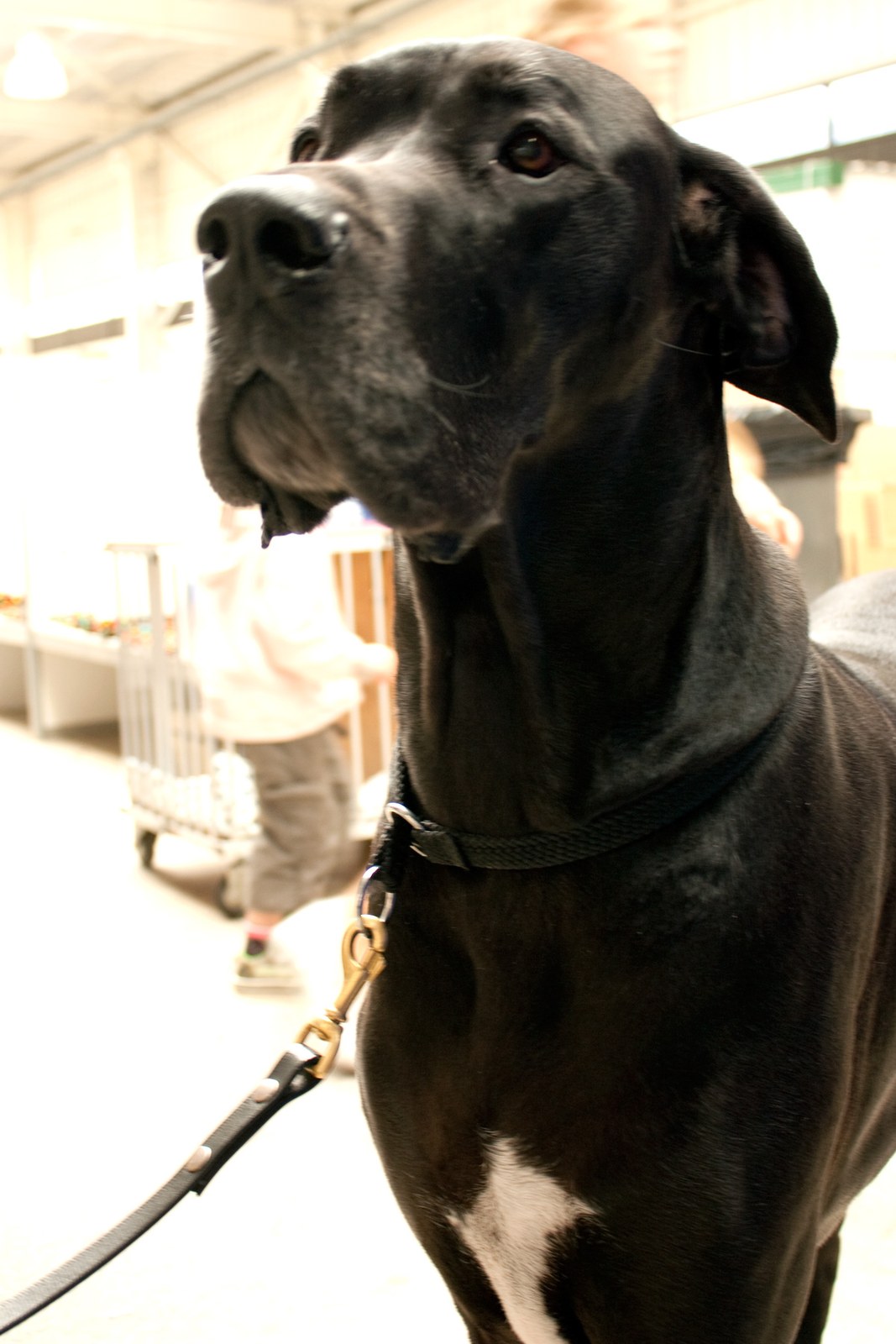
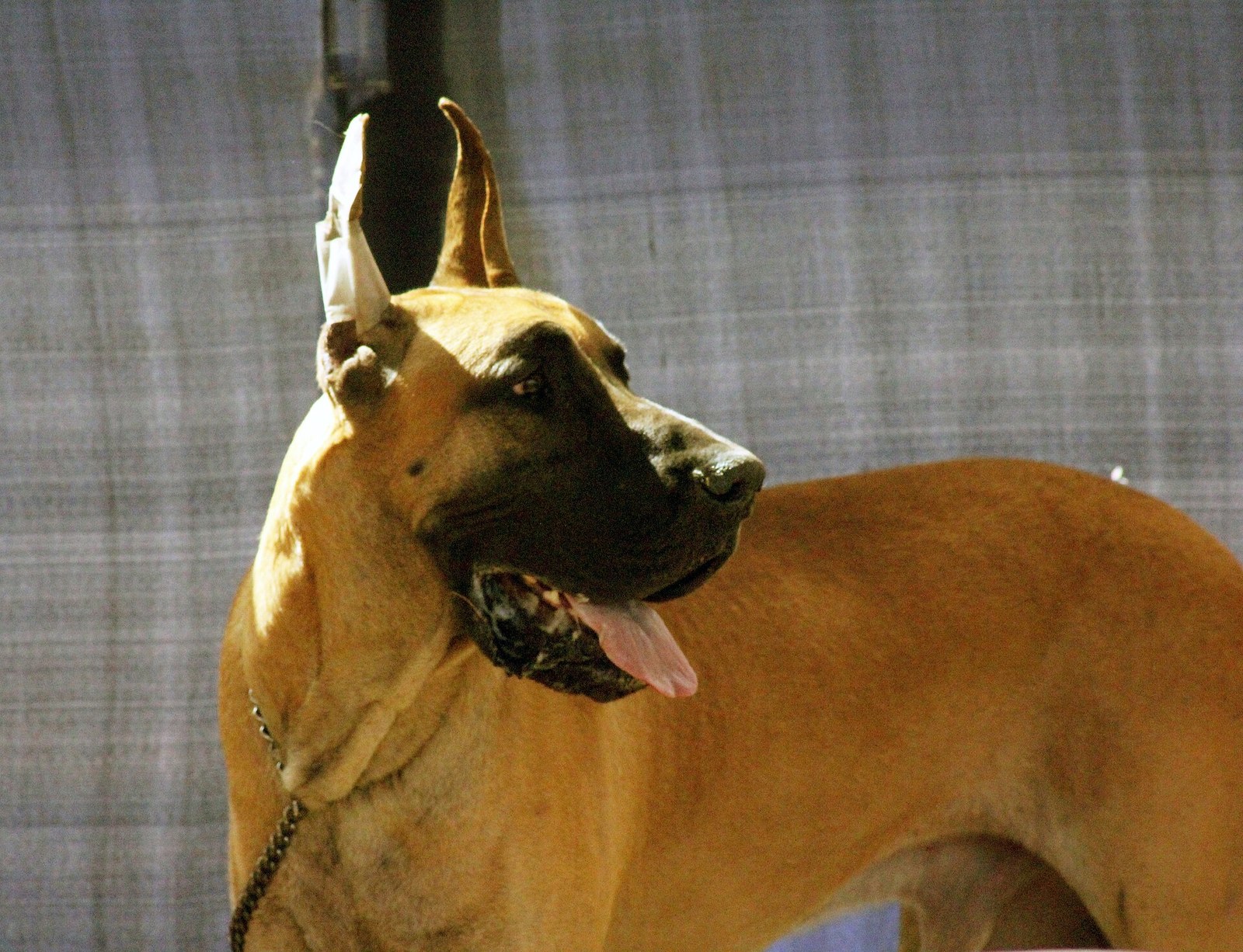
A Great Dane has a tall frame, deep chest, short coat, and long tail. Natural ears fold forward; they do not need cosmetic cropping, taping, or shaping to suit a pet's life. Keep the tail natural too, allowing room for enthusiastic movement rather than altering healthy anatomy for convenience. Coat colors and markings vary, but appearance alone cannot establish pedigree, temperament, or freedom from inherited disease. The UK breed standard gives minimum shoulder heights for dogs over eighteen months: males 30 inches, or 76 cm, and females 28 inches, or 71 cm. These are conformation thresholds, not maximums or targets that a puppy should be fed to reach quickly.
For weight, the Association for Pet Obesity Prevention lists common adult references of 140-175 lb for males and 110-140 lb for females, approximately 64-79 kg and 50-64 kg. Those ranges are not personalized healthy weights. The UK standard instead lists minimum conformation weights of 120 lb for males and 100 lb for females; that different purpose explains why the figures are not interchangeable. A veterinarian should assess frame, body condition, muscle, age, and weight trend together. Do not overfeed a smaller healthy dog to match a breed chart, or impose weight loss solely because another Dane is lighter. During growth, a balanced giant-breed puppy diet and a lean, appropriate condition matter more than record-breaking measurements. Watch comfort and movement as closely as the outline in a photograph.
Photo credits: Lilly M (CC BY-SA 2.5), Rexness (CC BY-SA 2.0), localpups (CC BY 2.0). Images resized and compressed for web display. Each image retains its linked license. This dog shows cropped ears. Ear cropping and tail docking are cosmetic procedures; the Great Dane profile presents natural folded ears as normal anatomy and does not recommend cropping. Retained for breed representation with this disclosure.
A Great Dane needs more than a large bed: it needs a home where a large body can turn, rest, eat, and move without constant collisions. Secure rugs can improve slippery routes, while sturdy gates help manage doors, visitors, and separate animal spaces. Think through vehicle access before a puppy becomes too heavy to lift. A carefully introduced ramp may help, but its size, stability, and weight rating must suit the adult dog. A garden is useful for toileting and sniffing, not a substitute for companionship, outings, and reward-based learning. Neither a small flat nor a large house determines welfare by itself; reliable access, safe space, and the household's routine matter together.
Daily care includes measured complete meals, fresh water, suitable activity, quiet rest, and checking for changes in appetite, breathing, or movement. Growing Danes need complete food appropriate for large or giant puppies; do not add calcium unless a veterinarian specifically directs it. Arrange preventive care and discuss gastric dilatation-volvulus, or GDV, early. Unproductive retching, distress, drooling, abdominal enlargement, weakness, or collapse requires immediate emergency veterinary care, not home treatment. Preventive gastropexy can reduce stomach-twisting risk but does not prevent every episode of stomach enlargement; discuss its benefits, risks, and timing with your veterinarian rather than assuming surgery is mandatory for every individual. Plan for capable holiday cover, higher-volume supplies, and emergency transport. An older dog may need easier toileting access and more supportive bedding, while preserving the chance to explore and make comfortable choices.
At a Glance
Ownership Guide
Offer comfortable walks, sniffing, and play suited to age, health, weather, and recovery. Avoid forced running and repetitive jumping during growth; ask your veterinarian when more demanding activity is appropriate.
Choose complete food suitable for large or giant-breed growth while your Dane is a puppy, with measured portions reviewed against body condition. Do not add calcium, bone meal, or mineral supplements unless your veterinarian specifically prescribes them.
Brush the short coat gently, maintain nails and teeth, and check natural ears and the tail tip for discomfort or injury. Bathe when needed using a dog-appropriate product and safe, nonslip access; cosmetic cropping or docking is not routine care.
Reward loose-lead walking, calm greetings, door pauses, and resting on a mat from the start. Use well-fitted humane equipment and short achievable steps, never intimidation or painful collar corrections.
Introduce people, surfaces, sounds, and suitable animals gradually at a distance where your dog remains comfortable. Provide retreat options and active supervision around children rather than treating the gentle giant label as a guarantee.
Discuss growth, heart and joint health, appropriate screening, and an individualized preventive plan. Know the GDV emergency signs and discuss gastropexy with your veterinarian, understanding that it lowers torsion risk but does not prevent all bloat.
Wellness
Unproductive retching, restlessness, drooling, abdominal enlargement, weakness, or collapse can indicate gastric dilatation-volvulus. Seek emergency veterinary care immediately; do not wait for every sign or try home treatment. Gastropexy reduces torsion risk but does not prevent all gastric dilation.
Great Danes can develop cardiac disease, including dilated cardiomyopathy. Reduced stamina, unusual breathing, or fainting needs veterinary assessment; collapse or breathing difficulty requires emergency care. Breeding-heart screening and a normal past examination cannot rule out later disease.
Hip disease and developmental orthopedic problems are relevant concerns, not inevitable diagnoses. Persistent lameness or reluctance to rise needs examination rather than being dismissed as growing pains; complete growth nutrition and appropriate activity support development without guaranteeing healthy joints.
Great Danes can develop cervical spinal disease, sometimes called wobbler syndrome. A new unsteady gait, weakness, or neck pain warrants urgent veterinary advice; inability to stand or rapidly worsening signs requires emergency assessment, not stretching or manipulation at home.
Persistent focal lameness or limb swelling can have many causes, including bone cancer. Arrange prompt assessment rather than repeatedly resting the dog without investigation; sudden severe pain or inability to bear weight increases urgency. Breed predisposition alone does not establish a diagnosis.
Eye disorders and thyroid disease are among the reasons to review breeding-health records and routine examinations. Squinting, eye pain, unexplained coat changes, or weight changes need investigation; appearance and symptoms alone do not identify the underlying condition.
The Great Dane Club of America highlights hip, cardiac, thyroid, and eye screening for breeding dogs. Documented results, weight trends, and early reporting improve decision-making, but screening does not guarantee unaffected offspring or replace your own dog's ongoing care.
Further Reading
Build a practical Great Dane care routine with safe home access, steady puppy growth, gentle exercise, calm handling, and an emergency plan for a giant dog.
Read articleChoose complete food for Great Dane growth, assess portions by body condition, avoid added calcium, and build a feeding routine without bloat-prevention myths.
Read articleRecognize Great Dane health concerns, including GDV, heart disease, painful joints, and gait changes, while understanding screening and gastropexy limitations.
Read articleTeach your Great Dane calm greetings, loose-lead walking, settling, and comfortable handling through rewards, with sensible boundaries for a powerful companion.
Read articleCare for your Great Dane's short coat, natural ears, teeth, nails, and tail with gentle routines, safe bath access, and clear signs that call for a vet visit.
Read articleConsider life with a Great Dane, from space and family safety to workdays, travel, emergency transport, and aging care, before choosing this giant companion.
Read articleYou May Also Like