Living With a Rottweiler: Daily Life & Companionship
What it's really like to share your life with a Rottweiler. Debunking myths, understanding their gentle nature, and building a strong bond.
Read article



Canis lupus familiaris
A gentle giant with a guardian's heart — powerful, loyal, and deeply devoted
Deep Dive
Rottweilers descend from ancient Roman drover dogs used to herd and protect livestock. As Roman legions marched through Europe, these dogs accompanied them, eventually settling in the town of Rottweil in southern Germany — giving the breed its name.
In Rottweil, these dogs became essential to the local meat industry, driving cattle to market and protecting merchants and their money on the way home. They were known as "Rottweil butchers' dogs" and were so valued that the town named itself after them.
By the early 20th century, the breed was nearly extinct. German breeders revived them, and they soon became valued as police and military dogs. The American Kennel Club recognized the Rottweiler in 1931. Today, they serve as working dogs, service dogs, therapy dogs, and beloved family companions.
Rottweilers are confident, calm, and courageous. They are naturally protective of their families and territory, but a well-bred, well-socialized Rottweiler is not aggressive — they are discerning guardians who assess threats before acting.
With their families, Rottweilers are gentle, affectionate, and sometimes surprisingly silly. They lean against their people, snore loudly, and believe they are lap dogs despite weighing over 100 pounds. They form deep bonds and prefer to be with their people at all times.
Rottweilers are highly intelligent and trainable. They excel at obedience, protection work, therapy, and service tasks. However, they need consistent, confident leadership and early socialization. A Rottweiler without training and boundaries becomes a dangerous dog — not because of aggression, but because of uncontrolled size and strength.
Rottweilers are powerfully built dogs with a robust, muscular frame. Males typically weigh 95-135 pounds and stand 24-27 inches tall. Females are slightly smaller at 80-100 pounds and 22-25 inches.
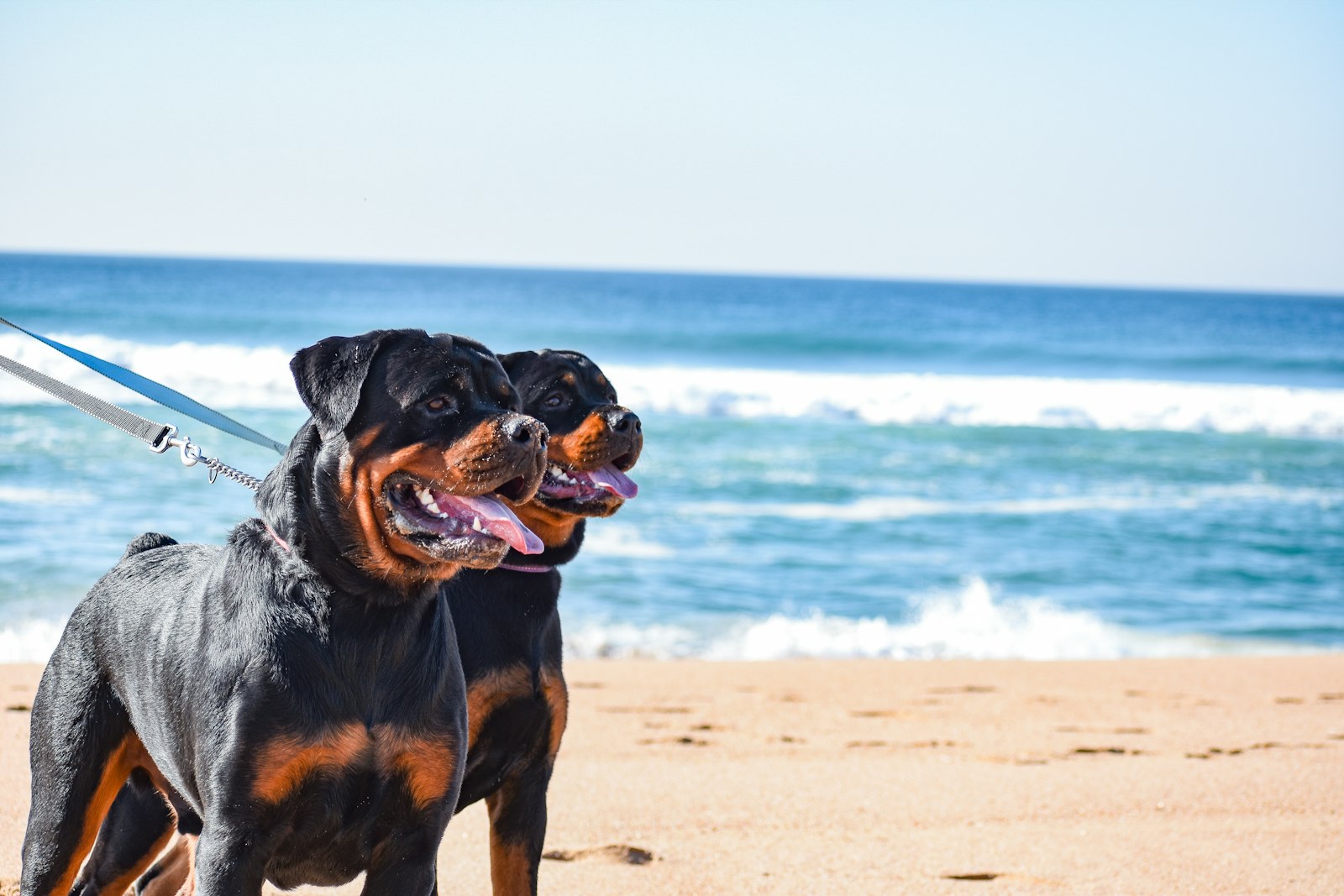
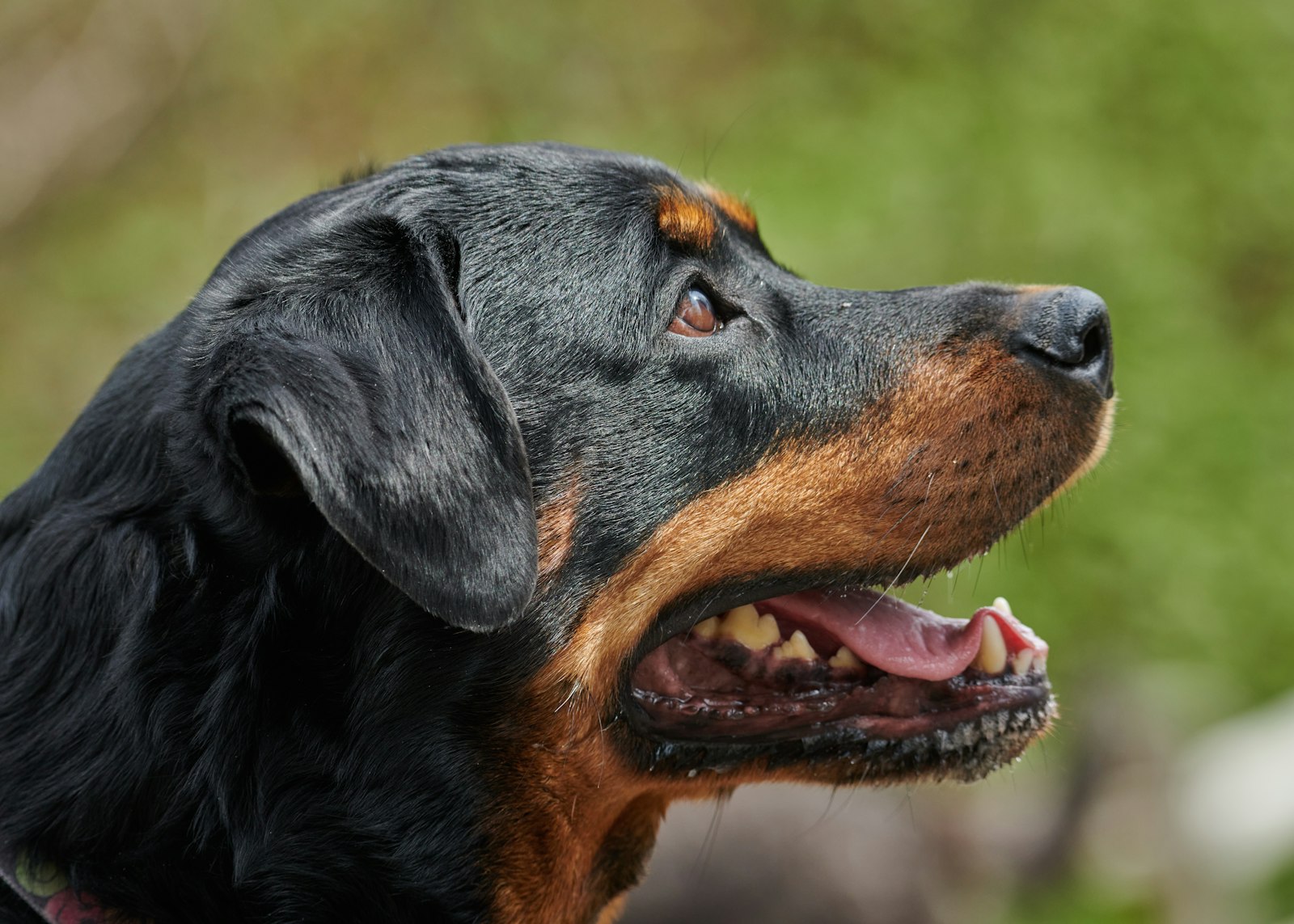
They have a broad head with a strong muzzle, dark almond-shaped eyes, and pendant ears that fold forward. Their expression is noble and confident. The coat is always black with clearly defined rust-colored markings on the cheeks, muzzle, chest, legs, and above the eyes.
Their double coat is medium-length, dense, and coarse. The outer coat is straight and lies flat against the body. They shed moderately year-round with heavier seasonal shedding. Their powerful gait reflects their heritage as working dogs — they move with purpose and strength.
Photo credits: @kvnsbl (Unsplash License), @sjaunzeme (Unsplash License), @mrforged (Unsplash License), @shanalirajpoot (Unsplash License), @joashzn (Unsplash License), @varrak (Unsplash License)
Rottweilers are house dogs — they need to live with their families, not in a backyard. They are moderately active indoors and need daily walks and play sessions. A securely fenced yard is essential.
Training and socialization are non-negotiable for this breed. Start early and continue throughout their life. Rottweilers need to learn manners because their size makes any bad habits — jumping, pulling, rough play — potentially dangerous.
Rottweilers are not recommended for first-time dog owners. They need an experienced handler who understands canine behavior and can provide consistent, firm but fair leadership. When properly raised, they are wonderful family companions and ambassadors for the breed.
At a Glance
Ownership Guide
Moderate exercise needs — 60-90 minutes daily including walks, play, and training. Avoid excessive exercise in puppies to protect developing joints.
Feed 3-4 cups of high-quality large-breed food daily. Puppies need large-breed formula for controlled growth. Monitor weight to reduce joint stress.
Low-maintenance coat — brush weekly to manage shedding. Bathe as needed. Regular nail trimming, ear cleaning, and dental care are essential.
Start training and socialization immediately. Use positive reinforcement. Rottweilers need consistent, confident leadership. Obedience classes are highly recommended.
Critical from puppyhood. Expose to diverse people, animals, environments, and situations. Well-socialized Rottweilers are confident and well-mannered.
Biannual wellness exams recommended. Discuss hip/elbow screening, cardiac evaluation, and cancer screening. Large breeds age faster than small breeds.
Wellness
Rottweilers are robust, muscular dogs with impressive strength and endurance when properly maintained.
Well-bred Rottweilers from responsible breeders have stable temperaments and good overall health.
Common in large breeds. Request OFA screening from breeders. Maintain healthy weight and provide joint supplements.
Rottweilers have a higher-than-average cancer rate. Regular checkups and early detection are critical.
Aortic stenosis and cardiomyopathy can occur. Cardiac screening is recommended, especially before breeding.
ACL tears and arthritis are common. Maintain healthy weight, provide supplements, and avoid over-exercising puppies.
Deep-chested breed at risk. Feed multiple small meals, avoid exercise after eating, and know emergency signs.
Further Reading
What it's really like to share your life with a Rottweiler. Debunking myths, understanding their gentle nature, and building a strong bond.
Read articleComplete Rottweiler grooming guide covering brushing, bathing, nail care, ear cleaning, and dental hygiene for this short-coated large breed.
Read articleExpert training guide for Rottweiler owners covering obedience, socialization, protection instincts, and building a well-mannered family companion.
Read articleComprehensive guide to Rottweiler health problems including cancer, joint dysplasia, heart conditions, and preventive care strategies.
Read articleComplete nutrition guide for Rottweilers covering large-breed diet, joint health, weight management, and feeding schedules for optimal health.
Read articleComplete care guide for Rottweiler owners covering training, socialization, exercise, nutrition, and health for this powerful guardian breed.
Read articleYou May Also Like


