Great Dane health advice should help you recognize a problem and choose the right urgency, not diagnose your dog from a breed checklist. Some conditions are more relevant in this giant, deep-chested breed, but no individual is destined to develop them all. Know the emergency signs first, then build preventive care around the dog's age, history, and clinical findings.
Treat possible GDV as an immediate emergency
Gastric dilatation means the stomach enlarges; volvulus means it twists. Together, gastric dilatation-volvulus, or GDV, can rapidly compromise circulation and become fatal. Great Danes are among the susceptible deep-chested breeds. Early signs may include restlessness, drooling, repeated attempts to vomit without producing anything, and abdominal enlargement. Weakness, abnormal breathing, or collapse can follow.
Do not wait for every sign or an obviously enormous abdomen. Call an emergency veterinary service and arrange immediate transport. Describe the symptoms and tell the team you are bringing a Great Dane with possible GDV. Early professional treatment matters far more than deciding whether the signs match an online photograph.
Simple stomach dilation and twisting cannot reliably be distinguished at home. Both can require urgent care. Keep emergency contact details accessible and have a plan for moving a giant dog without delaying treatment or injuring a helper.
Understand what preventive gastropexy can and cannot do
Gastropexy attaches the stomach to the body wall to reduce the likelihood of twisting. It may be discussed preventively in a high-risk dog or performed as part of treatment after GDV. Preventive surgery is worth an informed conversation for a Great Dane, but a breed profile cannot decide that every individual must undergo a particular procedure.
Ask about the dog's health, family history, surgical and anesthetic risks, available techniques, recovery requirements, and appropriate timing. If another operation is planned, the veterinarian can explain whether combining procedures makes sense. The decision should be based on a clinical assessment and your ability to provide aftercare, not pressure from an online checklist.
Gastropexy does not prevent all gastric dilation and is not an absolute promise against future emergencies. Retching, distress, abdominal enlargement, weakness, or collapse remains urgent after surgery. Tell every caregiver that the procedure changes risk, not the need to act on warning signs. Feeding routines and special bowls likewise cannot guarantee prevention.
Watch heart health without diagnosing from a cough
Dilated cardiomyopathy is an important Great Dane concern. It affects the heart's ability to function and may not be obvious to an owner early in its course. Reduced stamina, unusual breathing, weakness, or fainting deserves veterinary assessment. Breathing difficulty or collapse requires emergency help rather than waiting for a routine screening appointment.
A cough alone cannot establish heart disease, and a dog that appears fit cannot be assumed free of it. The veterinarian may recommend an examination and tests chosen for the individual, such as cardiac imaging or rhythm assessment. Ask how any existing breeding-screening results should influence ongoing monitoring.
Keep notes about changes during rest as well as activity. A short video can help document an intermittent sign if filming does not delay care. Do not start heart supplements, borrow medication, or adjust exercise as a substitute for diagnosis. A normal earlier examination or test cannot guarantee that disease will never develop later.
Investigate lameness, neck pain, and gait changes
Hip disease and developmental orthopedic problems can affect comfort and movement. In a growing Dane, persistent limping should not be dismissed as the inevitable result of getting tall. Avoid forced running and repetitive impact while seeking advice. Complete food suitable for giant-breed growth supports development; adding calcium without veterinary direction can upset its mineral balance.
Cervical spinal disease, sometimes called wobbler syndrome, is another concern. Signs can include an unsteady gait, weakness, or neck discomfort. New coordination problems need urgent veterinary advice, especially if worsening. Do not manipulate the neck, attempt stretching exercises, or repeatedly make the dog walk for a better video. Inability to stand or rapidly deteriorating function calls for emergency assessment.
Persistent focal limb pain or swelling also requires investigation because injuries, joint disease, and bone cancer can overlap in appearance. Osteosarcoma is one possible diagnosis, not the automatic explanation for every limp. Sudden severe pain or inability to bear weight increases urgency. Human painkillers are not a safe default while you wait for an appointment.
Read screening results as evidence, not guarantees
The Great Dane Club of America identifies hips, heart, thyroid, and eyes as important breeding-health areas. Ask for actual reports that identify the tested dogs, not a statement that the parents were vet checked. Different tests answer different questions, and some conditions require reassessment as dogs age. Let your veterinarian explain what the available records do and do not establish.
Useful questions include:
- Which examinations or tests were completed, and when?
- Do the reports match the parents' registered identities?
- Are there known cardiac, orthopedic, or GDV problems in relatives?
- What results require follow-up or repeat assessment?
- What health information is missing or uncertain?
Normal screening cannot guarantee unaffected offspring. Equally, missing family information in a rescue dog is a reason for individualized care, not an assumption that the dog must be unhealthy.
Build preventive care around individual changes
Routine appointments should consider body condition, muscle, mouth, skin, eyes, movement, and cardiovascular findings. Vaccinations and parasite prevention depend on region, exposure, age, and history; there is no single schedule suitable for every reader. Eye pain or squinting deserves prompt advice, while unexplained weight or coat changes need investigation rather than a presumed thyroid diagnosis.
PetMD estimates a Great Dane lifespan of about seven to ten years. That is neither a guarantee nor a reason to dismiss discomfort in an older dog. Changes in appetite, sleep, toileting, sociability, or mobility may be treatable and should be discussed.
Keep the emergency plan current, including transport and treatment authorization for a sitter. Good care reduces avoidable hazards and improves early recognition, but cannot prevent every disease. Responsible ownership means responding thoughtfully, not blaming yourself whenever a diagnosis occurs.
Continue reading: Great Dane Training: Gentle Methods for a Powerful Dog.
Sources and further reading:
- Royal Kennel Club: Great Dane breed standard
- Association for Pet Obesity Prevention: Great Dane weight comparison
- PetMD: Great Dane
- American College of Veterinary Surgeons: Gastric Dilatation-Volvulus
- MSD Veterinary Manual: Nutritional Requirements of Small Animals
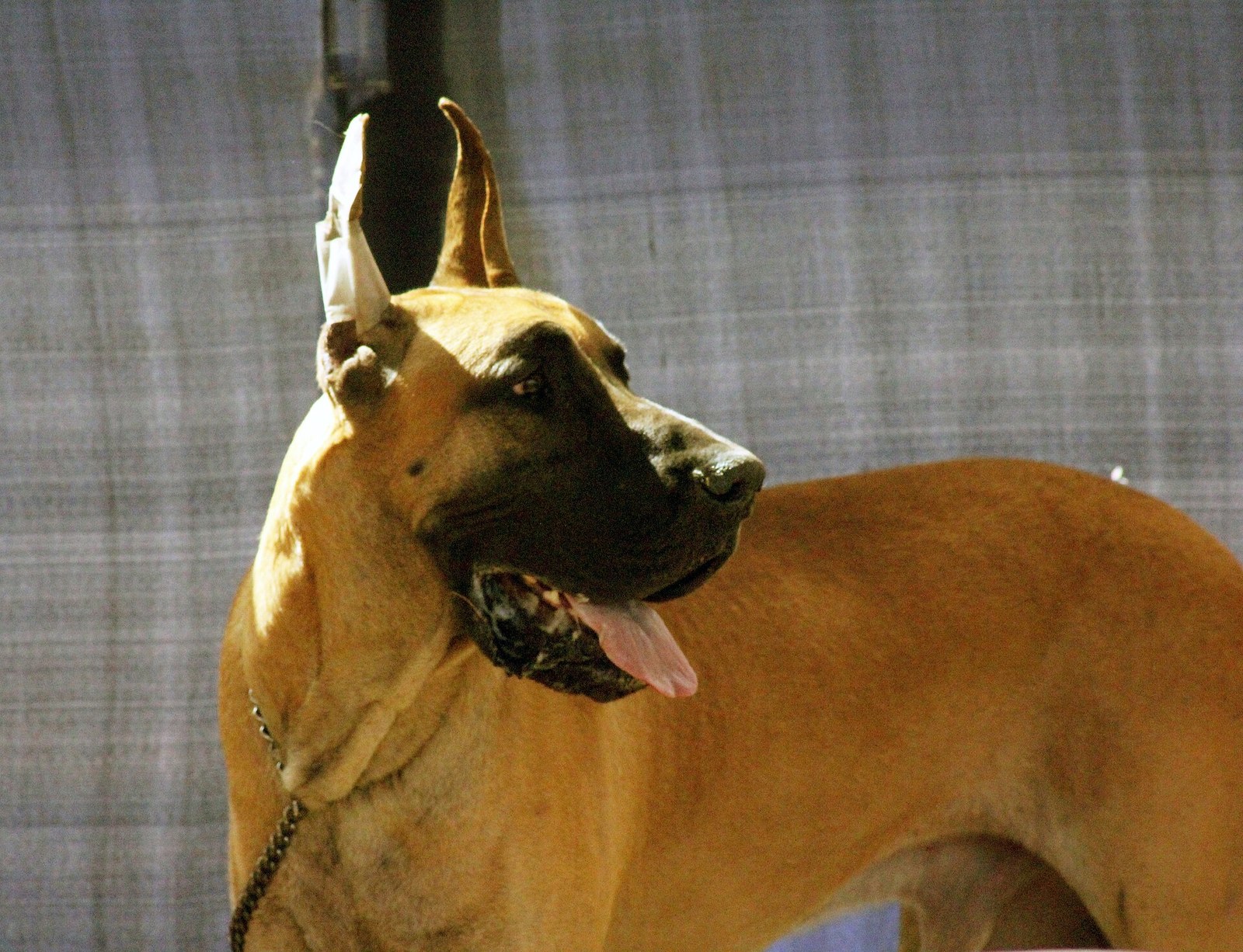
Photo credits: localpups (CC BY 2.0), Lilly M (CC BY-SA 2.5), Rexness (CC BY-SA 2.0). Images resized and compressed for web display. Each image retains its linked license. This dog shows cropped ears. Ear cropping and tail docking are cosmetic procedures; the Great Dane profile presents natural folded ears as normal anatomy and does not recommend cropping. Retained for breed representation with this disclosure.


