Feeding a Great Dane is not a competition to build the biggest puppy. The useful goals are an appropriate growth rate, balanced nutrition, comfortable digestion, and a healthy body condition. A giant dog may eat a substantial volume, but volume alone says little about whether the diet is suitable. Start with nutritional adequacy, then use individual monitoring to make portion decisions.
Choose a complete diet for the correct life stage
During puppyhood, use complete food formulated for large or giant-breed growth. In the United States, check the nutritional adequacy statement rather than relying on the front of the bag. It should include growth of large-size dogs, not specifically exclude them. In the UK and other markets, look for an appropriate complete growth diet and ask the manufacturer or veterinary team to confirm suitability for giant puppies.
The ingredient list alone cannot show whether a diet has the right nutrient balance. Neither a high meat percentage nor an appealing description such as natural proves that a food is complete. Plain meat with rice is not a balanced long-term puppy menu, even if the dog enjoys it.
Avoid switching to adult maintenance food simply because someone says it slows growth. That product may not meet the needs of a growing dog. Ask your veterinarian when to move to an appropriate adult diet based on development and condition, rather than choosing a universal birthday or the moment your puppy looks tall.
Protect the mineral balance instead of adding extras
Rapid skeletal development makes appropriate nutrition especially important in giant breeds. A suitable complete puppy food supplies minerals as part of a formulated balance. Adding calcium, bone meal, mineral powders, or multiple growth supplements can upset that balance. More bone-building material does not automatically produce stronger bones.
Do not add calcium unless your veterinarian specifically directs it. This includes supplements marketed as natural or recommended by another owner. Tell the clinician about everything offered, including powders, chews, and homemade additions, because seemingly small extras may overlap.
Avoid improvising a homemade growth diet from meat, organs, dairy products, and a general multivitamin. If a home-prepared diet is necessary, obtain a recipe from a veterinarian with appropriate nutrition expertise and follow it accurately. Substitutions can change the nutrient profile. Balanced feeding supports development but cannot guarantee that a genetically susceptible puppy will avoid orthopedic disease.
Measure portions and follow body condition
Use the manufacturer's guide as a starting point, not an automatic prescription. Energy density differs between products, so the same scoop of two foods may deliver different calories. A kitchen scale can make portions more consistent. Record the product, daily amount, rewards, and any changes in appetite or stool.
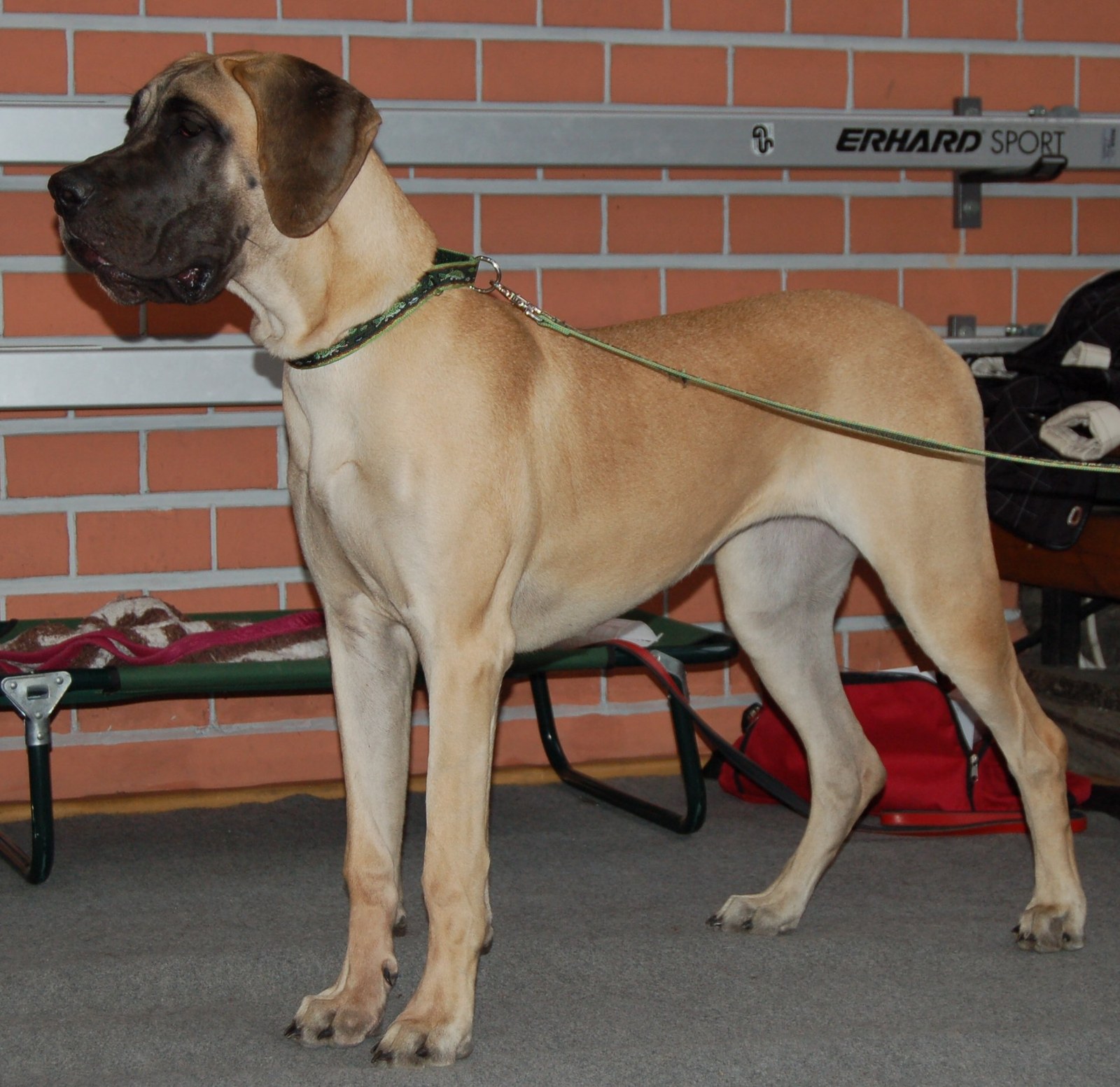
Ask your veterinarian to demonstrate body-condition assessment, including feeling the ribs and looking at the waist and abdominal outline. Muscle condition also matters. A dog can gain fat while losing muscle, so the number on the scale cannot answer every nutritional question. Growth reviews should look at trends, not isolated weigh-ins.
APOP lists common adult weight references of 140-175 lb for males and 110-140 lb for females, approximately 64-79 kg and 50-64 kg. These are not individual healthy-weight targets or puppy milestones. Do not overfeed a healthy smaller Dane to enter a published range. Likewise, an unusually large frame needs clinical assessment before anyone recommends weight loss from a chart alone.
Organize meals without promising GDV prevention
Divide the daily ration into suitable meals rather than one very large serving, discussing a puppy's schedule with your veterinarian. Feed in a quiet place where another animal cannot rush or steal the food. If your dog gulps, a safe slow-feeding option may help pace eating, but choose one that does not frustrate the dog or trap its muzzle.
Keep fresh water available and wash feeding equipment regularly. Do not deliberately dehydrate a dog to prevent bloat. Avoid planning boisterous exercise around a large meal, but recognize that meal timing and calm routines cannot eliminate GDV risk. A dog can develop an emergency despite thoughtful husbandry.
Raised feeding bowls are not an established GDV-prevention measure. If your dog needs a particular feeding position for a medical or mobility reason, get individual veterinary advice. Preventive gastropexy is another discussion: it lowers the risk of stomach twisting, not every episode of gastric dilation. A procedure or feeding accessory never removes the need to recognize emergency signs.
Keep treats and diet changes accountable
Training a giant puppy can involve frequent rewards, which are still part of daily intake. Set aside some normal food for practice and discuss suitable additional treats with your veterinarian. Reward size need not match dog size; a small, easily swallowed piece can mark a good choice without turning a training session into another dinner.
Useful feeding records include:
- Exact food name and the nutritional adequacy statement.
- Amount offered and whether meals are actually finished.
- Treats, chews, supplements, and food given by visitors.
- Weight trends and the last body-condition assessment.
- Vomiting, stool changes, or difficulty chewing.
When changing diets, introduce the new food gradually with advice suited to the dog. If appetite falls or digestive signs develop, pause and consult the veterinary team rather than cycling through several new foods at once.
Recognize when feeding problems need medical care
A Dane that walks away from food may be stressed, uncomfortable, or ill; it is not necessarily bored with the flavor. Repeated refusal, weight loss, painful chewing, vomiting, or diarrhea warrants veterinary advice. Give a clear history, including possible access to rubbish, toys, toxins, or unusually large meals. Do not conceal symptoms with leftovers or supplements.
Food decisions should support the individual through growth, adulthood, and aging. The best feeding plan is one you can describe accurately, monitor consistently, and adapt with professional help when the dog's needs change.
Continue reading: Great Dane Health Problems: Emergencies, Screening, and Care.
Sources and further reading:
- Royal Kennel Club: Great Dane breed standard
- Association for Pet Obesity Prevention: Great Dane weight comparison
- PetMD: Great Dane
- American College of Veterinary Surgeons: Gastric Dilatation-Volvulus
- MSD Veterinary Manual: Nutritional Requirements of Small Animals
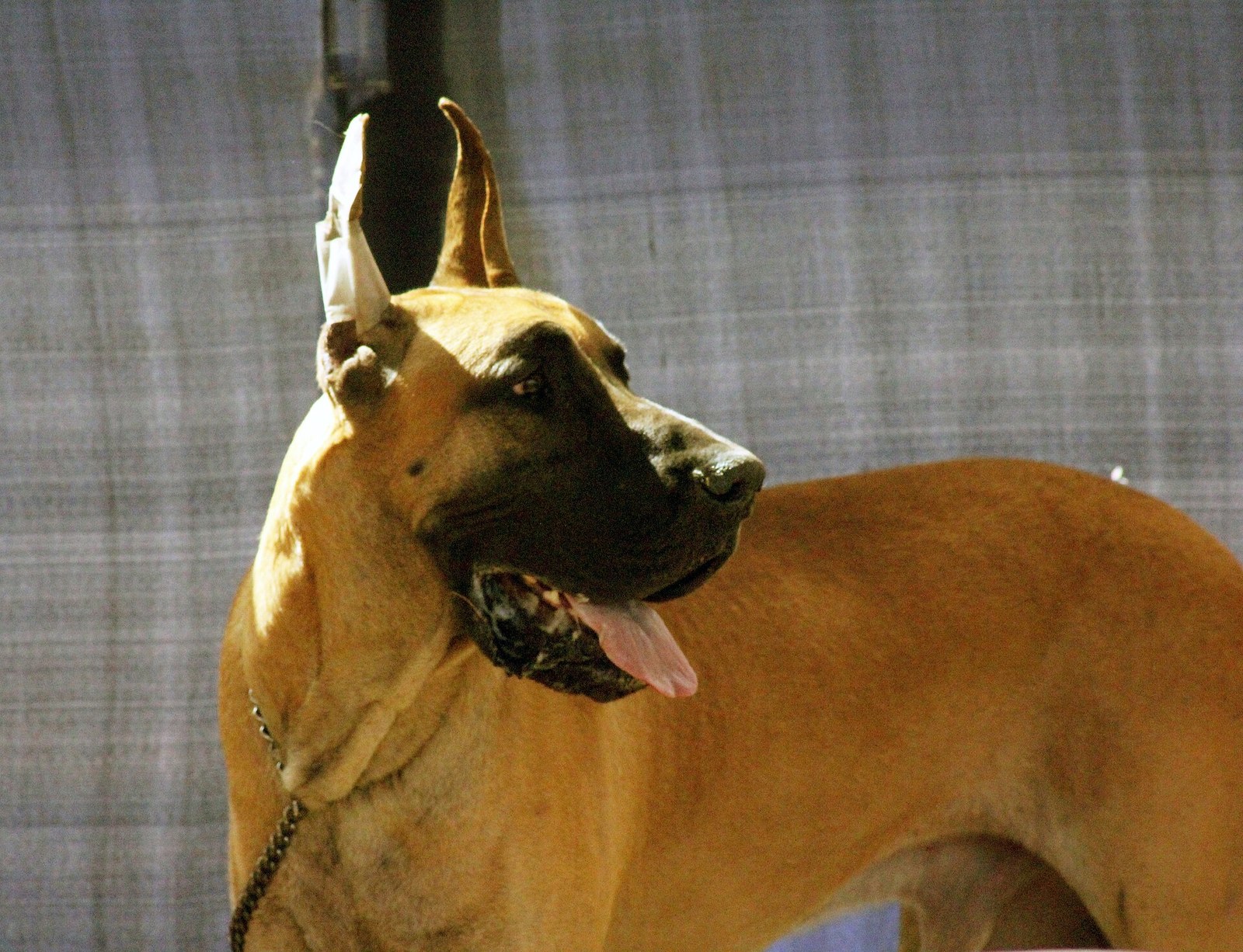
Photo credits: Rexness (CC BY-SA 2.0), localpups (CC BY 2.0), Lilly M (CC BY-SA 2.5). Images resized and compressed for web display. Each image retains its linked license. This dog shows cropped ears. Ear cropping and tail docking are cosmetic procedures; the Great Dane profile presents natural folded ears as normal anatomy and does not recommend cropping. Retained for breed representation with this disclosure.


