Doberman Pinscher Care: A Practical Plan for Everyday Wellbeing
Build a realistic Doberman care routine with safe exercise, calm enrichment, comfortable housing, and veterinary planning that takes heart health seriously.
Read article
Canis lupus familiaris
An attentive, athletic companion who thrives on connection, kind teaching, and proactive care.
Deep Dive
The Doberman Pinscher originated in Germany, with development associated with Friedrich Louis Dobermann during the nineteenth century. The FCI history places his breeding work in the 1870s and describes several contributing dog types rather than a neat, fully documented recipe of modern breeds. Dobermann's surname explains the breed name; Doberman Pinscher is the familiar American form, while Dobermann is widely used elsewhere. This profile places the breed in the Working Group. That classification describes a breeding and registry tradition, not an instruction to give a family dog an intimidating role. Today's companion needs opportunities to move, investigate, learn, and rest safely.
Historical accounts should not become predictions about an individual puppy. Working ancestry does not establish that a dog will be comfortable with strangers, suitable for every child, or interested in a particular sport. Health, early experiences, and the way people teach and manage the dog all matter. Likewise, a dramatic outline in an old photograph is not a welfare goal: natural ears and a natural tail are normal, and the FCI standard explicitly describes both. When choosing a companion, prioritize documented health information, an honest behavior history, and a support network over a stylized appearance. Ask a breeder or rescue how the dog handles ordinary household situations and what cardiac information is available. An attractive pedigree or impressive family story cannot replace ongoing care or rule out disease.
Many Dobermans enjoy being involved in household life, following familiar people between rooms and engaging eagerly in a shared activity. That connection can be delightful, but it needs room for independent rest as well as attention. Teach a comfortable bed routine, reward relaxed observation, and introduce brief separations that remain manageable for the individual. A dog that cannot settle when someone leaves is not being disobedient. Distress deserves a revised plan and, when necessary, veterinary behavior support. Excitement, sensitivity, and confidence can coexist in different combinations, so use the dog's actual responses rather than a breed reputation to decide what happens next.
Reward-based teaching gives this active learner clear information without confrontation. Useful goals include loose-leash walking, returning when called, exchanging objects, and waiting behind a barrier while a visitor enters. Socialization means safe, positive experience and freedom to keep a comfortable distance; it does not mean greeting every person or joining every group of dogs. Children need adult supervision, and other animals need carefully managed introductions rather than assumed compatibility. Trait scores are editorial tendencies, not measurements or promises about temperament. Age, pain, previous learning, and individual preferences can change what a dog enjoys. A quiet senior may prefer easy sniffing and familiar company, while an adolescent may need more help disengaging from distractions. Neither needs harsh corrections, confrontational games, or training designed to make people seem threatening.
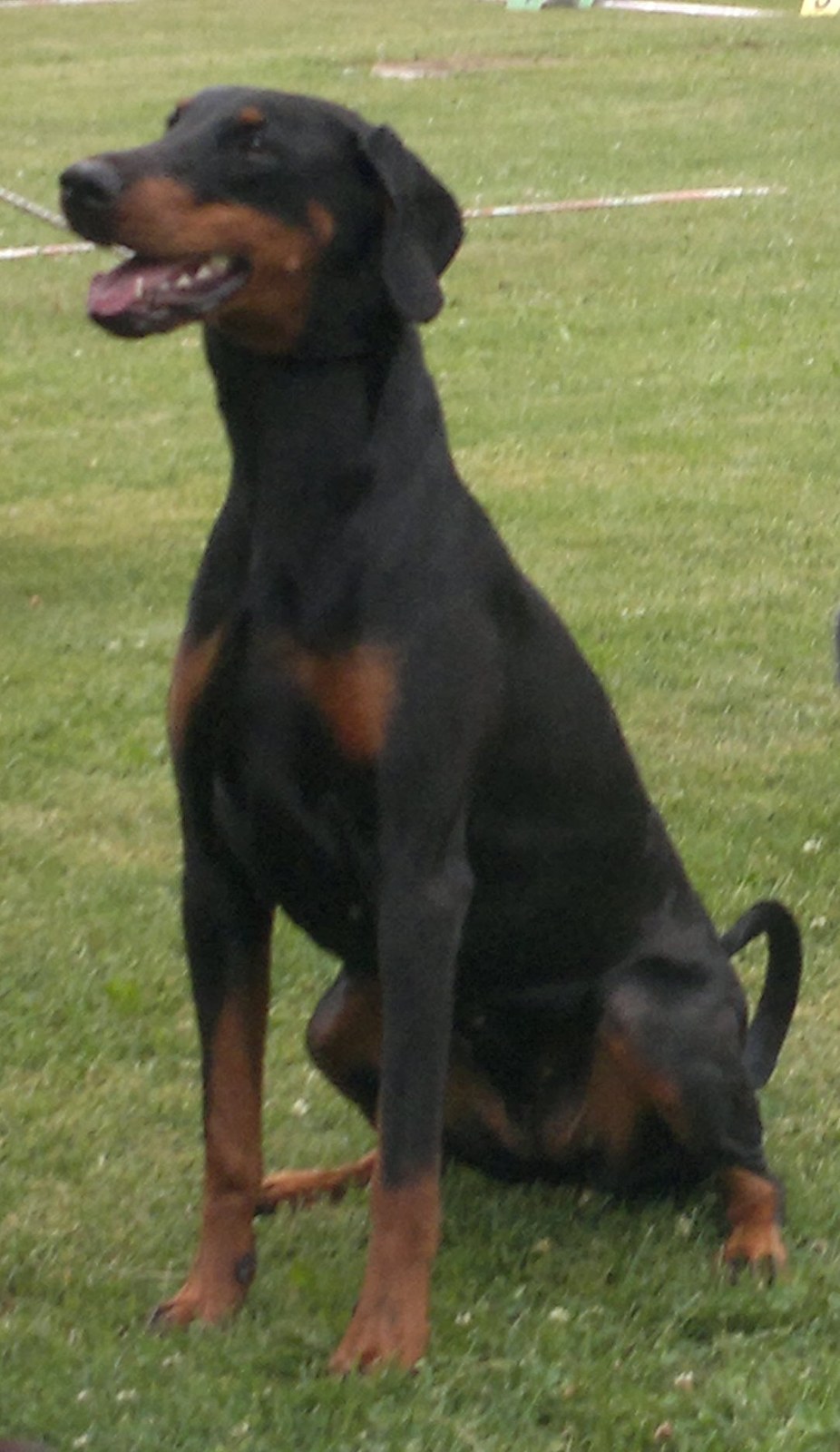
The Doberman has a smooth, short coat, a deep chest, long legs, and a lean, muscular outline. Rust markings often frame the face and lower limbs, but color and silhouette cannot establish pedigree, temperament, or health. This profile uses FCI standard weight references: males approximately 40-45 kg, or 88-99 lb, and females approximately 32-35 kg, or 71-77 lb. Other registries and veterinary breed summaries publish different ranges. These figures are not a target for every adult, and a dog outside them should not automatically be fattened or put on a diet. A veterinarian should assess frame, muscle, body condition, growth, and any unexplained weight change.
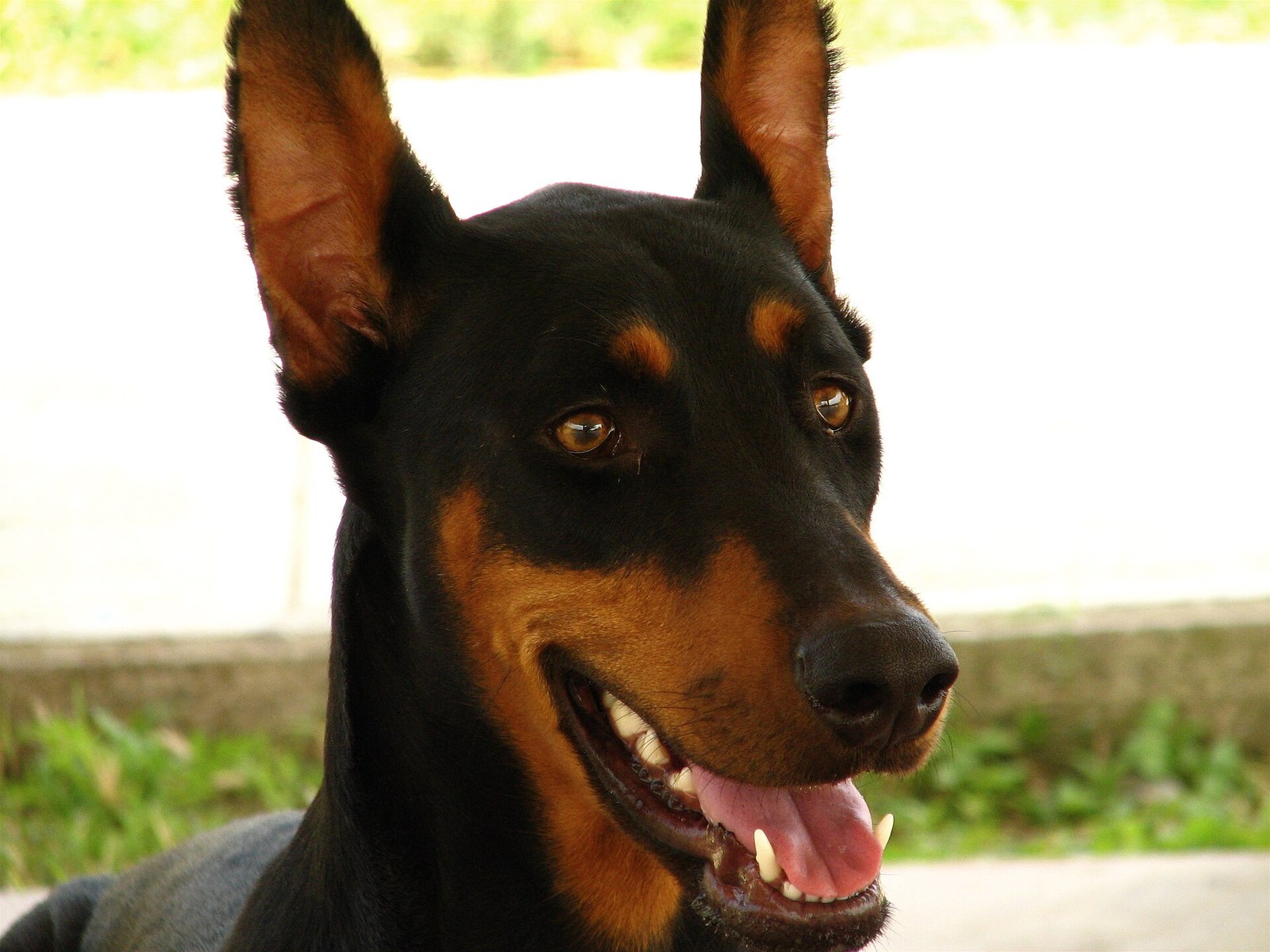
Natural ears usually fold beside the head, and an unaltered tail is long and expressive. Both are normal anatomy, not defects requiring cosmetic correction. Ear cropping and tail docking are not routine care recommendations in this profile; medical treatment of an actual injury is a separate veterinary decision. Dogs with previous alterations deserve the same gentle care without assumptions about their character or background. Short hair still sheds and does not make the breed hypoallergenic. Check the skin during brushing, because thinning patches, redness, and repeated scratching are different from loose seasonal hair. The coat also offers limited insulation, so match outdoor activity to the weather and give the dog a warm, dry place to rest. A glossy coat cannot rule out internal illness, particularly silent cardiac disease.
Photo credits: Canarian (CC BY 4.0), Canarian (CC BY-SA 3.0), pato garza (CC BY 2.0). Images resized and compressed for web display. Each image retains its linked license. This dog shows cropped ears. Ear cropping and tail docking are cosmetic procedures; the Doberman profile states they are not routine care recommendations and that natural ears and an undocked tail are normal anatomy. Retained for breed representation with this disclosure.
A suitable Doberman home offers reliable companionship, secure boundaries, varied activity, and a genuinely quiet place to sleep. A large garden does not replace shared walks or thoughtful teaching, and a smaller home can work when daily needs are met. Plan outings around the dog's age, physical condition, confidence, and the weather rather than a fixed exercise quota. Growing puppies should not be pushed into repetitive jumping or forced distance running. Provide non-slip surfaces and adapt access to cars and stairs when mobility changes. Calm sniffing, food searches, and cooperative handling practice add useful variety without turning every interaction into a fitness test.
Veterinary planning is a central part of ownership, not an optional extra reserved for older dogs. Dilated cardiomyopathy can develop without obvious early signs, and negative genetic results do not establish freedom from disease. Ask your veterinarian about cardiac surveillance, including the complementary roles of echocardiography and Holter monitoring; the clinician should set timing and interpret results. Keep records of the actual tests rather than relying on a description such as heart checked. Budget for investigations and possible specialist care alongside food, training, and routine prevention. A commonly published lifespan estimate is ten to twelve years, but individual lives vary substantially. Anyone looking after the dog must know that collapse, breathing difficulty, or repeated unproductive retching calls for immediate veterinary attention. Clear handovers and an emergency transport plan make those preparations useful when the household is busy.
At a Glance
Ownership Guide
Combine sniffing walks, play, and learning, adjusting intensity to age, fitness, weather, and veterinary advice. Avoid forced distance work and repeated high-impact jumps in growing dogs; stop and seek advice for new fatigue, stiffness, or exercise intolerance.
Choose a complete diet appropriate to life stage, with large-breed growth nutrition for puppies. Measure meals, include treats in the daily allowance, and use body condition rather than breed-standard weight as the feeding target. Discuss diet concerns or supplements with your veterinarian instead of treating food as a guaranteed DCM preventive.
Brush the short coat gently, check paws and nails, and gradually teach tooth brushing with a dog-safe product. Natural ears and tails need ordinary observation and gentle care, not cosmetic alteration. Persistent odor, redness, hair loss, or handling pain deserves examination.
Reward practical skills such as loose-leash walking, recall, settling, and object exchanges. Keep sessions achievable and avoid physical corrections, intimidation, or attempts to cultivate threatening behavior.
Offer comfortable-distance exposure to ordinary people, sounds, surfaces, and suitable animals, with room to retreat. Reward calm observation instead of forcing greetings; supervise children and use barriers during uncertain introductions.
Arrange individualized preventive care and ongoing cardiac surveillance, discussing echocardiography and Holter monitoring rather than relying on genetic panels alone. Review bleeding history and von Willebrand testing before procedures, and discuss orthopedic concerns and GDV risk. Ask about preventive gastropexy without treating it as protection from every abdominal emergency.
Wellness
DCM is an important breed risk and can be silent before signs appear. Negative genetic tests do not rule it out; arrange veterinarian-led cardiac surveillance with appropriate imaging and rhythm monitoring. Collapse or breathing difficulty requires immediate veterinary care.
This inherited bleeding disorder can become apparent after injury or a procedure. Share genetic results and bleeding history with the veterinarian, who may assess von Willebrand factor and plan treatment accordingly. Persistent bleeding, pale gums, or weakness warrants urgent veterinary attention.
A deep-chested dog can develop life-threatening stomach distension and twisting. Repeated unproductive retching, distress, drooling, or a swollen abdomen means immediate emergency care, even without every sign. Preventive gastropexy reduces twisting risk but does not prevent all distension or replace urgent assessment.
Hip development and other orthopedic problems can affect comfortable movement. Keep growth and adult body condition appropriate, adapt activity, and investigate limping or difficulty rising rather than pushing through it. Parental screening helps inform decisions but cannot guarantee unaffected offspring.
Wobbler syndrome is associated with compression affecting the neck portion of the spinal cord. Neck pain, wobbliness, weakness, or dragging feet requires veterinary assessment; inability to stand or sudden severe weakness is urgent. Do not stretch, manipulate, or exercise the neck as a home treatment.
Short hair does not eliminate skin disease, and persistent scratching, odor, bald patches, or mouth pain should not be treated as cosmetic issues. Gentle checks help identify changes, but appearance cannot diagnose the cause. Avoid leftover ear medicines or human painkillers.
Keep test reports, body-condition notes, medication details, and changes in stamina together. Breed predisposition is not a diagnosis, and screening or careful care cannot guarantee lifelong health. Longitudinal records help the veterinarian interpret changes in this individual dog.
Further Reading
Build a realistic Doberman care routine with safe exercise, calm enrichment, comfortable housing, and veterinary planning that takes heart health seriously.
Read articleChoose balanced Doberman meals, support steady puppy growth, track body condition, and approach diet-related heart concerns without relying on food myths.
Read articleUnderstand Doberman heart surveillance, genetic test limits, bleeding disorders, bloat, and mobility changes, with clear guidance on seeking veterinary care.
Read articleTeach your Doberman calm greetings, loose-leash walking, recall, and comfortable alone time through reward-based practice, thoughtful management, and trust.
Read articleKeep Doberman grooming gentle with practical coat, nail, tooth, and ear care, respect for natural ears and tails, and advice on changes that need a vet visit.
Read articleExplore life with a Doberman, from household routines and visitor boundaries to other pets, travel, aging, and the practical costs of long-term cardiac care.
Read articleYou May Also Like