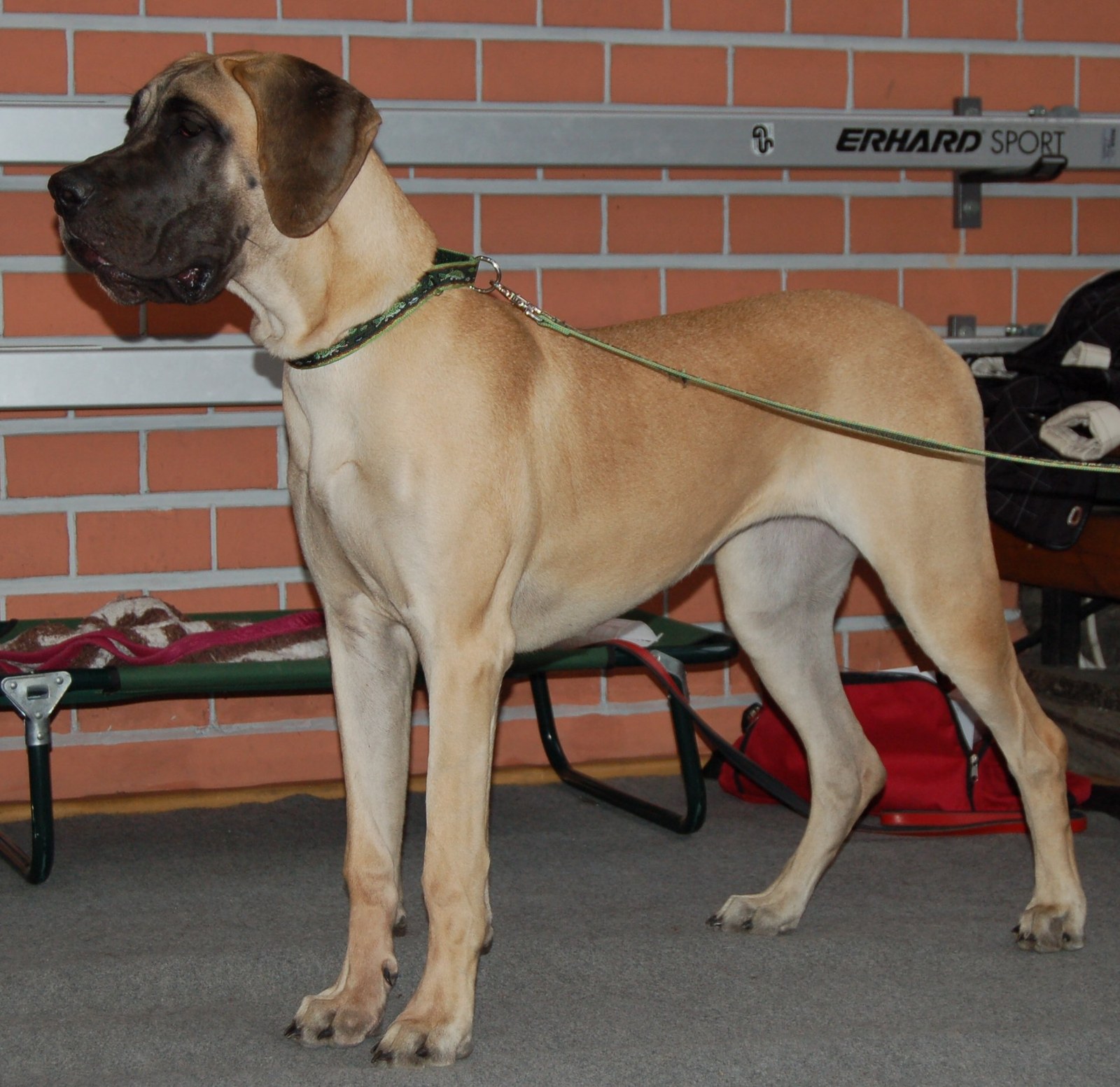
A Great Dane puppy can make giant-dog ownership look deceptively simple. For now, you can lift the youngster into the car and move it away from a doorway. Good care plans for the adult that will soon occupy that space. Prioritize secure access, appropriate nutrition, useful handling skills, and veterinary support rather than equipment chosen only for a puppy's current size.
Prepare routes, resting places, and transport
Walk through your home imagining an adult dog turning beside every bed, bowl, and door. Move fragile objects out of tail range and provide a roomy resting place away from passing feet. Bedding should support the whole body without forcing the dog to curl tightly. Secure rugs can help on slippery routes; avoid loose mats that slide when a heavy dog stands or turns.
Check gates and fences for strength as well as height. A boundary is useful only if the dog cannot push it open and people remember to close it. Keep food, medicines, cleaning products, and rubbish beyond an adult Dane's reach, not merely above puppy height.
Plan vehicle access early. Introduce a stable, appropriately rated ramp in small reward-based steps if it suits your setup. Ask the veterinary team how to move an injured giant dog safely, and identify helpers before you need them. An emergency plan should not depend on one person lifting a distressed adult.
Make steady growth the nutritional goal
Choose a complete puppy food appropriate for large or giant-breed growth. On US products, read the nutritional adequacy statement for suitability for growth of large-size dogs; elsewhere, confirm the equivalent life-stage suitability with the manufacturer and your veterinarian. A puppy picture or the word premium does not establish nutritional adequacy. Keep the existing food initially after adoption unless there is a medical reason to change it.
Bigger sooner is not better care. Measure meals and adjust them through veterinary body-condition and growth reviews rather than trying to reach a breed-chart number ahead of schedule. Calcium, bone meal, and mineral supplements can disrupt an already balanced diet. Do not add them unless your veterinarian specifically directs a medical plan.
Ask how to divide the daily ration into suitable meals and account for training rewards. Keep fresh water available. Neither a feeding timetable nor a particular bowl guarantees protection from GDV, and restricting drinking is not a substitute for appropriate feeding advice.
Match activity to the dog in front of you
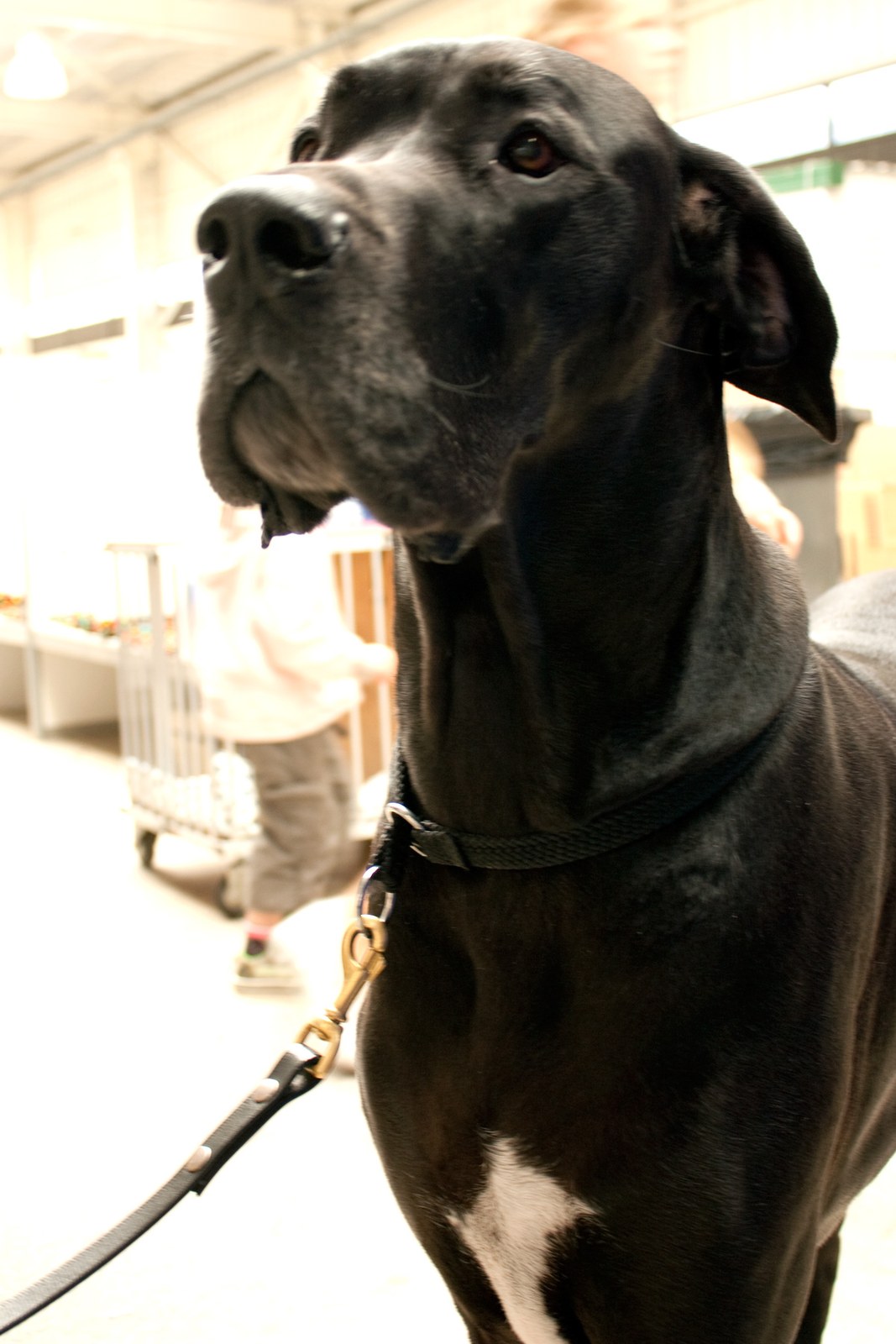
Provide daily opportunities to sniff, move comfortably, explore, and play, with quiet recovery between active periods. A youngster needs chances to learn about the world, not a program designed to exhaust it. Avoid forced jogging, repeated high jumps, and repetitive hard-impact games during growth. Your veterinarian can help determine when a developing dog is ready for more demanding activity.
Choose routes with secure footing and an easy return option. Turn back before a tired puppy is struggling, and adapt adult outings to weather, fitness, and any existing disease. Play can include finding food from the normal allowance, gentle toy interaction, or practicing a familiar skill in a new place. A large garden does not automatically provide enough engagement.
Watch how your Dane moves later that day and when rising after rest. Limping, stiffness, or reluctance to continue should prompt a change of plan and veterinary advice, not pressure to finish a predetermined distance. There is no single exercise-minute prescription that suits every age and individual.
Teach cooperation before strength becomes an obstacle
Start with practical behaviors: following a person on a loose lead, pausing at doors, settling on a mat, and keeping feet on the floor when greeting. Reward small successes in a quiet setting before adding distractions. Fit humane walking equipment carefully and check it again as the puppy grows; equipment manages safety but does not replace teaching.
Build comfort with touching paws, looking at ears, and briefly lifting a lip. Let the dog move away between steps rather than pinning it down until the task is finished. A clinic or reward-based trainer can demonstrate cooperative handling.
Social experiences should also stay manageable. Observe people and suitable dogs from a comfortable distance, reward calm attention, and leave when your dog needs space. Forced greetings are not a requirement for a friendly adult.
Use daily checks to notice small changes
A reliable routine helps distinguish ordinary variation from a developing problem. Look at each part of the day rather than judging health from a shiny coat alone. Useful checks include:
- Whether meals are eaten normally and water remains available.
- Comfortable rising, walking, and lying down.
- Changes in breathing, energy, or willingness to interact.
- Stool, urine, skin, natural ears, and the tail tip.
- Whether harnesses, bedding, and barriers still fit the dog.
Brush loose coat gently and keep teeth and nails on the care agenda. Short hair does not eliminate shedding or the need for skin checks. Report persistent changes rather than covering them with supplements or assuming they are normal for a giant breed. As the dog ages, easier toileting access and better traction may be more valuable than a new toy.
Arrange veterinary care and rehearse the emergency plan
Bring feeding and medical records to the first appointment. Discuss preventive care according to age, history, location, and exposure rather than copying a fixed vaccination or parasite schedule. Ask about growth monitoring, cardiac concerns, and breeding-health records if available. Screening is useful information, not a guarantee against later illness.
Discuss preventive gastropexy with your veterinarian because Great Danes are susceptible to gastric dilatation-volvulus. The procedure helps prevent the stomach from twisting but does not prevent all stomach enlargement. Decisions about suitability, timing, and surgical risk belong in an individual consultation.
Save the after-hours clinic number and confirm it can receive a giant dog. Share the transport plan with everyone responsible for care. Preparation makes ordinary life calmer and helps the household act promptly when a genuinely urgent change occurs.
Continue reading: Great Dane Feeding: Support Growth Without Chasing Size.
Sources and further reading:
- Royal Kennel Club: Great Dane breed standard
- Association for Pet Obesity Prevention: Great Dane weight comparison
- PetMD: Great Dane
- American College of Veterinary Surgeons: Gastric Dilatation-Volvulus
- MSD Veterinary Manual: Nutritional Requirements of Small Animals
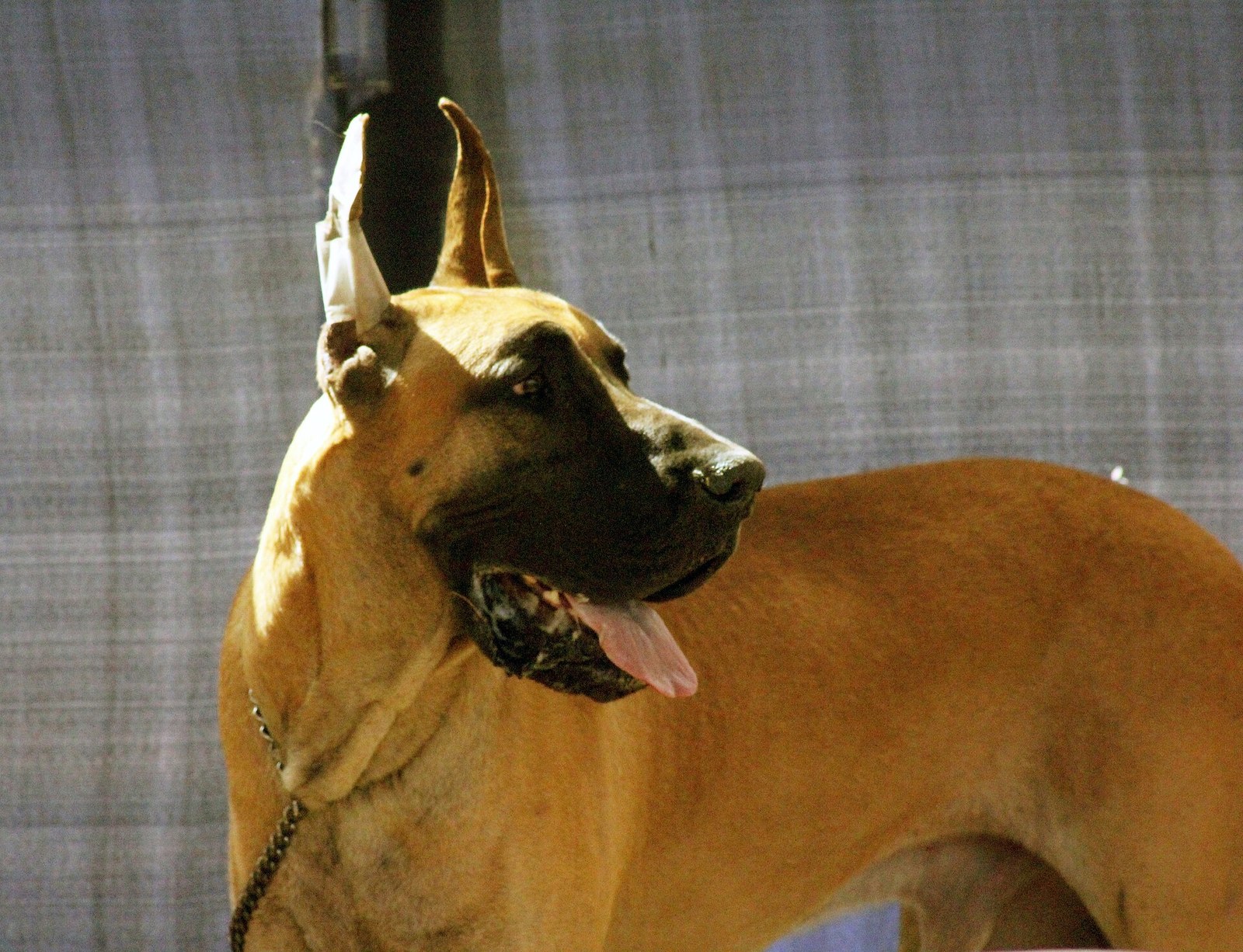
Photo credits: Lilly M (CC BY-SA 2.5), Rexness (CC BY-SA 2.0), localpups (CC BY 2.0). Images resized and compressed for web display. Each image retains its linked license. This dog shows cropped ears. Ear cropping and tail docking are cosmetic procedures; the Great Dane profile presents natural folded ears as normal anatomy and does not recommend cropping. Retained for breed representation with this disclosure.


