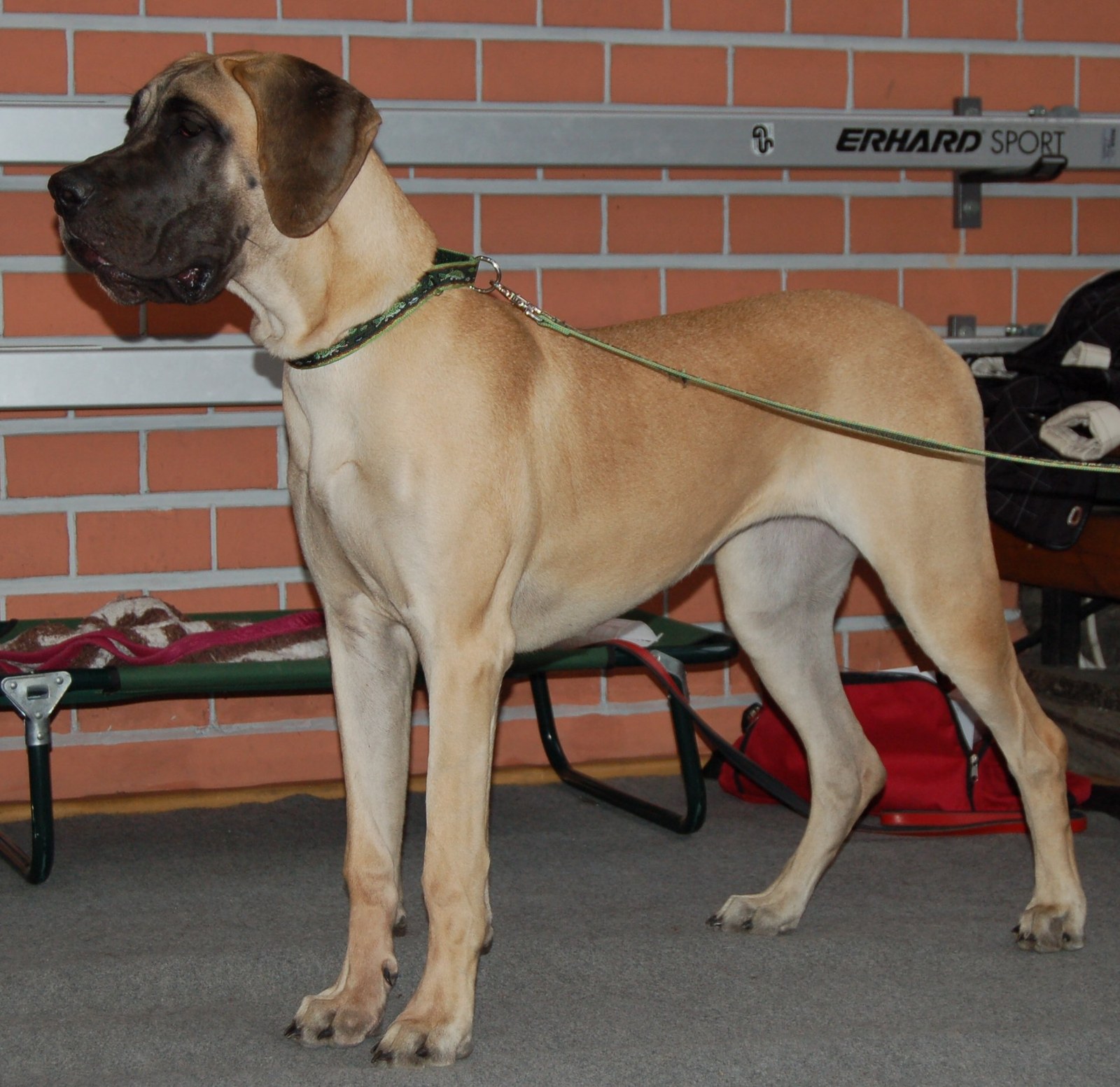
Training a Great Dane is about making ordinary choices safe: walking past another dog, waiting while a door opens, and accepting a paw check without a wrestling match. A giant breed does not need a harsher method. It needs a clear teaching plan, capable supervision, and practice before distractions become overwhelming. Start with skills that protect both the dog and the people sharing its space.
Replace the gentle giant stereotype with observation
Many Danes are affectionate and enjoy close company, but friendliness is not the same as reliable manners. A playful adolescent can cause injury by leaning, jumping, or rushing through a narrow doorway. Watch your individual dog's body language and recovery after excitement rather than assuming a breed label will keep everyone safe.
Signs of unease can include turning away, freezing, repeated avoidance, or escalating vocalization. Context matters: one gesture does not reveal an entire emotional state. Give the dog room to disengage and reduce the difficulty of the situation. Sudden irritability, reluctance to sit, or resistance to touch may indicate pain and warrants veterinary advice.
Behavior scores describe editorial tendencies, not measured guarantees. Age, health, past learning, and environment all affect responses. A mature dog may find a quiet walk satisfying while a youngster needs frequent, manageable learning opportunities. Compare progress with that dog's starting point, not a social-media performance.
Build a reward system the whole household understands
Choose a short marker word to tell the dog exactly which action earned a reward. Begin in an easy setting: mark a glance toward you, then deliver a small food reward. Once the connection is clear, use it to identify useful choices such as four feet on the floor or stepping toward a mat. Keep sessions brief enough that both of you remain successful.
Use part of the normal food allowance where practical and account for additional treats in the feeding plan. Rewards can also include sniffing, access to a toy, or moving toward something the dog wants when appropriate. Food should not be withheld to force cooperation, and an unwell or frightened dog may be unable to engage despite attractive treats.
Agree on cues and boundaries with other caregivers. If one person encourages jumping and another punishes it, the problem is an inconsistent lesson. Do not use dominance rituals, shouting, shock, prong, or choke corrections. Reward-based methods and good management remain appropriate as the dog becomes stronger.
Teach loose-lead walking before busy outings
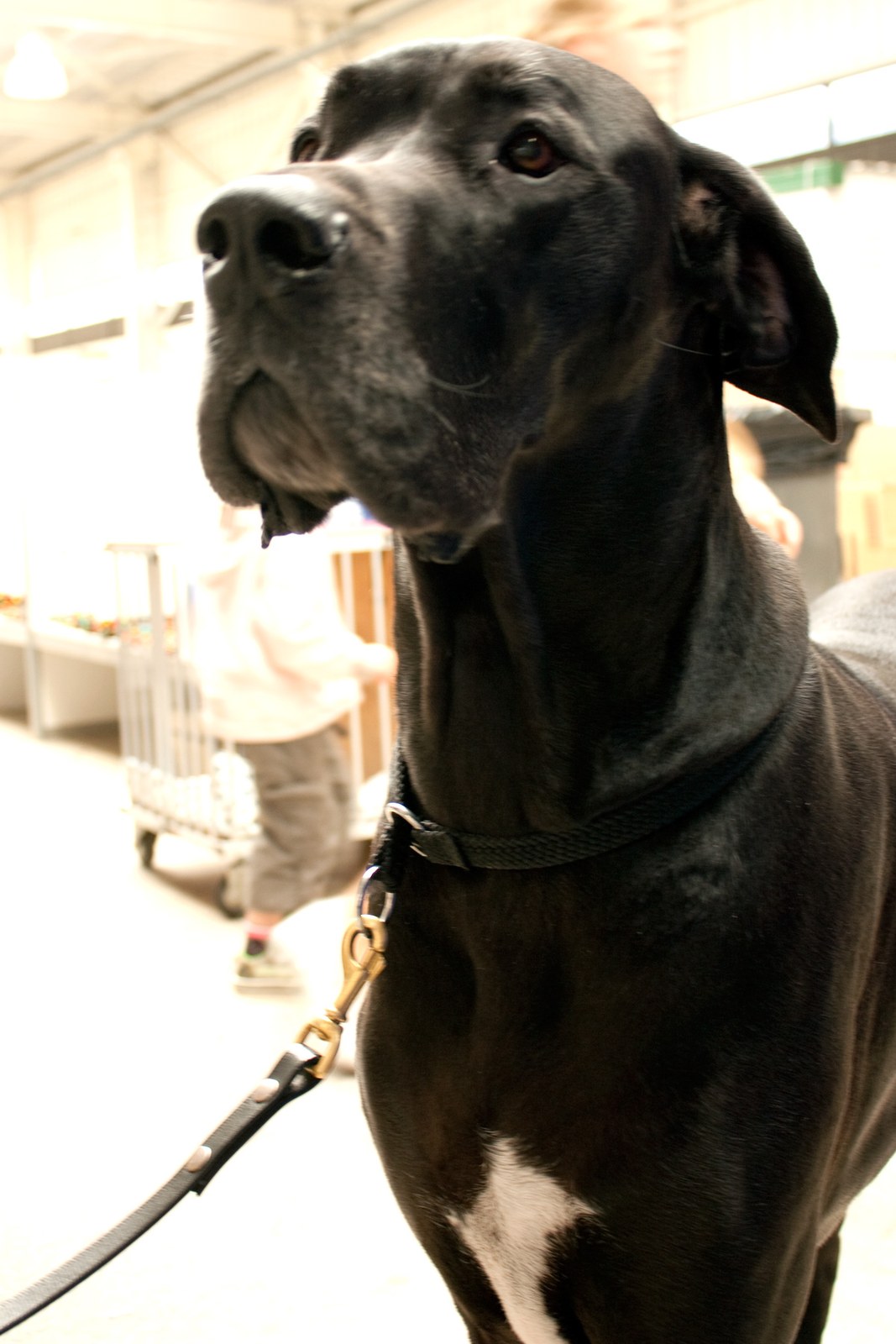
Fit a comfortable harness and lead suitable for a growing giant dog, checking for rubbing and changes in fit. Practice first in a quiet secure space. Reward the dog for being near your side and for checking in voluntarily. Take a few steps, mark the loose lead, and deliver the reward where you want the dog to return.
Increase distance and distractions separately. If tension develops, pause where safe or calmly create more distance, then reward reconnection. Avoid jerking the neck or turning each walk into a contest of strength. When an approaching dog is too exciting, crossing the road early may be more productive than repeatedly asking for attention at close range.
Do not attach a long line to the neck or allow it to wrap around limbs. Use such equipment only in a safe setting with appropriate handling guidance. If a handler cannot keep the dog and public safe, reduce exposure and seek a qualified reward-based professional. A child should not be the sole handler of a powerful dog in public.
Make greetings, doors, and settling predictable
Manage exciting situations before trying to teach inside them. A secure barrier gives visitors time to enter without being crowded. Reward the Dane for standing calmly or going to a familiar mat, and invite contact only if both dog and visitor are comfortable. The aim is a safe, relaxed greeting, not a compulsory performance for every guest.
A practical door routine can be built in small stages:
- Reward standing or resting away from the doorway.
- Touch the handle, then reward remaining in place.
- Open the door slightly while a barrier or lead maintains safety.
- Close it calmly if the task becomes too difficult.
- Build toward a release cue before moving through together.
For settling, reward relaxed moments on a mat and gradually add ordinary household movement. Do not repeatedly excite the dog and then demand instant stillness. Comfortable bedding, toileting access, and appropriate activity make relaxation easier.
Socialize through choice rather than forced contact
Socialization is learning that everyday sights, sounds, surfaces, and people can be navigated safely. It does not require playing with every dog or accepting every stranger's touch. Arrange gentle exposures at a distance where the puppy can notice the situation and still engage with you. Ask your veterinarian how to balance early learning with local infectious-disease considerations.
Offer an exit route and stop before the dog is overwhelmed. Crowded play sessions may be a poor match for a giant puppy whose size exceeds its coordination. Choose compatible, supervised interactions and separate animals if one repeatedly tries to escape. Children need instruction, active supervision, and a dog-free retreat of their own.
Practice handling and solitude as separate life skills
Teach cooperative care when nothing urgent needs doing. Reward a brief touch near a paw, then release. Build gradually toward checking a nail, lifting a lip, or examining the visible ear. A dog that can pause or move away is more likely to trust the process than one held down until it stops struggling. Medical procedures may need a veterinary handling plan rather than additional force at home.
Comfortable solitude also develops through achievable steps. Begin with very brief separations when the dog is settled and gradually build only while it remains comfortable. Toileting needs, age, health, and previous experience affect what is realistic. A camera can help reveal distress that starts after you leave.
Persistent pacing, vocalizing, destruction, or inability to settle deserves professional help, not punishment after the event. Arrange care that prevents repeated distress while working on the plan. Successful training produces a dog that can understand and cope with everyday life, not merely one that looks obedient while feeling unsafe.
Continue reading: Great Dane Grooming: Short-Coat Care Without a Struggle.
Sources and further reading:
- Royal Kennel Club: Great Dane breed standard
- Association for Pet Obesity Prevention: Great Dane weight comparison
- PetMD: Great Dane
- American College of Veterinary Surgeons: Gastric Dilatation-Volvulus
- MSD Veterinary Manual: Nutritional Requirements of Small Animals
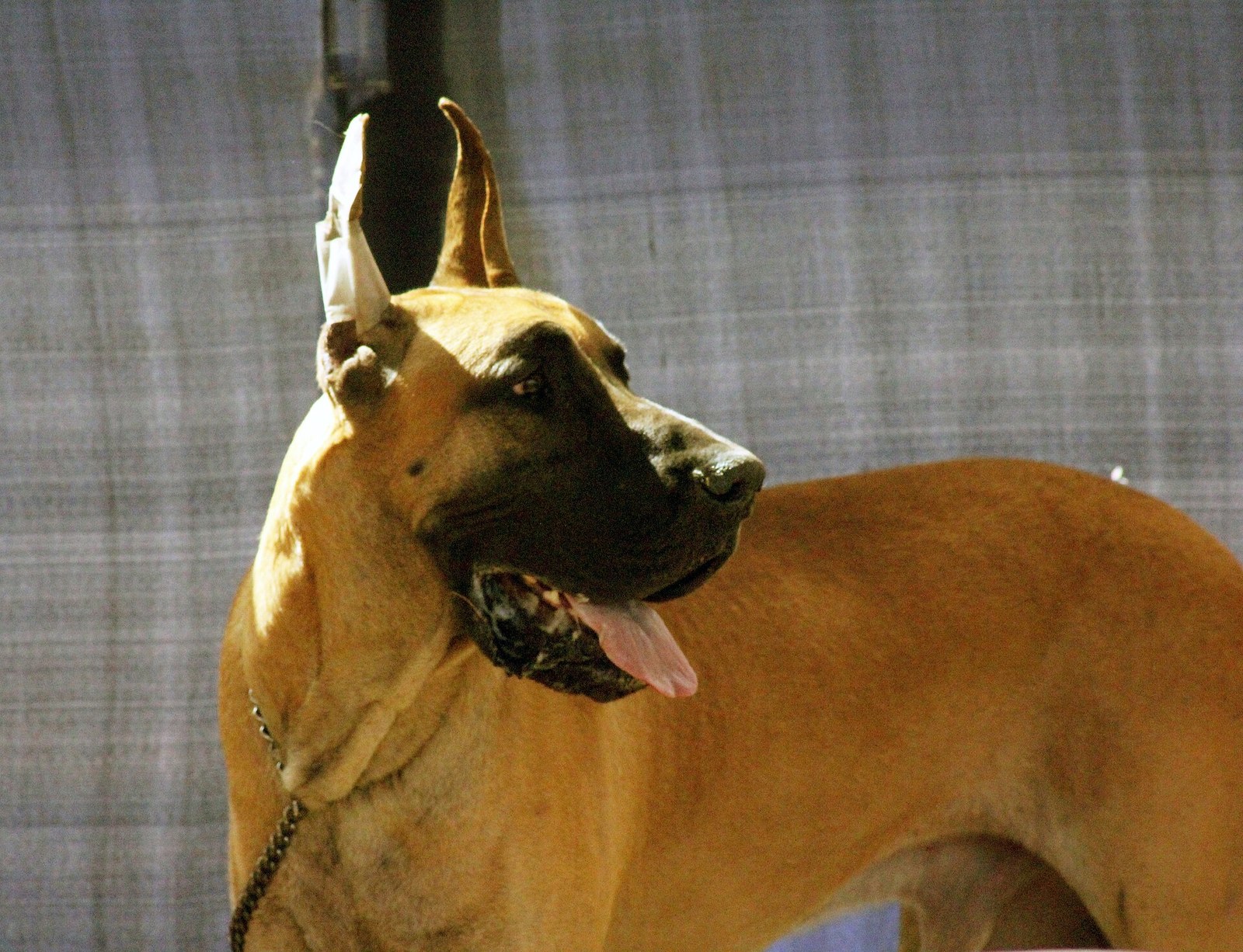
Photo credits: Lilly M (CC BY-SA 2.5), Rexness (CC BY-SA 2.0), localpups (CC BY 2.0). Images resized and compressed for web display. Each image retains its linked license. This dog shows cropped ears. Ear cropping and tail docking are cosmetic procedures; the Great Dane profile presents natural folded ears as normal anatomy and does not recommend cropping. Retained for breed representation with this disclosure.


