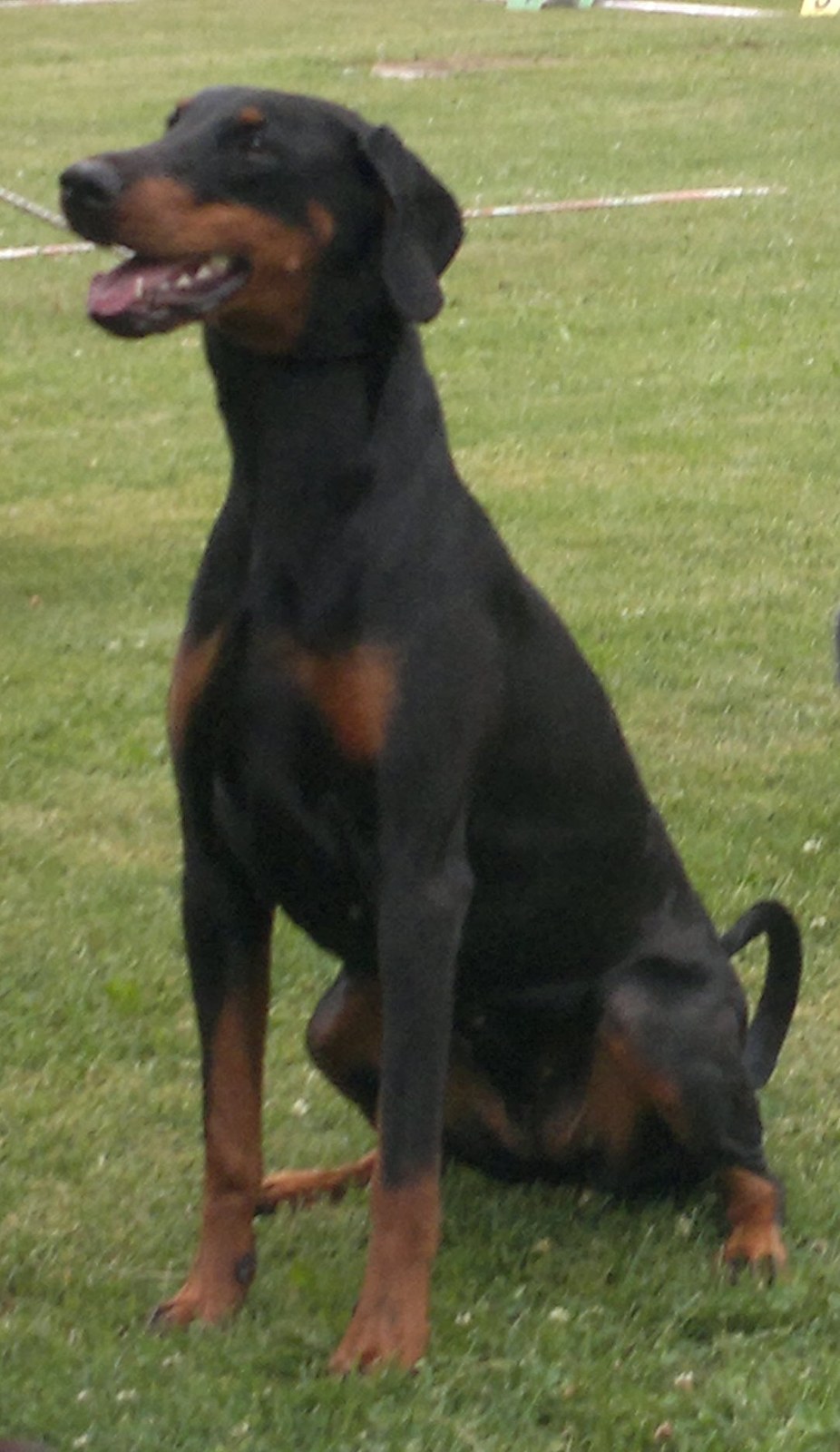
Feeding a Doberman involves more than choosing a protein percentage or filling a large bowl. A growing puppy, a lean active adult, and an older dog with heart disease may need different plans. The useful starting points are nutritional completeness, the right life stage, consistent measurement, and regular assessment of the dog. Breed-specific concerns matter, but they do not turn an ingredient slogan into a reliable prescription.
Choose a complete diet for the correct life stage
Look for a nutritional adequacy statement rather than relying on packaging words such as premium or natural. In the US, ask whether the food meets the relevant AAFCO nutrient profile or feeding-test requirements for the intended life stage. AAFCO does not approve individual brands. In the UK, choose a complete food appropriate to the dog and discuss unfamiliar products with your veterinary team. Treats and complementary foods are not complete daily diets.
For puppies, select a formulation suitable for large-breed growth. Controlled nutrition supports development; trying to produce the biggest puppy as quickly as possible is not a health goal. Do not add calcium, bone meal, or other mineral products to a complete growth diet without professional direction. The balance already present in the formulation matters. Ask the manufacturer about qualified nutrition expertise, quality control, and how the food's nutritional adequacy is established if the label leaves important questions unanswered.
Separate breed ranges from a healthy individual weight
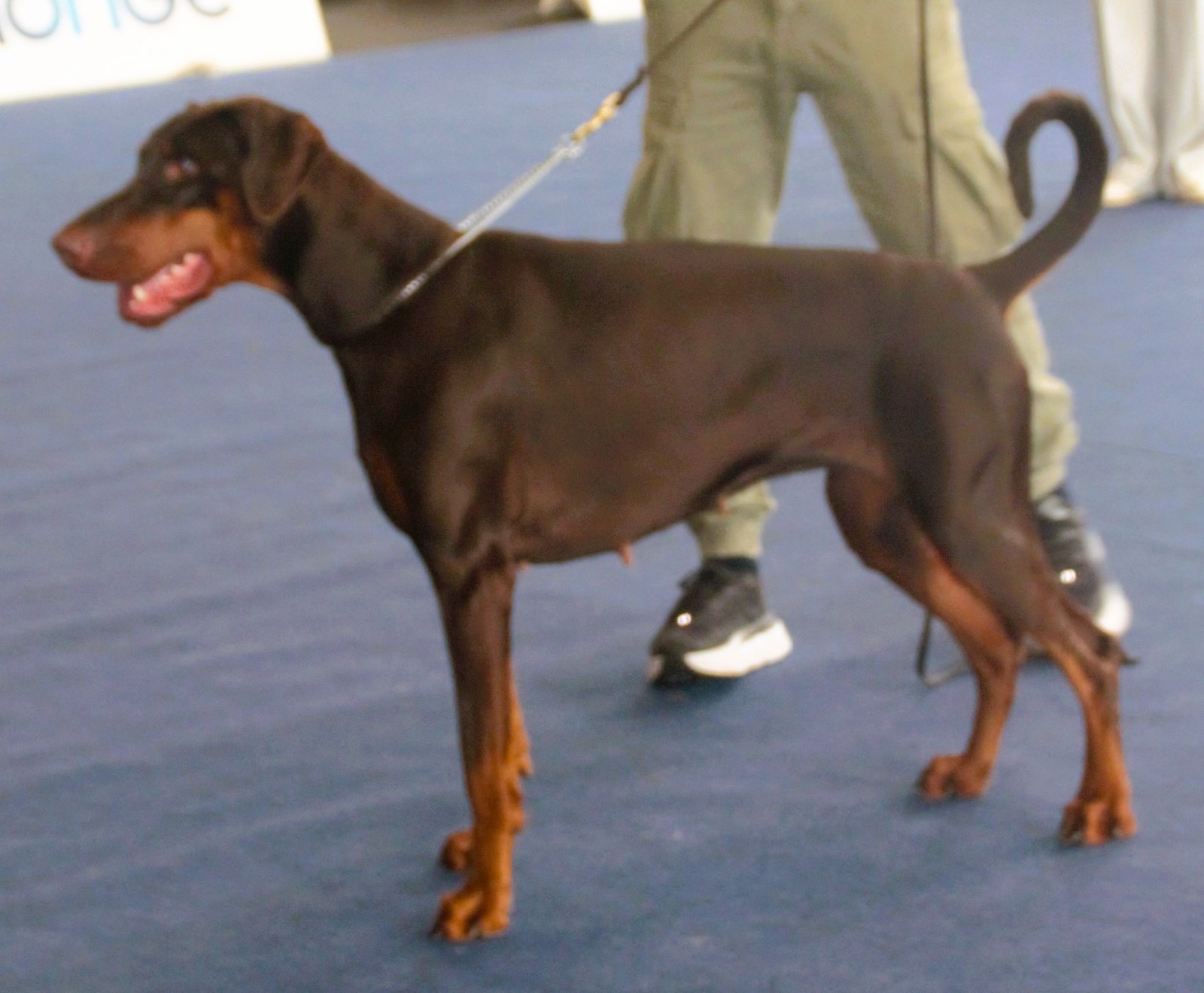
The FCI Dobermann standard gives approximate adult reference weights of 40-45 kg for males and 32-35 kg for females, roughly 88-99 lb and 71-77 lb respectively. These are specific standard references, not universal limits or feeding targets. Veterinary summaries may publish wider ranges. Do not increase food merely because a comfortable, appropriately conditioned dog sits below a number, or restrict it abruptly because its frame is larger.
Ask your veterinarian to show you how to assess body condition and muscle. Follow weight trends on a consistent scale, but interpret them alongside the examination. A waist and easily felt ribs can be useful observations, although a photograph alone is not enough. An older dog can lose muscle while maintaining similar scale weight. Feed the individual, not the breed chart, and investigate unexplained loss or gain rather than repeatedly changing portions without understanding the cause.
Measure meals and coordinate the whole household
Start with the food manufacturer's guidance and a veterinary recommendation, then review the result rather than treating the starting amount as permanent. Food energy density varies substantially, so one cup of a new product may not equal one cup of the old one. Weighing portions can improve consistency. Divide the day's allowance into suitable meals rather than allowing a large, hurried feeding to become the default household pattern.
Account for extras, including training rewards, dental products, table scraps, and food used to hide medication. PDSA advises keeping treats below ten percent of daily calories, leaving the main diet to provide balanced nutrition. Some dogs need a smaller discretionary allowance. Set aside part of the regular ration for training when it works well. Everyone should know whether dinner has already been served; a shared note is more reliable than assuming that an empty bowl answers the question.
Discuss DCM without reducing it to a food slogan
Dilated cardiomyopathy weakens the heart's pumping ability and is an important inherited concern in Dobermans. Cornell also describes nutritional deficiencies and an association with some grain-free diets that remains under investigation. These issues should prompt a careful diet review, not a claim that one ingredient category explains every case. A grain-inclusive label does not guarantee protection, and a diagnosis is not proof that an owner caused the disease through food.
Give your veterinarian the exact diet history, including previous foods, homemade additions, and supplements. A dog with suspected or confirmed DCM may need cardiac investigations and an individualized nutrition plan. Do not begin taurine, carnitine, salt restriction, or other interventions simply because another owner used them. Supplements cannot replace assessment or prescribed treatment. Negative genetic results also do not rule out clinical DCM, so changing food must not become a reason to abandon recommended cardiac surveillance.
Make mealtimes calm without promising to prevent bloat
Dobermans have the deep-chested build associated with GDV, in which the stomach distends and twists. Multiple smaller meals are preferable to a single large daily meal, but feeding changes cannot eliminate risk. Discuss preventive gastropexy with your veterinarian rather than relying on a special bowl or a rigid internet rule. Gastropexy reduces the risk of twisting; it does not stop every episode of stomach distension.
Keep feeding practical and low pressure:
- Feed dogs separately when there is competition or hurried eating.
- Choose stable, washable equipment suited to the individual.
- Supervise any slow feeder and check for frustration or chewing damage.
- Keep water available unless the treating veterinarian gives different instructions.
- Avoid scheduling strenuous games immediately around a large meal.
Do not elevate a bowl solely on the assumption that this prevents GDV. A dog with another medical need may have different feeding instructions, which should come from its clinician. No arrangement makes emergency symptoms safe to watch at home.
Change diets thoughtfully and respond to appetite changes
When adopting, obtain the exact current food and feeding routine so the move does not require an abrupt dietary overhaul. Introduce a planned change gradually as tolerated, with veterinary guidance for sensitive digestion or disease. Monitor what the dog actually eats, not just what is placed in the bowl. Homemade diets should be formulated by a qualified veterinary nutrition professional; meat, rice, and supplements selected by guesswork are not automatically balanced. Raw feeding also adds infectious and nutritional concerns to evaluate.
A new loss of appetite can reflect dental pain, nausea, stress, or systemic disease. Contact your veterinarian for persistent changes, weight loss, vomiting, or discomfort rather than cycling through increasingly rich foods.
Good feeding is an ongoing conversation between the food label, your observations, and veterinary assessment. Consistency makes that conversation clearer and leaves room to adapt when the dog's needs change.
Continue reading: Doberman Health: DCM Screening, Bleeding Risks, and Emergency Signs.
Sources and further reading:
- FCI: Dobermann breed standard No. 143
- PDSA: Dobermann breed information
- PetMD: Doberman Pinscher
- Cornell Riney Canine Health Center: Dilated cardiomyopathy
- NC State Veterinary Hospital: Doberman Pinscher dilated cardiomyopathy testing
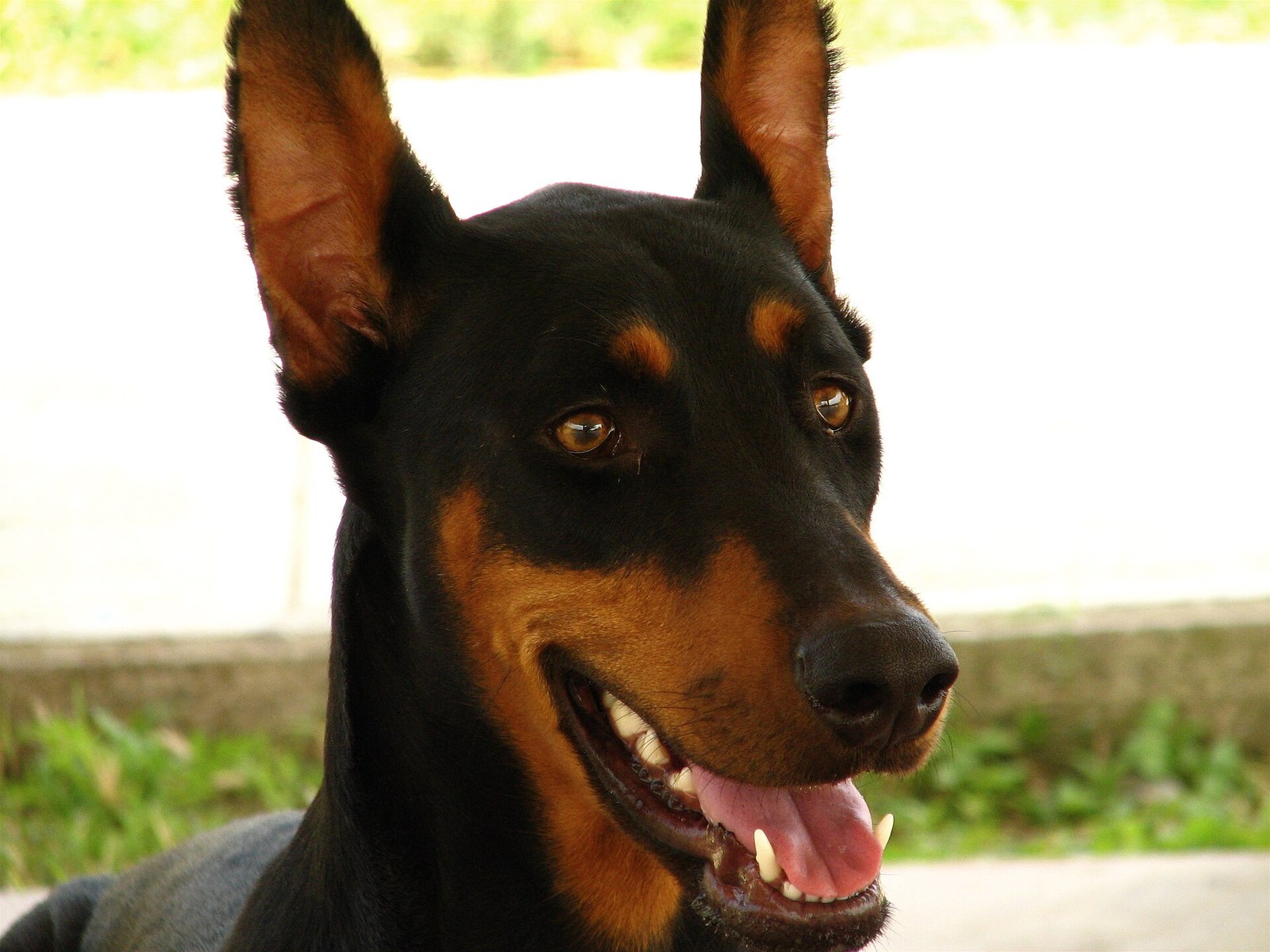
Photo credits: Canarian (CC BY-SA 3.0), pato garza (CC BY 2.0), Canarian (CC BY 4.0). Images resized and compressed for web display. Each image retains its linked license. This dog shows cropped ears. Ear cropping and tail docking are cosmetic procedures; the Doberman profile states they are not routine care recommendations and that natural ears and an undocked tail are normal anatomy. Retained for breed representation with this disclosure.


