Ferret Care Guide: Building a Safe, Enriching Home
Plan ferret care around safe housing, cool rooms, meat-based meals, compatible company, and daily play, with practical checks for a healthier life at home.
Read article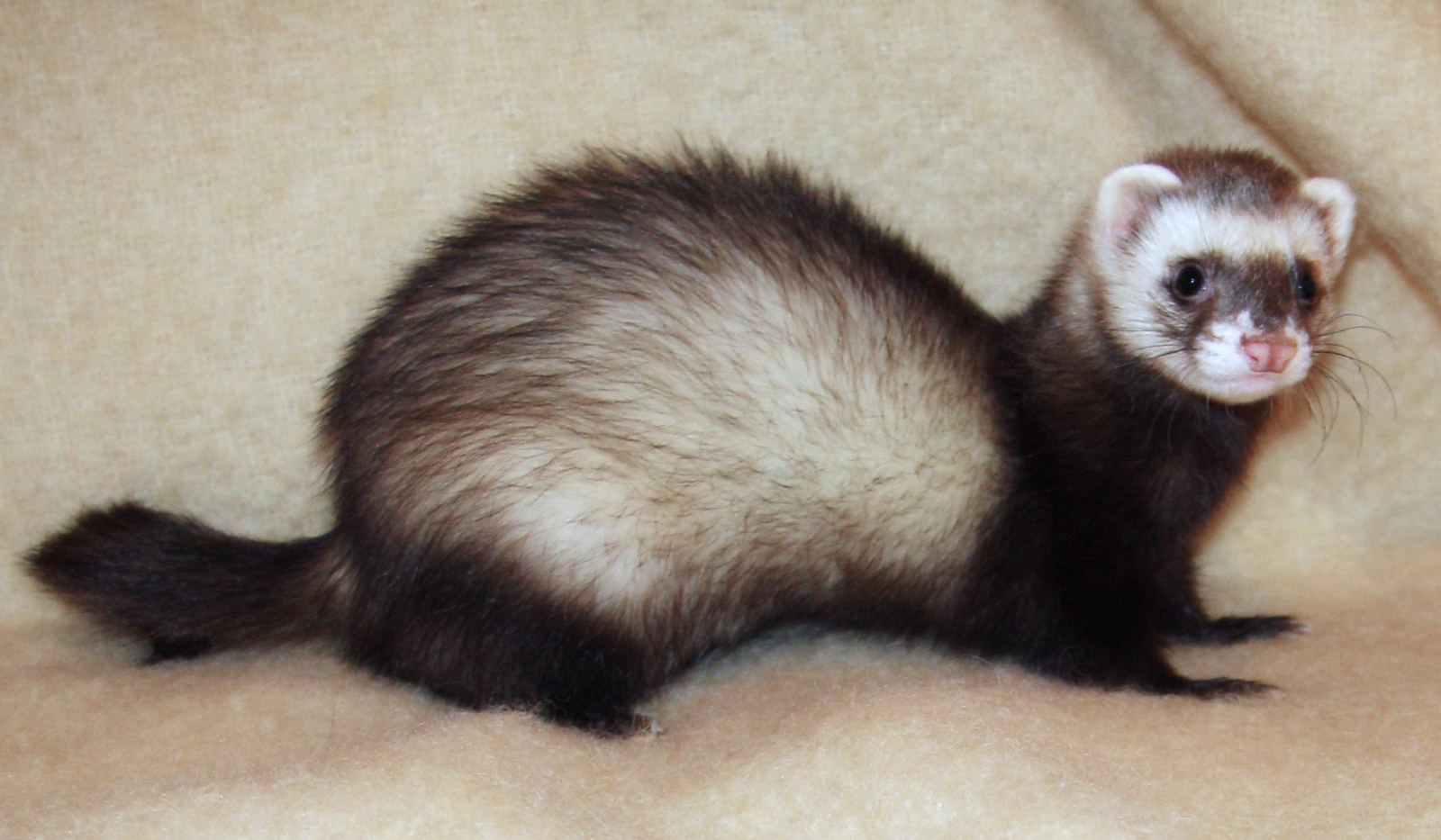
Mustela furo
A curious carnivore whose joyful mischief needs thoughtful boundaries.
Deep Dive
History
The domestic ferret is a mustelid, a relative of polecats, weasels, and otters rather than a rodent. This profile uses Mustela furo; Mustela putorius furo is another scientific name frequently encountered in veterinary writing. That naming difference does not turn a pet ferret into a wild polecat or the separate black-footed ferret. Domestic ferrets have a long association with people, including work locating rabbits in burrows. Their elongated bodies, persistent investigation, and strong interest in enclosed spaces make sense against that background. In a modern home, those same qualities demand protected furniture, secure doors, and tunnels that provide safe alternatives to disappearing inside appliances.
Domestication has not removed the ferret's need for a meat-based diet or made it safe with small prey animals. Nor does a history of working alongside humans mean that an individual will automatically enjoy restraint. Rescue organizations can help match prospective keepers with compatible ferrets whose behavior and medical history are better understood. Ask about previous companions, reproductive status, diet, and veterinary records instead of selecting solely for a striking mask or unusual coat. Published captive lifespan estimates differ: RSPCA Australia describes an average of five to seven years, while MSD gives six to ten. This guide uses the more conservative average without presenting older survivors as typical. Both estimates represent a substantial care commitment. Before adoption, check current local ownership, housing, and movement rules with the relevant authority; legal requirements cannot be established from a seller's assurances.
Personality
A comfortable ferret may investigate your shoes, carry a favorite object into a hide, then bounce sideways in an exuberant invitation to play. These lively episodes alternate with substantial periods of sleep. Judge behavior against the individual's usual pattern rather than expecting constant entertainment. Many ferrets learn familiar voices and routines, but trust develops through predictable handling and opportunities to withdraw. Mouthy play needs calm redirection toward a suitable toy, not nose tapping or punishment. A sudden change in biting, tolerance of touch, appetite, or activity can indicate discomfort and deserves a health check rather than a tougher training method.
Ferrets are social animals and generally benefit from compatible ferret companions. A bonded pair from an experienced rescue can simplify the search for a suitable relationship, although introductions still require planning when animals have not lived together. Provide enough space, hiding choices, and separate access to resources so that one animal cannot corner another. Social enthusiasm toward ferrets is not evidence of safety around rabbits, guinea pigs, birds, or rodents. These animals need physical separation, not supervised experiments. Interactions with children also require adult control because a quick movement can frighten a ferret and a bite can injure a child. The trait scores below are editorial tendencies, not measured behavioral tests or guarantees about a pet. An older, quiet ferret may enjoy gentle companionship more than boisterous games, while a youngster may need frequent changes of safe activity.
Appearance
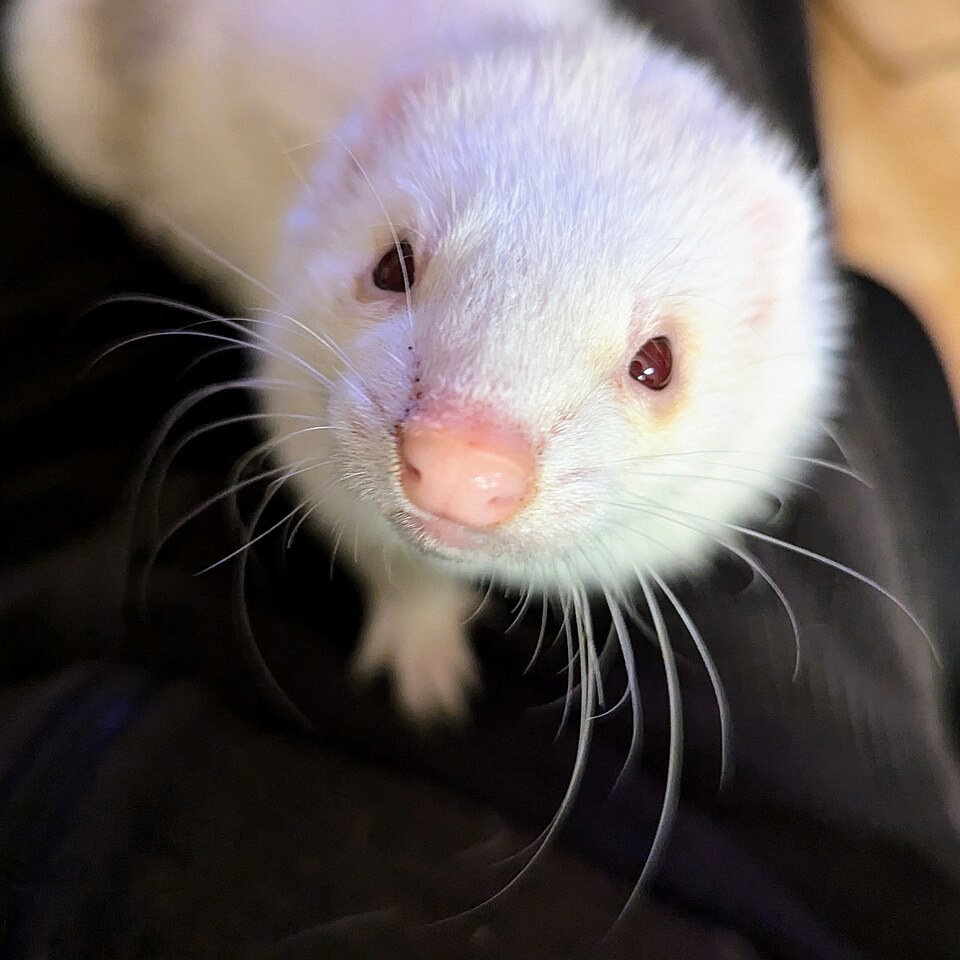
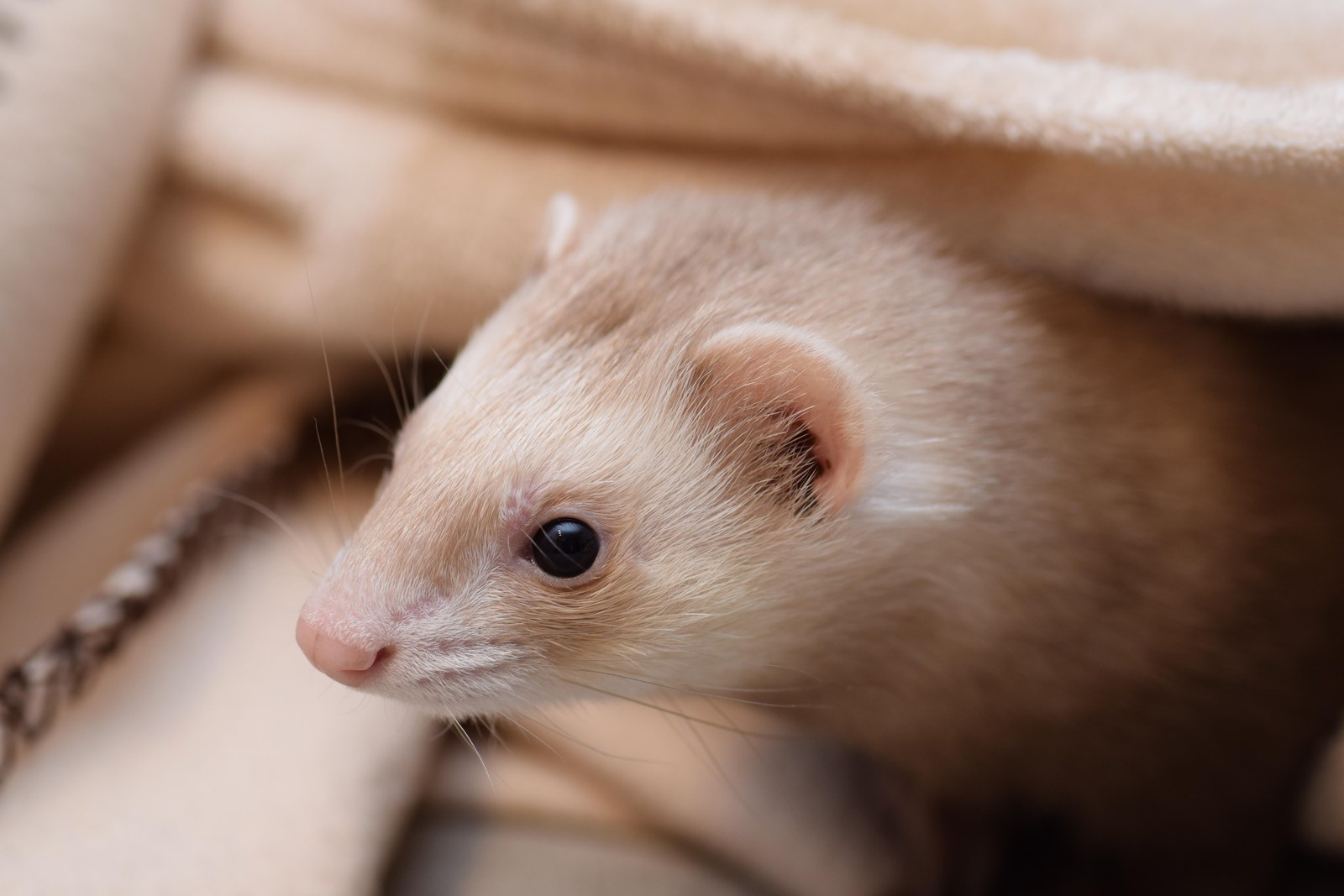
Ferrets have long, supple bodies, short legs, rounded ears, and a pointed, whiskered face. Their coat patterns range from familiar dark masks to much paler appearances. Color alone does not identify temperament, health, or suitability for a particular home. The weight statistic is a reference for neutered adults, not an ideal weight prescription: a veterinary review describes females around 500-900 grams and males around 800-1,400 grams. Intact animals may be larger, and individual build matters. Use a consistent scale and veterinary body-condition assessment rather than comparing your pet with the largest ferret pictured online. A falling weight trend can be important even when the number remains inside a published range.
Seasonal coat turnover can change a ferret's outline and leave loose hairs on bedding. Gentle brushing and regular laundering help, but progressive bald patches, inflamed skin, or persistent scratching should not be dismissed as ordinary shedding. Adrenal disease is one possible explanation for hair loss, especially when reproductive signs also change, yet appearance cannot establish that diagnosis. A healthy-looking coat likewise cannot rule out internal illness. Watch movement, breathing, appetite, and droppings alongside the fur. Check that nails do not snag on sleeping fabrics and replace bedding with exposed threads. The characteristic musky scent is part of ferret biology, not a reason to repeatedly shampoo or perfume the animal. Clean surroundings and attention to new odors are more useful than trying to make a ferret smell like a different species.
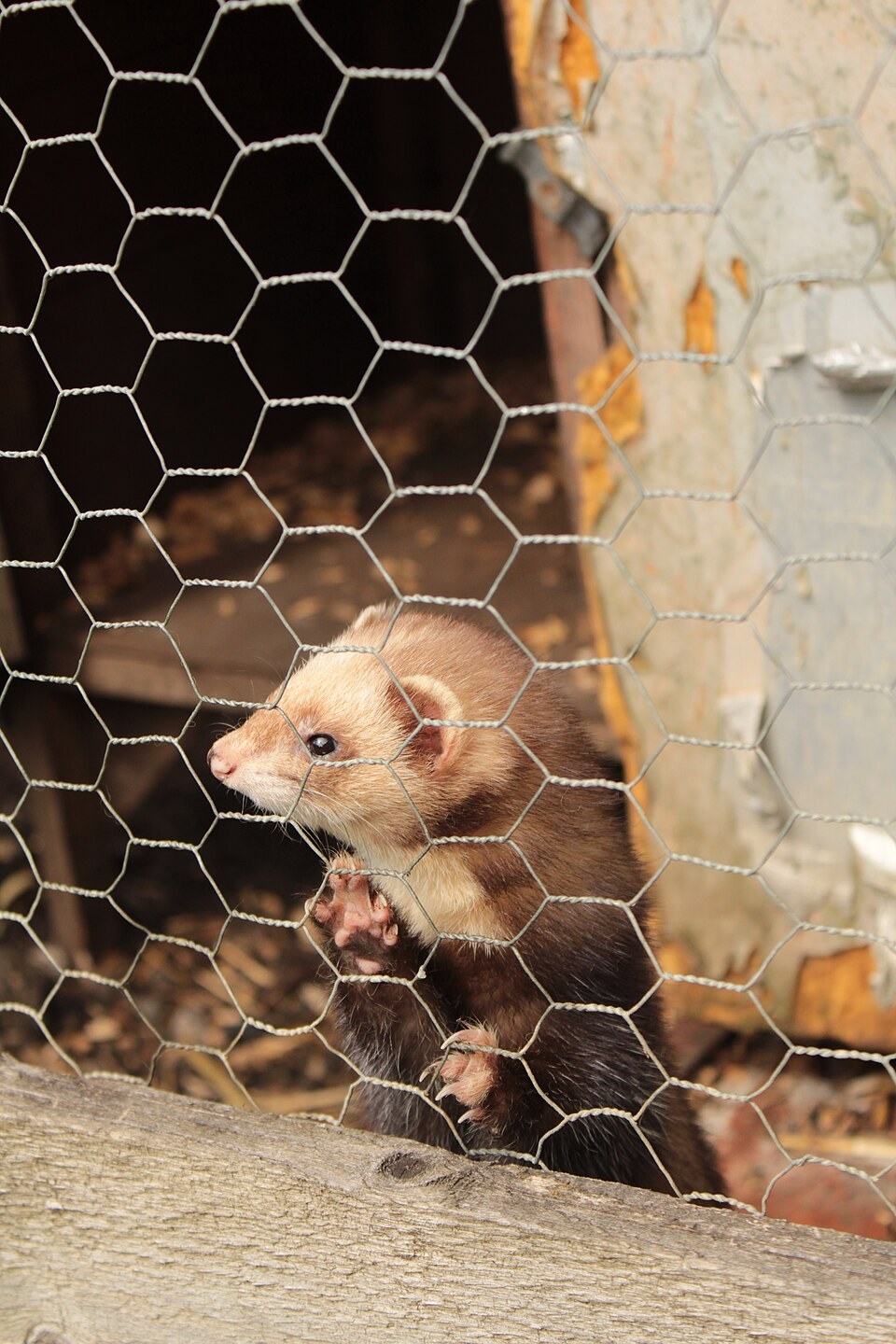
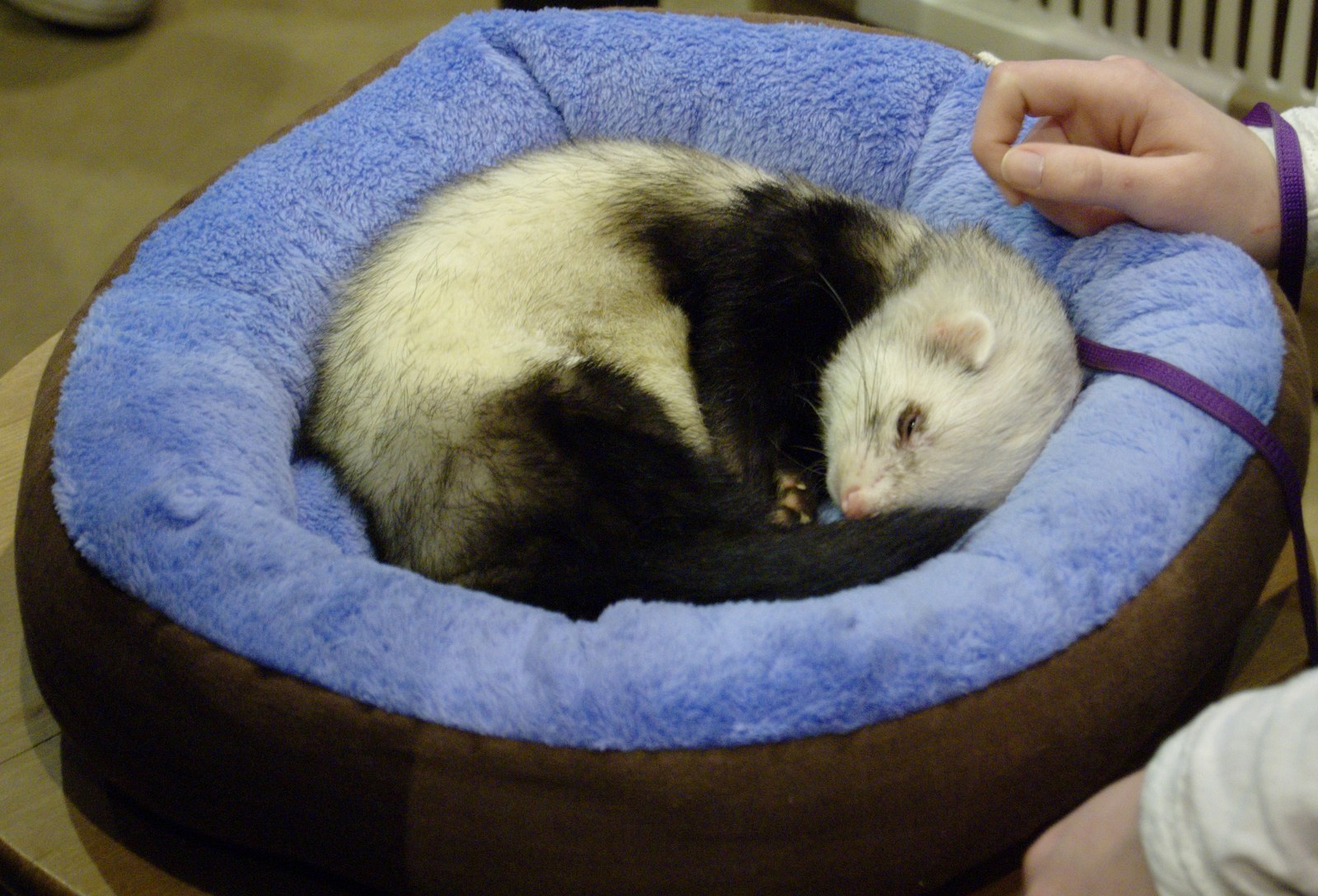
Photo credits: Alfredo Gutiérrez (CC BY-SA 4.0), Electo84 (CC0), Aurélien Mora (CC BY-SA 4.0), Joybot (CC BY-SA 2.0), KoS (CC BY-SA 3.0). Images resized and compressed for web display. Each image retains its linked license. This photograph illustrates the animal, not a recommended wire design or enclosure specification. Agricultural-show photograph cropped by the source uploader from KoS's original. A handler's hand remains visible at the edge.
Living With
Living with ferrets starts with a home that can be made secure at floor level. Their sleeping enclosure should be as spacious as practical, with solid comfortable areas, protected retreats, and separate feeding and toilet zones. It does not replace daily supervised exploration in a thoroughly checked room. Block access beneath appliances, inside reclining furniture, and through damaged screens. Keep rubber, foam, cables, medicines, and cleaning products inaccessible. RSPCA recommends housing ambient air around 15-21°C, approximately 59-70°F; this is an environmental comfort range, not a body-temperature target. Monitor the room during warm weather and arrange reliable cooling before a heat emergency occurs.
A daily routine includes checking each ferret, maintaining suitable food and fresh water, cleaning litter areas, and making time for play and companionship. Ferrets are obligate carnivores, so a rabbit or guinea pig menu is inappropriate. Veterinary planning is equally central: identify an experienced clinic, discuss region-appropriate vaccinations, and establish reproductive management before an intact female enters prolonged estrus. Persistent estrus can cause life-threatening anemia and is not something to solve through home medication or casual breeding. Set aside funds for emergencies such as suspected swallowed objects or sudden weakness. A holiday sitter must understand escape checks and individual feeding, not merely refill a shared bowl. Related pets listed on this page are browsing comparisons, never recommendations for mixed housing. Their very different social, dietary, and temperature needs are reasons to compare carefully before choosing a pet.
At a Glance
Ownership Guide
Provide daily supervised exploration in a ferret-proof room, with robust tunnels and safe hiding opportunities. A sleeping cage cannot replace activity; block furniture mechanisms, appliance gaps, and access to rubber or foam.
Offer a complete, appropriate meat-based ferret diet and constant fresh water, allowing frequent small meals. Avoid sugary treats and high-fiber small-pet foods; discuss portions and any medical feeding plan with your veterinarian.
Brush loose coat gently, inspect nails and bedding for snagging hazards, and keep litter and sleeping areas clean. Bathe only when needed with a suitable product, and have unexplained hair loss, scratching, or new odors assessed.
Reward brief, voluntary steps toward litter trays, carriers, and a recall cue using suitable rewards from the daily food allowance. Redirect mouthy play without hitting, chasing, scruff punishment, or withholding meals.
Plan for compatible ferret company with gradual introductions and professional help when needed. Support gentle human interactions while keeping rabbits, rodents, birds, and other prey animals physically separate.
Arrange routine exotic-pet examinations and individualized vaccination and reproductive advice. Suspected obstruction, weakness, collapse, breathing difficulty, or an intact female remaining in heat require prompt veterinary attention, not home medicines.
Wellness
Rubber, foam, and other chewed materials can obstruct the digestive tract. Vomiting, poor appetite, abdominal discomfort, or reduced droppings warrant urgent assessment; absence of vomiting does not exclude a blockage.
Drooling, staring, hindlimb weakness, or collapse can accompany dangerously low blood sugar, including insulinoma. Contact an emergency veterinarian immediately and never force food or liquid into an impaired animal's mouth.
Progressive hair loss, itching, or reproductive changes can be associated with adrenal disease but require diagnosis. Difficulty urinating is an emergency, especially in a male, and must not await a routine coat appointment.
An intact female can develop life-threatening estrogen-associated anemia if estrus persists. Arrange a veterinarian-led reproductive plan early and seek prompt care for ongoing heat, pale gums, bleeding, or weakness.
Ferrets need cool housing; RSPCA recommends ambient air around 15-21°C. Abnormal breathing, weakness, or collapse in warm surroundings requires immediate veterinary contact and movement to a cooler environment without ice immersion.
Vaccination and preventive care should be tailored by a ferret-experienced veterinarian to local requirements and available products. Appetite changes, drooling, discharge, or breathing problems deserve examination rather than leftover antibiotics or human remedies.
Regular weight records and daily checks of each ferret make subtle changes easier to notice. Good husbandry supports wellbeing but cannot prevent every endocrine disorder, infection, or tumor.
Further Reading
Plan ferret care around safe housing, cool rooms, meat-based meals, compatible company, and daily play, with practical checks for a healthier life at home.
Read articleLearn how to choose ferret food, manage frequent meals, avoid unsuitable treats, change diets gradually, and spot appetite changes that need veterinary help.
Read articleRecognize ferret health warning signs, from swallowed objects and low blood sugar to coat changes and prolonged heat, and know when veterinary care is urgent.
Read articleBuild trust with your ferret through gentle handling, litter habits, recall practice, and safer play while recognizing stress, pain, and companion conflicts.
Read articleKeep ferret grooming gentle with practical coat, nail, ear, and bedding care. Learn why frequent baths are unhelpful and which skin changes need a vet visit.
Read articleExplore daily life with ferrets, including escape checks, family routines, other pets, travel plans, and the long-term costs of caring for curious companions.
Read articleYou May Also Like