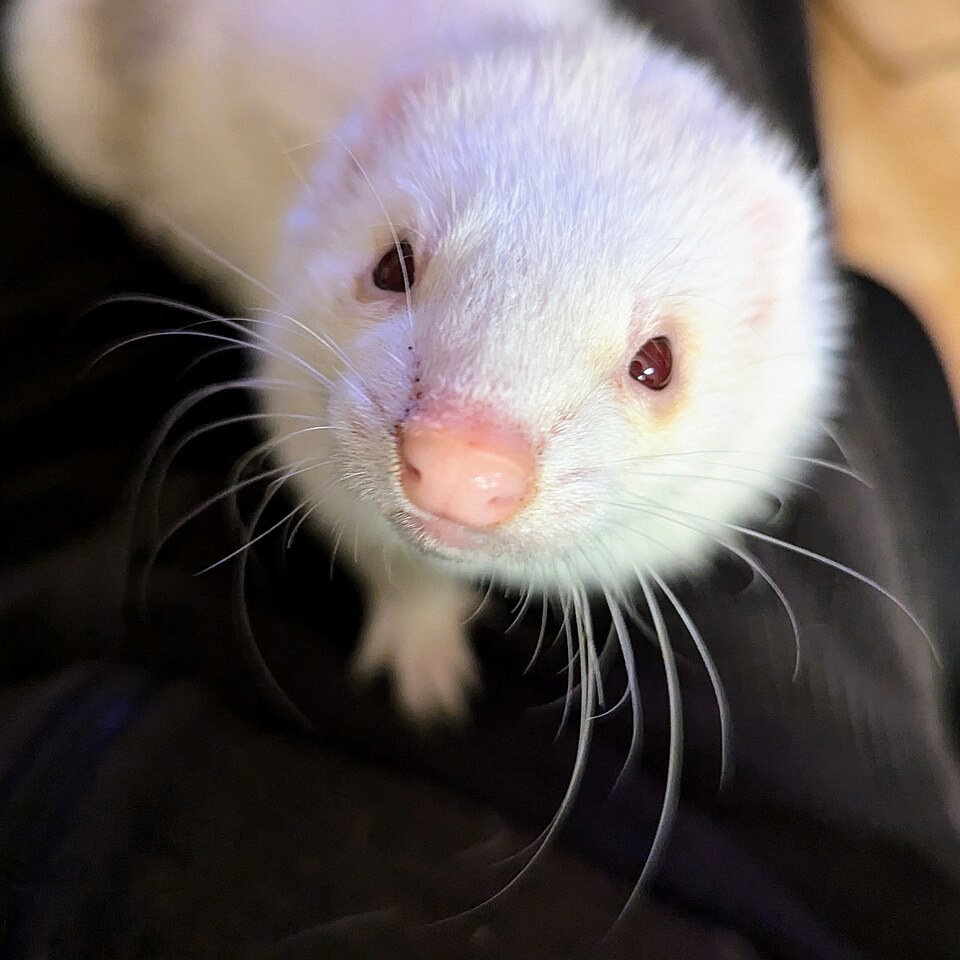
Ferret nutrition is not a miniature version of feeding a dog, rabbit, or human. Ferrets are obligate carnivores with a short digestive tract, and their meals must provide concentrated, appropriate animal-based nutrition. The challenge is not simply finding a bag with a ferret picture. You need a balanced staple, reliable access, sensible rewards, and a way to notice when one animal is eating less than usual.
Understand the carnivore behind the appetite
A ferret cannot make good use of large quantities of fiber or complex carbohydrates. Hay, seed mixtures, vegetable-heavy bowls, and cereal treats therefore do not become suitable merely because they are sold in the small-pet aisle. Their digestive needs are fundamentally different from those of guinea pigs and rabbits. Meat-based does not mean nutritionally complete, however: a bowl of chicken pieces alone is not a balanced lifelong menu.
Choose a complete food appropriate for ferrets and the animal's life stage, checking the nutritional adequacy statement rather than only the front label. Ask your veterinarian to review an unfamiliar product or a proposed alternative. Ingredient lists provide useful information but cannot establish digestibility or nutrient balance by themselves. Avoid choosing solely by a large protein number or a marketing phrase such as natural. A consistent, suitable formulation matters more than novelty, colorful packaging, or an unsupported promise to prevent disease.
Organize frequent meals and individual monitoring
Healthy ferrets usually eat little and often. RSPCA recommends keeping suitable food available, rather than restricting them to a long interval between two household mealtimes. Use clean, stable dishes and place food where each animal can reach it. Where companions eat together, check that a more assertive ferret is not quietly excluding another. Access is only useful if the animal is actually able and willing to eat.
Measure what you offer so changes can be recognized, while remembering that hidden food complicates the calculation. Record weight regularly on the same scale and ask the veterinarian to interpret body condition. Sex, reproductive status, season, and individual build affect size; a published weight range is not a dieting target. Do not impose fasting or abrupt calorie cuts on an overweight ferret. A clinician can adjust energy intake while maintaining safe meal access, and animals with endocrine or other illnesses may need a more individualized routine.
Choose rewards that fit the main diet
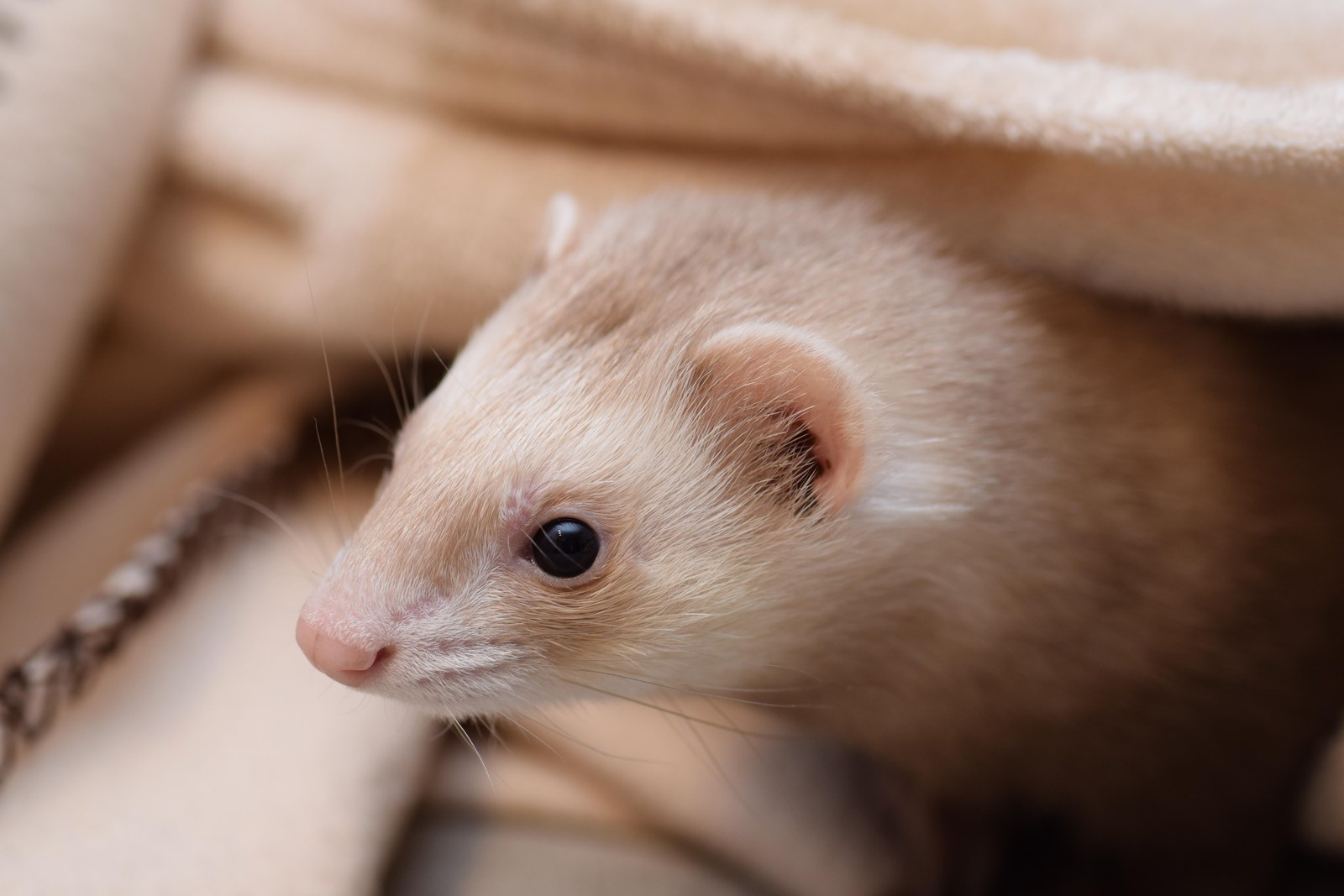
Training rewards should be small enough that repeated practice does not displace a balanced staple. Pieces of the normal food can work well. If using a separate treat, choose a suitable meat-based product or a tiny amount of cooked, unseasoned meat, and account for it in the day's intake. Boneless meat avoids sharp fragments; cooking and careful handling also reduce foodborne risks compared with casually offered raw scraps.
Keep the reward menu simple:
- Avoid sweets, sweetened pastes, biscuits, and sugary fruit snacks.
- Do not offer chocolate, alcohol, caffeine, or seasoned leftovers.
- Skip milk and dairy treats that can upset digestion.
- Avoid bones or chews that can break teeth or be swallowed.
- Ask before using supplements or products marketed for another species.
Change foods without turning meals into a standoff
Ferrets can become strongly attached to familiar foods. Before adoption, obtain the exact food name and enough of the existing diet to bridge the move. Moving home and changing every meal simultaneously makes it harder to identify why appetite has fallen. Once the animal is settled, discuss any needed transition with your veterinarian and introduce changes gradually while keeping close track of actual consumption.
Mixing a little new food with the familiar staple may help, but a ferret can select around it. Look at what remains rather than assuming that an apparently empty dish proves acceptance. Never try to win a food battle by withholding the old food until hunger forces compliance. If intake declines, seek advice instead of continuing the transition blindly. Likewise, do not switch a sick ferret repeatedly between internet remedies; dental pain, obstruction, nausea, and low blood sugar can all make a feeding problem look like ordinary fussiness.
Keep water, storage, and feeding areas clean
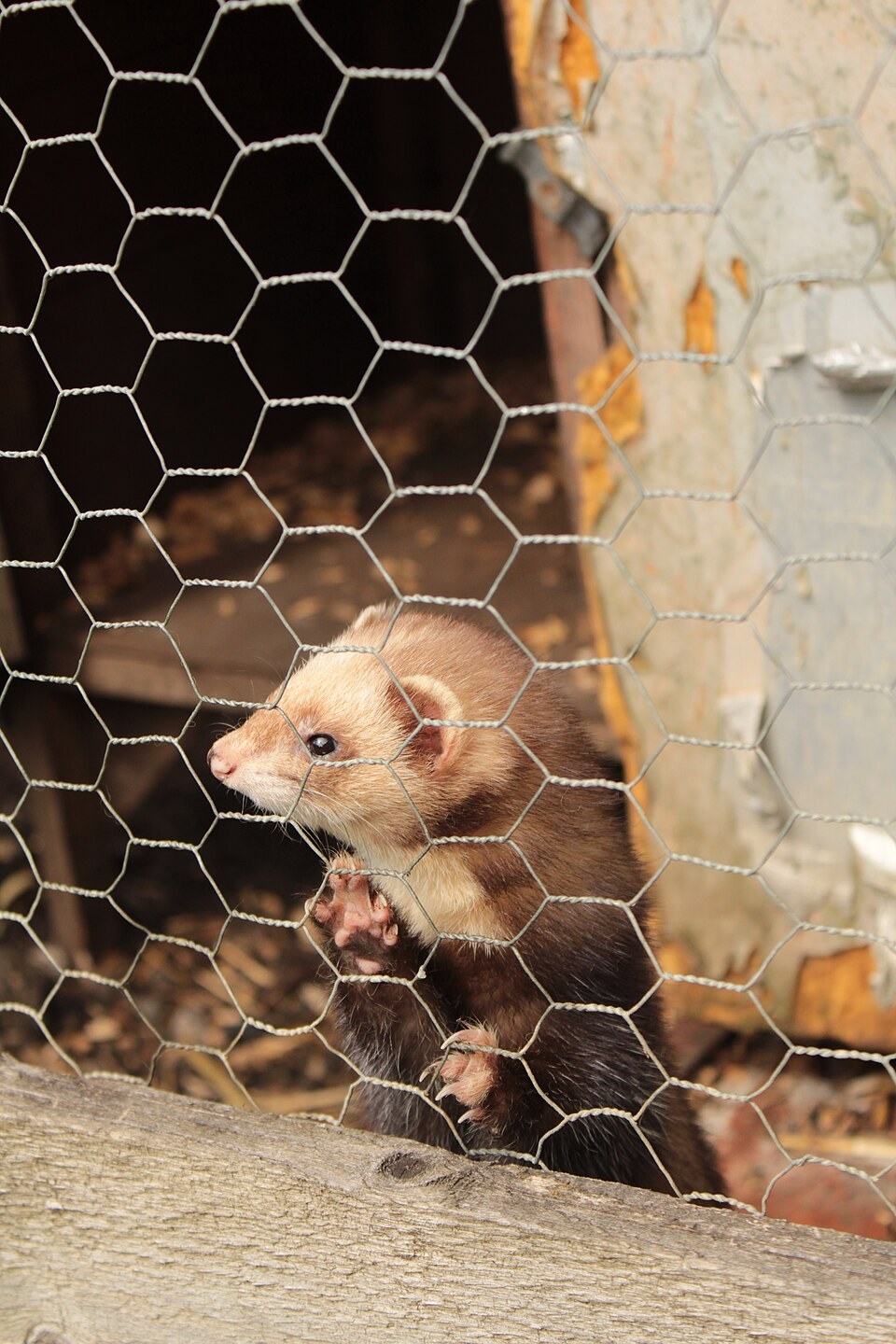
Provide fresh water continuously. A heavy shallow bowl can be convenient, but it must remain clean and upright; a bottle must be checked for a blocked or leaking spout. During a change of drinking equipment, confirm that the ferret understands the new system. Water in the room is not equivalent to water reaching the animal. Sudden changes in drinking deserve a note for the veterinary record.
Store dry food according to its label in a clean, dry place and keep the original packaging or batch details. Wash bowls regularly and remove uneaten moist food promptly. Ferrets may stash snacks inside tunnels or sleeping fabric, so inspect those areas after feeding and play. Raw diets require particularly careful nutritional formulation and hygiene and are not made safe or balanced simply by resembling prey. If considering one, consult a veterinarian with nutrition expertise rather than assembling an untested recipe from meat, organs, and supplements.
Know when appetite changes become urgent
A ferret that approaches food but drops it may have mouth pain; one that ignores meals and becomes quiet may have a broader illness. Vomiting, reduced droppings, a painful abdomen, or a missing piece of rubber raises concern about obstruction. Drooling, a blank stare, weakness, or collapse can accompany hypoglycemia, including insulinoma. These signs need veterinary assessment, not a stronger appetite stimulant purchased online.
Take the food packaging, recent weight notes, and a description of possible chewed objects to the appointment. Keep following any existing medical feeding plan unless the clinician changes it. Good nutrition supports health, but no bag of food can diagnose or reliably prevent every endocrine disease. Your most useful feeding skill is noticing a change early and responding appropriately.
Continue reading: Ferret Health Problems: Recognize Changes and Act Early.
Sources and further reading:
- RSPCA: A suitable environment for ferrets
- RSPCA: A healthy diet for ferrets
- RSPCA Australia: How should I care for my ferrets?
- Ferret care and husbandry: veterinary review
- MSD Veterinary Manual: Overview of ferrets
Photo credits: Electo84 (CC0), Aurélien Mora (CC BY-SA 4.0), Joybot (CC BY-SA 2.0). Images resized and compressed for web display. Each image retains its linked license. This photograph illustrates the animal, not a recommended wire design or enclosure specification.


