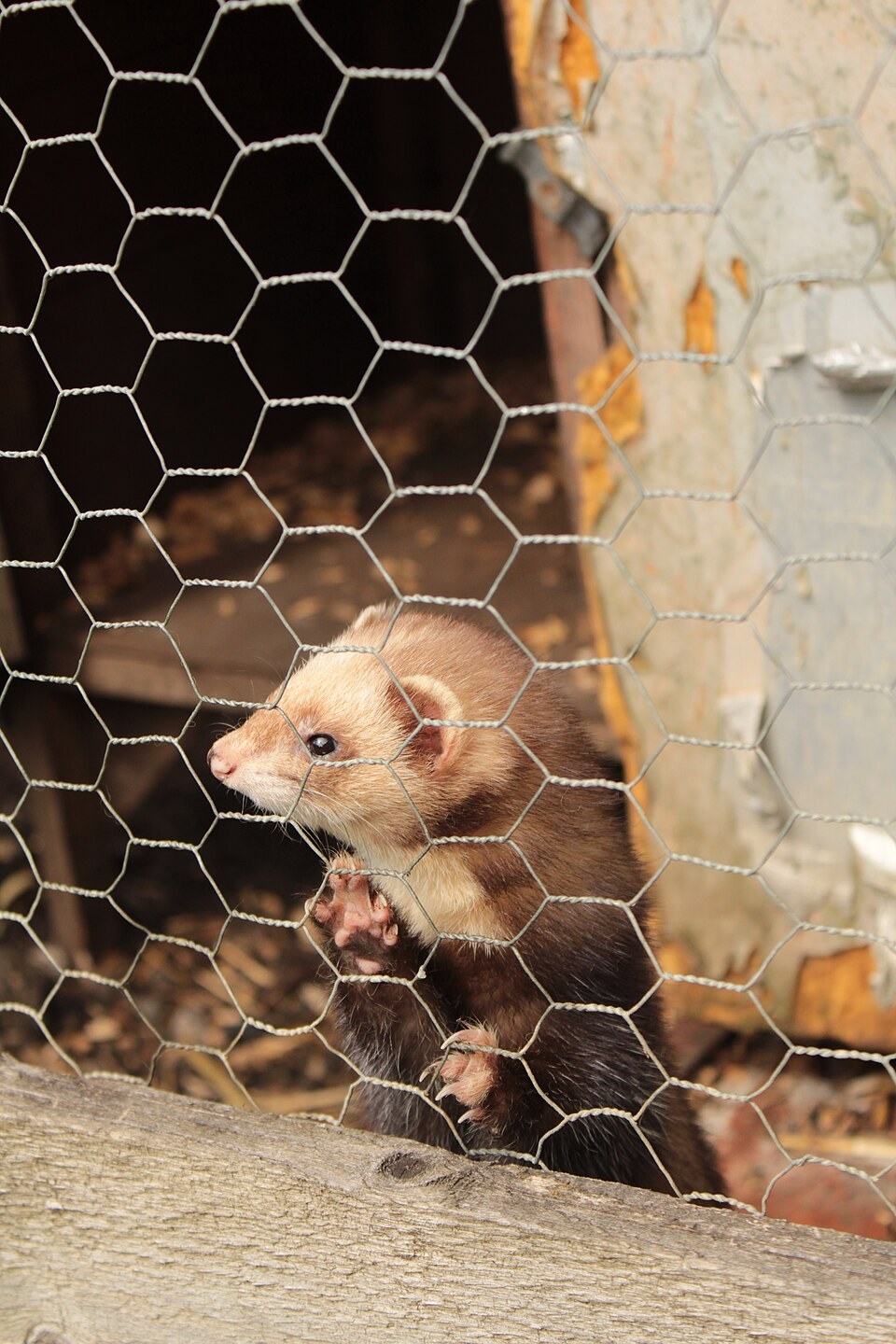
Ferret training works best when it makes ordinary life easier: returning to you, entering a carrier, using a nearby litter tray, and accepting brief checks. It is not about suppressing curiosity. A ferret that investigates everything is doing what ferrets do. Your role is to provide safe outlets and reward useful choices while recognizing when fear, discomfort, or overstimulation is making learning impossible.
Read the whole interaction before responding
A loose, bouncing ferret may leap sideways, tumble, or make soft excited sounds during play. Another may prefer quiet sniffing and short invitations. Watch posture, context, and whether the animal voluntarily returns after a pause. A single noise does not tell the whole story. Retreating repeatedly, freezing, defensive biting, or frantic escape attempts means the interaction needs to change, not intensify.
Distinguish a familiar play pattern from a new loss of coordination. Stumbling, staring, drooling, weakness, or unusual lethargy can indicate illness, including low blood sugar, and must not be dismissed as a funny dance. Sudden aggression when touched can also reflect pain. Note the circumstances and contact your veterinarian when behavior changes without an obvious explanation. Behavior is health information, not simply a report card on training. The most useful first response is often observation rather than a command.
Teach comfortable handling in small steps
Begin during a calm waking period in a secure, floor-level space. Let the ferret investigate your hands, then briefly touch the shoulders or side and reward relaxed acceptance. Progress to lifting only when touch is comfortable. Support the chest and hindquarters together, keep the body close to you, and lower the animal before it begins struggling. Avoid gripping the tail or lifting by the scruff as a routine household method.
Practice for short periods rather than holding a restless animal until it gives up. A towel may provide support for some checks, but it should not become a device for forcing unnecessary restraint. Ask the veterinary team to demonstrate handling for medication or examinations if needed. Children should interact while seated with an adult controlling the session. If a child is frightened or the ferret becomes mouthy, end calmly; neither participant benefits from proving that they can tolerate a difficult encounter.
Redirect biting without creating fear
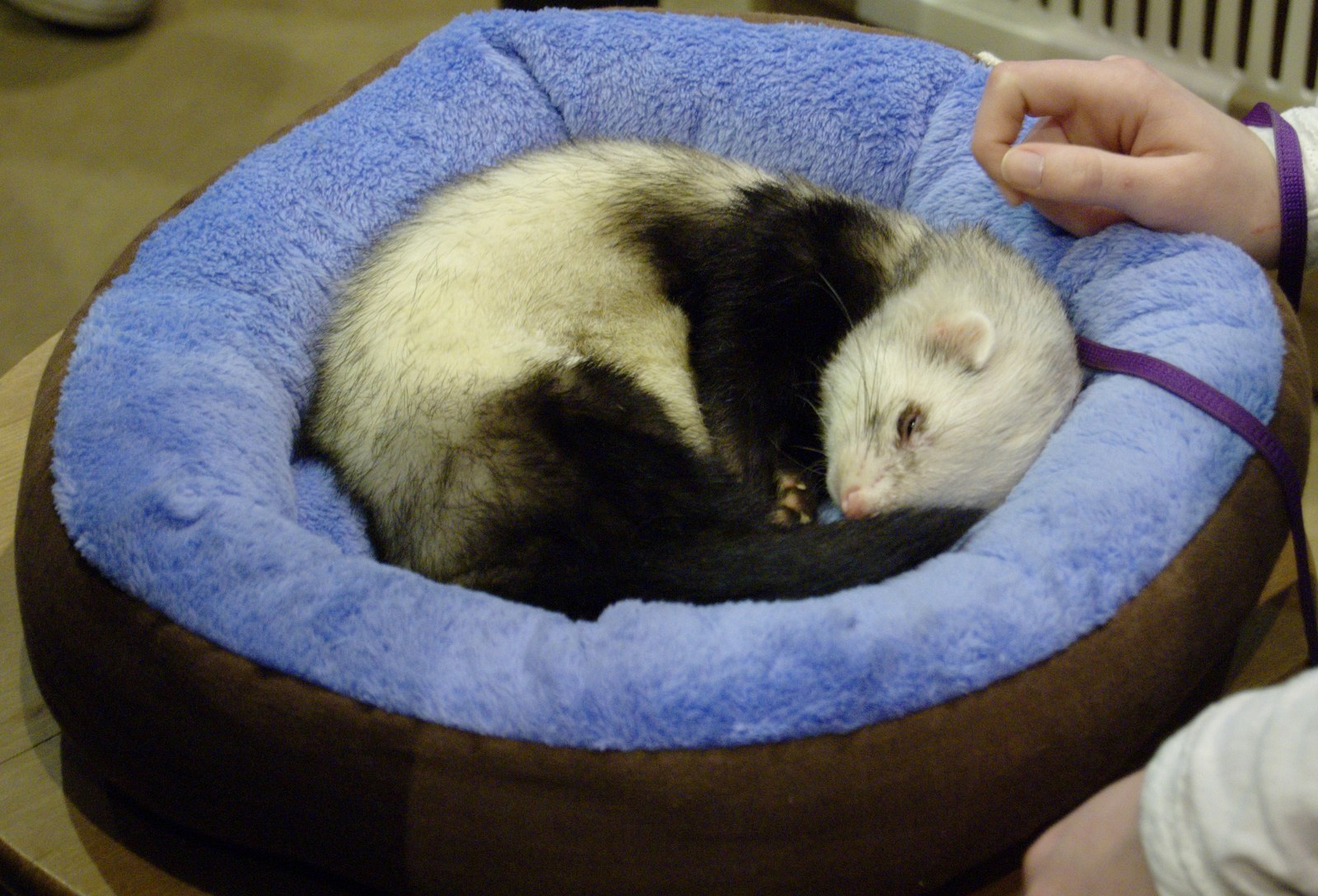
Young or excited ferrets may use their mouths in play, while frightened animals may bite defensively. The response should begin with prevention: avoid dangling fingers, rough wrestling, and suddenly grabbing a sleeping ferret. Offer a robust, appropriate toy that keeps teeth away from skin. If pressure becomes uncomfortable, pause the interaction and give the animal a chance to settle rather than escalating the game.
Do not hit, tap the nose, shout, or use scruff punishment. These methods can make hands predict threat and fail to explain the desired behavior. Reward gentle approaches and choose shorter sessions before excitement peaks. Where bites are persistent or severe, have pain assessed and seek help from an experienced rescue or behavior professional. A ferret that guards a hide or bites during a specific movement is providing a clue about context, not challenging your authority. Protect children and visitors with management while working out the cause.
Make litter habits easy to succeed at
Ferrets often select corners for toileting. Place a stable tray with an easy entrance near the chosen area and provide additional trays in the play space. A distant tray behind obstacles is less useful than one close to where the animal wakes or explores. Use a suitable low-dust, non-clumping litter and keep sleeping and feeding zones distinct. Reward use immediately with calm praise and a tiny appropriate food reward.
A practical routine is more helpful than expecting perfect control:
- Offer access to a tray after waking and before play.
- Watch for backing into a corner and guide without chasing.
- Reward successful use while the connection is clear.
- Clean accidents thoroughly with a pet-safe product.
- Add or reposition trays when accidents cluster in one location.
Practice recall and carrier entry without hunger
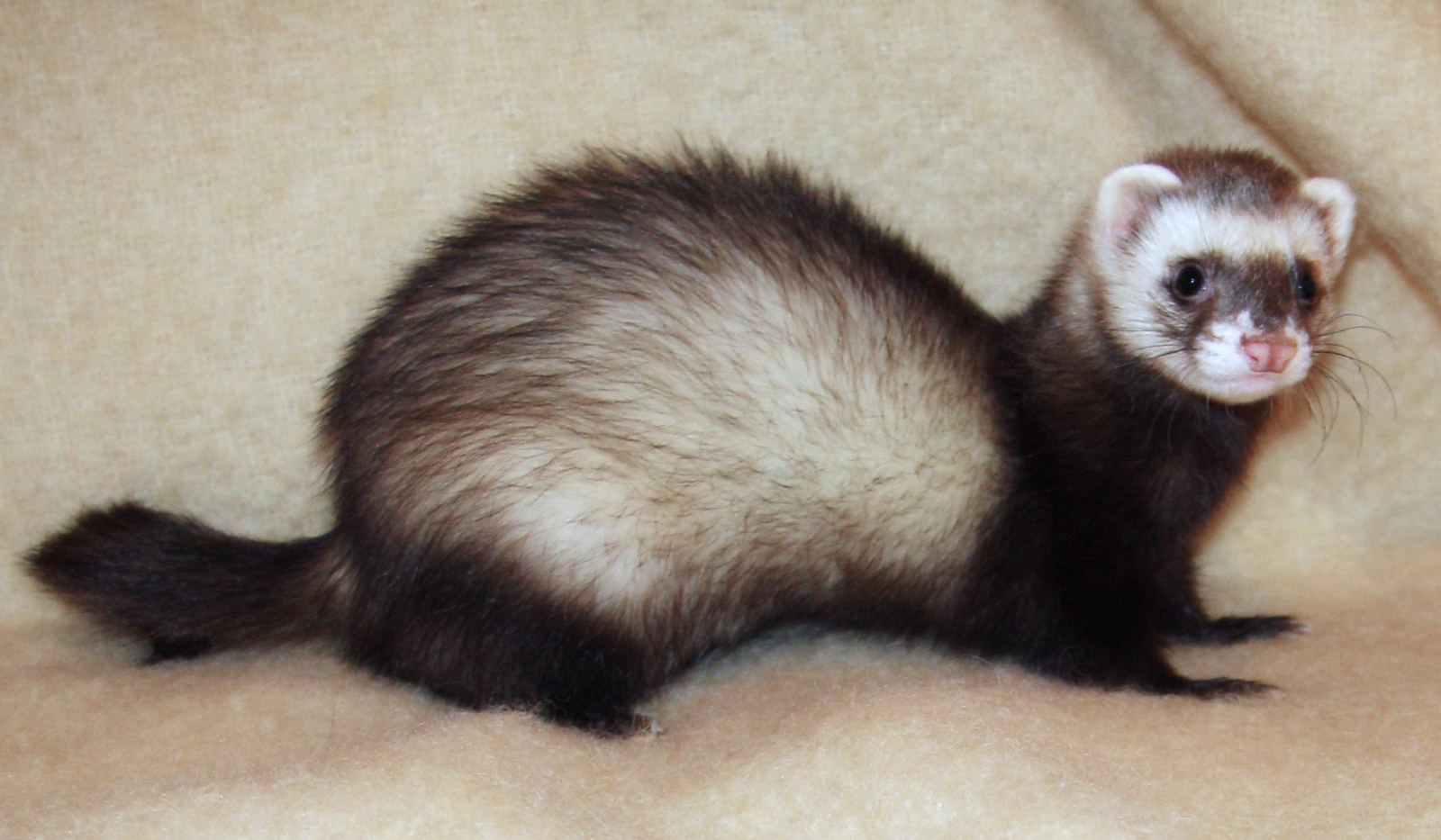
Choose a short cue and use it when the ferret is already close and likely to approach. Give the cue once, reward arrival, and repeat a few easy successes. Gradually add distance within a secure room. Use tiny rewards from the daily food allowance and never withhold meals to create motivation. A carnivore needing frequent meals should not be fasted for a training session.
Leave a secure carrier open in the play area with familiar bedding so entering it becomes ordinary. Reward looking inside, stepping in, and remaining briefly before introducing a momentary door closure. Build duration gradually and reopen while the animal is calm. Do not make every recall end play or every carrier visit lead to a frightening experience. Even a reliable response is not an outdoor safety system: distractions and escape routes can defeat learning, so physical containment remains essential.
Support ferret relationships without forcing friendship
Compatible ferret company supplies interaction that people cannot fully replace. If adopting unfamiliar animals, obtain guidance about health precautions and introductions before putting them together. Provide escape options, duplicate resources, and separate housing when needed. Brief mutual play looks different from relentless pursuit in which one animal repeatedly tries to get away. Injury, fear, or blocked access to food requires separation and reassessment.
In a multi-ferret home, train animals individually for some sessions so each has a clear chance to learn. Respect different ages and energy levels rather than expecting an older animal to match a youngster's games. Success is a household where ferrets can explore, rest, communicate, and cooperate with necessary care. Tricks are optional; safety, choice, and a trusting relationship are not.
Continue reading: Ferret Grooming: Coat, Claws, Teeth, and Sensible Hygiene.
Sources and further reading:
- RSPCA: A suitable environment for ferrets
- RSPCA: A healthy diet for ferrets
- RSPCA Australia: How should I care for my ferrets?
- Ferret care and husbandry: veterinary review
- MSD Veterinary Manual: Overview of ferrets
Photo credits: Joybot (CC BY-SA 2.0), KoS (CC BY-SA 3.0), Alfredo Gutiérrez (CC BY-SA 4.0). Images resized and compressed for web display. Each image retains its linked license. This photograph illustrates the animal, not a recommended wire design or enclosure specification. Agricultural-show photograph cropped by the source uploader from KoS's original. A handler's hand remains visible at the edge.


