Australian Shepherd Care: Build a Balanced Daily Routine
Build an Australian Shepherd care routine with varied activity, meaningful rest, home setup, coat checks, measured meals, and individualized veterinary care.
Read article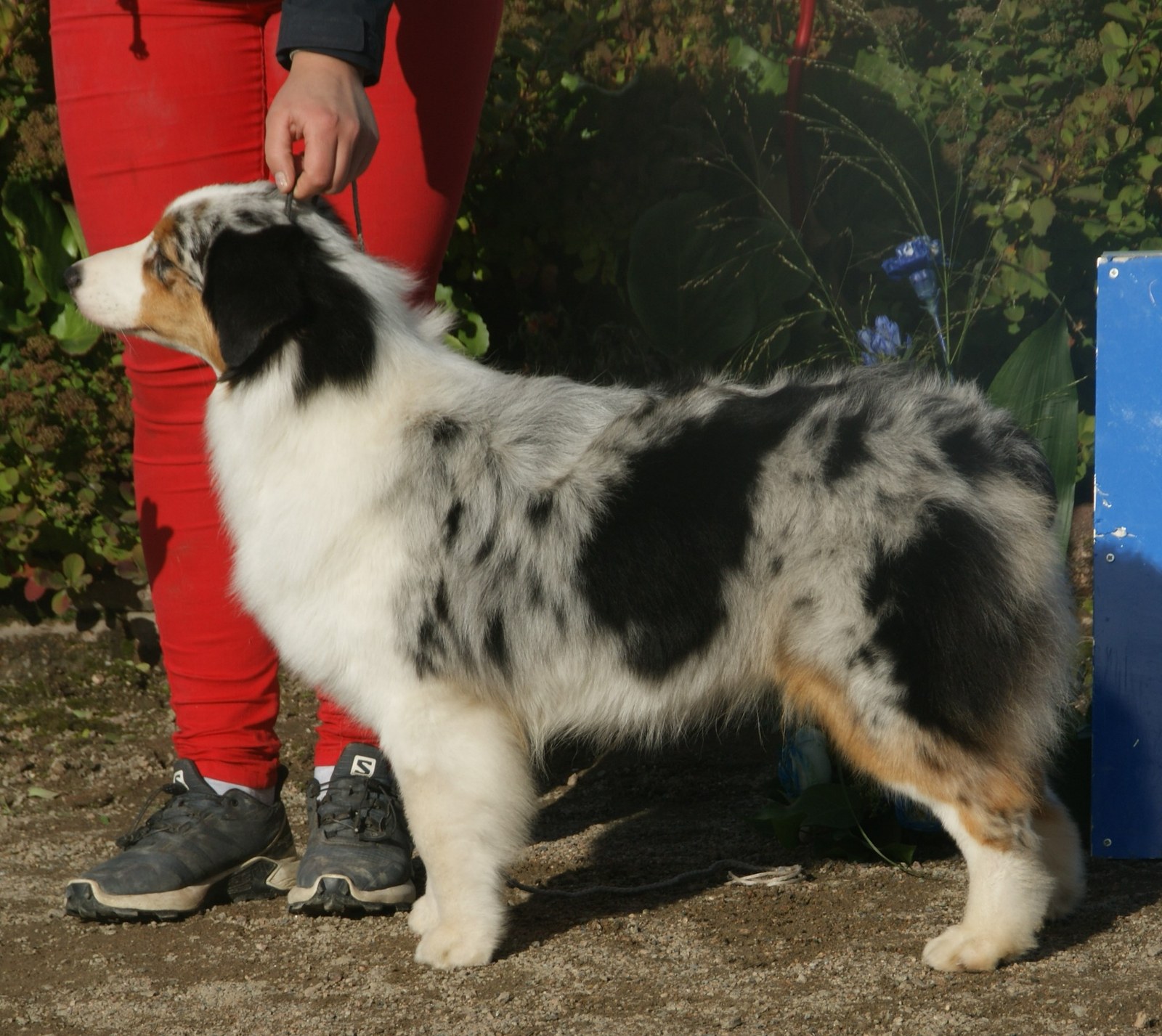
Canis lupus familiaris
An American-developed herding partner who needs useful work and permission to rest.
Deep Dive
The Australian Shepherd's name is a geographical trap: the breed was developed in the United States, where it became associated with ranch work and managing livestock. The name does not establish Australian breed development. Accounts of earlier herding-dog movements can be complicated, so this profile does not turn one migration story into a proven, complete ancestry. The important practical inheritance is a dog selected to notice movement, respond to a handler, and remain engaged in demanding work. Those qualities help explain both the breed's appeal and the challenges of fitting a working background into a companion household. A modern Aussie needs appropriate outlets, not livestock ownership as an entry requirement.
The United States Australian Shepherd Association's standard describes an intelligent, active dog that may be reserved on first meetings. It also sets preferred shoulder heights separately for males and females rather than defining a miniature version within this profile. The Miniature American Shepherd is a distinct breed, not the size category being described here; casual use of mini Aussie should not blur that distinction. Ask for accurate identity and individual records when considering a dog. Working ancestry does not guarantee easy training, suitability for every sport, or safety around children. Rescue assessment, health history, and observation of the individual are more useful than romantic claims that every Aussie is a tireless ranch hand. A family companion deserves rest and choice as well as meaningful activity.
An Australian Shepherd often seems to keep an informal attendance register: where the people are, what the other dog is doing, and whether something just moved outside. That attentiveness can support enjoyable teamwork, but it may also become chasing, barking, or difficulty switching off. Many Aussies learn patterns quickly, including patterns their owners never intended to teach. If barking reliably starts a ball game, the dog has learned something effective rather than plotted a challenge to authority. Reward the behavior you want, arrange the environment to prevent unsafe practice, and make calm periods a normal part of the day. More stimulation is not always the answer to a restless dog.
Some Aussies greet friends enthusiastically while taking longer to feel comfortable with unfamiliar people. Reserve does not require forced greetings, and friendliness toward the family does not establish safety with every visitor or animal. Give the dog space to observe and retreat, with rewards for relaxed engagement. Children running and shouting may trigger pursuit or heel-nipping, so adults need barriers and active supervision before trouble starts. The trait scores are editorial tendencies, not measured breed averages or promises about an individual. Age, pain, sleep, learning history, and environment all affect behavior. A quiet older dog may prefer a scent search to an energetic outing, while an adolescent may need much more help handling excitement. A sudden personality change belongs in a veterinary conversation, not a harsher training plan.
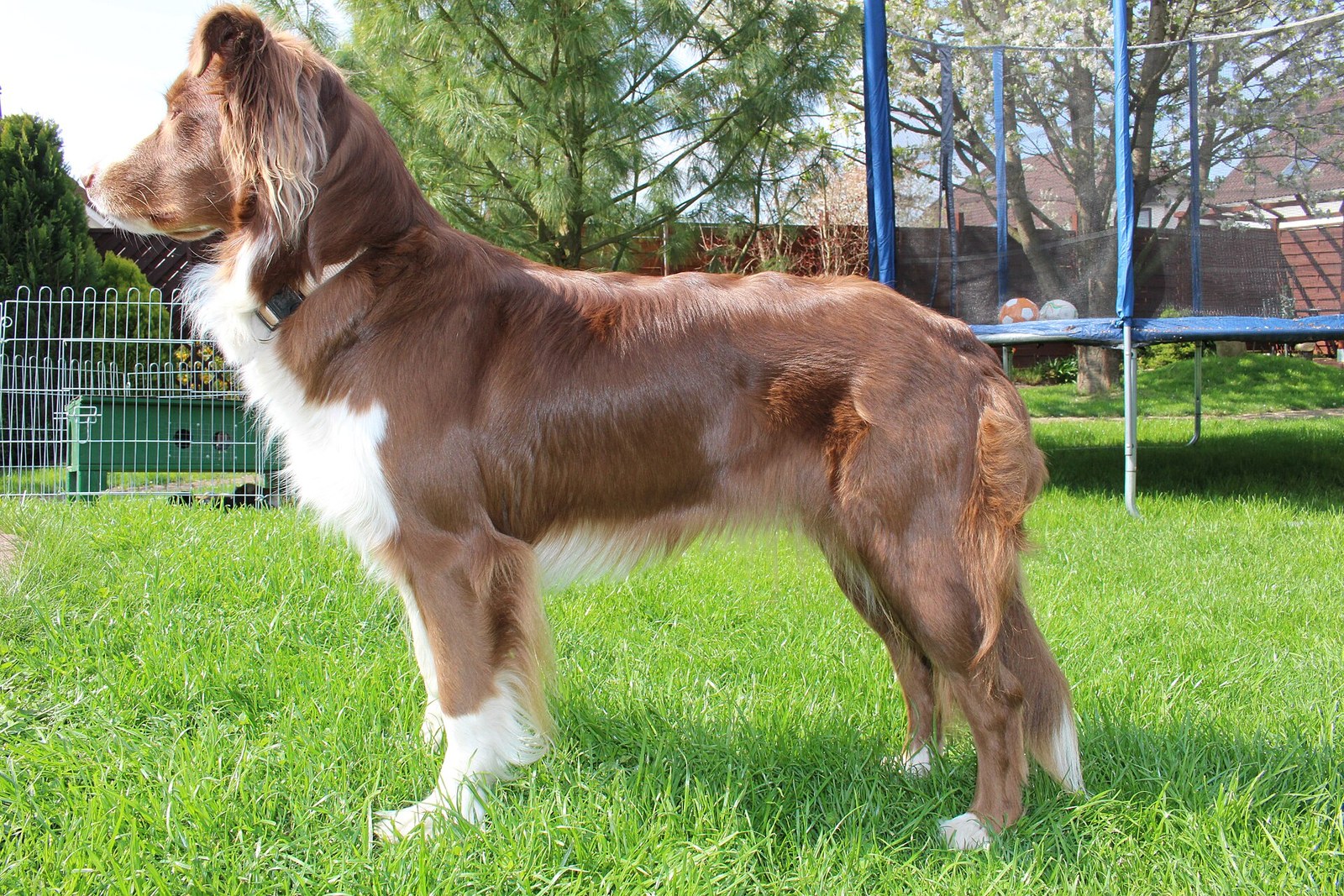
The Australian Shepherd is a medium-sized, athletic dog with a weather-resistant coat of medium length and texture. The breed standard prefers males at 20-23 inches at the shoulder and females at 18-21 inches; these are height preferences, not individual health thresholds. PetMD gives a pooled typical adult weight of 40-65 pounds, approximately 18-29 kilograms. That span covers varied builds and both sexes, and the breed standard itself does not set a weight requirement. A veterinarian should assess body condition and muscle rather than ask every dog to reach a particular number. A smaller healthy adult does not automatically need more food, and a heavier dog is not necessarily fitter.
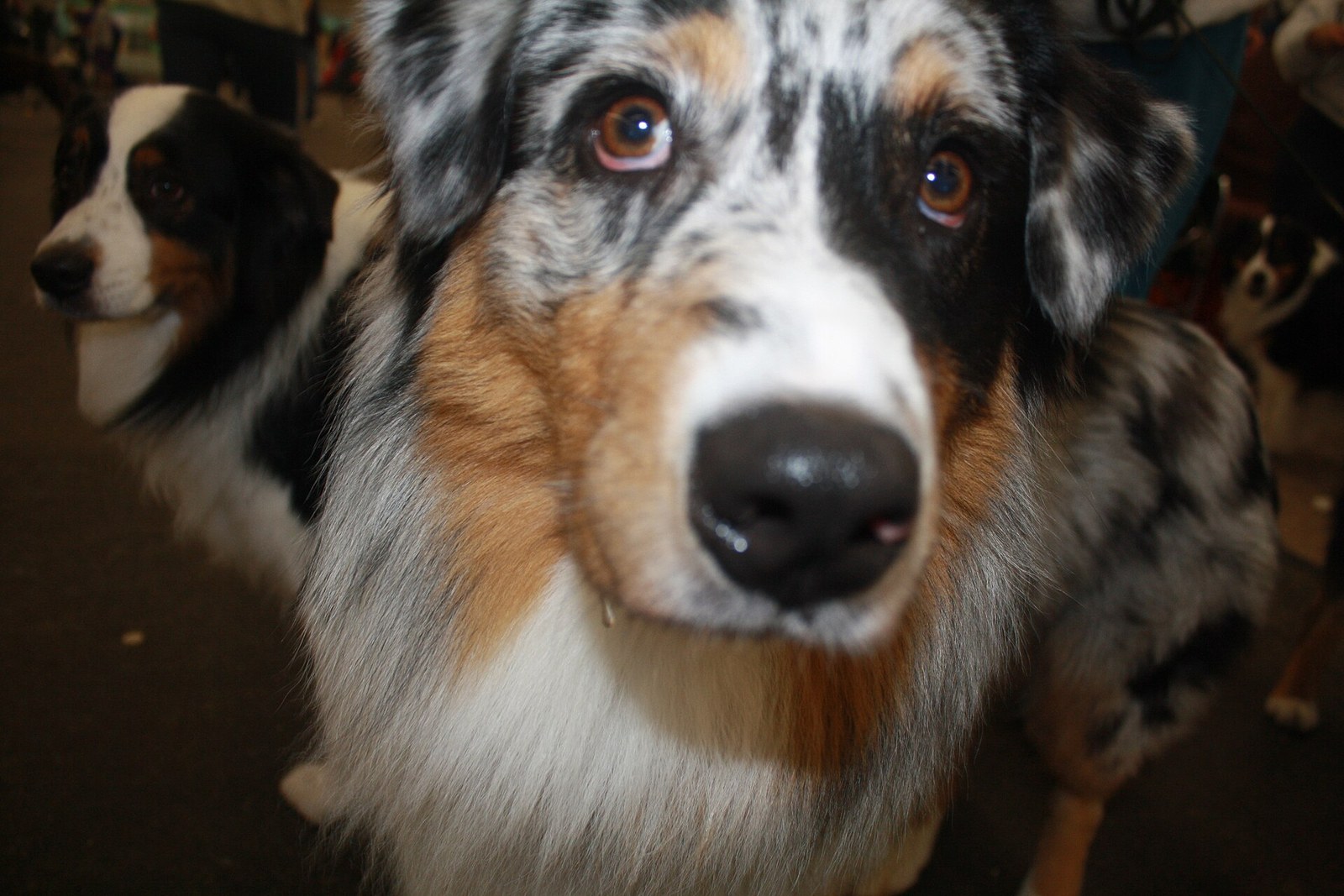
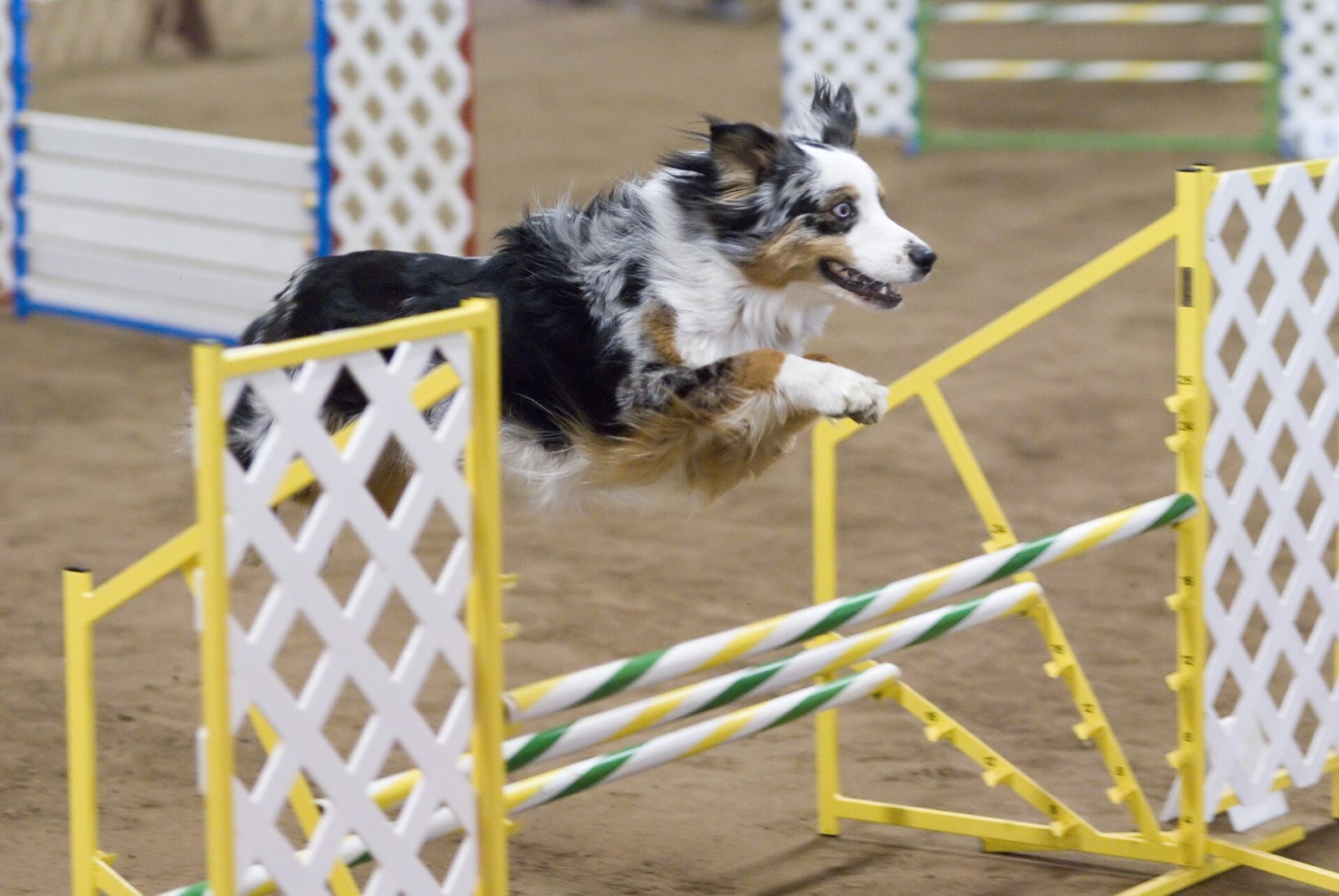
The standard recognizes black, red, blue merle, and red merle, with or without white markings and tan points. Coat appearance, eye color, and a striking photograph do not prove pedigree, sound hearing, or good vision. Merle patterning deserves informed breeding decisions: inheriting two merle copies increases the risk of hearing impairment and eye-development abnormalities, but not all merle dogs are deaf or blind. The coat may be straight or wavy, with an undercoat whose quantity varies with climate and feathering that can catch tangles. Expect regular shedding and additional work during seasonal coat turnover. Brushing should reach the undercoat gently without scraping the skin. Routine close shaving is not the default summer solution; medical clipping is a separate decision for the veterinary team.
Photo credits: Canarian (CC BY-SA 4.0), Trickdog-Fina (CC BY-SA 3.0), Fido Factor from USA (CC BY-SA 2.0), Ron Armstrong from Helena, MT, USA (CC BY 2.0). Images resized and compressed for web display. Each image retains its linked license.
An Aussie needs a household that enjoys participation rather than simply admiring an energetic dog. Plan daily opportunities for walking, sniffing, training, and suitable play, with the amount adapted to age, fitness, weather, and health. A fenced yard is useful management, not an exercise program or a substitute for company. An apartment can work for some individuals when outdoor access, noise management, and support are realistic; a rural address alone does not meet a dog's needs. Teach resting on a comfortable bed and introduce alone time gradually. Constant ball throwing can build endurance and excitement without teaching recovery, leaving both dog and owner exhausted by an escalating routine.
Daily life also includes measured complete meals, accessible water, coat checks, tooth care, and arrangements for workdays or holidays. Ask a breeder about documented hip and specialist eye screening and relevant DNA results; ask a rescue for the health information it actually has. Screening reduces uncertainty but cannot guarantee unaffected offspring. Discuss individual MDR1 testing with your veterinarian and keep results available before treatment decisions. Do not withhold necessary medicines or preventive care because of breed alone. Published lifespan estimates around 12-15 years are planning references, not guarantees, and older dogs may need substantial adaptations. Supervise children, protect small animals from chasing, and make sure every caregiver understands doors, leads, rewards, and emergency contacts. A good home offers predictable care during ordinary weeks as well as adventurous weekends.
At a Glance
Ownership Guide
Combine sniffing walks, reward-based skills, and suitable play rather than relying on repetitive high-speed chasing. Adjust activity to maturity, conditioning, weather, and veterinary advice, and teach comfortable recovery between outings.
Choose a complete food appropriate for life stage and measure the total daily intake, including training rewards. Follow body-condition and weight trends with your veterinarian rather than using the breed's typical weight range as a target.
Brush the double coat regularly, checking feathering and reaching loose undercoat gently; increase attention during shedding periods. Avoid routine close shaving and seek help for tight mats, inflamed skin, painful ears, or uncomfortable nails.
Reward useful alternatives to chasing, jumping, and barking, and practice settling when distractions are manageable. Use distance, leads, and barriers for safety; avoid coercion or punishment that makes people and triggers more frightening.
Offer controlled, positive experiences with people, sounds, surfaces, and suitable animals without forcing contact. Let a reserved dog choose distance and build confidence gradually, with veterinary advice about safe puppy exposure.
Discuss hip and eye screening records, relevant inherited risks, and individual MDR1 testing with your veterinary team. Keep genetic results with medical records, follow individualized prevention, and seek immediate care for collapse, breathing difficulty, or other emergency signs.
Wellness
These developmental joint disorders can occur in Aussies; stiffness, altered gait, or reluctance to move needs assessment. Documented breeding-dog screening is useful but cannot guarantee unaffected puppies, and a photograph cannot assess joint health.
Cataracts and other inherited eye disorders are relevant breed concerns. Request specialist eye-screening records and discuss appropriate DNA tests; a normal DNA panel does not replace an eye examination or exclude every cause of future vision loss.
An MDR1 variant can make some medications hazardous, and individual DNA testing informs veterinary decisions. Share results before prescribing or procedures; do not self-medicate, stop prescribed care, or assume an untested dog is unaffected.
Inheriting two merle copies increases the risk of congenital hearing impairment and eye abnormalities, so avoid merle-to-merle breeding. This does not mean all merle dogs are deaf or blind; individual hearing and vision require assessment rather than color-based conclusions.
Epilepsy occurs in the breed, but a seizure has multiple possible causes and needs veterinary assessment. Prolonged or repeated seizures, collapse, or failure to recover require immediate emergency care; keep hands out of the mouth and give no improvised medicines.
Breathing difficulty, collapse, suspected poisoning, or severe distress in heat requires immediate veterinary care. Stop activity, move the dog somewhere cool, begin gentle cooling with water while you contact the emergency clinic, and follow its transport instructions rather than waiting on the call to start basic cooling. Never force water into a distressed dog.
Regular examinations, body-condition checks, and clear records of movement, appetite, and behavior help detect change. Breed predisposition is not an individual diagnosis, and good care or reassuring screening cannot prevent every illness.
Further Reading
Build an Australian Shepherd care routine with varied activity, meaningful rest, home setup, coat checks, measured meals, and individualized veterinary care.
Read articleChoose Australian Shepherd food by life stage and body condition, account for training treats, manage food changes, and recognize appetite concerns at home.
Read articleUnderstand Australian Shepherd hip and eye screening, MDR1 sensitivity, merle breeding risks, seizure warning signs, and the limits of health records.
Read articleHelp your Australian Shepherd learn calm habits, safer responses to movement, visitor confidence, recall, and alone-time skills through reward-based training.
Read articleCare for an Australian Shepherd double coat with gentle brushing, seasonal shedding checks, sensible bathing, nail and tooth care, and help for painful mats.
Read articleExplore life with an Australian Shepherd, from workday support and child safety to visitors, other pets, travel preparation, and changing needs as dogs age.
Read articleYou May Also Like