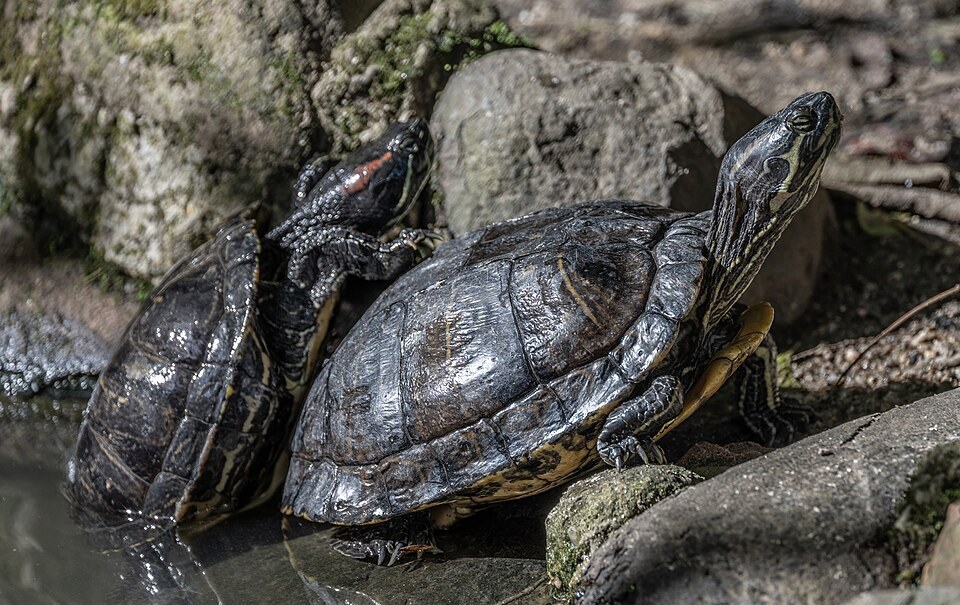
Red-eared slider shedding often worries keepers because it does not resemble the neat shed skin of a snake. A turtle may release thin outer shell plates and small pieces of skin, sometimes most visible underwater. The useful question is not whether anything is shedding, but what the material looks like and whether the underlying shell and animal appear normal. Routine care supports shedding; peeling and polishing do not.
Understand what a scute actually is
The turtle's upper shell is the carapace, and its underside is the plastron. The visible outer plates are called scutes. A slider does not abandon its entire shell as it grows: the shell is a living part of its body, associated with the skeleton. Treating it like a removable protective case can lead to rough handling and harmful attempts to clean beneath a plate.
Thin outer scute layers may lift and detach naturally. They can appear translucent, and a loosened edge may catch the light differently when the turtle moves between water and the dock. The underlying area should remain intact rather than exposing a bleeding, soft, or foul-smelling defect.
Do not use a rigid shedding timetable. Age, growth, and individual condition affect what you notice, and seeing no detached plate for a while does not prove a problem. Compare with the turtle's own appearance and seek advice about persistent unusual buildup or accompanying health changes.
Look at skin without trying to remove it
Small pieces of shedding skin may look more obvious when suspended in water than when the animal is basking. That does not mean the turtle needs a scrub. Observe whether the material is limited and whether the skin underneath appears intact. Extensive persistent peeling, sores, swelling, or a change in normal activity calls for veterinary assessment.
A photograph is most useful when it shows the same area clearly without repeated restraint. Record when you first noticed the change and whether appetite, swimming, or basking has altered. If the material disappears before an appointment, your notes can still help the veterinarian understand the pattern.
Avoid deciding from online photographs alone whether white material is skin, mineral residue, infection, or another process. Similar colors can have very different causes.
Make dry basking work for an aquatic animal
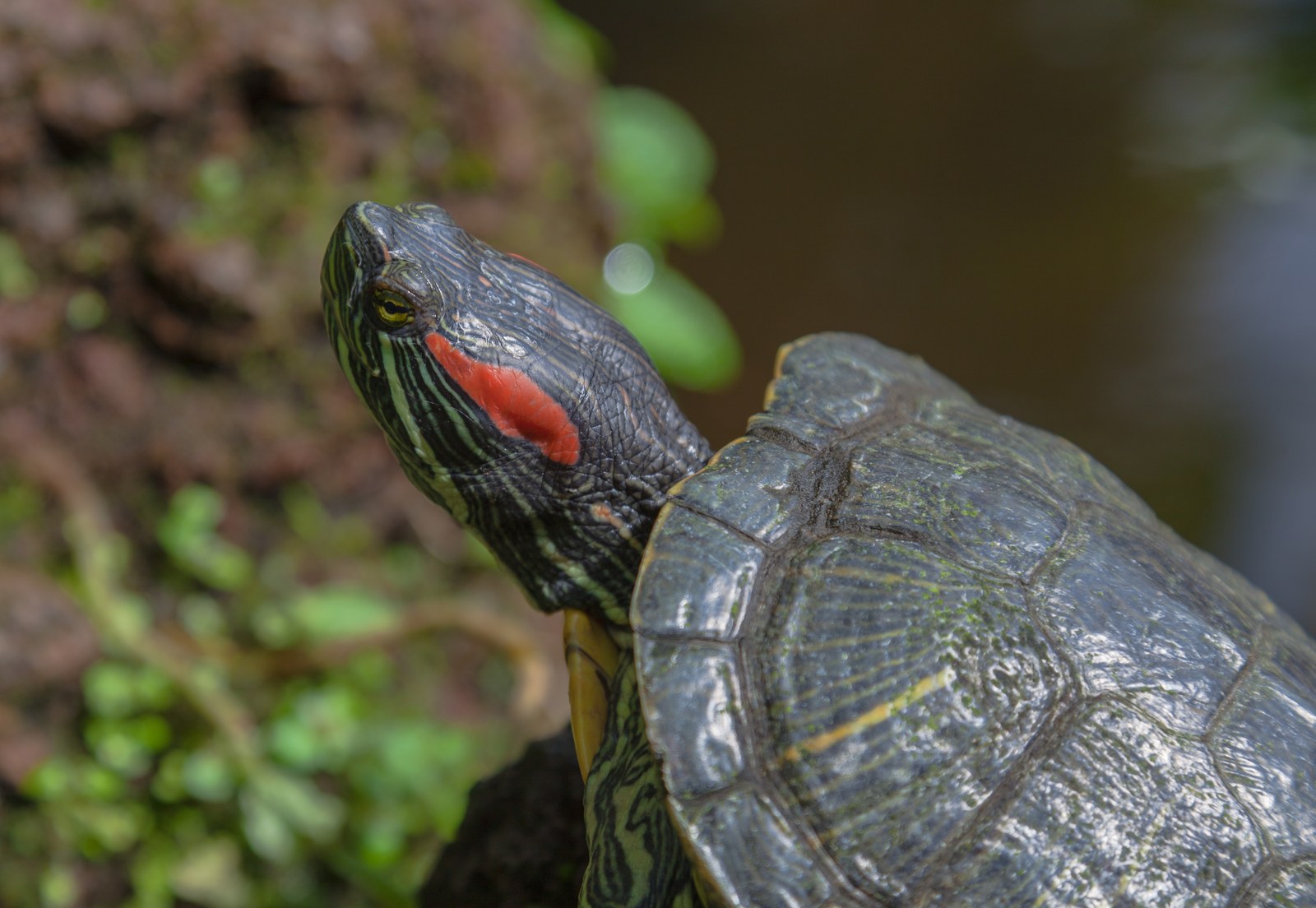
A red-eared slider needs to leave the water completely. Check whether the dock supports its entire body and remains dry when the turtle climbs aboard. A platform that tilts, sinks under adult weight, or leaves the underside continuously wet is not fulfilling the same function. Easy access matters as much as the presence of a lamp overhead.
Keep air moving through an appropriately secure cover. RSPCA specifies a cover that does not trap humidity, but does not quantify a relative-humidity target. Do not invent a percentage or copy instructions for a gecko's moist hide. Misting, wet substrate, and a sealed humid chamber are not solutions to a slider's shedding concerns.
Basking also depends on security. If every attempt ends with someone reaching toward the turtle, it may repeatedly dive before resting. Arrange predictable maintenance and quiet observation so the animal can choose dry time without being forced to remain on the dock or prevented from entering water.
Check heat, UVB, and water as different systems
Use the correct instrument for each measurement. The Bio Dude specifies basking air at 85–90°F, or 29.4–32.2°C, and platform surface at 95–104°F, or 35–40°C. A secured air probe measures one; an infrared thermometer aimed at the accessible platform measures the other. Check the surface when the turtle is not covering it.
RSPCA's 30–35°C basking-zone recommendation is not explicitly labeled as a surface measurement, so do not substitute it for one. Water temperature needs its own waterproof thermometer and age-appropriate plan. UVB needs a suitable fixture arrangement and, ideally, verification with a UVI meter at the basking animal's shell height; warmth and visible brightness do not establish UVB exposure.
RSPCA recommends basking UVI 3–5 with access to zero in shade. Maintain suitable nutrition and water quality alongside lighting. None of these checks is a treatment for an existing lesion, but they provide essential information when a veterinarian investigates why shedding or shell condition has changed.
Know when a shell change is not routine grooming
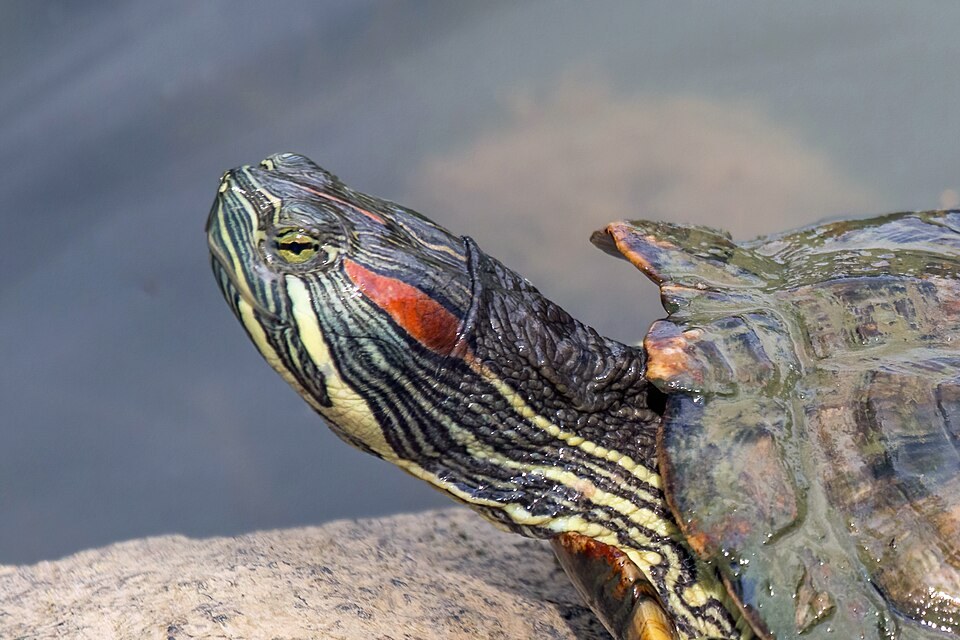
Pitting, discharge, unpleasant odor, bleeding, soft damaged patches, or a deep defect need prompt veterinary advice. The Merck Veterinary Manual describes shell pitting in an infectious disease of aquatic turtles. It is not the only possible cause, which is why identifying the problem from appearance alone is unreliable.
Do not push a fingernail into the shell to test its firmness or scrape a patch to see what lies beneath. Likewise, a white mark that seems dry and harmless should not be automatically dismissed if it is spreading or accompanied by other changes. Tell the veterinarian about previous injuries, new furnishings, altered diet, and any products already applied.
Breathing difficulty, marked weakness, appetite loss with other illness signs, or inability to swim safely makes the concern more urgent than a cosmetic change alone.
Keep shell care simple and the equipment clean
For a normally shedding turtle, concentrate effort on the habitat rather than the shell. Remove uneaten food, keep up with water testing and partial changes, and maintain the filter without stripping away its entire biological colony. Inspect the dock for rough edges and trapped debris that could irritate the underside.
- Leave attached skin and scutes alone.
- Remove detached debris during ordinary tank maintenance.
- Check that the entire body can bask dry.
- Record persistent changes and obtain veterinary advice.
Use dedicated cleaning tools and keep them away from kitchens and food utensils. Wash hands after contact with the turtle, water, or equipment, because normal shedding does not alter Salmonella precautions. Children under five should not handle the animal or its environment.
A healthy shell does not need to look freshly polished. Intact tissue, normal movement, appropriate basking opportunities, and a consistent care routine are more meaningful goals than a flawless photograph. When uncertain, protect the tissue by doing less to it and seeking better information.
Continue reading: Living With a Red-Eared Slider: The Decades-Long Decision.
Sources and further reading:
- RSPCA: How to care for a terrapin
- The Bio Dude: Red Ear Slider Care and Maintenance
- CDC: Reptiles and Amphibians
- USGS NAS: Red-eared Slider Species Profile
- 21 CFR 1240.62: Turtles intrastate and interstate requirements
Photo credits: Wilfredor (CC0), Diego Delso (CC BY-SA 3.0), Charles J. Sharp (CC BY-SA 4.0). Images resized and compressed for web display. Each image retains its linked license. Zoo-pond scene according to the source. Multiple animals in a photograph are not a recommendation for group housing.


