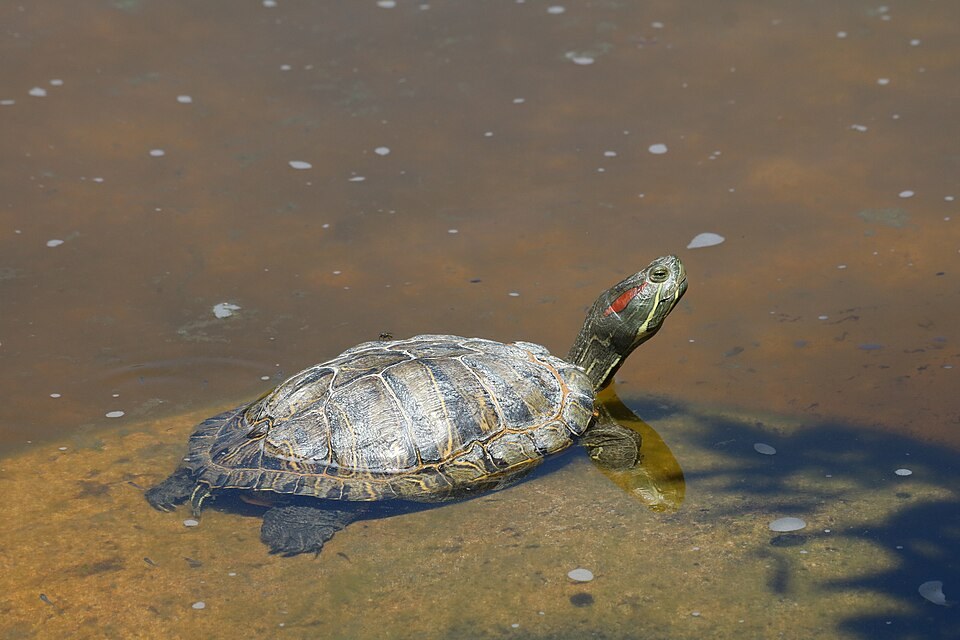
Red-eared slider health problems are easier to describe when you already know how your turtle normally behaves. A photograph of a shell patch or a short video of unusual swimming can help a reptile veterinarian, but neither replaces an examination. Your role is to notice changes, provide accurate husbandry information, and avoid home treatments that obscure the problem. This guide explains safer next steps, not diagnoses or medicine doses.
Build a baseline before something goes wrong
Observe the turtle quietly during normal activity. Note its usual appetite, swimming control, basking choices, and response to familiar routines. Keep occasional photographs of the shell under similar lighting so a genuinely new mark is easier to distinguish from a longstanding pattern. Use consistent measurements when tracking shell length or weight with veterinary guidance.
Keep a separate equipment record. Include actual water temperature, basking air temperature, platform surface temperature, and UVB arrangement, identifying which device measured each one. An infrared reading from the dock cannot stand in for a waterproof thermometer reading from the swimming area. Record lamp installation dates, water tests, food brands, and supplements.
Arrange preventive care with a veterinarian who sees reptiles, and identify an emergency contact before you need one. Ask how the clinic prefers turtles transported and whether it offers emergency reptile care itself. A general practice may need to refer you, so discovering that at midnight adds an avoidable delay.
Recognize changes that deserve prompt attention
Breathing difficulty is not a behavior to watch casually for several days. Open-mouth breathing at rest, visible effort, or nasal discharge warrants prompt veterinary contact. Severe weakness, collapse, major injury, or exposed tissue at the vent also requires urgent advice. Explain whether the turtle can keep its head above water and move normally.
New persistent listing, unusual floating, or inability to submerge is important to report, especially alongside respiratory signs. It is not proof of pneumonia or any other single diagnosis. Likewise, prolonged basking can reflect several influences, from disturbance and water conditions to illness. The pattern and associated changes matter more than a label attached online.
Do not place a weak animal into deep water for a demonstration video. Describe the concern first and follow the clinic's directions for safe temporary containment and transport.
Separate ordinary shedding from shell damage
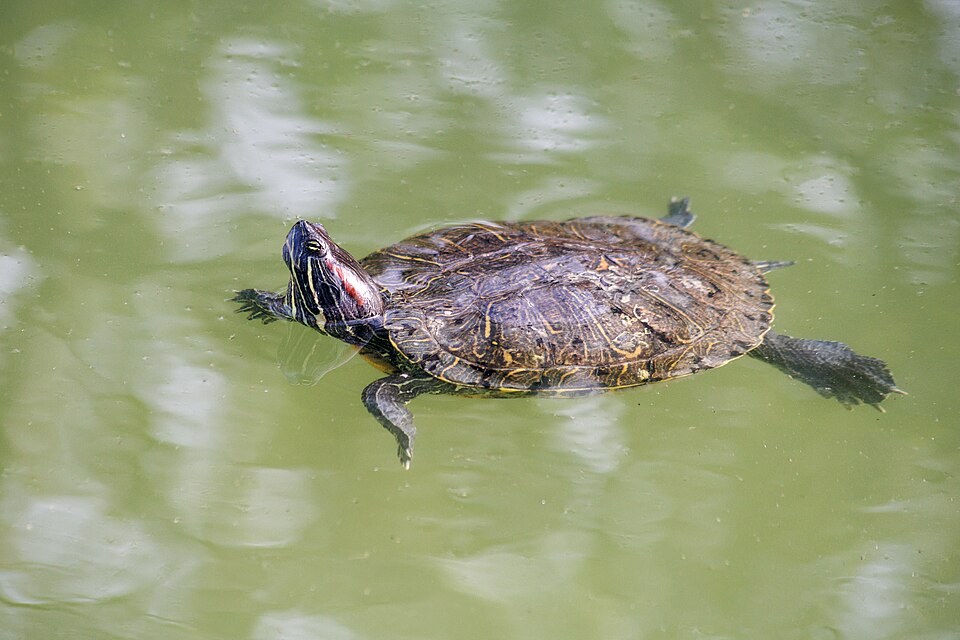
Thin outer scutes may lift and detach during normal growth. The shell below should remain intact rather than becoming an open, smelly, or soft defect. Small skin fragments may be noticeable underwater, but extensive persistent peeling, sores, or tissue changes deserve assessment. Avoid diagnosing by color alone: light, moisture, mineral deposits, and shell patterns can change what a photograph appears to show.
The Merck Veterinary Manual's reptile health overview describes shell pitting in an infectious disease of aquatic turtles. That is one reason not to dismiss a pit as routine shedding, but it does not mean every pit has that cause. Trauma and other disease processes also require professional evaluation.
Never pull scutes, scrape a suspicious patch, or apply household disinfectant to the turtle. Keep ordinary water care and access to dry basking in place while seeking advice. Medical dry confinement, wound products, and bathing treatments require an individualized plan; they are not routine grooming.
Review nutrition and UVB without assuming the diagnosis
Poor nutritional balance and inadequate UVB can contribute to serious bone and shell disease. Weak limbs, abnormal development, and difficulty supporting the body are concerning signs, not a request for a stronger supplement sprinkled onto the next meal. The Merck overview explains that nutritional bone disease is a major problem in captive reptiles.
Prepare a complete diet history, including pellets, greens, animal foods, treats, and every supplement. Check whether useful UVB reaches the basking animal without glass or plastic blocking it, and record the fixture, distance, mesh, and measured UVI if available. RSPCA recommends basking UVI 3–5 with access to zero in shade; correcting the setup does not reverse established disease instantly.
Closed or swollen eyes also need a broad investigation. Vitamin imbalance is one possibility, not the automatic explanation. Do not use concentrated vitamin preparations or human eye drops without veterinary direction. An animal that cannot see well may also struggle to find food, making delayed assessment especially unhelpful.
Include reproductive and environmental history
A female slider can develop eggs without a male present. Repeated straining, marked lethargy, appetite loss with other changes, or tissue protruding from the vent needs veterinary advice. Do not press on the body to look for eggs or attempt extraction. A veterinarian can assess reproductive status and advise on appropriate nesting provision rather than relying on guesses about digging behavior.
Environmental changes also belong in the history: a recent filter failure, new tank mate, heater problem, transport, or change of food may be relevant. Tell the clinic when signs began and whether another animal has been affected. Be honest about gaps in maintenance; accurate information helps the turtle more than a perfect-looking account.
- Record the last normal meal and subsequent appetite changes.
- Save clear photographs without repeatedly restraining the animal.
- List measured conditions and recent equipment changes.
- Bring product labels and previous veterinary records when available.
A concise timeline makes the appointment more useful than a collection of possible diagnoses from forums.
Protect people while supporting recovery
A turtle's illness is not the only health concern in the household. CDC notes that reptiles can carry Salmonella even when apparently healthy. Wash hands after contact with the animal, food, water, or equipment, and keep cleaning out of kitchens and other food-preparation areas. Never kiss the turtle or hold it near your face.
Children younger than five should not handle reptiles or their environments. Older adults and people with weakened immune systems also face greater risk. Do not ask a vulnerable family member to provide extra hands-on care simply because the animal now needs more attention.
Follow the agreed follow-up schedule even if the turtle appears brighter. Improvement is useful information, but treatment changes and decisions about recovery belong with the clinician who has assessed the animal.
Continue reading: Red-Eared Slider Behavior: Observation, Handling, and Trust.
Sources and further reading:
- RSPCA: How to care for a terrapin
- The Bio Dude: Red Ear Slider Care and Maintenance
- CDC: Reptiles and Amphibians
- USGS NAS: Red-eared Slider Species Profile
- 21 CFR 1240.62: Turtles intrastate and interstate requirements
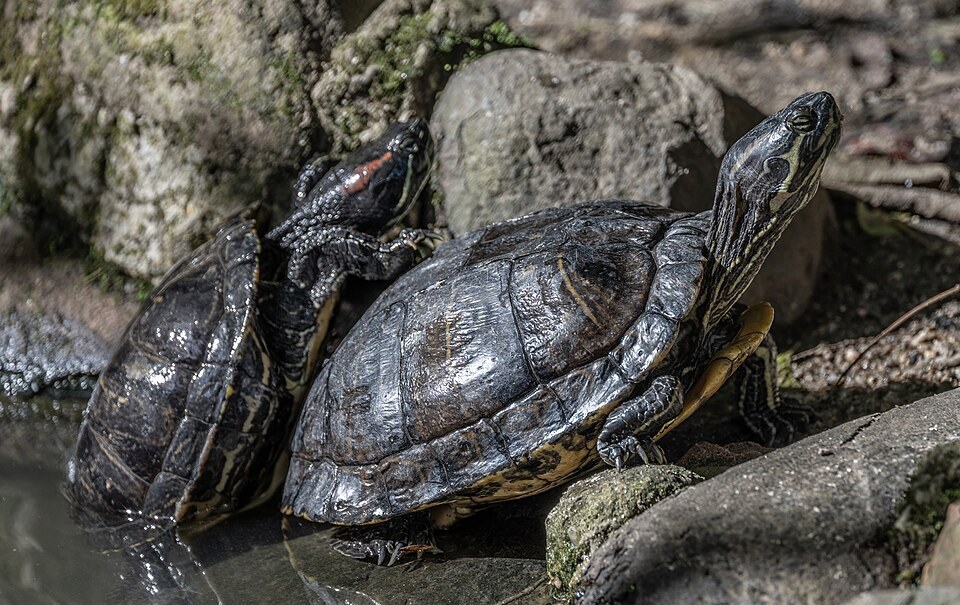
Photo credits: Grendelkhan (CC BY-SA 4.0), Godwin Borg (CC BY-SA 4.0), Wilfredor (CC0). Images resized and compressed for web display. Each image retains its linked license. Zoo-pond scene according to the source. Multiple animals in a photograph are not a recommendation for group housing.


