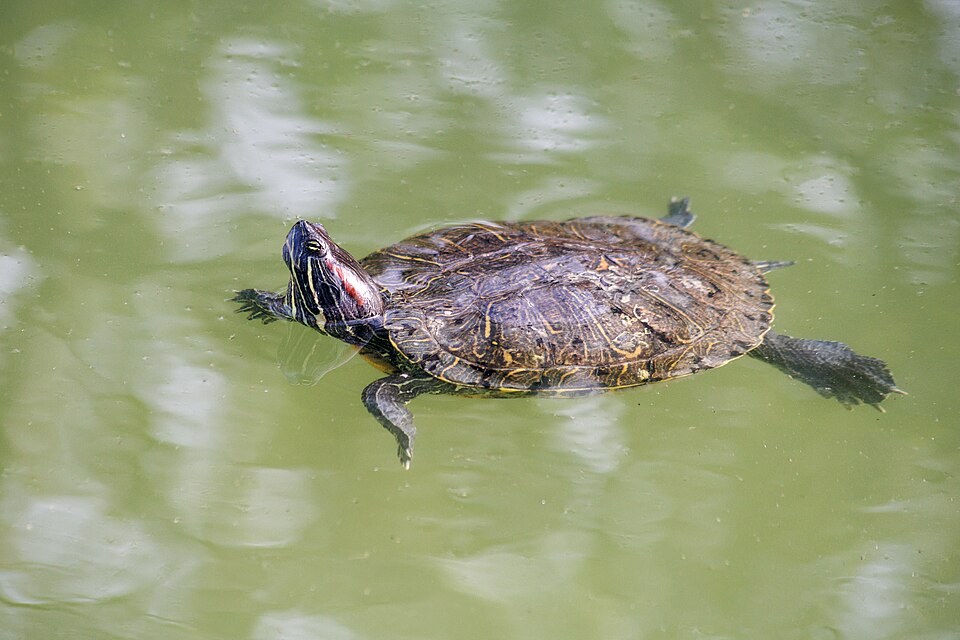
Red-eared slider behavior can be wonderfully absorbing without involving much physical contact. A turtle that watches you through the glass may be curious, expecting food, or assessing a possible disturbance. Learning those differences lets you offer a calmer home. Instead of asking how to make a slider enjoy cuddling, ask whether it can swim, bask, forage, and retreat comfortably while you carry out necessary care.
Read behavior in its setting
Start by observing from a little distance at different times of day. A slider may bask when the room is quiet, investigate leaves after feeding, and retreat when a shadow passes overhead. A single moment rarely tells you enough to label it friendly, frightened, or sick. Write down the context: who approached, what equipment was running, and what happened immediately before the behavior.
A sudden dive is often an escape response, not a personal rejection. Moving slowly, avoiding repeated looming over the dock, and choosing predictable maintenance times may reduce disturbance. Do not keep approaching to test whether the animal is finally accustomed to you; that can repeatedly interrupt the very behavior you want to observe.
Changes from the individual's baseline deserve more attention than comparisons with another keeper's turtle. An animal that abruptly stops basking or starts swimming abnormally needs an equipment and health review, not just a different interpretation of its personality.
Separate learned begging from a feeding requirement
Many sliders become animated when a person approaches because people predict food. That response can be learned without representing affection or a need for another meal. Feeding every time the turtle paddles at the glass teaches an efficient way to obtain extra calories and makes body-condition management harder.
Use a consistent feeding place and a written schedule. Prepare the planned portion before approaching so a prolonged performance does not alter the meal. If several people share care, record who fed the turtle and what was offered. A routine cue, such as the appearance of a dedicated feeding container outside the tank, can make meals predictable without repeated tapping on glass.
Do not offer fingers as targets or hold food near your face. Food motivation can be useful for encouraging voluntary movement toward a safe area, but it is not a guarantee against biting.
Make necessary handling brief and secure
Prepare the destination before lifting the turtle. A secure, appropriately sized container should already be within easy reach, with other pets excluded and the route clear. Wet shells are slippery, and a surprised slider may extend its neck or push hard with its limbs. If the turtle is too large for you to support confidently, obtain an experienced demonstration rather than improvising.
For a necessary lift, support the shell with both hands and keep fingers away from the head. Stay low over a safe surface and transfer directly, avoiding unnecessary carrying. Never pick the animal up by its tail, legs, or neck, and do not turn it upside down as a test of trust. Keep handling focused on the required task.
- Prepare equipment before touching the turtle.
- Keep the head away from your fingers and face.
- Stop unnecessary handling when struggling escalates.
- Return the turtle safely and wash your hands.
Children under five should not handle reptiles or their environments, according to CDC guidance. Older children still need adult supervision and a task that fits their abilities.
Improve choice before adding toys
For a slider, useful enrichment begins with functional space. A broad swimming area, an accessible dry dock, safe resting opportunities, and a choice of exposure or shade matter more than a colorful object marketed as a turtle toy. Check that changes do not reduce turning room, block filtration, or create a gap that can trap the shell.
Offer variety through appropriate leafy foods and modest changes to their presentation. A leaf placed where the turtle can investigate it in water encourages foraging without adding an extra high-calorie treat. Use safe, reliably identified foods rather than vegetation gathered from an unfamiliar outdoor pond.
Introduce changes gradually and watch the response. If a new object causes persistent avoidance or interferes with dock access, remove it instead of assuming the turtle must learn to accept it. Avoid small items that could be swallowed and loose cords or loops. Enrichment should expand comfortable choices, not create an obstacle course the turtle must conquer to meet basic needs.
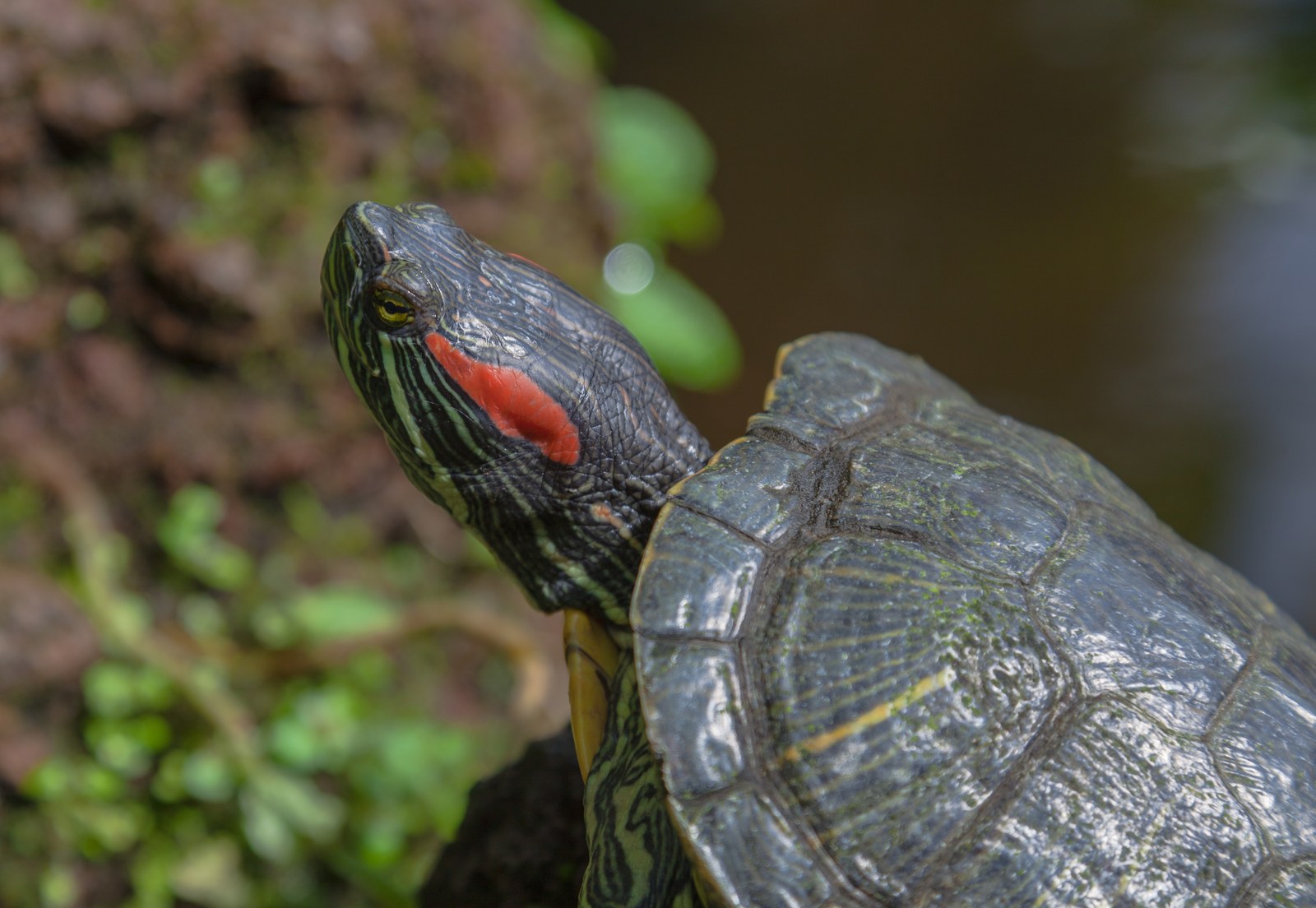
Do not confuse shared basking with friendship
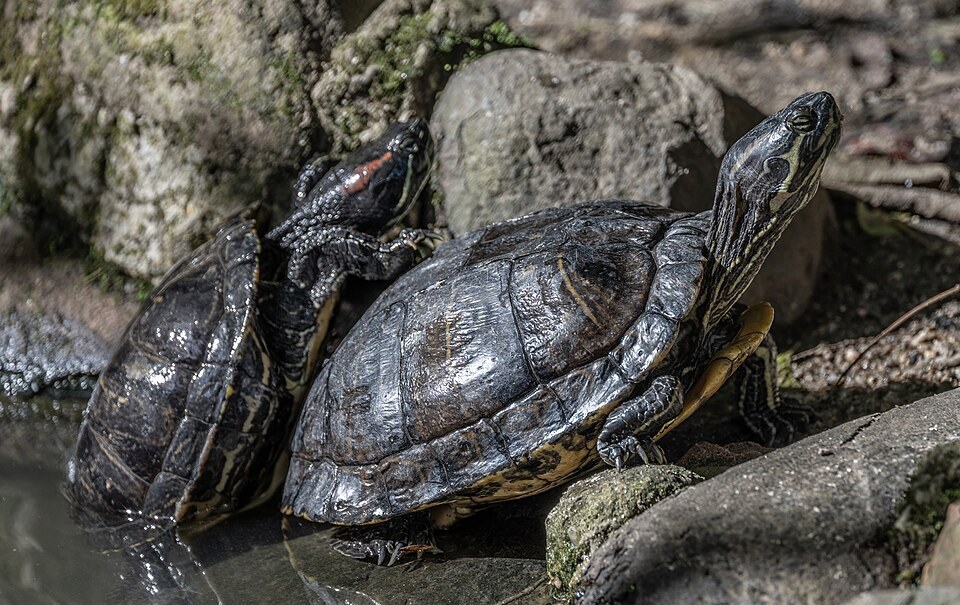
Wild turtles may gather at limited basking sites, but that does not establish a need for a companion in a home aquarium. In confinement, one animal can dominate access to the best dock, food, or retreat without a dramatic fight. Subtle avoidance, repeated displacement, and injuries can appear after an apparently peaceful introduction.
House one slider as the conservative default. Fish and other reptiles are not enrichment accessories; fish may be eaten, and different reptile species have incompatible environmental requirements. If you already have multiple turtles, be prepared for separate complete habitats and obtain species-specific advice rather than waiting for obvious wounds.
Foreclaw fluttering or persistent attention toward another turtle can occur in social or reproductive contexts. Do not diagnose sex, compatibility, or harmless intent from one gesture; look at the whole interaction and the animals' welfare.
Investigate persistent changes instead of training through them
Repeated frantic swimming, escape attempts, or avoidance of water can have several causes. Review water conditions, disturbance, dock access, and measured temperatures. Remember that basking air, platform surface, and water readings are different. A room that feels warm to you does not prove that the turtle's actual habitat is appropriate.
Breathing difficulty, marked weakness, swollen eyes, or new trouble swimming calls for prompt veterinary contact. A mature female may also need reproductive assessment when persistent restlessness is accompanied by appetite changes or straining. Do not force more interaction to distract an animal from possible illness.
Keep the relationship centered on reliable care. A slider that calmly uses its habitat and can retreat when it chooses is not missing out because it rarely sits in your hands. Successful handling is safe and necessary; successful companionship can consist of years of attentive observation from the other side of the glass.
Continue reading: Red-Eared Slider Shedding: Scutes, Skin, and Shell Care.
Sources and further reading:
- RSPCA: How to care for a terrapin
- The Bio Dude: Red Ear Slider Care and Maintenance
- CDC: Reptiles and Amphibians
- USGS NAS: Red-eared Slider Species Profile
- 21 CFR 1240.62: Turtles intrastate and interstate requirements
Photo credits: Godwin Borg (CC BY-SA 4.0), Wilfredor (CC0), Diego Delso (CC BY-SA 3.0). Images resized and compressed for web display. Each image retains its linked license. Zoo-pond scene according to the source. Multiple animals in a photograph are not a recommendation for group housing.


